
 Pin
Pin
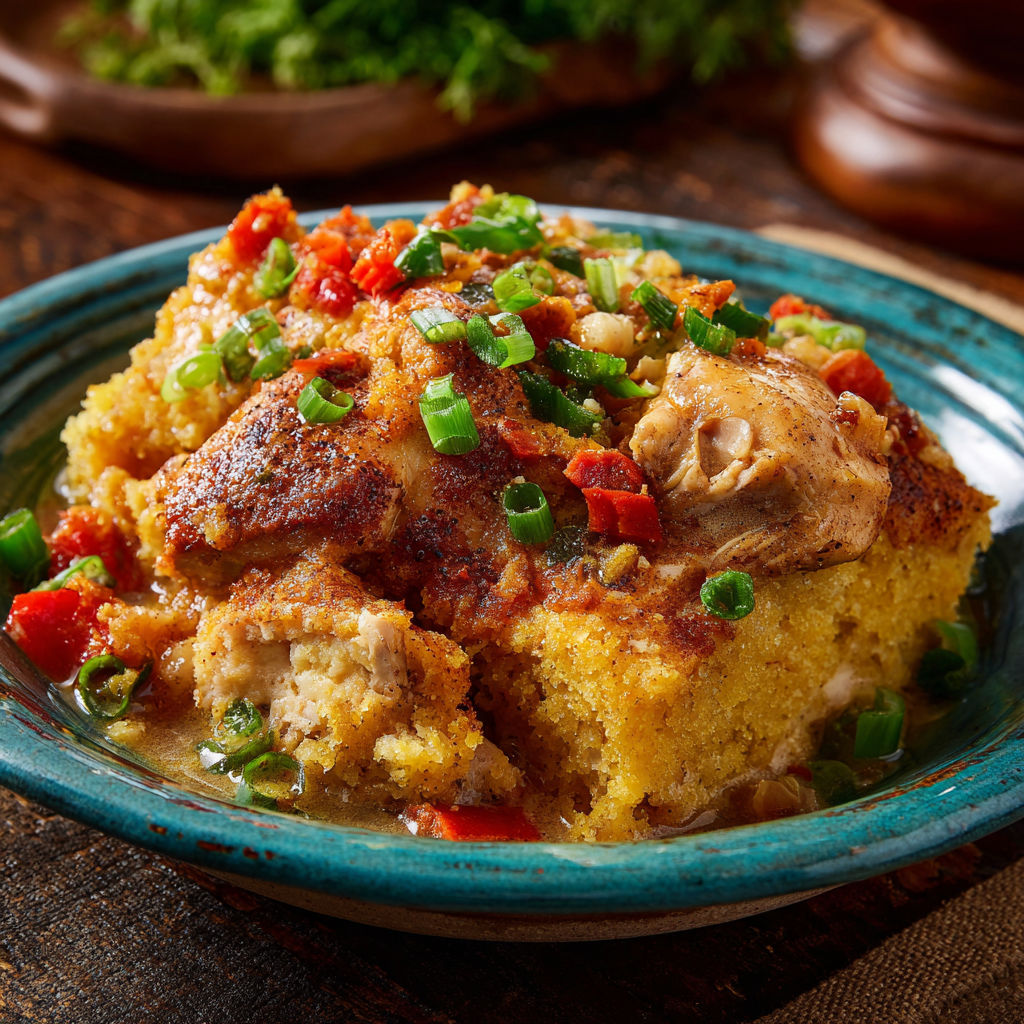
Smothered Cajun chicken and cornbread casserole layers a creamy chicken-and-vegetable filling beneath a corn muffin topping. The filling contains onion, bell pepper, celery, condensed soup, sour cream, and cheese. Cream-style corn gives the topping a moist texture. Cook the chicken completely before assembling, then bake until the casserole center reaches 165°F and the topping is set. A brown crust or clean toothpick in the bread does not establish the temperature of the chicken filling underneath.
Set out the ingredients in two groups before cooking: chicken filling and cornbread topping. The four tablespoons of butter are a total, split into two tablespoons for the skillet and two for the topping; they are not four tablespoons plus another skillet allowance. Use the specified 8.5-ounce corn muffin mix and cream-style corn. A larger mix package or drained whole-kernel corn is not the same topping formula. Read the Cajun seasoning label before adding salt because blends vary.
Ingredients and where the butter goes
- Two pounds boneless, skinless chicken breasts or thighs: Cut into even bite-sized pieces and cook fully before assembly.
- Two to three teaspoons Cajun seasoning: Start at the lower end if the blend includes salt or substantial cayenne.
- One small yellow onion: Dice it finely enough to soften with the other vegetables.
- One bell pepper: Remove seeds and stem, then dice to roughly match the onion.
- Two celery stalks: Slice thinly across the stalk before dicing so large tough pieces do not remain.
- Two 10.5-ounce cans condensed cream of mushroom or chicken soup: Use the condensed product without adding the can’s usual dilution water.
- One-half cup sour cream: Stir into the filling for tang and a smooth sauce.
- One-half cup milk or lower-sodium chicken broth: This is the measured liquid for the filling, not additional liquid for the muffin mix.
- One cup shredded cheddar or Pepper Jack: Mix this portion into the chicken filling.
- One 8.5-ounce box corn muffin mix: Use this recipe’s topping ingredients; do not also add the package’s standard milk quantity.
- One 14.75-ounce can cream-style corn: Include the entire contents rather than draining it like whole-kernel corn.
- One large egg: Mix into the topping with the corn and melted butter.
- Four tablespoons unsalted butter, divided: Use two in the skillet and melt the other two for the topping.
- An additional one-half cup shredded cheese: Fold into the topping. Diced jalapeños remain an optional garnish or heat adjustment.
Build the filling and topping separately
- Get the oven and ingredients ready
- Heat the oven to 400°F. Set out a 9-by-13-inch baking dish, two bowls, and a large skillet. Measure the four tablespoons of butter into two equal portions so none is accidentally counted twice. Dice vegetables before handling raw chicken, then clean the cutting area.
- Cook the chicken completely
- Season the chicken with the lower amount of Cajun seasoning. Melt part of the skillet butter over moderate heat and cook the chicken in batches if necessary. Check the thickest pieces for 165°F. Transfer cooked pieces to a clean bowl; raw-poultry utensils should not be used for finished food.
- Soften the vegetable base
- Add the rest of the skillet butter, keeping the skillet allocation to two tablespoons total. Cook onion, pepper, and celery until softened, stirring up brown cooking juices. Reduce heat if those juices start turning black. Scrape the vegetables into the bowl with the cooked chicken.
- Mix the creamy filling
- Whisk condensed soup with sour cream and the half cup milk or broth. Stir in one cup shredded cheese, chicken, and vegetables. Spread the mixture evenly in the baking dish, leaving space below the rim for the topping. If the dish is too shallow, use a deeper suitable dish rather than overfilling it.
- Stir the topping gently
- In the second bowl, combine the muffin mix, cream-style corn, egg, remaining two tablespoons melted butter, and half cup cheese. Stir until no dry pockets remain. Do not add the extra milk from the muffin package instructions; this topping uses cream-style corn as part of its moisture.
- Assemble, bake, and check both layers
- Spoon topping across the filling and gently join the spoonfuls. Begin checking after 30 minutes, expecting the draft estimate of 30 to 45 minutes may need extending. The filling must reach 165°F and the topping center must no longer contain wet batter. Tent if browning early. Rest about ten minutes before serving.
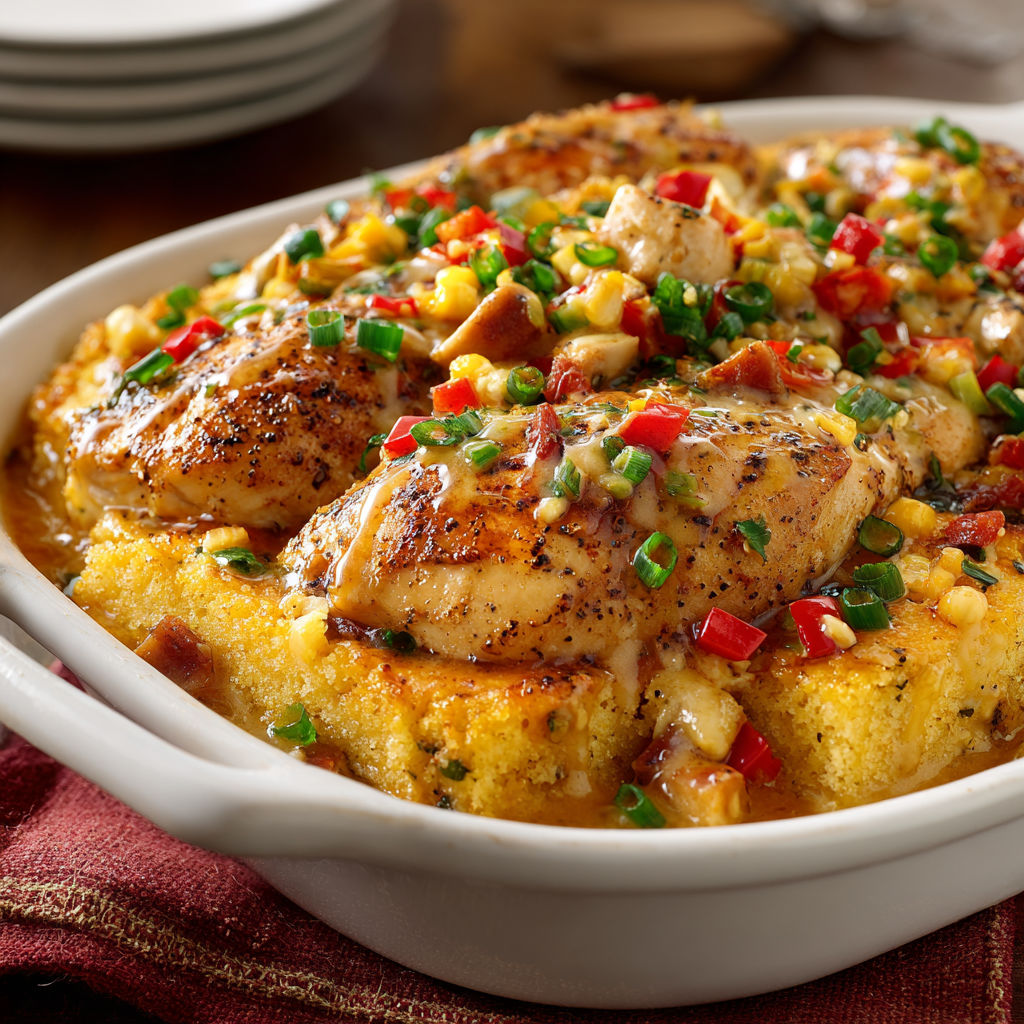
Treat the two layers as separate preparations. The filling should be evenly mixed before the topping is added, with chicken distributed to the corners as well as the center. Spoon batter over several areas and connect those spoonfuls gently rather than dropping the whole bowl in one mound. That limits dragging chicken upward into the bread and helps keep topping thickness more even. The cream-style corn makes this a moist topping; it should not be expected to resemble a dry standalone cornbread square.
Chicken, cheese, and ingredient substitutions
Chicken breasts and thighs can both be used, cut into similarly sized pieces so a batch cooks consistently. Cheddar gives a familiar cheese flavor, while Pepper Jack adds another source of heat. Choose mild Cajun seasoning when using spicy cheese, then offer jalapeños separately. Substituting broth for milk does not make the dish dairy-free because soup, sour cream, cheese, butter, and possibly the muffin mix remain. A gluten-free conversion likewise needs more than replacing the cornmeal component.
Make-ahead components and safe leftovers
For advance preparation, fully cook the chicken and vegetables, cool them promptly in shallow containers, and refrigerate. Keep the topping ingredients separate and mix the batter close to baking. Never hold partly cooked chicken for finishing another day. Refrigerate finished leftovers within two hours, or one hour above 90°F, and use within three to four days under USDA leftover guidance. Reheat to 165°F; a cold portion may need covering to protect the cornbread while the filling warms.
What to serve alongside the casserole
Serve with something crisp or lightly dressed, such as a cabbage slaw, cucumber salad, or steamed green beans with lemon. The cornbread already provides a substantial starch component, so additional bread is optional. For another dinner using chicken with pantry ingredients, compare BBQ ranch chicken pasta casserole. If a lighter-textured vegetable base sounds appealing for a different meal, shrimp and sausage cabbage cups pair a skillet filling with roasted cabbage.
Allergens and label-dependent nutrition
The packaged ingredients make label reading especially useful here. Condensed soups, cheese, seasoning, and corn muffin mixes vary in sodium, allergens, and sweetness. The recipe contains milk ingredients, egg, and ordinarily wheat; some products also contain soy. No verified nutrient calculation is provided because brands and serving weights are unspecified. Choose products that suit the people eating the meal, but avoid treating a single lower-fat or lower-sodium swap as proof that the finished casserole meets a dietary claim.
Checking a wet center or browned topping
A toothpick pushed all the way through the topping reaches a creamy filling and will emerge wet even when the bread is baked. Test the bread layer only, then use a thermometer for the filling center. If the surface browns too early, tent it loosely while the middle finishes. A deep substitute dish increases the distance heat must travel; dividing into suitable shallower dishes is more predictable than assuming the original bake window still applies. This exact formula remains research-based rather than kitchen-tested.
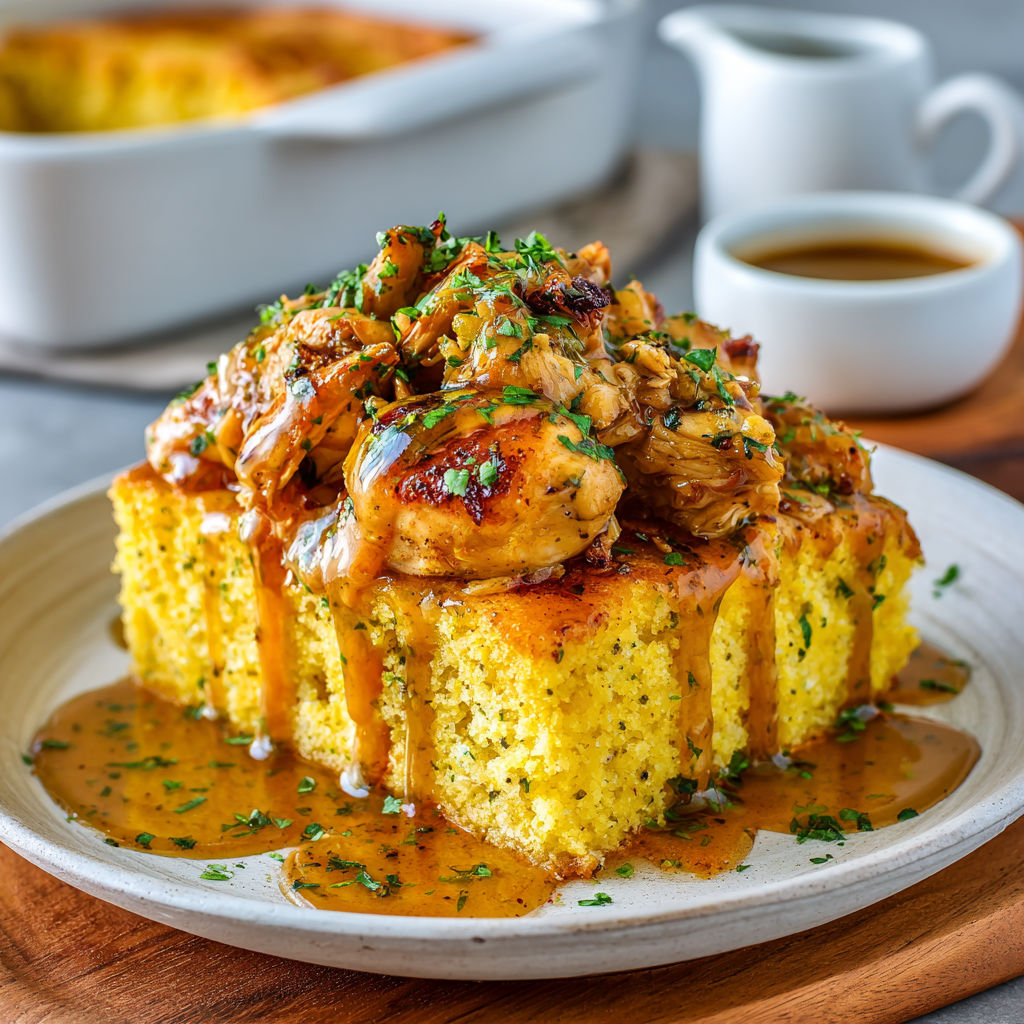
Make-ahead work is simplest when kept in components: fully cook and promptly refrigerate the chicken filling, then mix the cornbread batter when ready to bake. Never store partially cooked chicken for finishing later. Cold filling can extend the bake and must still reach the finished casserole endpoint. Serve a small helping of cowboy caviar alongside, or use BBQ ranch chicken casserole for a separate pasta-based meal rather than swapping its sauce into this topping.
Common Questions About This Recipe
- Why is my toothpick wet when the topping looks cooked?
Check whether it entered the filling. Test the bread without pushing through it, and separately measure the filling temperature; the two checks answer different questions.
- Can I prepare the cornbread batter the night before?
This recipe does not validate overnight batter holding. Prepare the cooked filling ahead, refrigerate it safely, and mix the topping when assembling.
- → Should the soup cans be diluted?
No. Use the condensed soup as supplied, plus the half cup milk or broth specified here. Adding the usual soup-can water would change the filling considerably.
- → Can homemade cornbread batter replace the mix?
Possibly, but no equivalent batter quantity or bake time has been validated for this draft. Different sugar, flour, and liquid proportions can alter the topping thickness and texture.
- → How should a leftover portion be reheated?
Cover it to limit drying and heat until the center reaches 165°F. Microwave or oven timing depends on the portion’s size and temperature; check rather than relying on a set number of minutes.