
 Pin
Pin
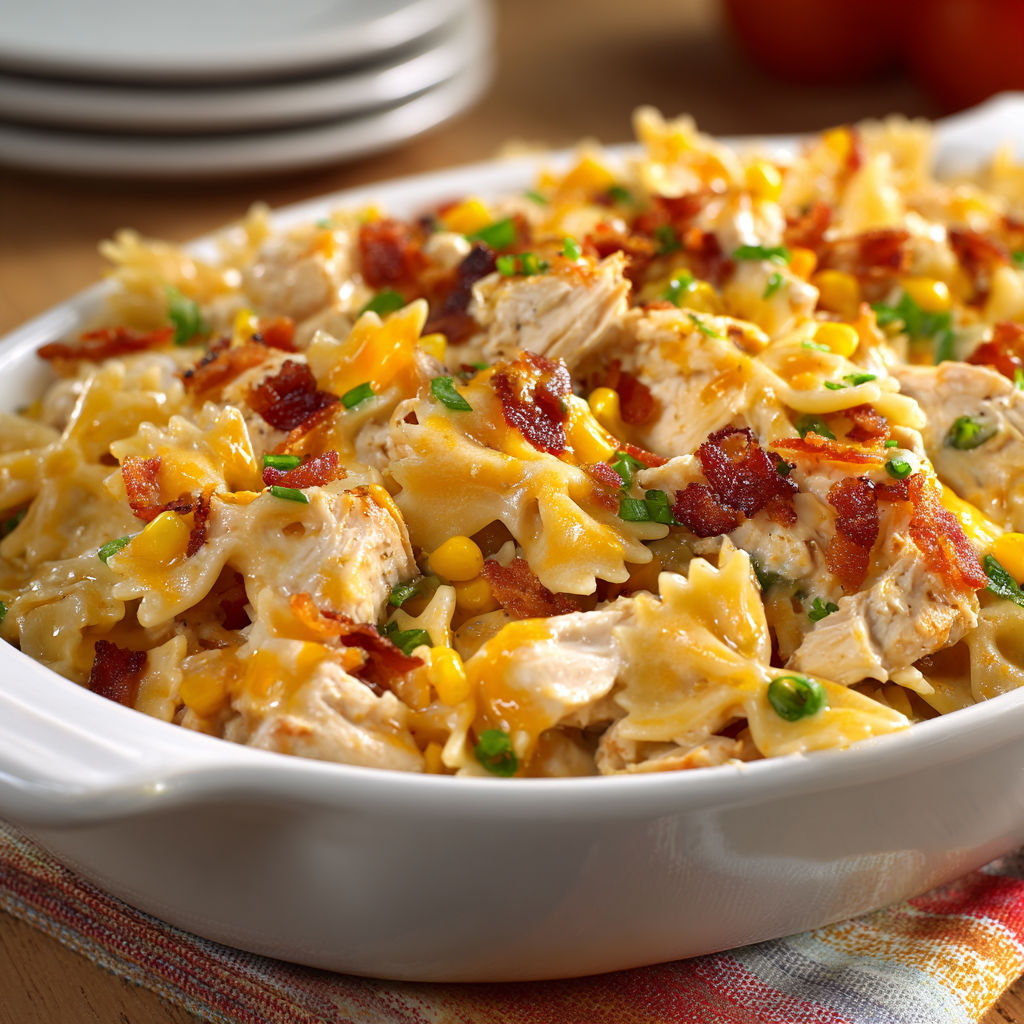
BBQ ranch chicken casserole is a baked pasta dish made with cooked shredded chicken, bowties, cheddar, corn, tomatoes, green chiles, ranch dressing, and barbecue sauce. The ranch provides the creamy base and the barbecue sauce adds the characteristic sweet, smoky, or tangy flavor, depending on the brand. Cook the pasta before assembly and use chicken that is already fully cooked. Bake the assembled dish until the center reaches 165°F, rather than stopping when only the surface cheese has melted.
Measure the pasta dry and the chicken after cooking and shredding. Drain corn before measuring it into the bowl, and follow the ingredient card for the tomatoes rather than assuming every can should be treated identically. Ranch and barbecue sauce are different components: use the stated amounts of both. When comparing barbecue sauces, sweetness and salt matter as much as smokiness; do not add extra sugar or seasoned salt before tasting the cooked mixture.
Ingredients, including the barbecue sauce
- Twelve ounces dry bowtie pasta: Cook separately before assembly. Taste a piece while boiling and stop when the center is just tender with some firmness.
- Three cups cooked shredded chicken breast: Use safely stored leftover chicken or prepare fresh chicken to 165°F before shredding.
- Two and one-half cups shredded cheddar or cheddar blend: Reserve part of this total for the surface if a visible cheese topping is wanted.
- One 15-ounce can corn, drained: Empty it into a strainer so the additional liquid does not thin the sauce.
- One 10-ounce can diced tomatoes with green chiles, undrained: Add both tomatoes and their juices.
- Seven ounces canned diced green chiles, undrained: Read the heat designation; mild and hot cans produce noticeably different results.
- One cup prepared ranch dressing: This means pourable dressing, not a cup of dry seasoning mix.
- One tablespoon minced onion: Finely mince fresh onion so there are no large raw pieces in the brief bake.
- One-half cup barbecue sauce: Sweetness, smokiness, and heat vary by brand. Choose a flavor you like with ranch and measure it before combining the sauce.
Mix and bake in five stages
- Prepare the dish and chicken
- Heat the oven to 350°F. Set out a large baking dish and a mixing bowl. A 9-by-13-inch dish is a useful starting size, but the mixture must fit with room below the rim; split it between two dishes if necessary. Confirm the chicken is already cooked.
- Boil the pasta
- Cook bowties in boiling water according to their package, checking before the longest suggested time. Drain when just tender. They will continue absorbing sauce during assembly and baking, so very soft pasta can become fragile before serving. Do not add uncooked pasta to this method.
- Distribute the sauce
- Mix ranch and barbecue sauce in the large bowl. Fold in chicken, drained corn, undrained tomatoes and chiles, minced onion, and most of the cheese. Add the pasta and turn gently from the bottom so every portion receives sauce without breaking the bowties.
- Fill without overcrowding
- Transfer to the baking dish and spread into an even layer. Scatter any reserved cheese from the measured total over the surface. If using two dishes, keep their depths similar and check each separately; smaller quantities do not necessarily finish at exactly the same moment.
- Bake to a measured endpoint
- Begin checking a warm assembly after about 20 minutes. A cold casserole will usually require longer. Insert a clean food thermometer into the center and another deep area, avoiding the dish itself. Continue until both reach 165°F. Cover the surface if needed and rest briefly before spooning out portions.
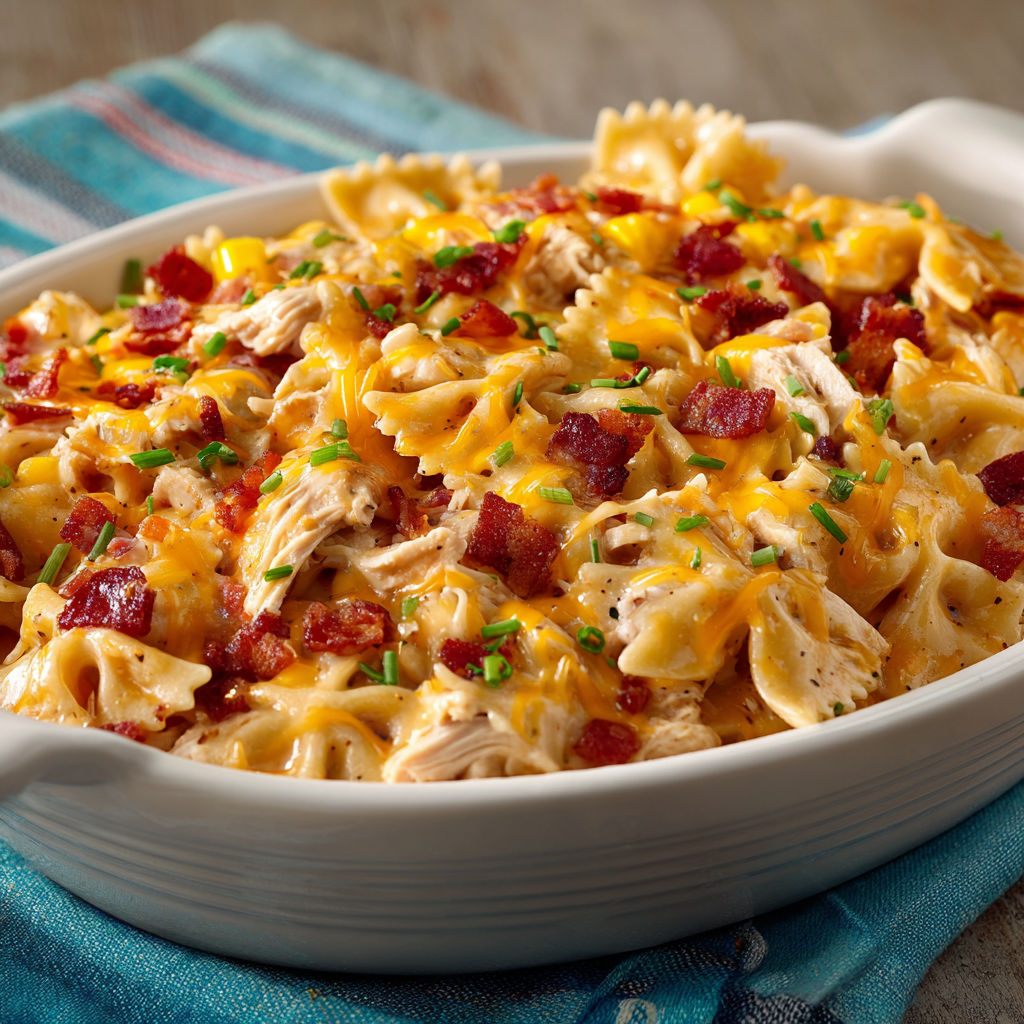
Before mixing, set out a bowl large enough to turn the pasta without crushing it. Shred the chicken into short pieces instead of long strands that gather around the spoon. Drain the corn thoroughly, but keep the liquid from the specified tomatoes and chiles because it forms part of the sauce. Stir the ranch and barbecue sauce together first so concentrated pockets of either dressing do not remain between the pasta folds.
Pasta, cheese, and heat variations
Penne or rotini can replace bowties by the same dry weight, with their own package cooking time. Monterey Jack or a mild cheddar blend can soften the cheese flavor. These changes do not make the dish dairy-free, and replacing pasta alone does not establish that every ingredient is gluten-free. For more heat, choose hotter canned chiles or put hot sauce on the table. Adjust one variable at a time so the barbecue sauce, ranch, and peppers do not compete unpredictably.
Make-ahead preparation and leftovers
For make-ahead cooking, keep the cooked chicken, drained pasta, and sauce refrigerated in separate covered containers, then combine near baking time. An assembled casserole can also be refrigerated promptly, but the pasta will absorb liquid and the center will take longer to heat. Follow USDA leftover guidance: chill perishables within two hours, use refrigerated leftovers within three to four days, and reheat to 165°F. Count the age of previously cooked chicken as well; assembly does not restart its storage clock.
Sides and other dinner ideas
Because the casserole already includes pasta, chicken, and cheese, a crisp vegetable side offers useful contrast. Try sliced cucumber with vinegar, steamed green beans, or a simple leaf salad. For a larger menu, fried potatoes and onions provide a separate side to portion according to appetite. For another chicken dinner to plan later in the week, smothered Cajun chicken and cornbread uses a soft baked topping instead of pasta.
Allergens and unverified nutrition
The recipe contains wheat in ordinary bowtie pasta and milk in cheese and many ranch dressings. Ranch may also contain egg; barbecue sauces vary in their additional allergens. Read actual package labels when cooking for someone with an allergy. A numeric nutrition panel would depend on the dressing, sauce, cheese, chicken, and number of servings, so this draft does not publish unverified calorie or protein figures. Lower-sodium labels can help compare products, but they do not guarantee a low-sodium finished meal.
Preventing dry pasta and a cold center
Before baking, inspect a spoonful from the bottom of the mixing bowl. Bare, sticky bowties suggest uneven mixing or insufficient sauce coverage; a pool of watery canning liquid suggests an ingredient was not drained as directed. Correct that stage rather than relying on a longer bake to solve everything. For an assembled dish taken from the refrigerator, use the center temperature to determine completion. Add time as needed and protect a browning top, rather than applying a universal “extra eight minutes” rule.
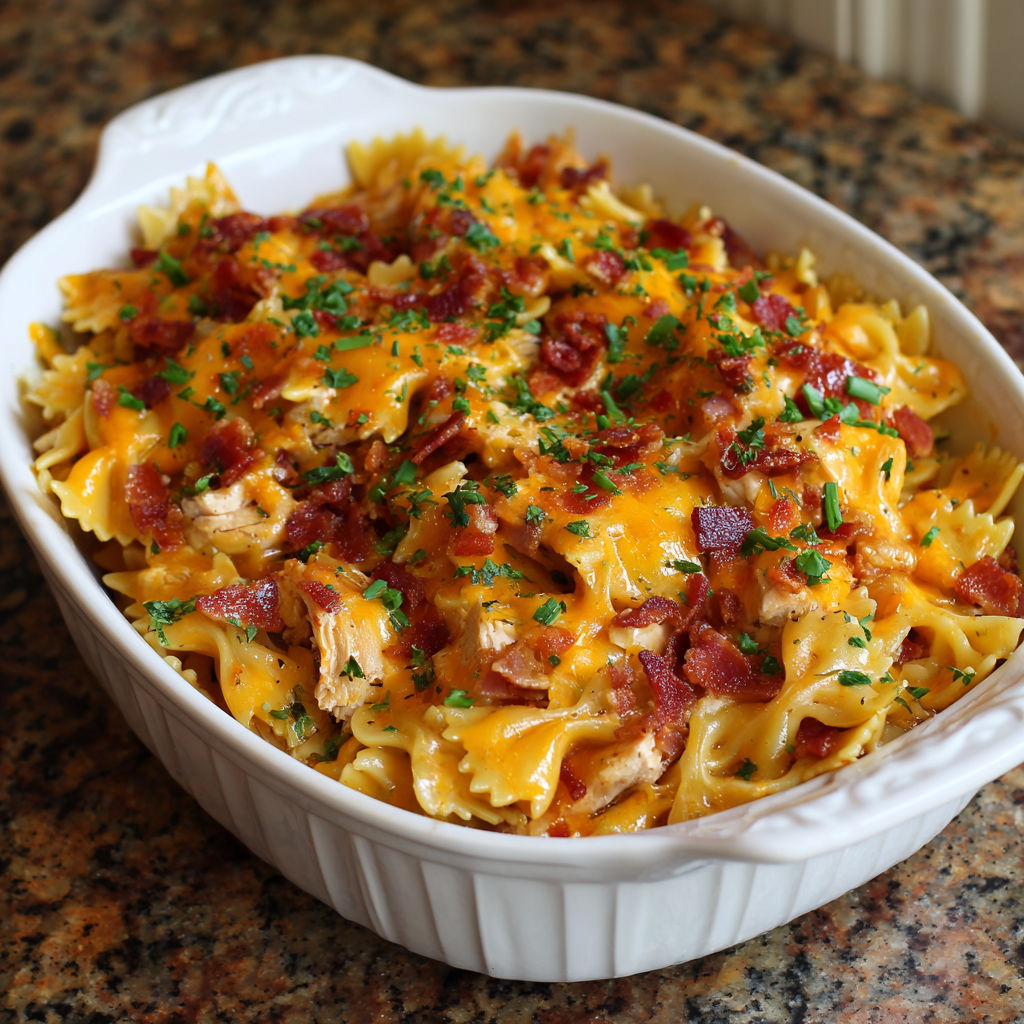
Choose sides that do not duplicate the casserole’s rich sauce. Bean-and-corn salad can be served separately in a small portion; for another dinner with a different protein, beef and shells uses a tomato-soup base. Do not mix their sauce ratios. This casserole is served with a spoon, so a cohesive coating matters more than a firm slice. Note the brand and package size when repeating it, especially if a product has changed formulation.
Common Questions About This Recipe
- Can raw chicken be mixed into the casserole?
No. The method is written for fully cooked shredded chicken and cooked pasta. A browned cheese top cannot establish that raw chicken underneath is safe.
- How much extra time does a chilled casserole need?
There is no single reliable addition for every pan and refrigerator. Check the center for 165°F and protect the surface if it browns first.
- → Can the pasta be cooked in the casserole?
Not with these quantities and instructions. The method assumes cooked, drained pasta and does not include a validated amount of liquid for dry pasta.
- → How long does a cold casserole bake?
There is no verified fixed time for this draft. Start with the stated oven temperature, cover if necessary, and keep cooking until the center reaches 165°F.
- → Can portions be frozen?
Yes, after prompt cooling and packaging in freezer-safe containers. Texture may change: pasta can soften and the sauce may separate. Thaw in the refrigerator and reheat thoroughly.