
 Pin
Pin
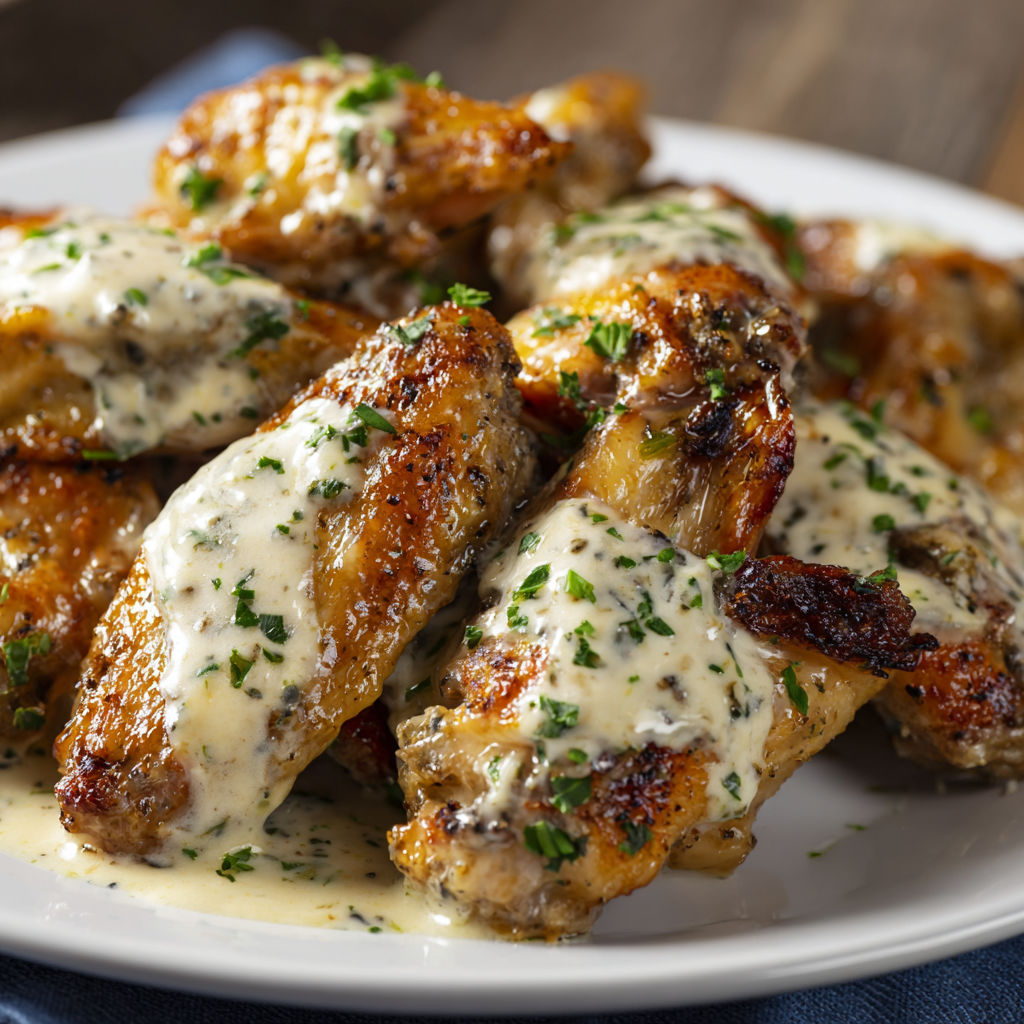
Alfredo chicken wings pair oven-baked chicken with a warm garlic and Parmesan cream sauce. Cook the wings first, check their internal temperature, and coat them only when the sauce is ready. This order keeps the dairy sauce out of the hot roasting pan, where it could scorch. It also makes the dish easier to manage: the oven handles the chicken while a saucepan is used for the finishing sauce.
Separate wing flats and drumettes at the joint if needed and compare their size before arranging the tray. Three pounds can require more than one pan to avoid overlap. Read the seasoned-salt label: its salt content varies, so the listed tablespoon is a flavor starting point rather than a brand-independent guarantee. Use Parmesan that can melt into the sauce, and add it gradually after reducing the heat. A powdery shelf-stable cheese and freshly grated cheese may behave differently.
Six Ingredients and What to Check
- 3 pounds chicken wings: Use thawed wings of reasonably similar size; separated flats and drumettes are easier to arrange and check.
- 1 tablespoon seasoned salt: Measure the total before seasoning. Different blends have different salt levels and may already contain garlic or paprika.
- 1/4 cup salted butter: This equals four tablespoons. Melt gently so the sauce base does not brown.
- 1 cup heavy cream: Have it measured before starting the sauce; a lower-fat milk is not an identical replacement.
- 1 tablespoon minced garlic: Use evenly minced pieces so the flavor spreads through the sauce rather than concentrating in large chunks.
- 1 1/4 cups grated Parmesan: Grate finely for easier melting and add gradually. Volume measures vary with how tightly the cheese is packed.
Bake the Wings, Then Make the Sauce
- Set up the tray:
- Heat the oven to 375°F. Use a large rimmed baking sheet with a lightly greased surface. Keep any liner compatible with both baking and broiling; do not place ordinary parchment beneath the broiler.
- Dry and season:
- Pat the thawed wings dry with paper towels, discard the towels, and wash hands. Coat the wings evenly with the measured seasoned salt. Leave gaps instead of stacking pieces.
- Roast and check:
- Bake for about an hour, turning if needed for even color. Begin checking before the hour is up. Measure multiple pieces and continue cooking until every checked piece reaches at least 165°F.
- Brown only if needed:
- Use the broiler briefly for extra color, watching continuously. Turn with tongs if the second side needs browning. Broiling adds color; it does not replace the internal-temperature check.
- Build the cream sauce:
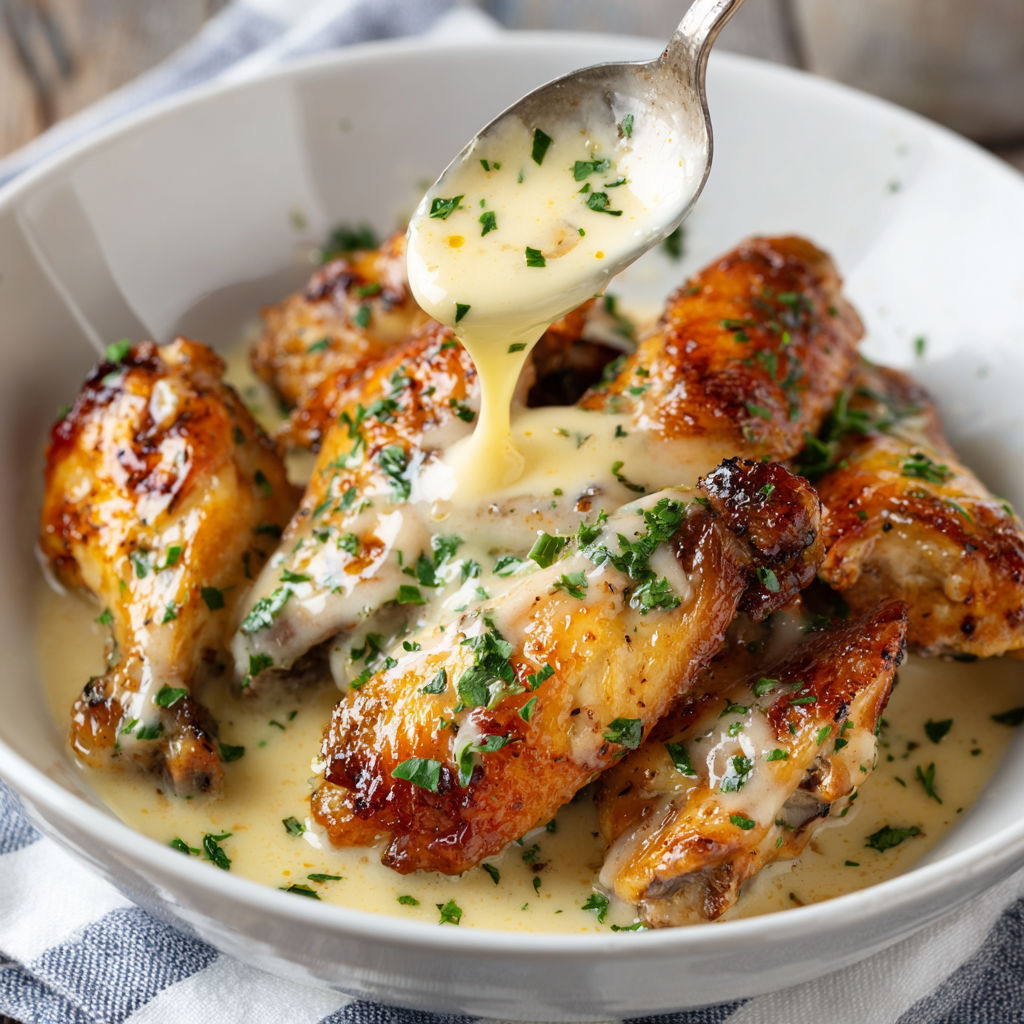
- Melt butter gently, add cream and garlic, and heat until small bubbles form. Reduce heat and stir in Parmesan in small additions. Remove from heat once smooth and keep it warm only briefly.
- Coat just before serving:
- Move the cooked wings to a clean bowl. Add sauce in stages and fold with tongs, checking that the coating reaches both sides. Serve immediately, or offer the sauce separately.
A baking time is a planning estimate, not a safety check. Size, starting temperature, pan crowding, and oven performance all affect how long wings take. The USDA guidance for chicken wings calls for at least 165°F, measured in the thickest meat without touching bone. Check several of the largest pieces and spots across the tray. Return any pieces below that temperature to the oven even if their skin already looks brown.
Seasoning Changes and Substitutions
Seasoned salt varies substantially by brand, so read the label before adding extra garlic powder, paprika, or salt. This formula already includes salted butter and Parmesan. You can choose unsalted butter when controlling salt, but do not promise an exact sodium reduction without calculating the actual products. Swapping all the heavy cream for milk produces a thinner sauce and may require a different method; it is not a direct equivalent in this recipe.
Making Ahead and Storing Leftovers
For advance preparation, refrigerate cooked wings and sauce separately so you can reheat each with better control. Follow USDA leftover handling guidance: refrigerate promptly in shallow containers, within two hours, or within one hour above 90°F, and use within three to four days. Reheat wings to 165°F before serving. Sauce may separate after refrigeration or freezing, so freshly prepared sauce generally gives a more predictable texture for guests.
Sides for Creamy Chicken Wings
A crunchy or acidic side offsets the thick coating. Try cucumber slices, a leafy salad, or cowboy caviar salad served in a separate bowl. For a fuller meal, fried potatoes and onions provide a skillet side while the wings bake. Leave room on the plate rather than pouring surplus sauce over everything; diners can add more according to taste.
Allergens, Salt, and Serving Size
Butter, cream, and Parmesan make milk an inherent allergen in this dish. Check seasoned salt and packaged cheese labels for other ingredients. No exact calorie, protein, or sodium figures are presented because the edible yield varies with the ratio of bones to meat and the amount of sauce served. Divide the wings into four main-course portions or smaller appetizer portions according to the rest of the meal, without treating that division as a nutrition calculation.
Fixing Thin, Thick, or Grainy Sauce
Diagnose the sauce before changing it. A smooth sauce that is too thick needs a small liquid adjustment off the heat; a thin cream base can be reduced gently before cheese is added. An oily sauce with visible curds is a separation problem, not a request for harder boiling. Stop heating and stir gently, but do not promise that more cream will restore every broken sauce. Keep the wings separate until the sauce is acceptable so one saucepan problem does not soak the entire tray.
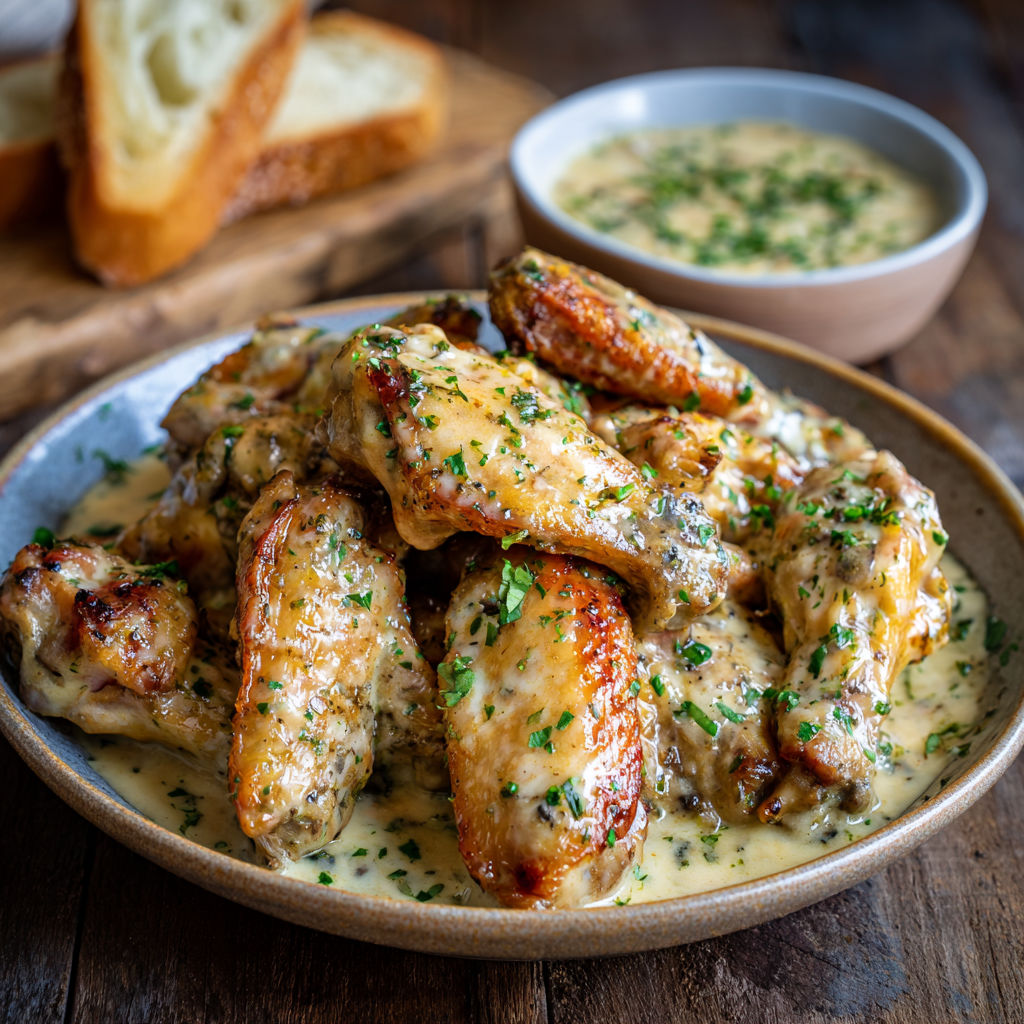
For a crispness-first serving, offer the sauce alongside; for fully coated wings, toss only the amount being eaten immediately. Cream necessarily moistens the skin, so “crispy for hours” would be an unreliable promise. Arrange cowboy caviar separately so its dressing cannot wet the chicken. Potato packets are another side, but their grill schedule should be planned independently rather than forcing both dishes into one timing window.
Questions About This Recipe
- How do I keep a second batch from getting soggy?
Keep its sauce separate until serving and use safe hot-holding practices. Do not pile freshly cooked wings into a deep, tightly covered bowl if crisp texture is the priority.
- Can vigorous boiling fix a grainy Parmesan sauce?
No reliable fix is guaranteed. Remove it from heat and reassess; harder boiling may worsen separation.
- → Why did my Alfredo sauce turn grainy?
Excessive heat, coarse cheese, or a cheese product that does not melt readily can contribute. Lower the heat and add cheese gradually. Once fully separated, the original smooth texture may not return.
- → Can these wings be cooked ahead?
Cook them completely, refrigerate promptly, and reheat safely before serving. Store sauce separately if possible. The coating will be softer after reheating, so make fresh sauce when texture is the priority.
- → How do I keep coated wings crisp?
A wet sauce inevitably softens the skin. Coat immediately before eating, or serve the warm sauce as a dip. Holding sauced wings for a long period changes their texture.