
 Pin
Pin
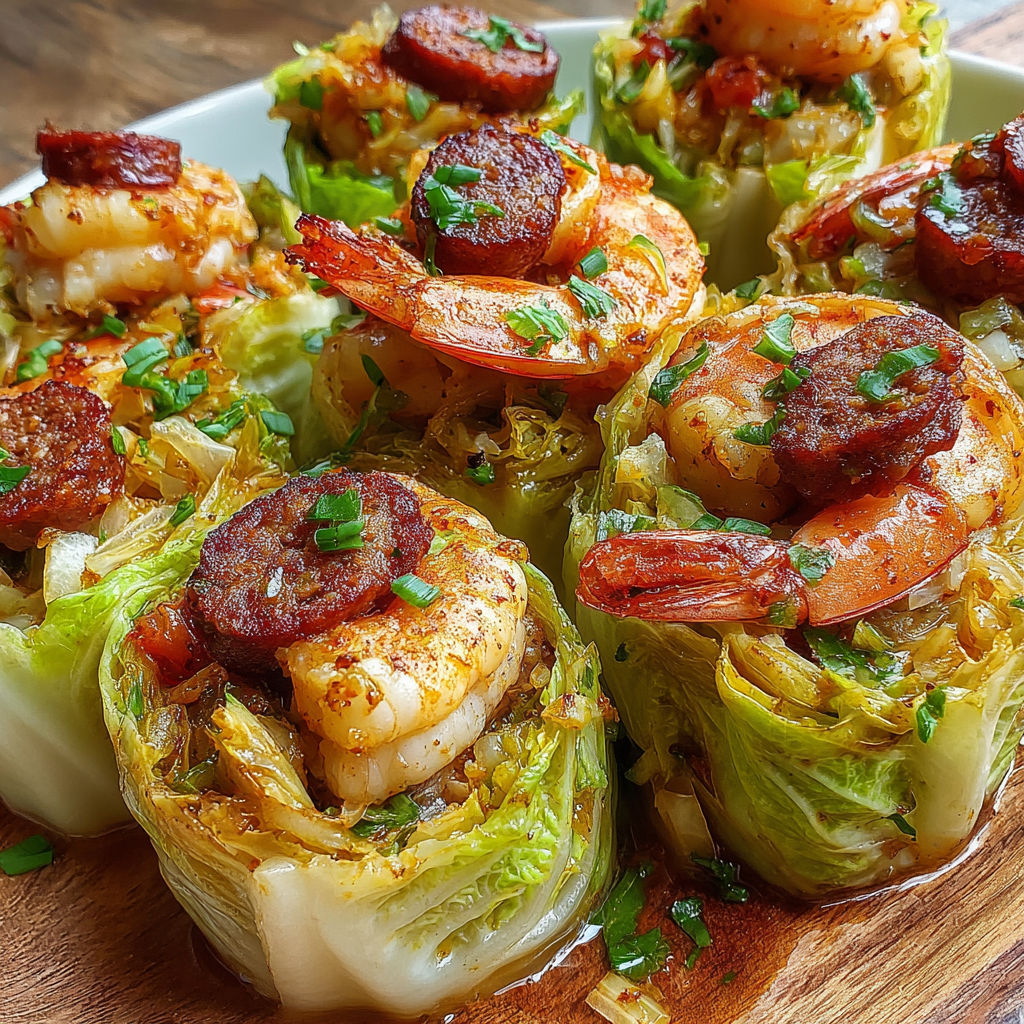
Garlic shrimp and sausage cabbage cups combine roasted cabbage with a skillet filling of smoked sausage, shrimp, peppers, onion, and butter. The practical order is to soften the cabbage first and cook the shrimp near the end. Fill the hot bowls and serve, rather than baking already cooked shrimp for another long interval. This version uses one cabbage cut into two shared bowls, with the filling divided into about six portions at the table.
The “cups” here are two hollowed cabbage halves shared at the table, not six separate leaves. One head does not provide six equally sized edible bowls. Keep enough cabbage wall to support the filling, but do not force all the filling into a small cavity. If your head is small, serve the excess hot filling beside the roasted halves and divide the meal at the table. The six-portion estimate refers to the whole recipe, not the number of cabbage vessels.
Ingredients and the cabbage-bowl yield
- One head of green cabbage: Cut it in half through the core. Remove enough center leaves to make two bowls while leaving a supported base.
- One pound peeled, deveined shrimp: Similar-sized shrimp are easier to cook evenly. Thaw frozen shrimp before beginning and pat away surface moisture.
- Twelve ounces fully cooked smoked sausage: Slice into bite-sized pieces. The package should explicitly indicate whether it is ready to eat.
- One diced yellow onion: Small, even pieces soften more consistently alongside the peppers than large wedges.
- One diced red bell pepper: Remove the stem and seeds before measuring it into the skillet.
- One diced green bell pepper: Keep its pieces similar to the red pepper so neither batch needs much extra cooking.
- Four to five garlic cloves: Mince them before heating the skillet; garlic is added after the other vegetables soften.
- Four tablespoons unsalted butter: Melt this into the vegetables shortly before the shrimp go in.
- Olive oil as needed: Brush a thin film over the cabbage and use a little for the skillet only if necessary.
- One to two tablespoons Cajun seasoning: Begin with the lower amount, especially with a salted or particularly hot blend.
- Salt and black pepper: Taste the cooked filling before adding salt because the sausage and seasoning already contribute it.
- Optional red pepper flakes: Offer these separately when people prefer different heat levels.
- One cup chicken broth: Pour around the cabbage, rather than filling its hollowed centers. Lower-sodium broth gives more seasoning control.
- Parsley and lemon juice, optional: Add at serving time. Lemon changes the flavor balance but does not replace proper cooking.
A workable cooking sequence
- Shape two supported bowls
- Heat the oven to 400°F. Remove damaged outer cabbage leaves and halve the head through the core on a stable board. Carefully remove some central leaves, retaining enough core and surrounding layers to support each half. Save the removed cabbage for another meal. Brush exposed surfaces with oil and season lightly.
- Roast until the ribs soften
- Set the halves cut-side up in a baking dish and pour the broth around them. Begin checking after 25 minutes, but allow longer for a dense or large head. A knife should enter the thick leaf layers without hard resistance. Cover loosely if edges brown before that point.
- Brown the sausage
- While the cabbage cooks, brown the fully cooked sausage in a large skillet over medium-high heat, turning as needed. Transfer it to a clean plate. Reduce heat if the pan develops dark, bitter-looking deposits rather than brown cooking juices.
- Soften the vegetables
- Cook onion and both peppers in the same skillet, adding a small amount of oil if the pan is dry. Stir until the onion loses its raw crunch. Add the garlic last and stir briefly so it becomes aromatic without scorching.
- Cook the shrimp near serving time
- Once the cabbage is tender, melt the butter with the vegetables. Add the drained shrimp and the lower amount of Cajun seasoning. Turn and stir until the flesh is opaque and pearly throughout. Timing varies with size, so inspect the thickest shrimp rather than relying on color at the edges.
- Combine and fill
- Return the sausage to the skillet and stir until hot. Taste a cooked piece of vegetable before adjusting seasoning. Spoon filling into the hot cabbage halves; put excess filling alongside or serve it separately. A further ten-minute bake is unnecessary when both parts are freshly cooked and hot.
- Portion at the table
- Finish with parsley or lemon if wanted. Cut each cabbage half into smaller portions and divide the filling among the plates. Use a wide spatula to support the softened leaves; the bowls are a serving format, not rigid individual containers.
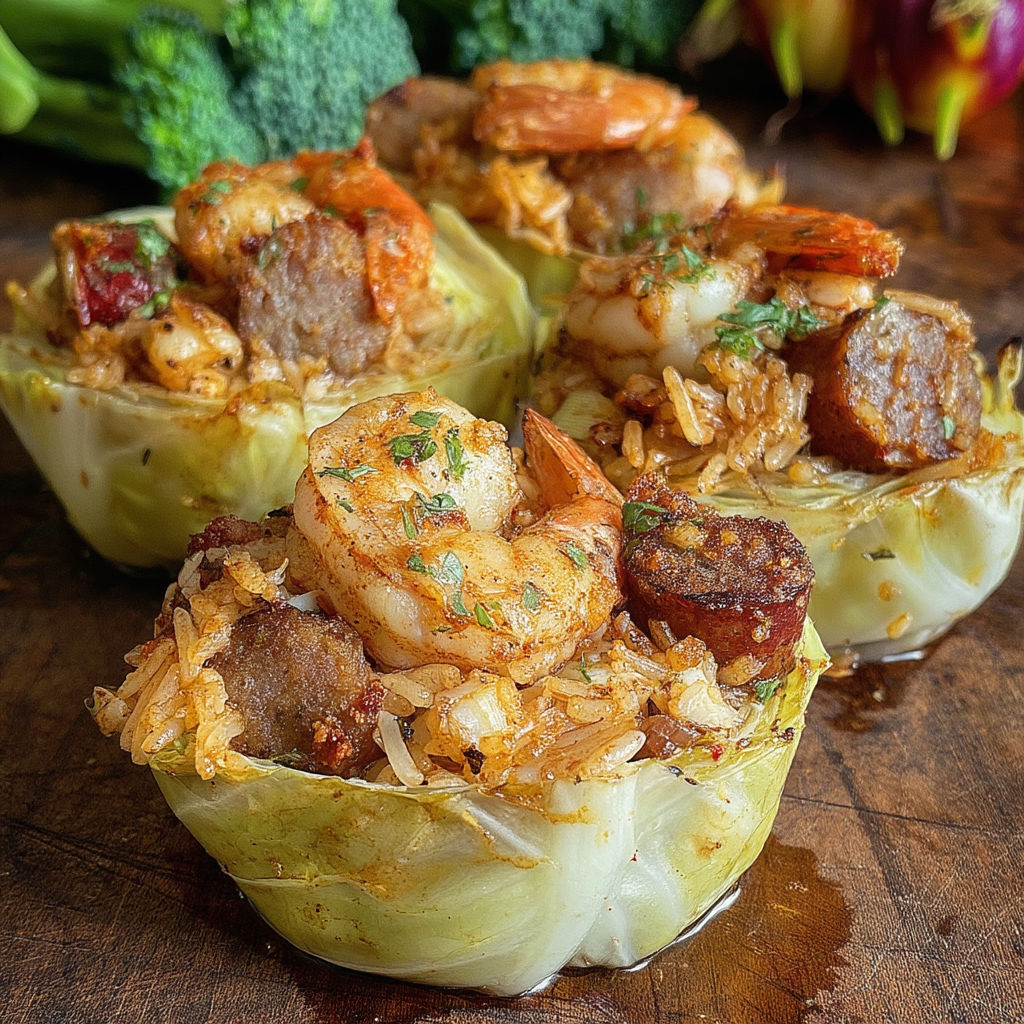
Cabbage and shrimp need very different amounts of cooking. A thick cabbage rib may still resist a knife when the outer leaves are browned, while shrimp can go from translucent to firm quite quickly. Do not start the shrimp merely because the original roasting estimate has elapsed. Test the cabbage first. Once its thickest accessible leaf layers are tender, keep it warm while completing the filling. That sequence makes the dish easier to coordinate without repeatedly reheating seafood.
Sausage choices and substitutions
Use a fully cooked smoked sausage so the skillet step is chiefly about browning and heating. Andouille often brings more spice than a mild kielbasa, but check the specific package rather than relying on the name. A raw sausage needs separate cooking according to its label and safe temperature requirements before joining this filling. For a meat-free interpretation, mushrooms and plant-based sausage change the recipe substantially; butter and chicken broth would also need substitutions. It is not a one-ingredient conversion.
Cooling, storing, and reheating
Divide leftovers into shallow containers promptly, separating a large cabbage bowl into smaller pieces so it cools more readily. Refrigerate within two hours, or one hour when the surroundings exceed 90°F. Keep at 40°F or below and use within three to four days, following USDA leftover guidance. Reheat only the portion needed to 165°F. A covered microwave-safe container or covered oven dish helps retain moisture; check several spots rather than assigning a fixed reheating time.
Serving the shared cabbage bowls
The cabbage supplies a vegetable base, but rice or potatoes can turn small portions into a more substantial dinner. Spoon a little of the savory skillet liquid over plain rice, and keep the lemon on the table for individual use. For a separate potato side, see fried potatoes and onions. If planning a second dinner with a similar seasoning profile, Cajun chicken with cornbread topping uses a different oven-baked format.
Allergens and nutrition information
This recipe contains shrimp and butter, so it is not suitable for shellfish or milk allergies as written. Smoked sausage, broth, and seasoning blends may introduce other allergens. Cabbage replacing a grain does not establish a verified low-carbohydrate or gluten-free nutrition claim for the entire meal. No reliable per-serving nutrient calculation is available here. Anyone tracking sodium should compare the sausage, broth, and seasoning labels because all three can contribute salt before extra seasoning is added.
Solving texture and seasoning problems
Finish the cabbage before the shrimp. Test its thick wall with a knife, then keep the cooked halves hot while finishing the skillet filling. Use sausage labeled fully cooked; raw sausage requires a separate safe cooking method and cannot be substituted by appearance. Add shrimp late, cook through, and fill the bowls for immediate service. If the filling is ready first, do not put cooked shrimp through a prolonged second bake simply to soften hard cabbage.
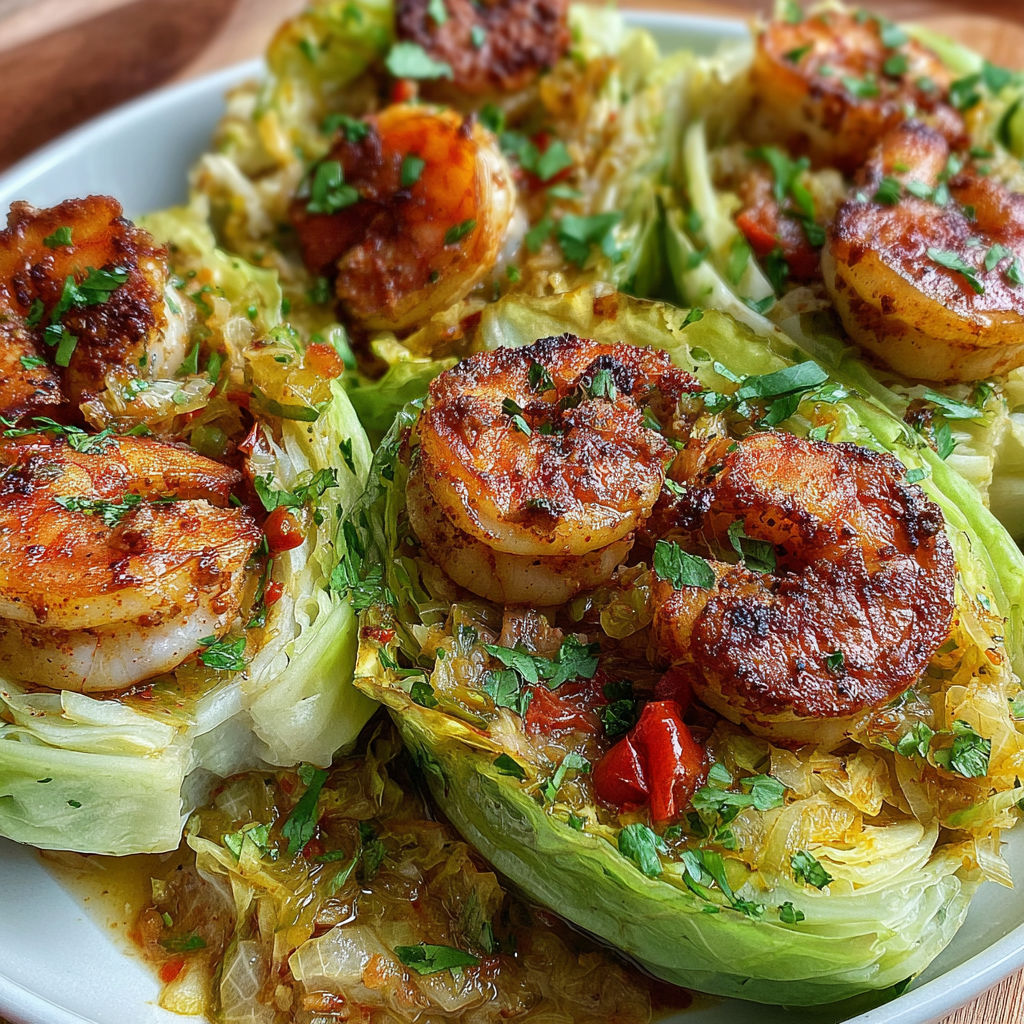
For a steadier serving, set a cabbage half in a shallow bowl or rimmed plate and spoon portions from it rather than asking diners to pick up the entire half. Cut through the roasted wall with a knife so everyone receives cabbage as well as filling. Skillet potatoes make a separate side; baked Parmesan shrimp is another meal option, not an interchangeable filling because its coating would soften in the bowl.
Common Questions About This Recipe
- What if the filling does not fit in the cabbage?
Serve the excess alongside. Do not over-hollow the cabbage until its wall collapses or treat the photograph as a reliable capacity measurement.
- Can I roast the filled bowls after cooking the shrimp?
The selected method serves the hot cooked filling in already tender cabbage. A long second bake risks overcooking shrimp and is not part of this version.
- → Can the cabbage be prepared ahead?
Roast it ahead and refrigerate promptly, then reheat to 165°F before adding freshly cooked filling. Keep the shrimp step close to serving time.
- → Must the filled bowls go back into the oven?
Not when the cabbage and filling are freshly cooked and hot. The recipe deliberately avoids a second prolonged bake of cooked shrimp.
- → What if the bowls collapse?
Serve the tender cabbage in wide bowls with filling spooned over it. Structural collapse changes presentation, not the intended combination of ingredients.