
 Pin
Pin
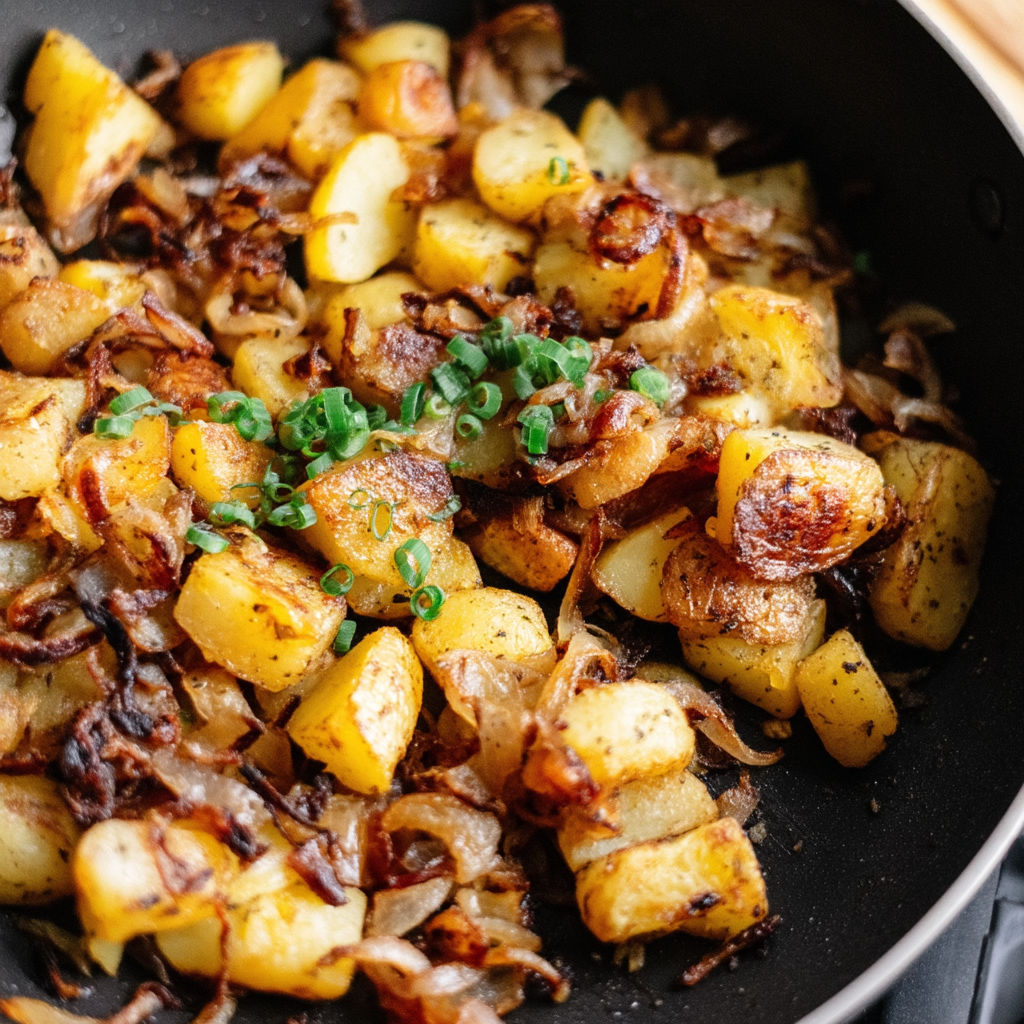
Fried potatoes and onions are a stovetop side made by cooking sliced potatoes with onion in a shallow layer of oil. The potatoes should be tender in the middle with browned areas where they touch the skillet; the onion should be soft and sweet-smelling, without black, bitter edges. “Grandma-style” describes the familiar preparation here. It is not a claim that this recipe comes from a documented family tradition or personal kitchen memory.
The flat base of the skillet determines capacity. Before adding oil, arrange some dry potato slices in the cold pan to judge how much fits without a deep mound, then remove them. Two pounds may require two skillets or sequential batches. For a half batch, use one pound of potatoes and half the listed onion and seasoning; divide the oil between batches while maintaining a thin film. Do not double the cooking time merely because you doubled the ingredient weight.
The Five Ingredients
- 2 tablespoons vegetable oil: Use the listed total for one batch, or divide it between two batches. Spread it over the cooking surface.
- 2 pounds potatoes: Peel Yukon Gold or Russet potatoes and cut into even slices about 1/4 inch thick. Dry the surfaces before frying.
- 1 large Vidalia onion: Peel and slice into strips of similar thickness. Separate the layers so they can spread between the potatoes.
- 1/2 teaspoon salt: Start with the measured quantity. Different crystal sizes can change how much a teaspoon holds.
- 1/2 teaspoon ground black pepper: Mix through the potatoes and onion; taste at the end before adding more seasoning.
A Skillet Method You Can Adjust by Sight
- Prepare and dry the vegetables:
- Follow FDA produce-cleaning guidance: scrub potatoes under running water before peeling. Cut evenly, then pat the slices dry. Water clinging to their surfaces can cause splattering when they meet hot oil.
- Warm the pan moderately:
- Heat the oil over medium heat until it spreads readily and looks lightly shimmering. If it smokes, lower the heat and allow the pan to settle before adding food.
- Spread, season, and cook:
- Add potatoes and onion carefully, season, and turn to coat. Spread across the skillet. Cook in batches if necessary; a thick mound will steam more than it browns.
- Turn in sections:
- Leave the mixture undisturbed for several minutes, then lift and turn sections with a spatula. Reassess the heat each time so onion does not burn while potatoes soften.
- Check tenderness and serve:
- Start checking around 20 minutes. Pierce the thickest slices; continue as needed until no hard center remains. Serve promptly rather than holding in a covered bowl.
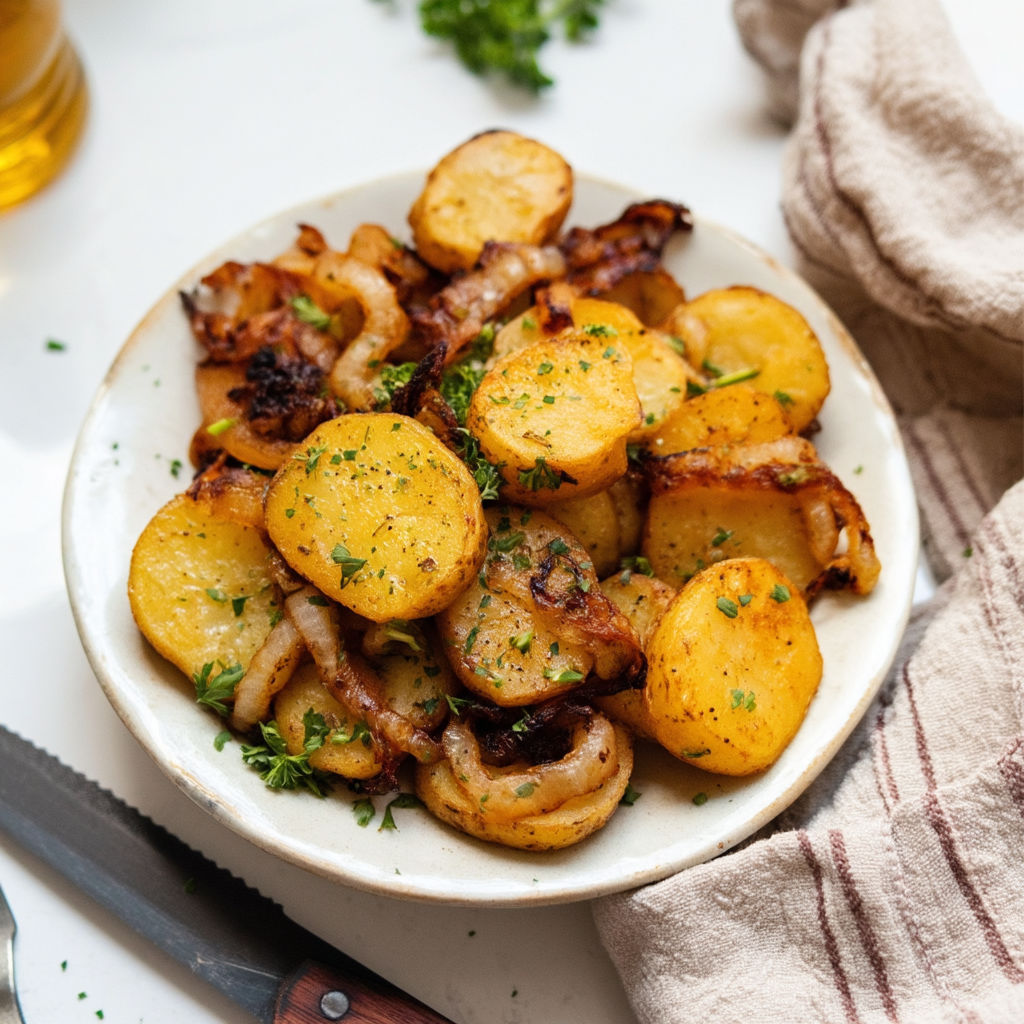
Choose an even slice thickness before heating the pan. A target of about one-quarter inch offers enough substance to turn without breaking while remaining manageable for skillet cooking. Thin ends brown faster, and thick pieces may stay firm after their neighbors are ready. If a potato is very large, halve it lengthwise before slicing so the pieces are easier to turn. A mandoline is optional; use its guard if you choose one.
Potato Choices and Simple Variations
Yukon Gold potatoes generally give slices that hold together, while Russets tend toward a fluffier interior and can break more easily as they soften. Either can be used with the listed quantities. A yellow onion can replace the Vidalia when a sweet onion is unavailable. Add paprika or chopped herbs sparingly after the potatoes are nearly done, so you can judge the existing seasoning before adding another flavor. Sweet potatoes behave differently and should not be assigned the same timing automatically.
Storing and Reheating Cooked Potatoes
Transfer leftovers into a shallow container and refrigerate promptly. Follow USDA storage guidance: within two hours of cooking, or one hour when the surroundings exceed 90°F, and use within three to four days. Reheat a small portion in a skillet, spreading it out so steam can escape, and check for 165°F throughout under USDA reheating guidance. Reheated potatoes can regain some surface browning, but they will not necessarily match their just-cooked texture.
Breakfast and Dinner Pairings
For breakfast, serve the potatoes beside eggs cooked to your preference using appropriate food-safety guidance, with sliced tomatoes or fruit. At dinner, they can sit beside roasted chicken or liver and onions if you enjoy that combination. For a chicken option with a rich sauce, see Alfredo chicken wings. Keep the potatoes on the side so their browned surfaces are not immediately softened by sauce.
Dietary Details and Portion Planning
The basic ingredients contain no deliberate dairy or meat additions. Check the oil and any added seasoning for suitability if cooking for someone with an allergy or a specific dietary requirement. Four servings means each starts with roughly half a pound of raw potato, before cooking losses and onion are considered. Exact calories and nutrient values are not supplied because the finished yield and amount of oil left in the skillet have not been measured.
What to Do When Potatoes Stick or Stay Firm
If onions are browning quickly but a knife still meets a firm potato center, lower the heat and lift the darkest onion pieces onto a clean plate. Continue cooking the potatoes, turning gently, and return the onions at the end. If the whole pan is wet and pale, separate the mixture into shallower batches; more burner heat alone can scorch the bottom while the top steams. Sticking, burning and undercooking are different problems and should not all receive the same “cook longer” answer.
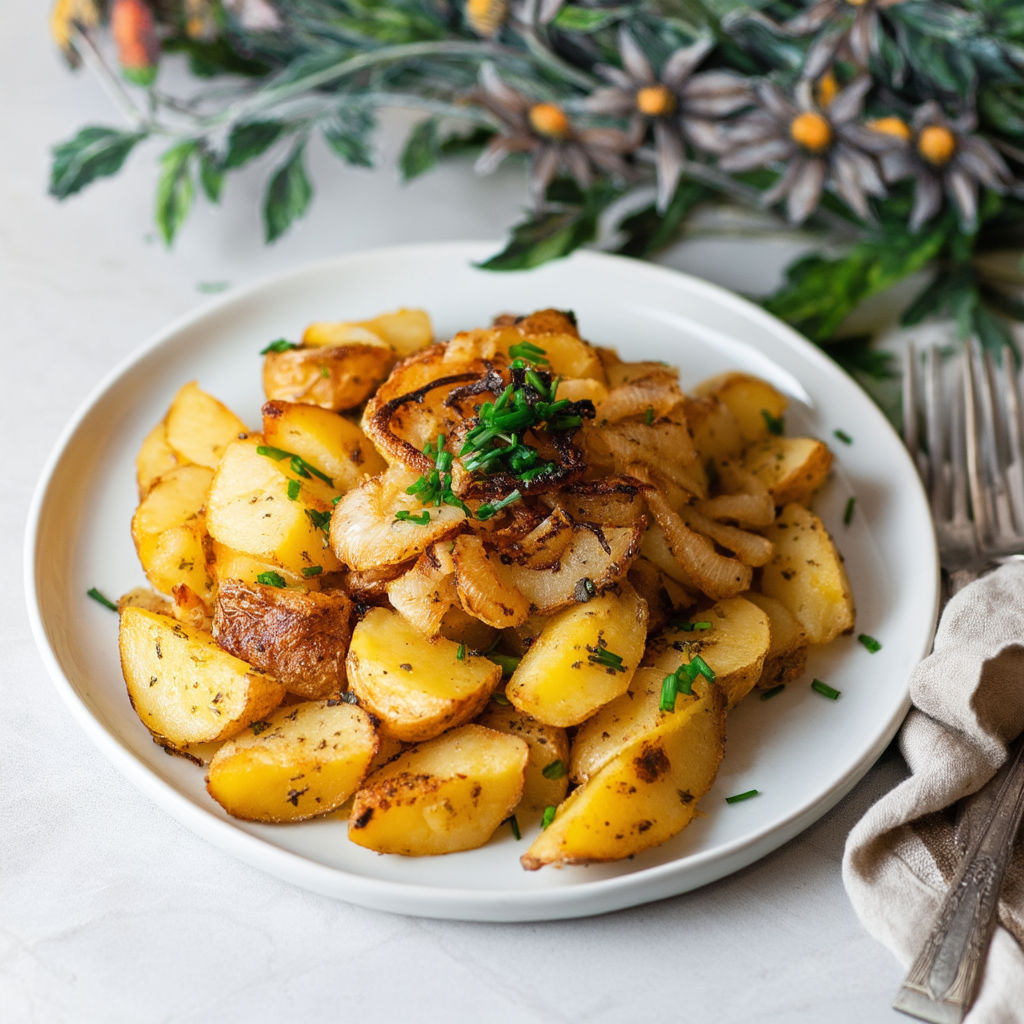
Cut the slices close to 1/4 inch thick so tenderness checks are comparable. Judge several of the thickest pieces, not just a browned edge. A short covered stage can soften potatoes, but remove the lid for the final browning and expect less crispness if moisture remains trapped. This recipe has not been tested across pan sizes. For another cooking method use foil-packet potatoes; for a main dish alongside the skillet, use beef liver and onions.
Questions About This Recipe
- Can I cook four pounds in the same skillet?
Not simply by extending the time. A deeper pile changes moisture loss and contact with the pan. Use additional cooking surface or work in batches.
- Why remove the onion before the potatoes finish?
Onion pieces may soften and brown faster than thick potato slices. Temporarily removing them lets you finish the potatoes without turning the onions bitter.
- → Can I change the oil?
A cooking oil suitable for skillet heat can be used. Consider its flavor and the needs of the people eating the dish, and avoid letting any oil smoke.
- → Why are the potatoes pale instead of browned?
They may be crowded, still wet, or being turned too often. Spread them out and allow contact with the pan between turns, reducing the batch size if necessary.
- → Do the onions have to be caramelized?
No. The aim is softened onion with some golden edges. Deeply caramelized onions require a different, longer process; blackened edges are not the target here.
- → Can I prepare the potatoes in advance?
For the best texture, cook shortly before eating. You can also fully cook and promptly refrigerate the dish, then reheat safely. Do not leave cooked potatoes at room temperature for later service.