
 Pin
Pin
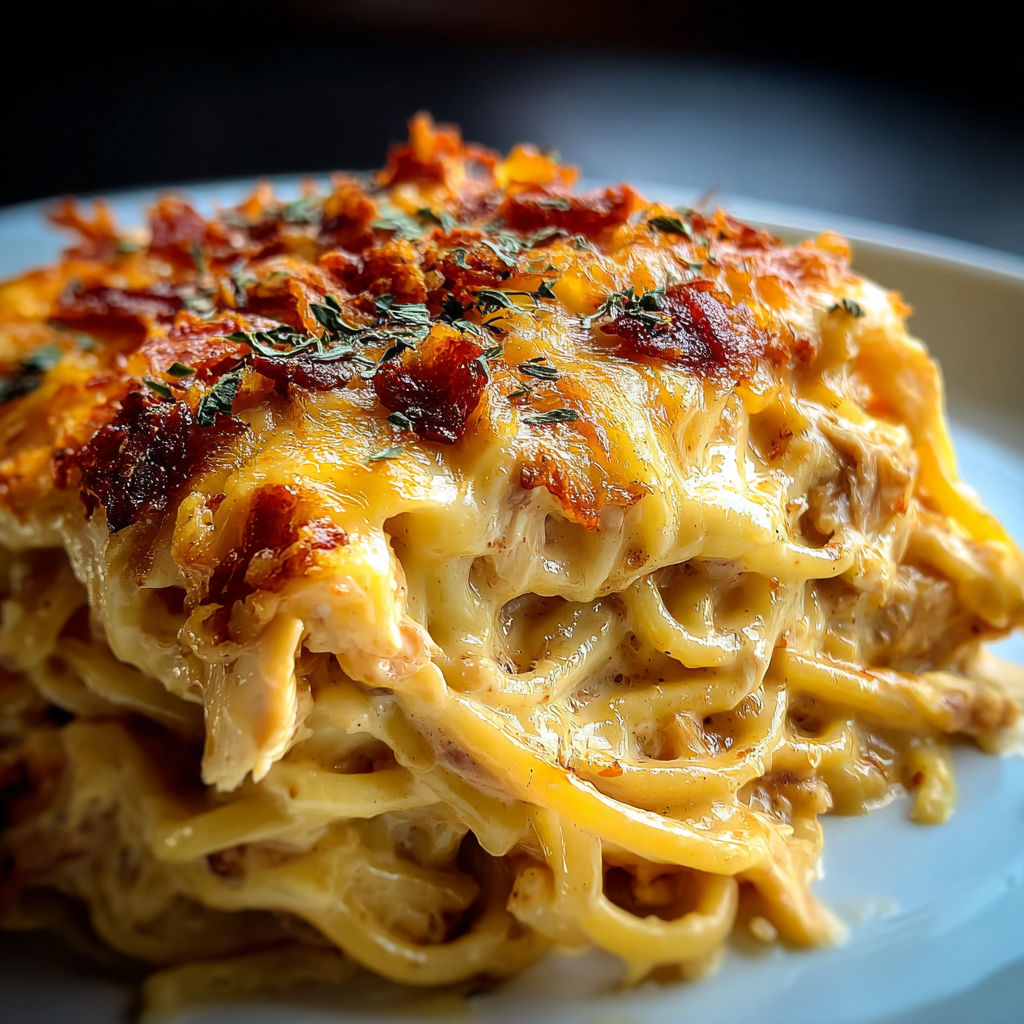
Cooked chicken and al dente spaghetti are mixed with condensed chicken soup, peppers and cheddar before baking. Cook the chicken fully before assembling the casserole. The soup is used undiluted, with a little reserved pasta water available only if the mixture needs loosening.
One option is to poach the breasts gently in water until their thickest parts reach 165°F, then shred on a clean board. This avoids relying on a dry pan when the ingredient list provides no frying fat. Separately cooked chicken can also be used, keeping its equivalent amount consistent.
Ingredient amounts and preparation
- Set out: 3 to 4 boneless, skinless chicken breasts (approximately 1.5 pounds)
- Set out: 8 ounces dry spaghetti
- Set out: 2 cups shredded sharp cheddar cheese
- Set out: 1 cup chopped fresh bell peppers
- Set out: 1 can (10.5 ounces) cream of chicken soup
- Set out: 1 teaspoon paprika
- Set out: 1/2 teaspoon cayenne pepper
- Set out: 1 teaspoon garlic powder
- Set out: 1/4 cup sliced green onions
Cooking sequence and doneness
- Stage 1
- Cook the chicken separately, for example by gently poaching in water until the thickest parts reach 165°F.
- Stage 2
- Rest briefly and shred on a clean board. Heat the oven to 350°F and lightly grease a casserole dish.
- Stage 3
- Boil spaghetti to al dente, reserve a little cooking water and drain. Finely chop the peppers and soften separately if a tender texture is preferred.
- Stage 4
- Mix the chicken, spaghetti, condensed soup, peppers, paprika, cayenne, garlic powder and one cup cheddar.
- Stage 5
- Loosen with a small splash of pasta water only if needed to coat the noodles. Spread evenly in the dish and add the remaining cup of cheddar.
- Stage 6
- Bake about twenty-five to thirty minutes, continuing until the center reaches 165°F. Rest five minutes and garnish with the green onions.
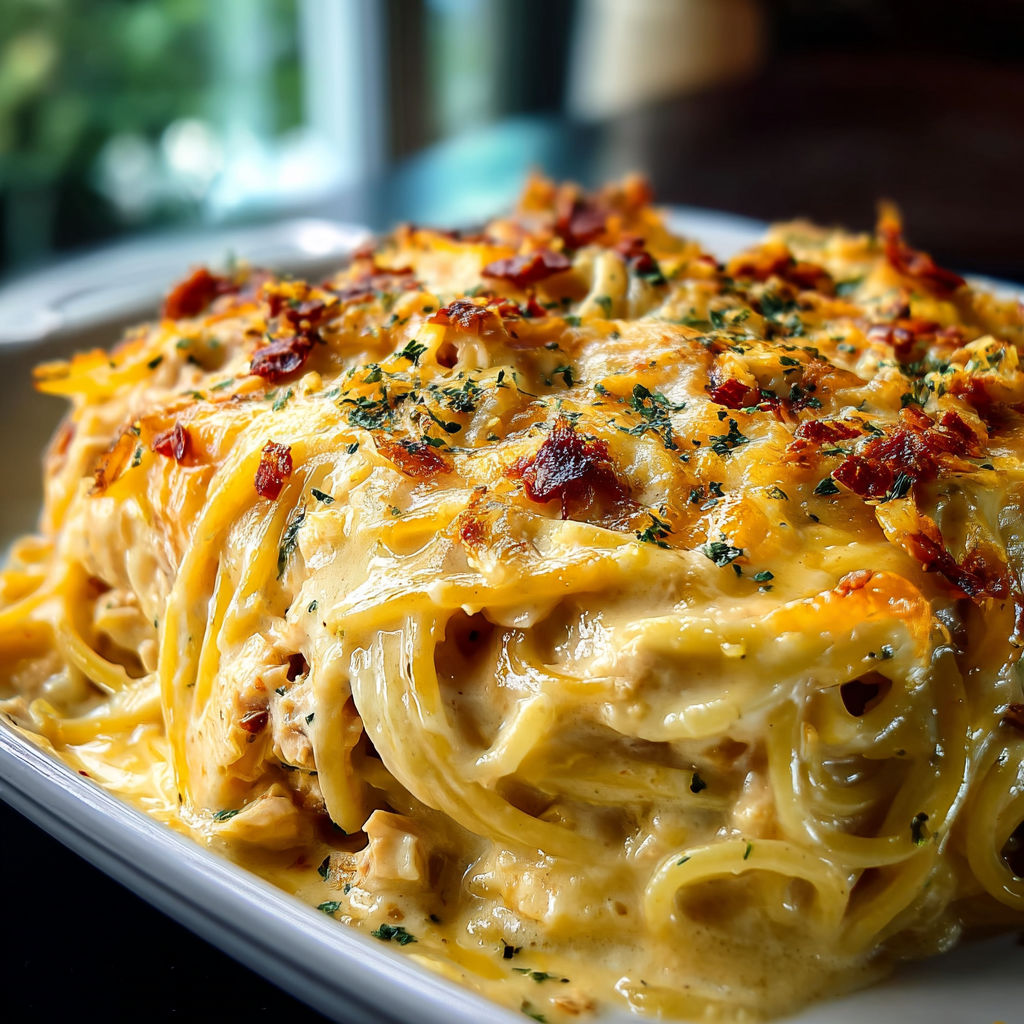
Mix one cup into the chicken and spaghetti and reserve the other cup for the surface. The final oven stage melts both portions through the dish. Do not add all the cheese to the filling and then assume an extra unmeasured topping.
Should the pepper be cooked first?
Finely chopped pepper can soften in the bake, but a softer texture is easier to achieve by steaming or briefly softening it beforehand. Thick raw chunks may remain crisp. Keep the pieces small enough to distribute through the spaghetti. Reserve pasta water before draining and add a small splash only if the condensed soup mixture is too stiff to coat the noodles. Do not dilute the soup with a full can of water. Toss gently so the noodles do not break into a paste.
How much heat does the seasoning add?
The half teaspoon of cayenne gives noticeable heat and can be reduced to preference. Taste the fully cooked filling before adding other seasoning. The soup and cheddar already contain salt, even though no extra salt is specified in the ingredient card.
Storage and serving later
Refrigerate perishable leftovers promptly in shallow containers at 40°F or below; do not wait for a large hot batch to cool completely on the counter. University of Illinois Extension’s leftover guidance gives a three-to-four-day refrigerated window and 165°F for reheating foods served hot. Keep cold salads and toppings chilled, and follow shorter product-label limits where applicable.
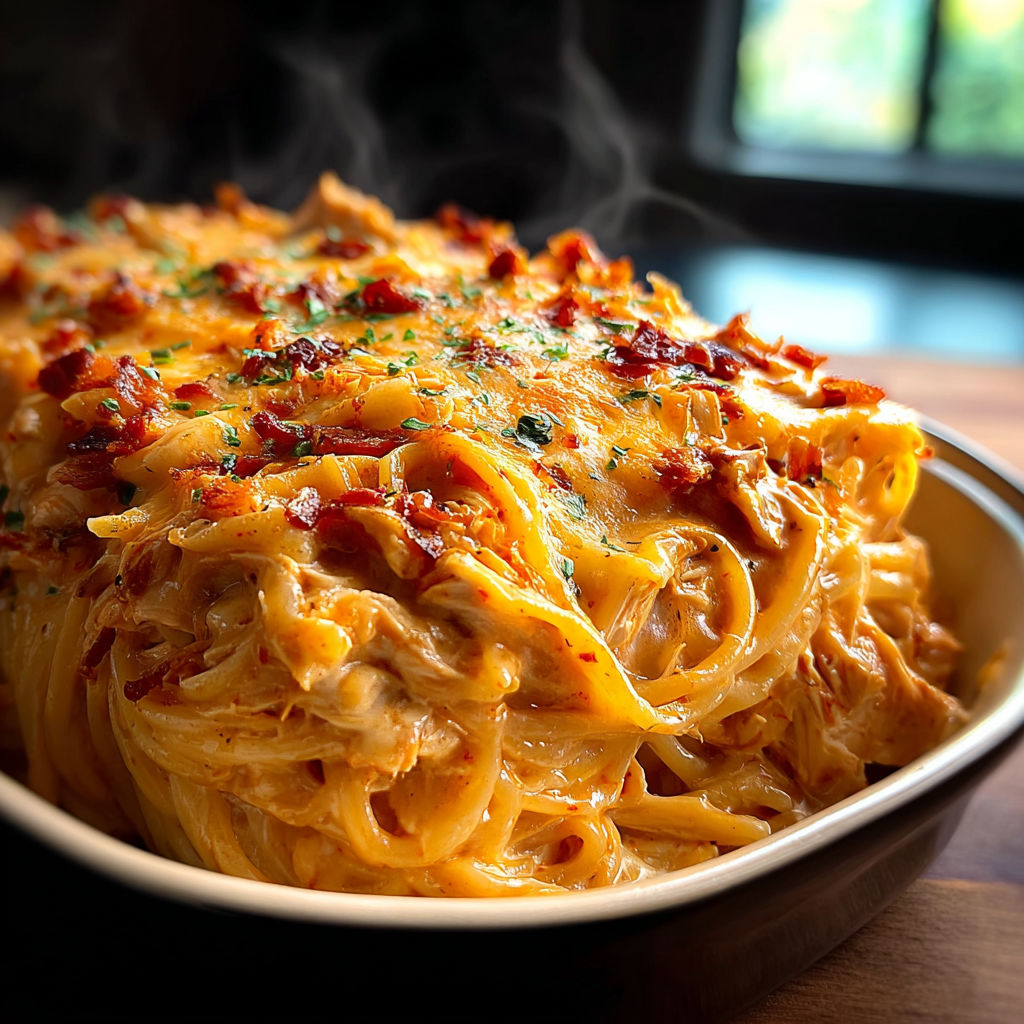
For another complete recipe, see Creamy Angel Chicken Pasta with Baked Chicken Breasts or BBQ Ranch Chicken Pasta Casserole. Each has its own ingredient quantities and cooking sequence; keep those measurements separate when choosing a meal. USDA’s temperature guidance specifies 165°F for poultry, including ground chicken and turkey. Thermometer placement guidance explains checking the thick center rather than relying on surface color.
Common Questions About This Recipe
- How can the chicken be cooked without sticking?
One option is to poach the breasts gently in water until their thickest parts reach 165°F, then shred on a clean board. This avoids relying on a dry pan when the ingredient list provides no frying fat.
- How is the cheese divided?
Mix one cup into the chicken and spaghetti and reserve the other cup for the surface. The final oven stage melts both portions through the dish.
- Should the pepper be cooked first?
Finely chopped pepper can soften in the bake, but a softer texture is easier to achieve by steaming or briefly softening it beforehand. Thick raw chunks may remain crisp.
- What if the filling is difficult to mix?
Reserve pasta water before draining and add a small splash only if the condensed soup mixture is too stiff to coat the noodles. Do not dilute the soup with a full can of water.
- How much heat does the seasoning add?
The half teaspoon of cayenne gives noticeable heat and can be reduced to preference. Taste the fully cooked filling before adding other seasoning.