
 Pin
Pin
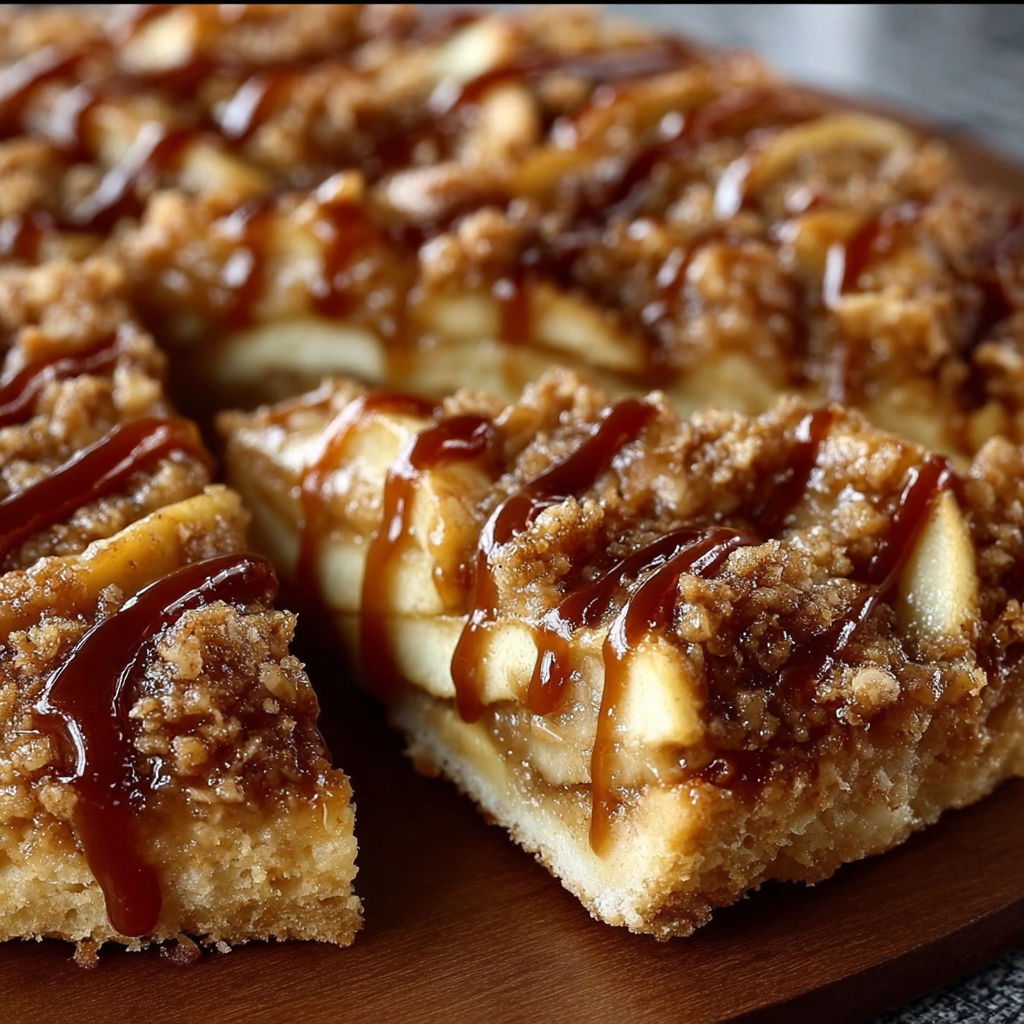
Apple crisp dessert pizza is a shallow pie-crust base covered with cinnamon apples, oat crumbs and caramel. It uses pastry, not yeast pizza dough. The important checks are underneath the crust, inside a thick apple slice and across the crumb topping. A golden surface cannot tell you whether the bottom is still pale or the apples retain a hard center.
The two flour quantities have different jobs: three tablespoons coat the apples, while half a cup belongs in the topping. Keep them in separate bowls. Four medium apples can vary substantially in usable weight, so spread them in a shallow, even layer rather than forcing a mound onto a small dough round. Use the size your single-crust dough can cover at about a quarter-inch thickness without tearing.
Keep filling and topping measures separate
- 1 single-crust pie dough
- 2/3 cup granulated sugar
- 3 tablespoons all-purpose flour
- 1 teaspoon ground cinnamon
- 4 medium baking apples, peeled and sliced into 1/2-inch wedges 1/2 cup all-purpose flour
- 1/3 cup packed brown sugar
- 1/3 cup old-fashioned rolled oats
- 1 teaspoon ground cinnamon
- 1/4 cup unsalted butter, softened 1/4 to 1/2 cup caramel topping or caramel apple dip
Assemble a shallow apple layer
- Stage 1
- Preheat to 375°F and prepare a pizza pan or rimmed baking sheet suitable for the dough. Roll the single pie crust to about 1/4-inch thickness, keeping the size within what the dough can cover without tearing.
- Stage 2
- Place it on the pan. Combine 2/3 cup sugar, 3 tablespoons flour and 1 teaspoon cinnamon in a mixing bowl.
- Stage 3
- Peel and core the apples, cut similar half-inch wedges, and toss with the sugar mixture. Arrange coated apples in a shallow, even layer over the pastry, leaving a small clear edge. Do not force excess fruit into a deep pile.
- Stage 4
- In a second bowl combine the topping’s half cup flour, brown sugar, oats and remaining cinnamon. Work softened butter into the topping until it forms coarse clumps rather than a smooth paste.
- Stage 5
- Distribute the topping over the fruit without packing it tightly. Bake about 35–40 minutes as a starting window.
- Stage 6
- Check that thick apple slices are tender, the underside is baked and the crumbs are golden; continue with a loose shield if needed. Let the fruit settle before cutting. Drizzle the measured caramel over the dessert or individual servings and use a broad server to lift slices.
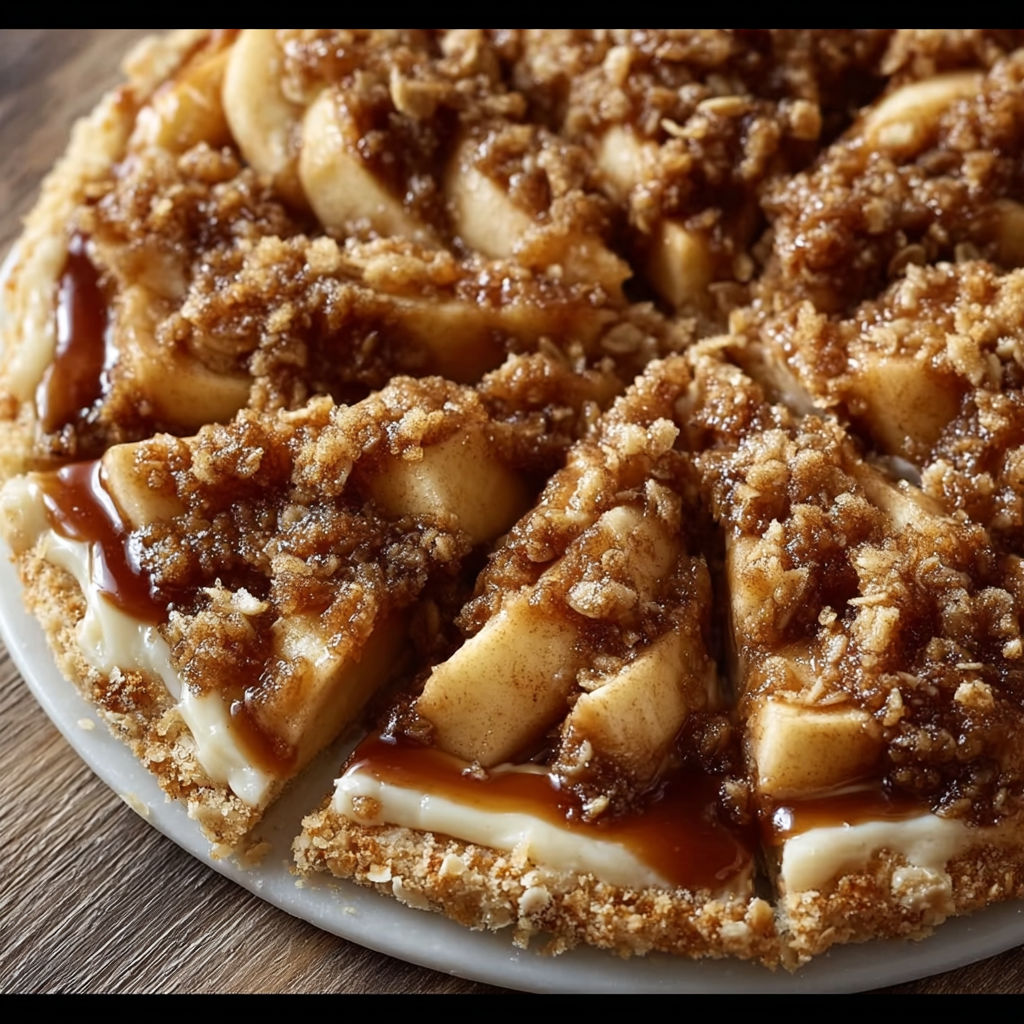
Half-inch apple wedges are substantial for a shallow dessert. Check one of the thickest pieces with a thin knife before removing the tray. King Arthur’s deeper apple pie also uses thick slices but has a much longer baking schedule; its timing is not transferable to this open pastry. If the topping colors first, shield it while checking the fruit and base.
Store the crust and topping thoughtfully
For the crispest contrast, serve soon after baking and add caramel to portions being eaten. Covered storage softens the pastry as moisture moves from the fruit into the base. Cool on a stable surface before packing, refrigerate any dairy accompaniments separately, and do not promise that freezing and reheating will recreate the first-day texture. A dry reheating tray helps keep the underside from sitting in collected condensation.
Slice according to the occasion
Choose the cutting pattern after seeing the baked size. Eight wedges and twelve wedges are different portions, not different recipe yields. Let the fruit settle before lifting a slice with a broad server. For another apple texture, apple crumb cake uses a butter-cake base; pumpkin cinnamon rolls are a separate yeast-dough project.
Substitutions change the bake
Puff pastry cannot simply inherit the pie dough’s rolling thickness and bake time; it rises differently under a wet topping. Likewise, swapping nuts for all the oats changes the crumb structure and introduces allergens. Keep the original formula when checking whether your oven and pan brown the base properly, then change one feature at a time in a later trial.
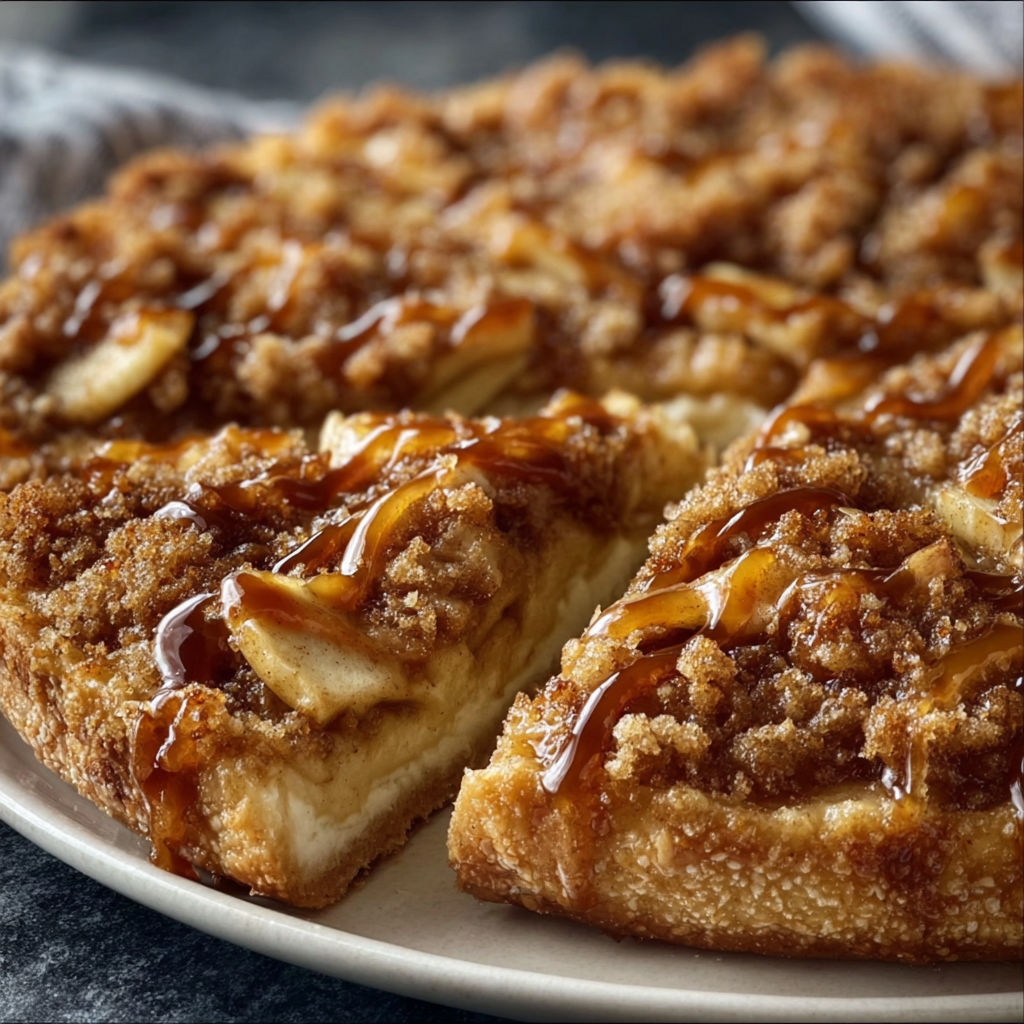
A pale underside with tender apples suggests the base received too little useful heat. Dark crumbs over hard apples suggest the surface ran ahead of the filling. A puddle after cutting may reflect fruit moisture or cutting while very hot. Identify which result occurred before changing sugar, flour and oven temperature together; multiple simultaneous changes make the next result difficult to interpret.
Common Questions About This Recipe
- Is the base pizza dough?
No. This formula uses one single-crust pie dough.
- What diameter should it be?
Use the diameter the dough can reach at the stated thickness. A fixed diameter is not established for every packaged or homemade crust.
- Can I use more apples?
Only if the dough area can still hold a shallow layer. A thick pile changes the baking problem.
- Why is the topping done before the apples?
The exposed crumbs heat differently from thick apple centers. Check both and shield the top if necessary.
- When should caramel be added?
After baking. Adding it to individual portions also avoids soaking the entire stored crust.