
 Pin
Pin
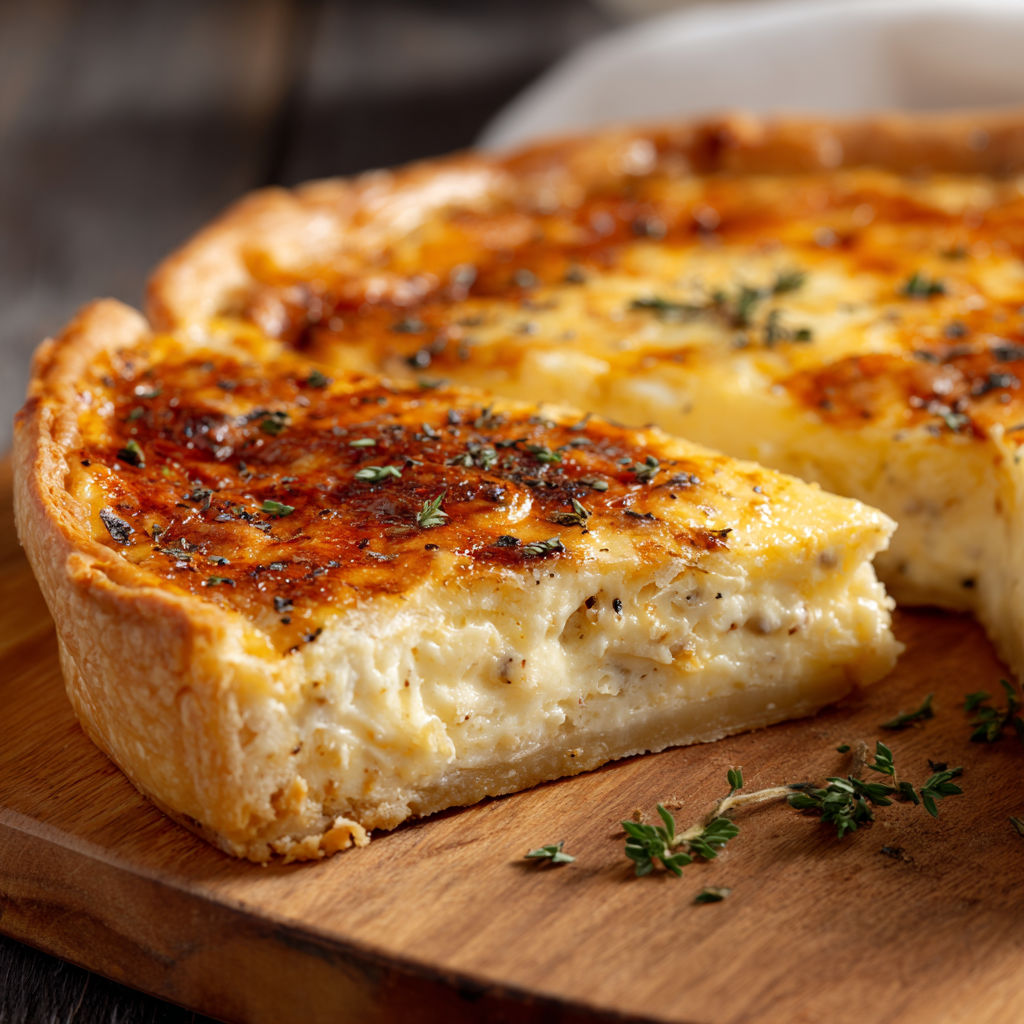
Old-school cheese and onion pie is a savory tray pie with a shortcrust pastry base and an egg-set cheddar filling. There is no pastry lid. Cook the onion until soft, spread it across the lined tin with grated cheese, and pour over the beaten eggs and milk. Bake at 350°F, checking the center of the filling for 160°F. The pie should be cut after a short rest so the hot custard can settle without requiring a long wait on the counter.
This is an open, egg-set cheese pie, closer in structure to a simple cheese flan than a deep, lidded cheese-and-onion pie. The specified 12-by-8-inch tin gives 96 square inches of base area. A 9-inch round pan has only about 64 square inches, so pouring the whole filling into it creates a substantially deeper layer. Do not treat those pans as interchangeable merely because both can hold pastry. Stop below the pastry rim and bake any excess separately in suitable bakeware.
Ingredients for a savory cheese pie
- 11.3 ounces ready-made shortcrust pastry, about 320 g: Check its handling directions. It must cover the base and sides of the specified tin without holes.
- One large onion: Chop into roughly 1/2-inch pieces and soften before it enters the pastry case; raw chunks may remain firm during baking.
- Five large eggs: Beat until the whites and yolks are evenly combined. Keep eggs refrigerated until preparation and do not taste the uncooked filling.
- Two-thirds cup whole milk: Measure in a liquid measuring cup at eye level. The milk loosens the beaten eggs so they spread through the onion and cheese.
- 5.3 ounces grated mature cheddar, about 150 g: Weighing gives a more consistent amount than estimating a loosely packed cup.
- One teaspoon vegetable oil, plus flour for dusting: Use the oil to soften the onion and only a light dusting of flour for rolling pastry.
Build the pastry shell and filling
- Preheat a separate supporting sheet
- Heat the oven to 350°F with a larger baking sheet on the middle rack. Keep the 12-by-8-inch rimmed pie tin on the work surface, unheated. Read the pastry package and use a suitable tin with sides deep enough to retain the egg mixture.
- Soften the onion
- Warm the teaspoon oil in a skillet over moderate heat. Add the chopped onion and stir until it is softened, with a little color around the edges. Allow about 8–10 minutes, adjusting heat rather than letting dry edges burn. Remove from the heat and let the steam subside.
- Line the cool tin
- Roll or unfold the pastry to fit the cool tin. A thickness around 1/8 inch is a useful handling target, but packaged sheets vary. Ease the dough into corners without stretching, repair gaps, and leave an even rim. Keep the shell cool while finishing the filling.
- Distribute onion and cheese
- Spread the softened onion across the base, then scatter grated cheddar evenly over it. Break up clumps so one corner does not receive most of the cheese. Leave the pastry rim exposed above the filling ingredients rather than burying it under an uneven mound.
- Mix and pour the custard
- Beat eggs and milk thoroughly in a jug, scraping any unblended whites from the fork. Pour slowly across the cheese and onion, stopping below the pastry rim if your tin is shallow. Any excess belongs in a separate suitable ovenproof dish, not over the edge of the pie.
- Bake, measure, and rest
- Set the filled tin on the hot supporting sheet using oven mitts. Begin checking around 35 minutes; 35–45 minutes is an estimate. The filling center must reach 160°F and the pastry must be cooked. Shield a darkening edge if necessary, then rest about 10 minutes before cutting.
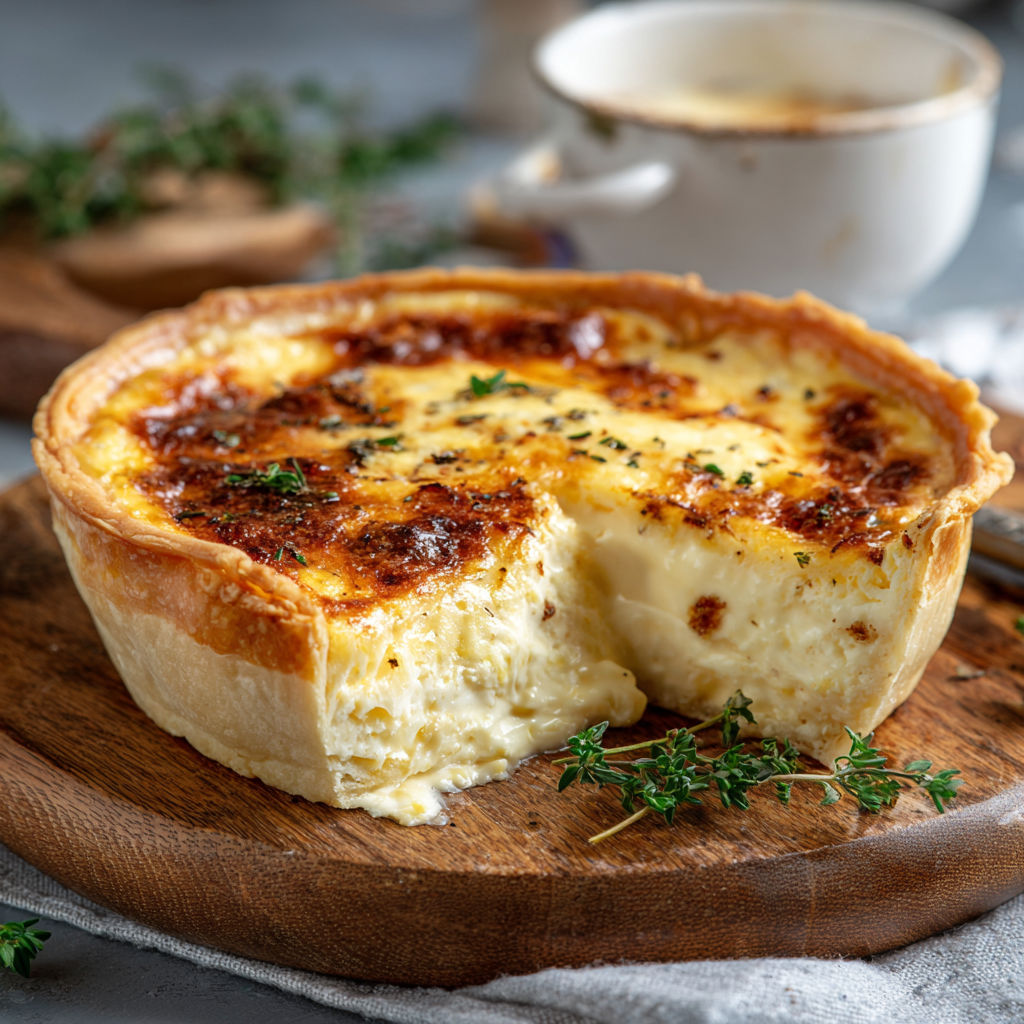
Keep the pastry cool enough to handle without stretching. If it resists reaching the corners, roll it gently on a lightly floured surface instead of pulling at the edges after it is in the tin. A stretched shell may shrink away from the sides as it cooks. Press the dough into the bottom corners with the pads of your fingers and mend any holes before adding liquid filling. An intact rim matters more than elaborate decoration because it helps contain the egg mixture.
Cheese choices and changes to the filling
Use mature cheddar if a pronounced cheese flavor is wanted, or a milder cheddar for a gentler result. A different cheese may melt differently and change the saltiness; keep the measured amount the same when trying a small variation. Whole milk is the specified liquid. Replacing it alone does not remove dairy because cheddar and many shortcrust pastries also contain milk ingredients. Adding ham, bacon, or a pile of raw vegetables changes both the filling volume and the cooking requirements.
Cooling, keeping, and reheating slices
After the brief serving rest, refrigerate saved portions promptly in shallow containers. The USDA leftover guidance recommends refrigeration within two hours, or one hour above 90°F, followed by use within three to four days. Do not leave the whole pie out overnight to set. Reheat a slice in an oven or microwave until its center reaches 165°F. The pastry may soften after refrigeration; a reheated slice is still the same savory pie, but should not be promised the texture of a fresh bake.
Serving the pie for lunch or supper
This is a savory lunch or supper dish despite the word “pie.” Serve a slice with a leaf salad, sliced tomatoes, or another simple vegetable. For a picnic-style plate, cowboy caviar salad offers beans and chopped vegetables alongside the soft filling. For a separate potato side on another menu, see fried potatoes and onions. Start with a modest side because the pastry already makes each piece substantial.
Allergens, vegetarian labels, and portions
Eggs, milk, and cheddar are integral ingredients here; ordinary shortcrust pastry also contains wheat. Check the pastry label for its fat source and other allergens. Some cheddar uses animal-derived rennet, so a vegetarian claim depends on the products chosen rather than the absence of visible meat. No verified calorie, sodium, or protein figures are supplied. Cutting the tray into eight pieces is a portioning suggestion, not a nutritional measurement or a guarantee that every slice has identical cheese distribution.
Checking the center without overbrowning the edge
Keep the pastry tin cool while lining it; the hot object is the separate supporting baking sheet. Stretching dough tightly into the corners encourages shrinkage, so ease it into place and patch any gaps before adding the filling. Follow packaged pastry handling instructions. If the pastry specifically requires blind baking, use a compatible preparation rather than ignoring its directions; this article’s original schedule does not validate every pastry brand.

Check the filling and the base independently. A safely cooked custard can still sit over pale pastry, while a browned rim can hide an unset middle. If the top is ahead, shield it and continue cautiously; do not solve a damp base by serving undercooked eggs. Pair a slice with a chilled bean salad or a small bowl of white bean soup. These are savory meal pairings, not evidence that this pie shares a cheesecake method.
Questions About This Recipe
- Is a 9-inch round pie dish equivalent to the tray?
No. Its base area is about two-thirds as large, so the same filling becomes deeper. Use the specified pan or revise the quantity and verify a new bake schedule.
- Does this cheese pie need a pastry lid?
No. The current recipe is an open, egg-set pie. Adding a lid changes both its identity and how the filling cooks.
- → Should I blind-bake the pastry?
The method below does not include blind baking. Follow any essential directions for your particular pastry product; a different shell preparation changes the overall bake schedule.
- → How can I tell that the egg filling is ready?
Check the center for 160°F with a food thermometer. Puffing, color, and a clean knife help describe texture but do not replace that safety endpoint.
- → Can it be eaten cold?
Yes, once fully cooked and promptly refrigerated. Keep cold portions chilled until serving and observe the same room-temperature limits used for other perishable egg dishes.