
 Pin
Pin
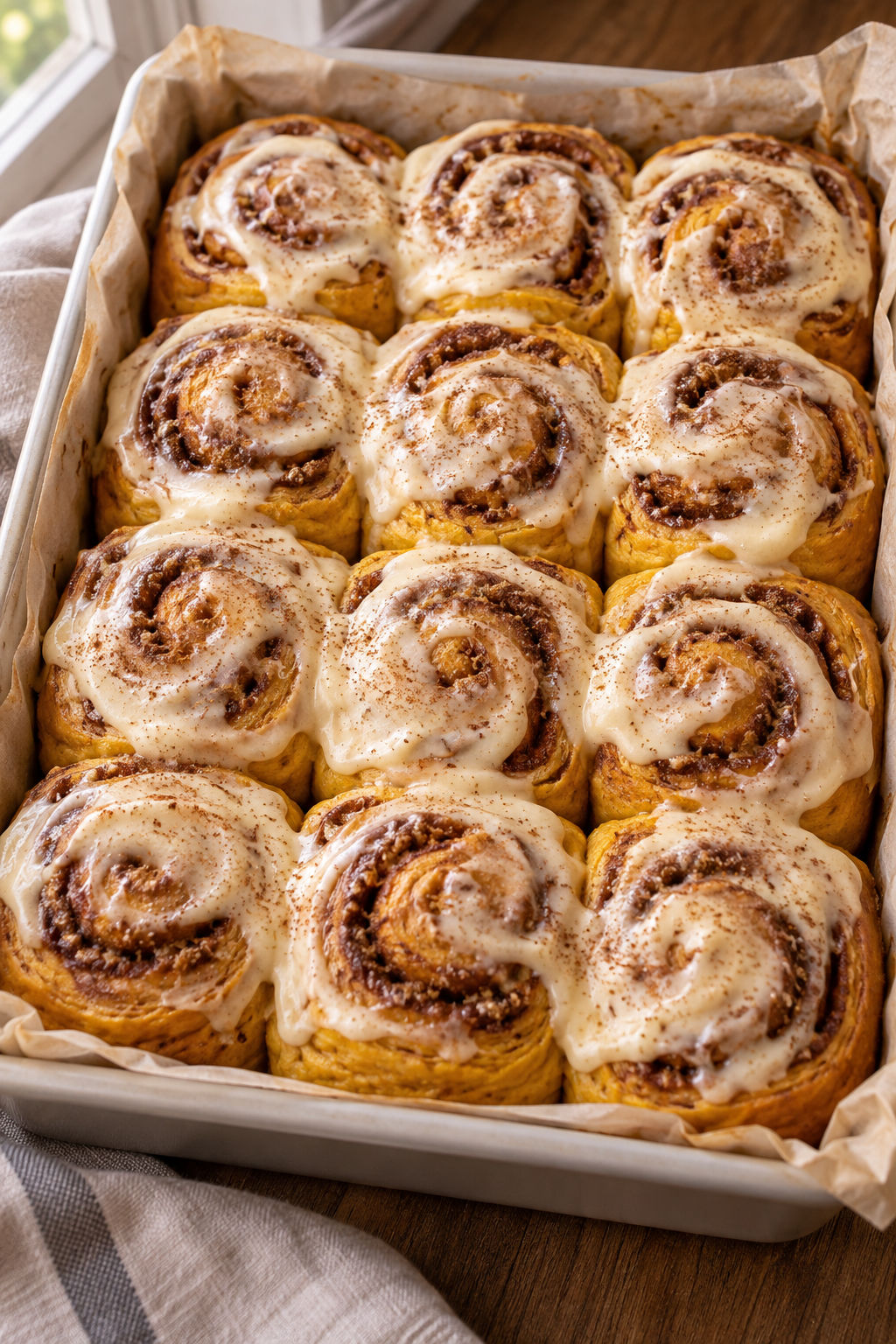
Pumpkin cinnamon rolls combine a soft yeast dough with a spiraled brown-sugar filling. Pumpkin puree supplies moisture as well as flavor, so the dough can feel tackier than an ordinary bread dough. The aim is dough that can be handled after kneading, not a dry ball that never sticks. This is an explanatory, research-based recipe; no claimed test batch supports a guaranteed rise time or next-day softness.
Mix a soft pumpkin dough
Use plain pumpkin puree rather than pumpkin pie filling, and read the yeast packet. The formula calls for instant yeast. Warm the milk gently and check that it is within the yeast manufacturer’s recommended range; adding butter and other ingredients changes the final mixture temperature. Hotter is not automatically faster or better. Measure the flour by gently spooning and leveling, or use a product-specific weight conversion if available.
Knead until the dough becomes smoother and elastic before deciding it needs more flour. If it remains a loose paste rather than a soft dough, first check the puree and milk quantities. Dust the work surface sparingly. King Arthur’s pumpkin-roll method illustrates the importance of a soft dough and visible rise cues, but its different formula is not a tested schedule for these quantities.
Shape twelve evenly sized rolls
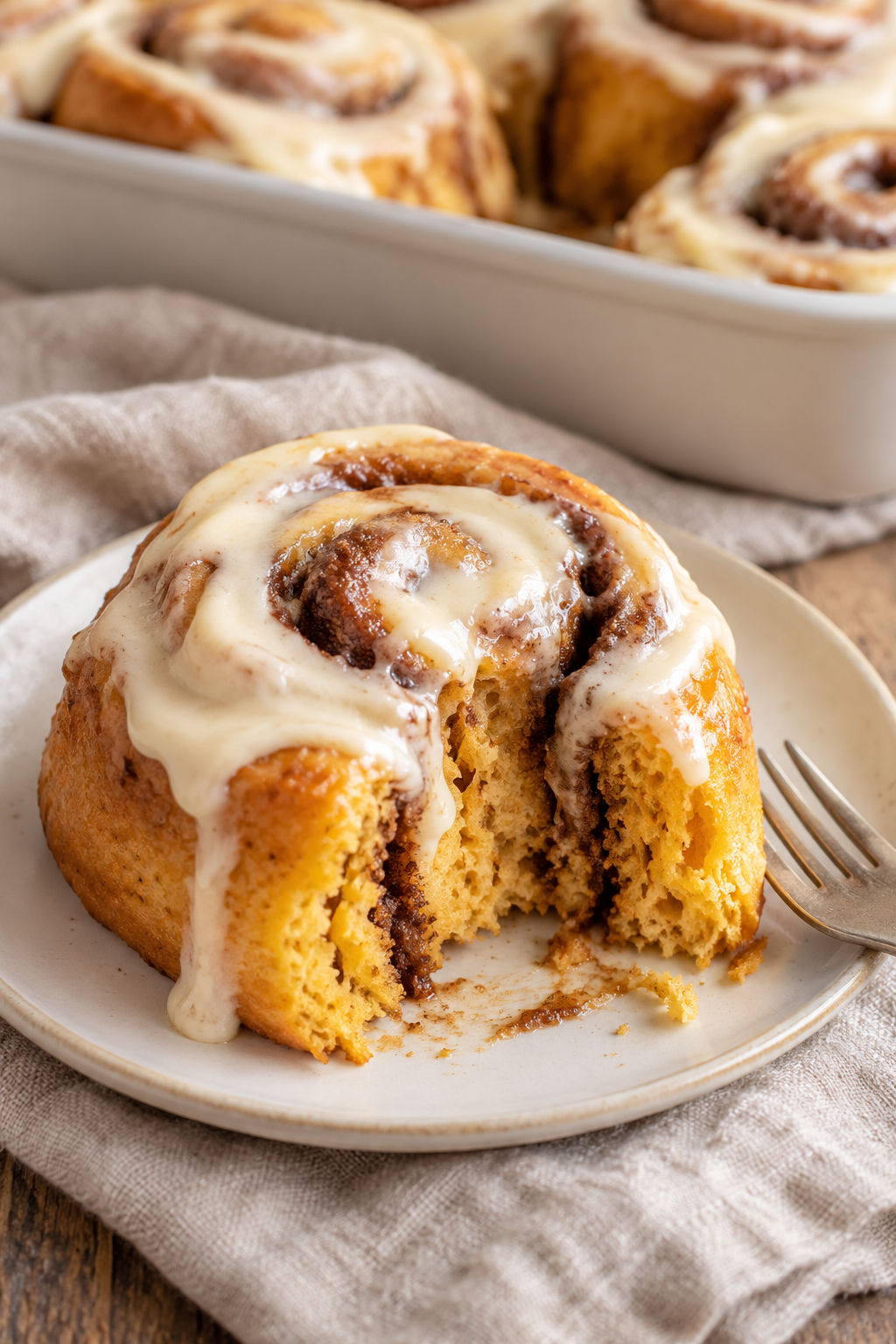
Cover the first rise so the surface does not dry out. Look for a clear increase in volume rather than relying on a timer alone; a cool room and an old yeast packet can change the schedule. Roll the dough to approximately 14 by 16 inches. Spread the softened filling butter in a thin layer, leaving a small clean edge for the seam, then distribute the cinnamon sugar evenly.
Rolling from the 14-inch edge produces a log about 14 inches long. Divide it into twelve comparable pieces, roughly 1 1/6 inches each before allowing for any trimmed ends. Mark the positions before cutting so the last roll is not twice the size of the first. Place cut sides up in the greased pan and leave space for expansion. This simple geometry makes more consistent portions without claiming identical baked weights.
Check the center rolls before finishing
Let the shaped rolls become visibly puffy before baking. If they still look tight and dense, a warm oven should not be used as a substitute for completing the rise. Bake at 350°F and begin checking near the stated range, but inspect the center rolls as well as the edges. A browned top can hide gummy dough where tightly packed spirals meet. Cover a darkening top loosely while the interior finishes if needed.
For overnight preparation, this exact formula does not have a validated refrigerator-proofing schedule. The more predictable advance work is measuring dry ingredients and preparing the pan, then mixing and proofing on baking day. If following a separate reliable overnight method, keep its dough formula and instructions together; do not combine its timing with these quantities and present the result as guaranteed.
Frost, refrigerate and serve
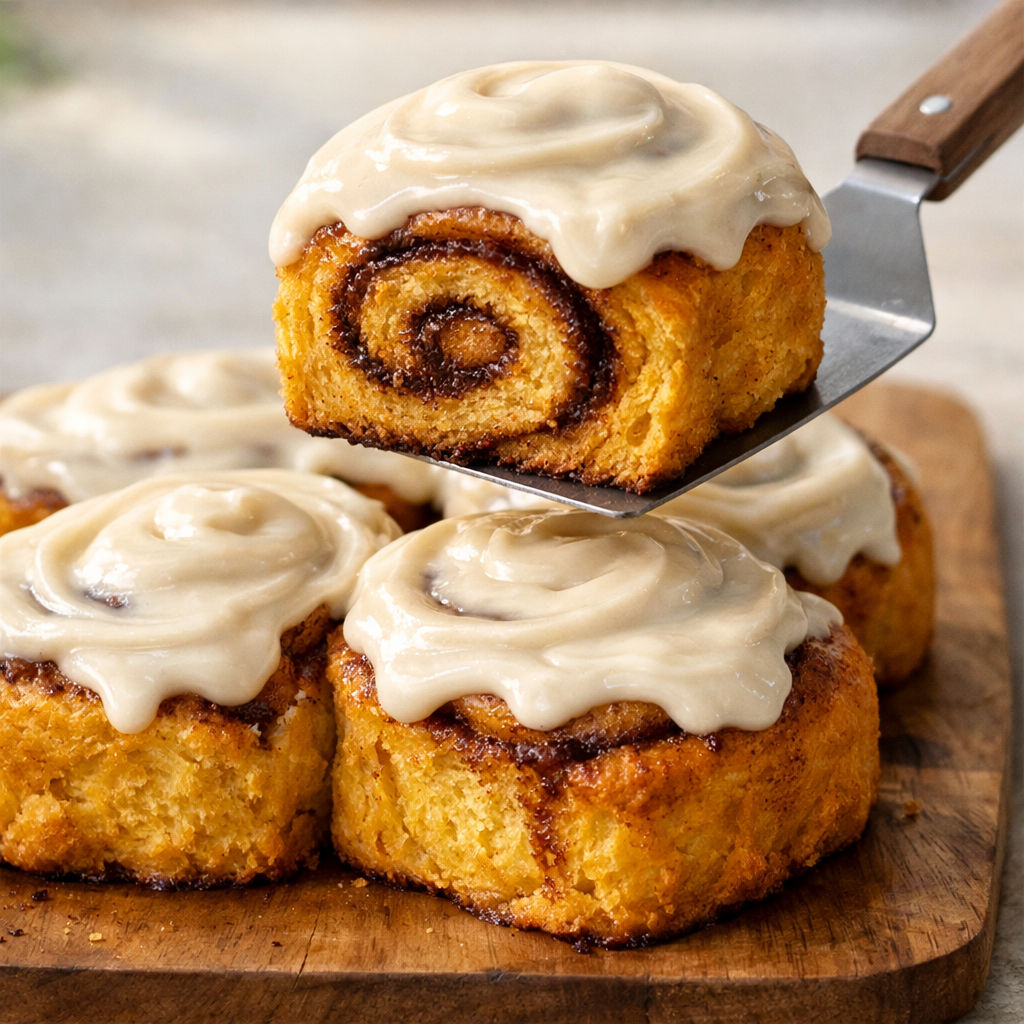
Beat softened cream cheese and butter until smooth before adding powdered sugar and maple syrup. Add the syrup gradually and stop to scrape the bowl, since different temperatures affect the frosting’s consistency. Let baked rolls lose their strong heat before spreading if you want frosting to sit on top rather than melt into the spirals. Because the topping contains cream cheese, refrigerate frosted leftovers; King Arthur’s storage guidance explains why cream-cheese-topped bakes are not room-temperature storage candidates.
Store portions covered and warm only what you intend to eat. For advance serving, keeping frosting separately refrigerated gives more control over reheating the bread, but it does not prove an extended shelf life. Fantasy Fudge is a different make-ahead sweet based on sugar cooking, while Oreo cheesecake needs its own long chilling stage. Plan the actual cooling or rising stages rather than comparing only their active preparation times.
Common Questions About This Recipe
- Should I add flour until the dough stops sticking completely?
No. Knead and check the measured ingredients first. A soft, slightly tacky dough is different from a loose batter; excessive added flour can make the baked rolls dense.
- Does a one-hour timer prove the dough is risen?
No. Look for the stated volume and puffiness cues. Yeast condition and dough temperature affect the schedule.
- Can pumpkin pie filling replace pumpkin puree?
Not directly. It contains additional sugar and seasoning, changing the dough formulation. Use plain puree for this recipe.
- Is the overnight method verified for this dough?
No. The earlier blanket overnight claim has been removed. Measure and prepare components ahead, or choose a separately developed overnight recipe and follow it consistently.