
 Pin
Pin
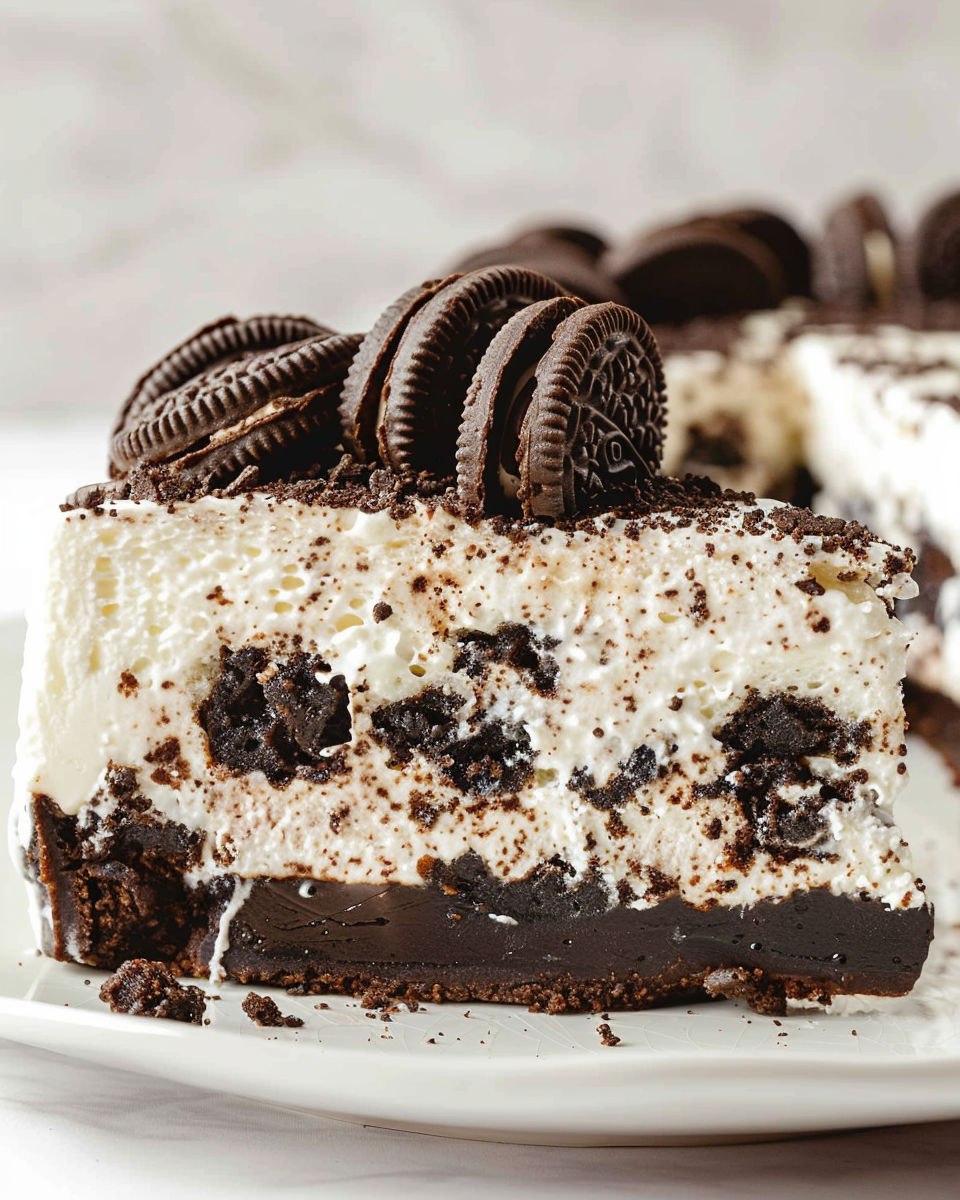
Baked Oreo cheesecake combines a pressed chocolate cookie crust with an egg-set cream cheese filling. This version uses 50 cookies in two different ways: the wafers from 35 cookies form the crust, while 15 whole cookies supply pieces for the filling. Keep those groups separate before beginning. The cake bakes without a water bath, but still needs careful mixing, a doneness check, and a long refrigerator rest before it can be sliced neatly.
Sort the cookies before crushing: remove and discard the cream from 35 cookies for the crust, but keep 15 whole cookies for the filling. “Fifty cookies” does not mean fifty whole cookies go into the crust. Changing that split changes the sugar and fat in the base. Press crumbs evenly without repeatedly compressing them into a hard slab. This formula uses a 9-inch springform pan; a smaller pan makes a deeper filling and invalidates the same bake-time expectation.
Ingredients and the Two Cookie Mixtures
- 50 Oreo cookies, divided: Use 35 cookies with their filling removed for the crust and 15 whole cookies for the batter.
- 5 tablespoons unsalted butter: Melt it and mix through the fine crumbs so no dry pockets remain.
- 32 ounces brick-style cream cheese: Full-fat blocks match this formula; soften before mixing, while limiting time outside refrigeration.
- 1 cup granulated sugar: Measure it separately so it can be blended into the cream cheese before adding eggs.
- 3/4 cup sour cream: Use plain sour cream and stir the container before measuring if liquid has separated.
- 1 teaspoon vanilla extract: Add with the sour cream for even distribution.
- 4 large eggs: Lightly beat, then add gradually at low speed; do not taste raw batter.
- 3 ounces semisweet chocolate: Optional; chop a baking bar finely or use chips for the topping.
- 1/2 cup heavy cream: Optional; this quantity makes a loose ganache with the listed chocolate.
- Prepared whipped cream: Optional; add shortly before serving and keep the finished dessert refrigerated.
Mixing and Baking the Cheesecake
- Prepare the pan and oven:
- Preheat to 325°F. Check that the 9-inch springform base is locked in place; set the pan on a rimmed baking sheet to catch butter drips.
- Build an even crust:
- Grind the separated cookie wafers finely, combine with melted butter, and press across the base and partly up the sides. Aim for even thickness rather than a tall, fragile wall.
- Keep the filling cookies chunky:
- Break the remaining whole cookies into small bite-size pieces. Fine dust turns the batter uniformly dark; pieces leave recognizable pockets.
- Smooth the cheese first:
- Mix the softened cream cheese with sugar, scraping the bowl and beaters. Check for lumps before moving on.
- Add the sour cream:
- Blend in sour cream and vanilla on low speed. Scrape underneath the batter as well as around the sides.
- Add the eggs gradually:
- Pour in the lightly beaten eggs in several additions. Stop mixing as soon as each addition disappears.
- Fold by hand:
- Use a flexible spatula to distribute cookie pieces with a few broad folds rather than extended beating.
- Fill carefully:
- Spoon the batter into the crust and level the top gently. Do not bang a fragile springform pan against the counter.
- Check doneness:
- Begin checking around 50 minutes; 50–60 minutes is an estimate. Look for set edges and confirm 160°F in the center with a thermometer.
- Cool and refrigerate:
- Rest on a rack for about an hour, then refrigerate for at least six hours. Keep total room-temperature holding within two hours, or one hour when the surroundings exceed 90°F.
- Make the optional ganache:
- Pour just-simmering cream over finely chopped chocolate. Wait five minutes, then stir gently from the center until blended.
- Finish after chilling:
- Let ganache cool before drizzling. Refrigerate until the topping is cool, and add whipped cream close to serving.
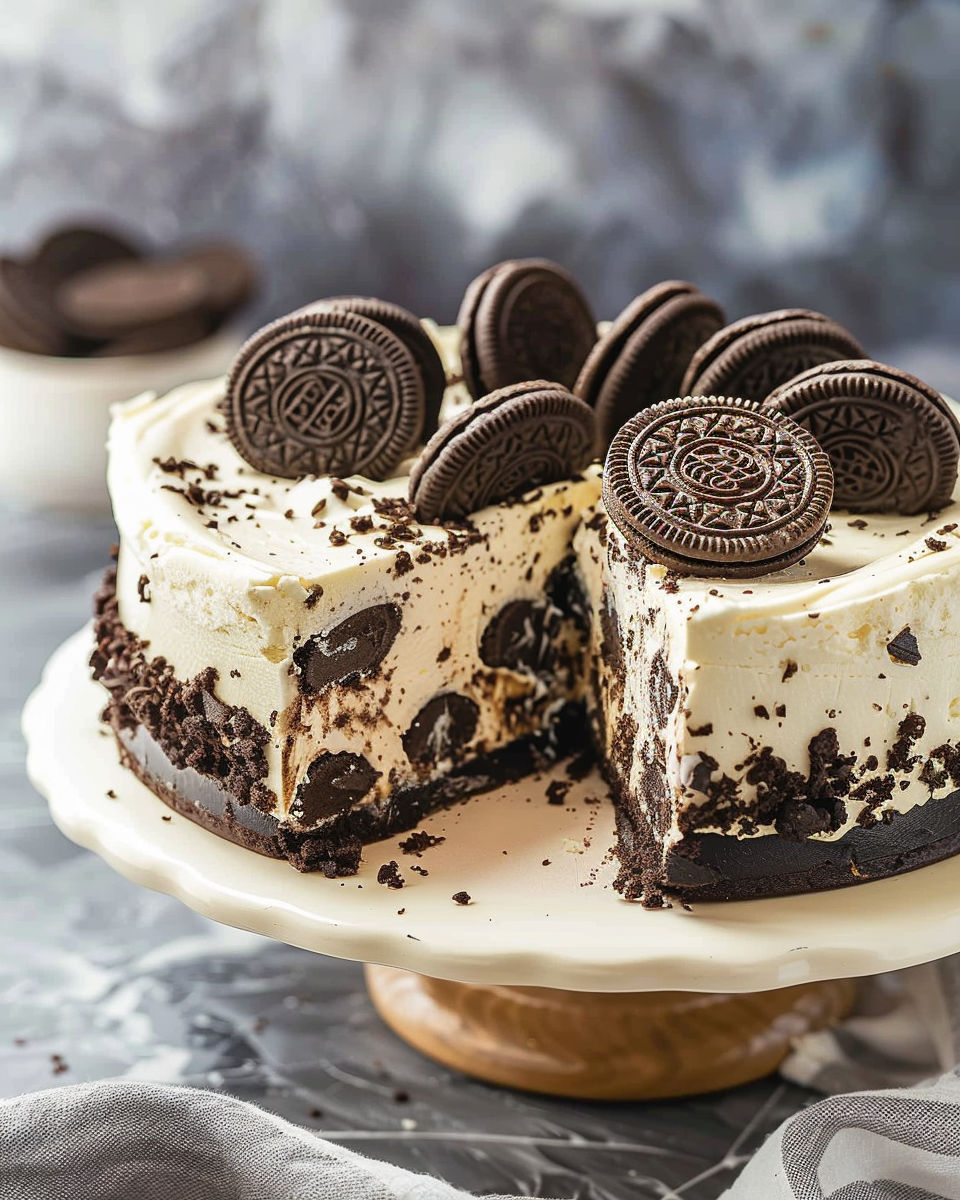
Smooth batter starts before the eggs go in. Press a spatula through the softened cream cheese to check for firm centers, then blend it with the sugar and scrape the bowl thoroughly. A lump of cold cheese will not reliably disappear during baking. Once the eggs are added, use low speed and stop when the mixture is uniform. King Arthur Baking explains that excessive mixing and overbaking can contribute to cracks; a perfectly unbroken top is not guaranteed by skipping the water bath.
Topping Options and Ingredient Changes
The simplest variation is to leave off the ganache and add whipped cream at serving time. Keep the filling formula unchanged while learning how it behaves in your oven. Substituting a tub of spreadable cream cheese changes the product and can change the texture. Lactose-free sour cream is still dairy, and replacing only the cream cheese does not make a recipe containing butter, cream, and eggs vegan. A dairy-free version would need its own developed formula.
Chilling, Refrigerating, and Freezing
Move the cake into the refrigerator after its initial cooling period; do not leave it on the counter overnight. Keep it covered once cold so the surface does not dry out. For a conservative home-storage plan, use it within three to four days or freeze portions sooner. The FDA egg-safety guidance recommends prompt refrigeration of cooked egg dishes and a refrigerator at 40°F or below. Thaw frozen slices in the refrigerator, with the wrapping loosened after thawing if condensation collects.
Slicing and Serving
Chill the cheesecake thoroughly before releasing the springform ring. Use a thin knife to free any filling attached above the crust, then open the latch slowly. Slide a wide spatula under each slice rather than pulling it away by its point. A knife dipped in warm water and wiped dry between cuts gives cleaner edges. Offer berries alongside the cake, or make fresh fruit as a separate fruit option.
Allergens and Nutrition Information
This recipe contains milk, eggs, and wheat when made with standard cookies. Chocolate and cookie labels may list additional allergens or cross-contact information. A gluten-free cookie substitution requires checking the other ingredients and preparation surfaces as well. No calculated nutrient values are supplied here: brands, cookie size, topping quantity, and the number of slices all affect the result. Treat twelve slices as a serving guide, not a validated nutritional portion.
Cracks, Lumps, and a Soft Center
Keep the chosen method consistent: this recipe uses a dry oven, not a water bath. A water bath can reduce cracking, as shown in King Arthur’s comparison, but it also changes heat transfer and pan handling. Do not add one halfway through and assume the same timing. Check the filling center rather than judging the browned edge; this recipe uses the conservative 160°F egg-dish endpoint. A crack may be covered, but topping cannot correct a liquid, undercooked center.
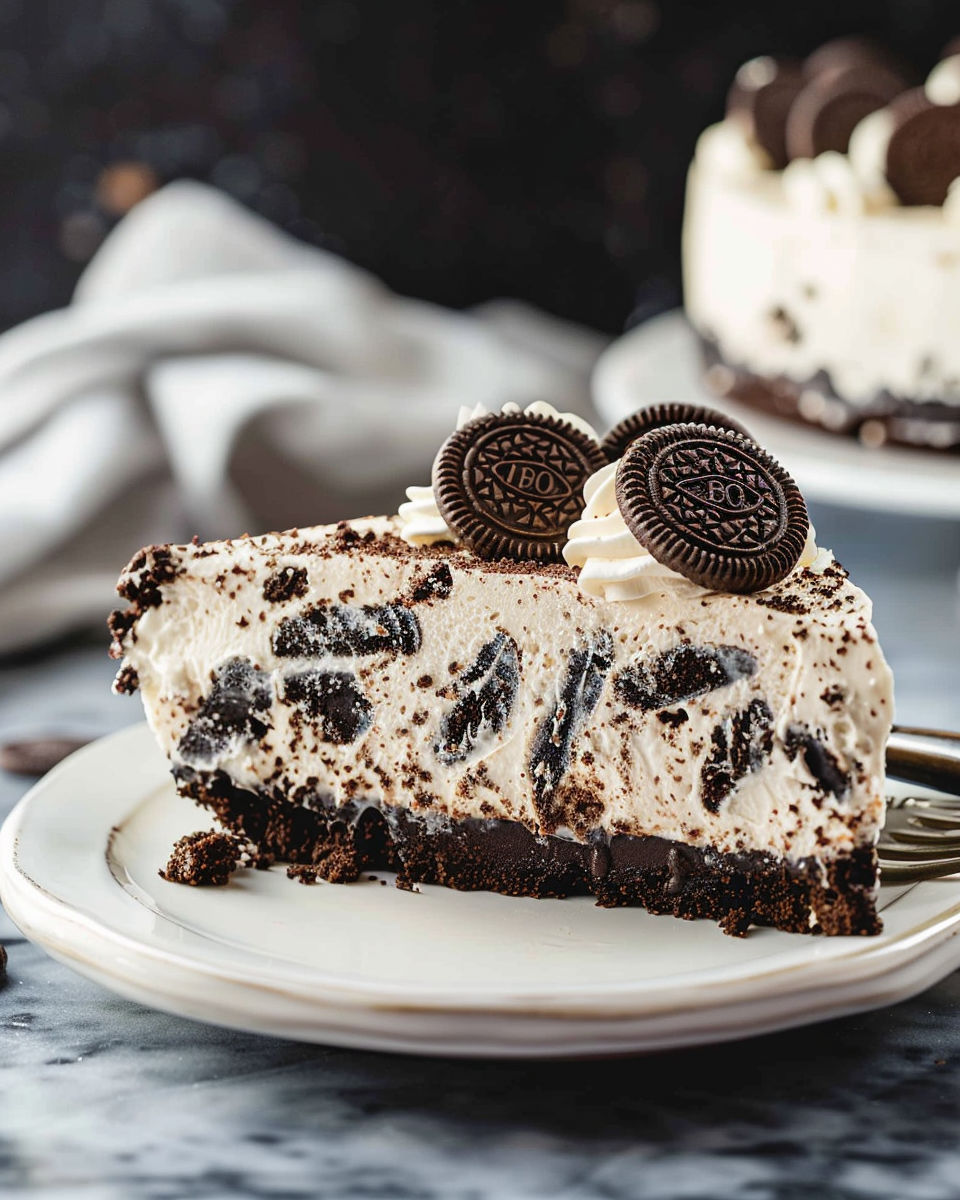
The optional three-ounce chocolate and half-cup cream topping is a soft drizzle, not a firm ganache lid. Add it only after the cheesecake is thoroughly chilled and the topping is no longer hot. For cleaner portions, release the rim carefully and wipe a warmed knife between cuts. If you want a different dessert to make on another day, consider pumpkin cinnamon rolls or chocolate walnut fudge. Their setting methods are different and should not be borrowed for this cake.
Questions About This Recipe
- Should I remove the filling from every cookie?
No. Remove it only from the 35 crust cookies. The 15 cookies folded into the cheesecake remain whole before being broken into pieces.
- Can a crack be hidden with ganache?
Yes, if the cheesecake is properly cooked and safely chilled. The topping is cosmetic and cannot make an undercooked or poorly stored filling safe.
- → Is a water bath required?
This method does not use one. Without that added protection, monitor the cake carefully and expect that a cosmetic crack is possible.
- → Can individual slices be frozen?
Yes. Chill first, wrap portions securely, and freeze promptly. Thaw in the refrigerator; cookie pieces and whipped cream may be softer afterward.
- → Can I use a different pan size?
A 9-inch springform is the specified pan. A larger pan makes a shallower cake and a smaller one may overflow; this guide does not supply tested alternate timings.
- → Will the ganache set into a firm layer?
The listed ratio makes a soft topping. Cool it before drizzling and chill the cake again, but do not expect a firm chocolate shell.