
 Pin
Pin
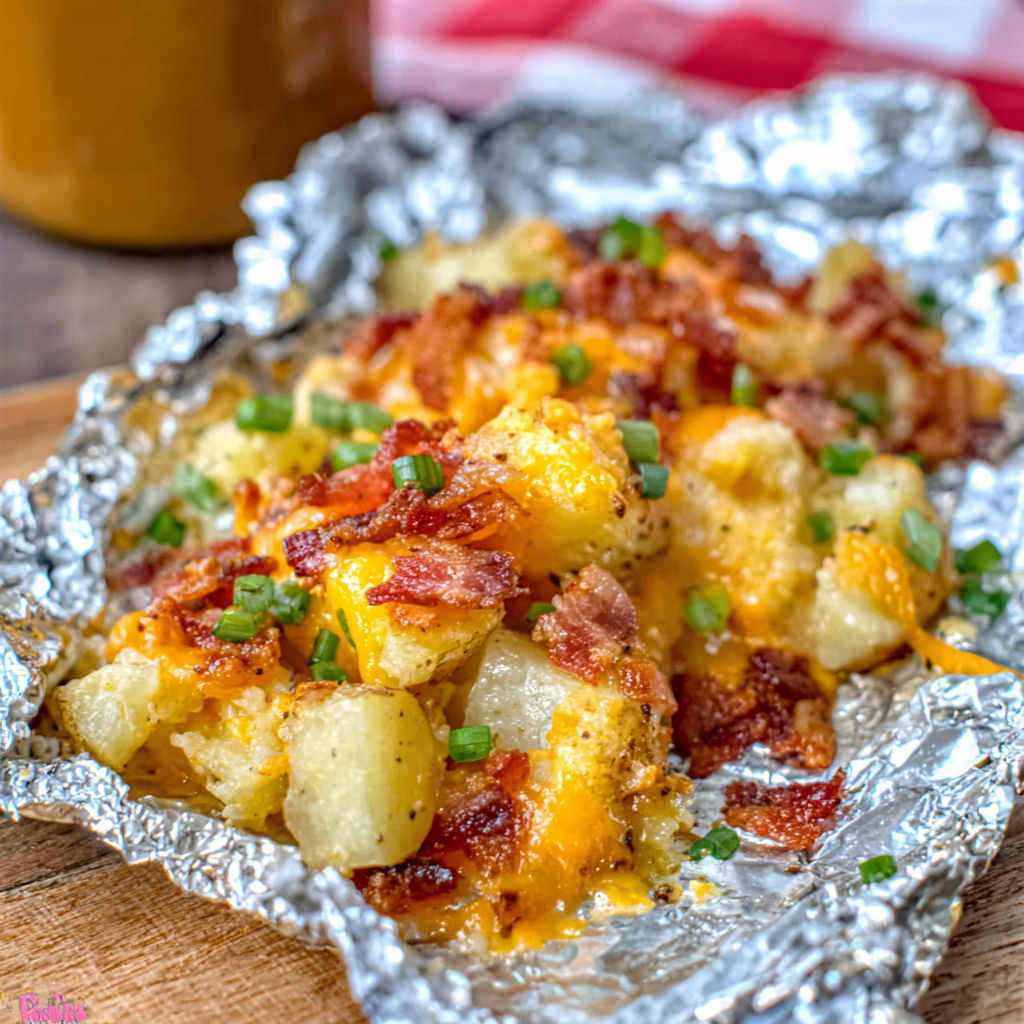
Cheddar bacon potato packets are individual foil parcels of cubed potato, butter, melted cheese, and cooked bacon. The covered packet traps moisture so the potato centers soften on the grill. Cook the potatoes first over indirect heat, then add cheese and bacon for a short finish. Expect soft, buttery potatoes with occasional browned edges rather than uniformly crisp fried cubes. Four medium potatoes make four packets, but actual portion size depends on the potatoes you buy.
Weigh your potatoes before dividing them if you want packets of similar size. Four “medium” potatoes can vary considerably, so divide the prepared cubes evenly rather than assigning one uneven potato to each diner. Cut near 1 inch and keep the layer relatively shallow inside each parcel. Leave enough foil to fold a secure seam without crushing the cubes. Record the total potato weight for your next batch; the recipe’s four-packet count is not a tested weight specification.
Ingredients and what belongs inside the packet
- Four medium russet potatoes: Cut into roughly 1-inch cubes, keeping the larger pieces similar in size to the rest. A larger potato creates a larger packet.
- Four tablespoons salted butter: Divide into four one-tablespoon portions, one for each packet. Account for its salt before adding more seasoning.
- Two cups shredded mild cheddar: Reserve until the potatoes are tender, then use roughly 1/2 cup per packet.
- One cup cooked, crumbled bacon: Keep chilled until the topping stage. Divide into four 1/4 cup portions and do not substitute raw bacon without cooking it first.
- Two green onions: Wash, trim, and slice, then keep separate to add after the packets are finished.
- Salt and black pepper to taste: Season potatoes modestly; cheddar, salted butter, and bacon contribute additional salt at the finish.
- Four large foil squares: Use nonstick foil or a lightly greased inner surface. Each square needs enough overlap to make a folded seam with room for steam.
Assemble, grill, and add the topping
- Prepare indirect heat
- Preheat a covered grill to about 350–375°F, arranging burners or coals so the packets can sit away from direct flame. Follow the grill’s instructions for this setup. Clear a heatproof landing area where hot packets can be opened without carrying them over other food.
- Divide the potatoes
- Scrub and cut the potatoes into even 1-inch cubes. Lay out four large foil squares with the nonstick or lightly greased side facing the food. Divide cubes equally into shallow piles, leaving generous foil margins for folding rather than cramming food to the edges.
- Add butter and seasoning
- Place one tablespoon butter on each portion and season lightly with salt and pepper. The butter and moisture in the potatoes supply the enclosed cooking environment; do not fill packets with water. Keep the measured cheese and cooked bacon for the later topping step.
- Reserve the finishing ingredients
- Portion the cheese and bacon so each packet will receive roughly 1/2 cup cheese and 1/4 cup bacon. Keep them refrigerated while the potatoes cook. This avoids holding perishable toppings beside a warm grill for the entire cooking period and makes the final opening brief.
- Fold secure packets
- Bring opposite foil edges together and fold down several times, then fold the ends inward. Leave a little headroom without leaving open gaps. Keep seams facing up so melted butter is less likely to escape, and reinforce thin foil if the potato corners threaten to puncture it.
- Grill and test the centers
- Cook over indirect heat with the grill closed, starting tenderness checks around 45 minutes. Carefully vent one packet and pierce a thick cube with a fork. Continue as needed, generally allowing 45–60 minutes or longer for larger portions. Rotate positions for hot spots without inverting the seams.
- Melt the topping and serve
- Once potatoes are tender, open packets carefully and add the cheese and cooked bacon. Loosely close again and heat another 5–10 minutes, until cheese melts and the filling is hot throughout. When using refrigerated cooked bacon, check that the topped filling reaches 165°F. Add green onions and serve on plates.
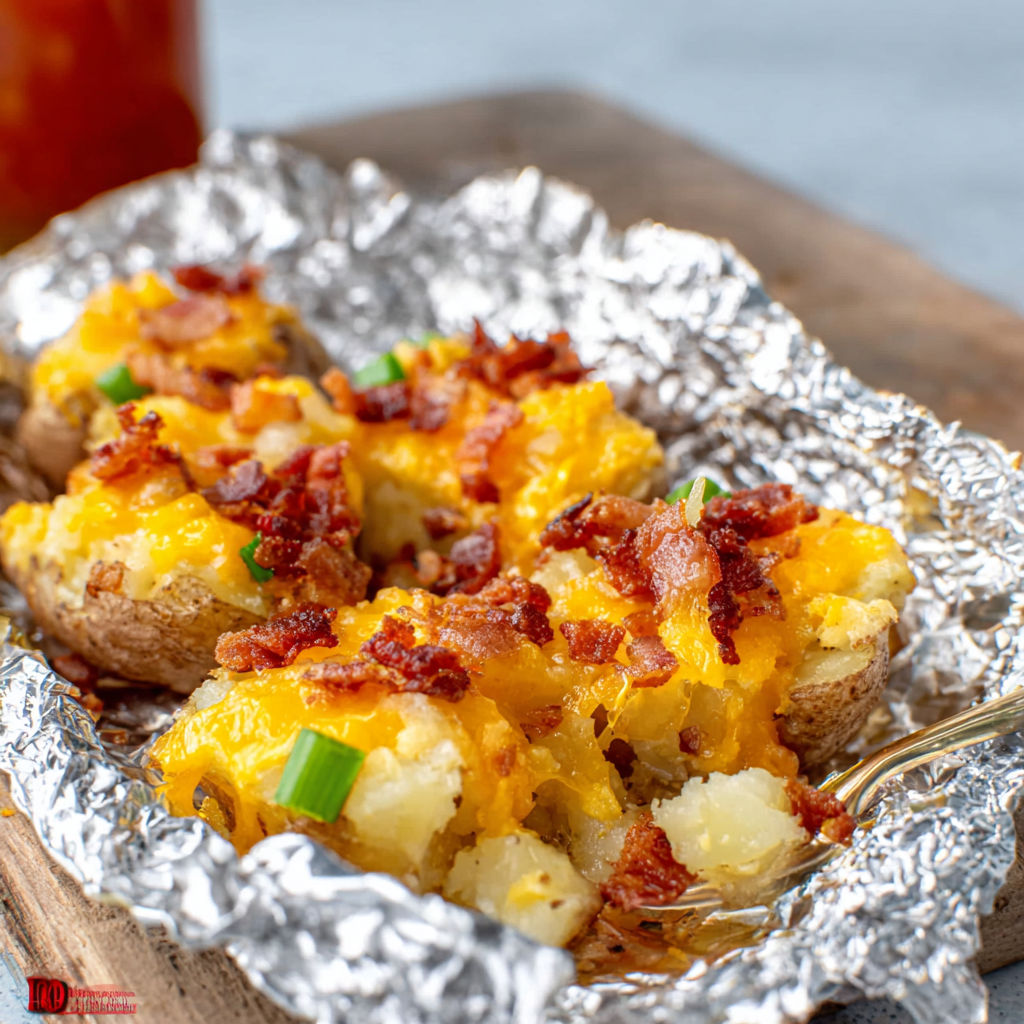
Prepare evenly sized cubes before assembling. A large piece hidden among small ones can remain firm when the rest is ready. Scrub potatoes under running water before cutting, following FDA produce-cleaning guidance; peeling is optional if the skins are sound and clean. Dry the cut surfaces so a puddle of wash water does not enter the packet. Spread each portion into a relatively shallow mound instead of stacking a tall, compact pile that makes the center slower to cook.
Bacon, cheese, and vegetable changes
The listed bacon is already cooked. Do not tuck raw strips among the potatoes and assume the same sequence will cook them properly. Turkey bacon or a meat-free alternative should also be prepared according to its package before adding. A plant-based bacon alone does not make packets vegan while cheddar and butter remain. Mild cheddar is the starting cheese, but sharper cheddar changes flavor without needing another whole recipe. Extra vegetables bring their own water and cooking times, so avoid overloading the original packet.
Handling foil-wrapped leftovers safely
Do not leave cooked potatoes sealed in warm foil for later eating. CDC advice for potatoes baked in foil calls for hot holding at 140°F or above until serving, or refrigeration at 40°F or below with the foil loosened. For these packets, transfer leftover contents into shallow containers and refrigerate promptly. Keep the room-temperature limit to two hours, or one hour above 90°F. Removing the wrapper also makes it easier to divide a large portion instead of cooling a dense parcel.
What to serve with the potatoes
These packets can sit alongside a plainly seasoned main dish because the topping already supplies strong flavors. A small serving of cowboy caviar salad contrasts with the soft potatoes. If the grill is unavailable and a skillet approach suits the meal better, fried potatoes and onions is a separate method with its own timing. Do not simply transfer the wrapped-grill schedule to an uncovered skillet and expect the same moisture or texture.
Allergens, equipment, and serving size
Butter and cheddar contain milk. Bacon products and optional cooking sprays can contain additional ingredients, so check their labels rather than assuming this is automatically gluten-free or suitable for another dietary need. Foil is equipment, not an edible ingredient. No per-serving nutrient calculation is available because “medium potato,” bacon packing, cheese measurement, and food left on the foil can all change the finished portion. The recipe’s four-packet yield is an assembly guide, not a nutrient claim.
Managing hot spots, firm centers, and torn foil
Use one packet as an early check and choose a cube from its thickest area. If the bottom is browning while the center is hard, move it away from direct heat and continue cooking the potato before adding toppings. Keep seams upward to limit leaks. Cheese goes on when the potato is tender, followed by a short covered finish; it should not be used as the readiness indicator for the potato underneath. Open the foil away from your face and hands.
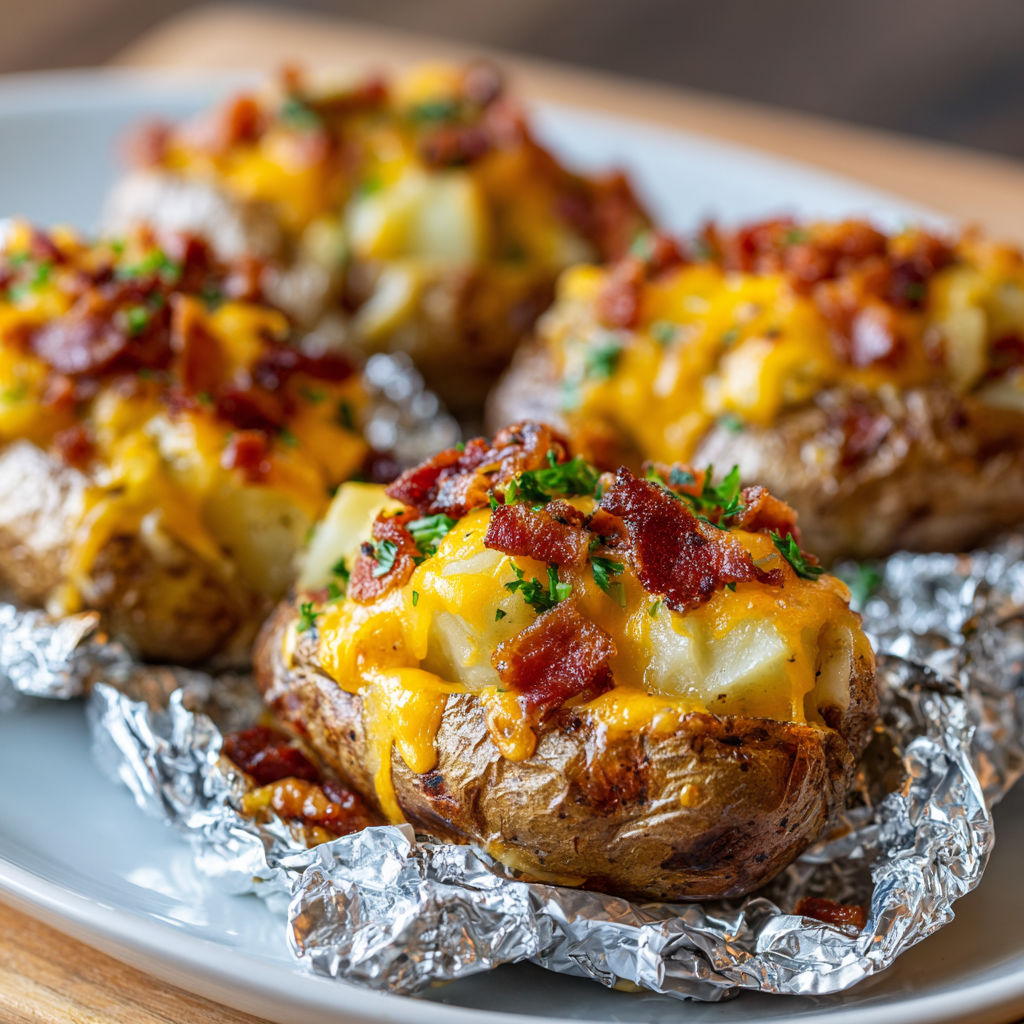
A grill packet and a skillet side produce different textures. Choose fried potatoes and onions when you want more exposed browning; serve these soft packets with Alfredo wings when coordinating separate cooking appliances. For leftovers, do not leave sealed warm parcels on the counter. CDC’s foil-potato guidance calls for safe hot holding or prompt refrigeration with foil loosened. Portion the filling into shallow containers rather than storing a warm pile of sealed packets.
Questions About This Recipe
- Can I use the same timing for much larger packets?
No. A deeper pile and heavier load change how the centers heat. Keep packets comparable and test potato tenderness before adding cheese.
- Does a melted cheese topping mean the potatoes are ready?
No. Cheese can melt while the potato is still firm. Probe a thick cube first, then add the toppings.
- → Can uncooked bacon go into the packets?
Not in this method. It specifies one cup cooked, crumbled bacon. Cook raw bacon separately according to its package before adding it at the topping stage.
- → Can I cook them in an oven?
An oven variation would need its own tested pan arrangement and timing. The directions here describe a covered grill with indirect heat, so treat another method as a separate adaptation.
- → May the unopened packets stay on the counter?
No. Serve promptly, hold safely hot, or open and transfer contents for refrigeration. Foil does not replace temperature control for cooked potatoes.