
 Pin
Pin
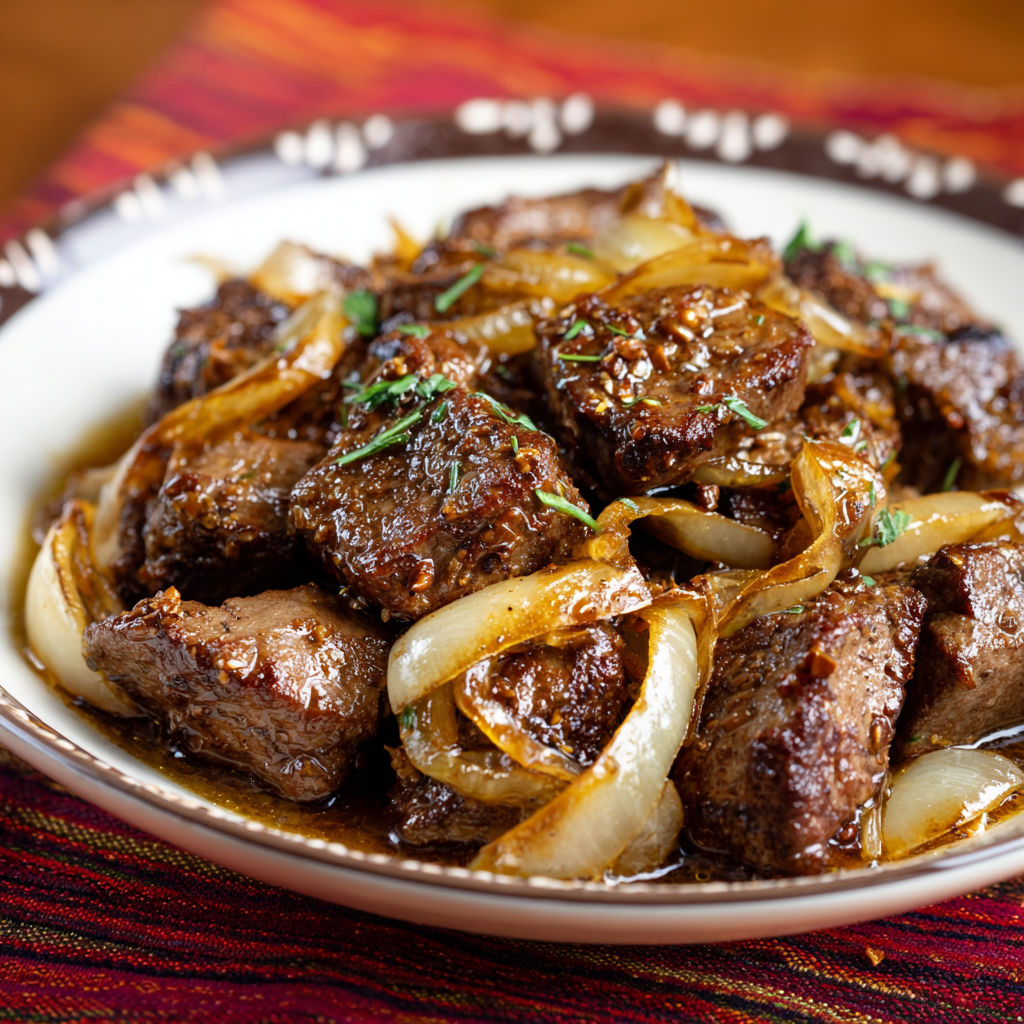
Beef liver and onions is a skillet dish of lightly floured liver slices served with softened sweet onions. Cook the onions first so they can become tender without forcing the liver to remain in the pan for the same length of time. Then cook the beef liver to 160°F, checked in the center of each slice. The USDA guidance for beef organ meats uses that temperature for liver; the 145°F steak recommendation does not apply to this cut.
Before heating the skillet, sort the liver by thickness. A thin edge and a thick center will not finish together simply because both slices weigh the same. Keep the meat refrigerated while the onions cook, then pat the surfaces dry and flour only the first batch. Reserve a clean plate for cooked liver and a separate utensil for handling the raw slices. The listed two pounds is the recipe quantity, not a promise that it fits one pan.
Ingredients and preparation quantities
- Two pounds sliced beef liver: Choose evenly sliced pieces when possible. Ask for the thickness if ordering from a butcher; that dimension affects cooking time.
- One and one-half cups milk, or enough for the chosen dish: This is soaking liquid, not a sauce ingredient. Keep the soak refrigerated and discard it afterward.
- One-quarter cup unsalted butter, divided: Four tablespoons total are split equally between onions and liver. Allocate the liver portion across batches if necessary.
- Two large Vidalia onions: Slice into rings or half-rings of similar thickness and separate the layers before they enter the pan.
- Two cups all-purpose flour, or as needed: This is a dredging supply, not an amount that must all adhere. Start with some on a plate and replenish as needed.
- Salt and black pepper to taste: Season the dredging flour lightly and adjust only after tasting cooked food. Do not taste flour that has contacted raw liver.
Cook the onions before the liver
- Chill during the optional soak
- Place liver in a shallow, food-safe container with enough milk to contact the slices. Cover and refrigerate for about 20–30 minutes if using this step. It can be skipped as a preference; it does not replace safe cooking. Prepare the onions while the liver remains in the refrigerator.
- Soften the onions
- Melt two tablespoons butter over medium heat in a broad skillet. Add separated onion rings and turn until pliable and lightly colored. Allow roughly 10–15 minutes as a planning estimate, reducing heat if edges darken. Deep caramelization would need a different schedule. Transfer onions to a clean dish.
- Apply a thin flour layer
- Put some flour on a shallow plate and season lightly. Drain the liver, discard the milk, and pat slices dry with paper towels. Coat both sides in flour and shake off excess. Add more flour to the plate only as needed; discard the remainder after raw liver contact.
- Cook in uncrowded batches
- Melt the remaining two tablespoons butter, dividing between batches when needed. Add slices over moderate to medium-high heat, leaving room to turn them. Begin checking after a few minutes per side, but judge by temperature rather than that estimate. Lower heat if the flour browns too quickly.
- Verify the center, then return onions
- Insert a suitable thermometer from the side into each slice’s thickest center and cook to 160°F. Remove completed slices to a clean plate while checking others. Return the cooked onions only long enough to heat through; the liver should not remain frying simply to soften the onions further.
- Serve without a long hold
- Transfer liver and onions to prepared plates and serve with finished sides. The coating will soften where onions cover it, which is expected. If there are leftovers, divide them into shallow containers and refrigerate promptly instead of leaving the skillet on the turned-off stove.
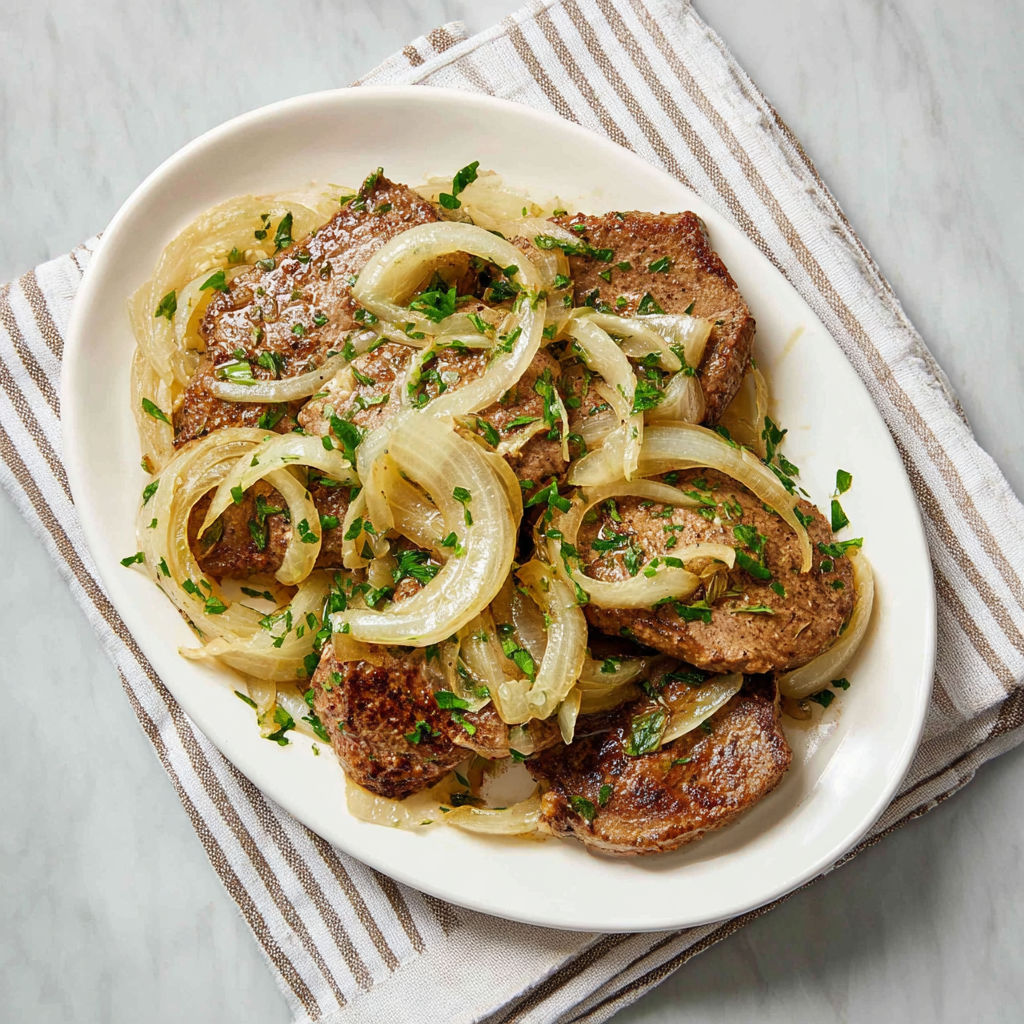
Thin slices can make thermometer placement awkward, but checking only the browned exterior is not an adequate substitute. Use a probe suited to thin food and insert it from the side so its sensing area reaches the center. The USDA thermometer guidance explains side insertion and following the instrument’s required depth. Test the thickest area, avoiding contact with the hot skillet. A dial thermometer needing several inches of insertion may be poorly suited to a thin liver slice.
Species-specific temperatures and substitutions
This method is specifically for beef liver. Do not transfer the same temperature or estimated timing to chicken liver: USDA poultry guidance specifies 165°F for poultry, including giblets. Sweet yellow onions can replace Vidalia in the same quantity. Replacing butter alone does not make the recipe dairy-free while the milk soak remains, and a flour substitution changes the crust rather than guaranteeing the same result. Keep variations modest until the basic cooking sequence is familiar.
Buying, chilling, and saving portions
Buy only the amount you can cook promptly and keep raw liver cold in a covered, leakproof container. For cooked leftovers, refrigerate in shallow containers within two hours, or one hour above 90°F. The USDA leftover guidance provides a three-to-four-day refrigerator window at 40°F or below. Do not wait for a panful to become completely cold on the counter. If saving portions, label their cooking date and reheat only what is needed for the next meal.
Side dishes and timing the meal
A simple potato side gives the onions and light pan coating something to sit beside. Fried potatoes and onions are an option, though plain mashed potatoes avoid repeating the onion flavor. A chilled spoonful of bean and corn salad offers a different texture. Finish whichever sides you choose before the liver so the meat can leave the pan when it reaches its temperature rather than waiting over heat for the rest of dinner.
Allergens and uncalculated nutrition
This recipe contains milk from both the soak and butter, plus wheat from ordinary all-purpose flour. The amount of milk and flour listed is for preparation; much is discarded rather than eaten. That makes a reliable nutrition calculation dependent on measuring what remains on the food, as well as portion sizes. No iron, vitamin, calorie, or medical benefit claim is made here. Readers with specific dietary requirements should use the actual ingredients and any personal guidance they already follow.
Preventing a burnt crust and underdone center
Use the first slice as a heat check, not as a fixed timer for the rest. If flour blackens while the center is below its endpoint, reduce the burner before loading another batch. Leave space between slices; overlapping meat traps moisture and makes the coating wet. For a thin piece, insert a suitable instant-read probe through the side toward the center, avoiding the skillet. USDA explains this approach in its food-thermometer guidance. Check the pieces individually rather than assuming one reading represents the pan.
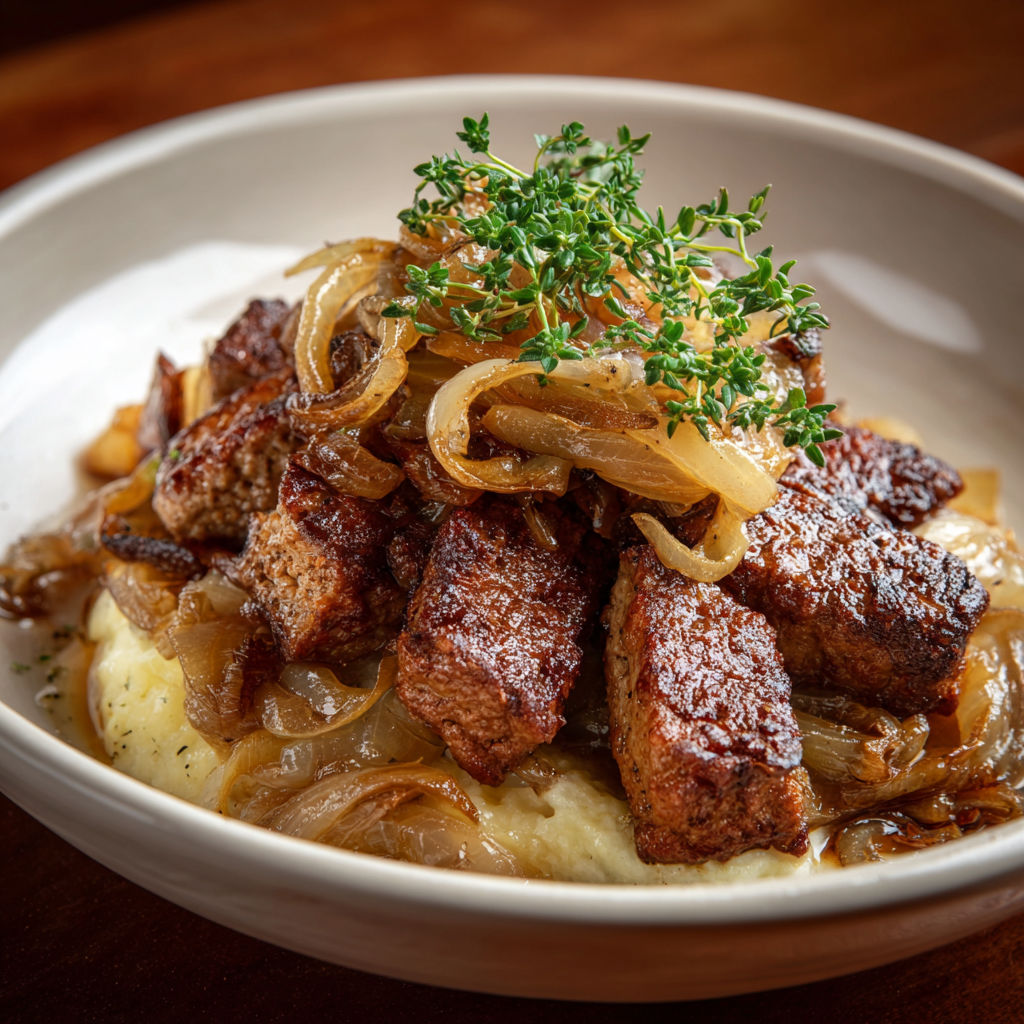
Milk soaking is optional here, not a safety step or a proven tenderness treatment for this formula. If you use it, keep the dish covered in the refrigerator, discard the used milk and dry the liver before flouring. For a repeatable comparison, change only the soak on a later batch while keeping slice thickness and cooking endpoint the same; no such comparison has been performed for this article. Serve with skillet potatoes and onions or a cool spoonful of bean-and-corn cowboy caviar.
Questions About This Recipe
- How many liver slices should go in the pan?
Only as many as fit without overlapping, with room to turn them. Batch count depends on slice area and the flat cooking surface, not the advertised rim diameter. Keep uncooked portions chilled.
- Does soaking let me serve liver pink?
No. Soaking changes preparation preferences, not the required safe endpoint. Beef liver needs a measured 160°F center; color alone cannot establish safety.
- → Why do the onions cook first?
Onions need time to soften without keeping the liver over heat for the entire period. Removing them also creates more pan space for an even flour coating.
- → Can unused dredging flour be saved?
Only flour kept separate from raw-liver contact can return to normal storage. Discard flour remaining on the dredging plate, along with the used milk.
- → Can this method be used for chicken liver?
Use a dedicated chicken-liver method instead. Poultry liver must reach 165°F, and its size, shape, and cooking behavior differ from the sliced beef liver specified here.