
 Pin
Pin
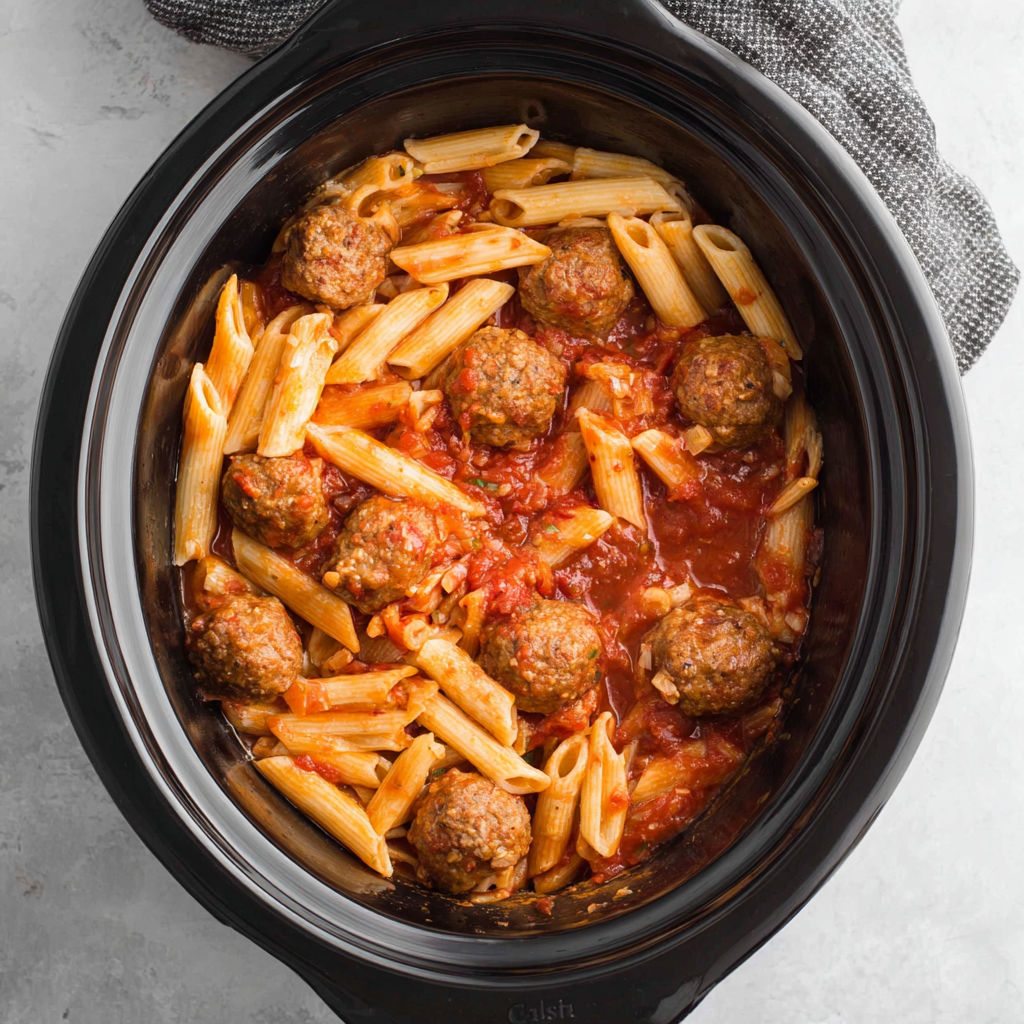
Crockpot pasta and meatballs can be convenient for serving a family meal when everyone is ready at slightly different times. In this version, the stovetop does the cooking and the preheated slow cooker supplies a short, covered finish. Rigatoni is boiled in a separate pot, fully cooked meatballs are heated through in marinara, and mozzarella melts over the combined dish. The result is deliberately saucy, with eight ounces of dry pasta to forty-eight ounces of sauce.
This is a serving-cooker recipe, not a dump-and-cook meal. Read the meatball package before starting: it must identify the product as fully cooked and give a suitable stovetop reheating method. Cook the rigatoni separately, heat the meatballs in sauce, and preheat the cooker according to its manual. Only combine the components when they are hot. If you want everything to cook from raw in one vessel, these quantities and steps do not establish that alternative.
Choosing the Five Ingredients
- 1 pound fully cooked meatballs: Choose a labeled fully cooked product. Frozen meatballs are heated on the stove according to the package, never placed frozen in this short slow-cooker finish.
- 8 ounces dry rigatoni: Measure the pasta before boiling. The hollow tubes hold sauce, so drain them well without rinsing away their surface starch.
- 48 ounces marinara sauce: Two 24-ounce jars supply the listed total. Stir before measuring if using a larger jar, and choose a flavor you enjoy without added seasoning.
- Up to 2 cups reserved pasta water: Use the water only as needed to loosen the sauce. The separate pasta-boiling water is additional and follows the pasta package directions.
- 1 cup shredded mozzarella: Scatter over the hot mixture near serving. Low-moisture shredded mozzarella avoids the extra liquid associated with wet fresh mozzarella.
Prepare on the Stove, Finish in the Cooker
- Heat the meatballs in sauce:
- Use a large covered saucepan and follow the fully cooked meatball package directions, including any required thawing. Stir carefully to prevent scorching; verify at least 165°F in several meatball centers before transferring.
- Boil and drain the rigatoni:
- Cook in boiling water according to the pasta package, stopping at a just-tender texture. Scoop out up to two cups of cooking water, drain, and keep the pasta ready to combine immediately.
- Transfer only hot food:
- Preheat the cooker according to its manual. USDA slow-cooker guidance supports transferring reheated food to a preheated cooker for holding at 140°F or above. Combine the hot pasta, sauce, and meatballs; add reserved hot water only if needed.
- Melt the cheese and serve:
- Scatter mozzarella over the surface and cover for approximately 5–10 minutes, just until melted. Check the food stays at least 140°F while serving. Turn the cooker off only when portions will be promptly refrigerated.
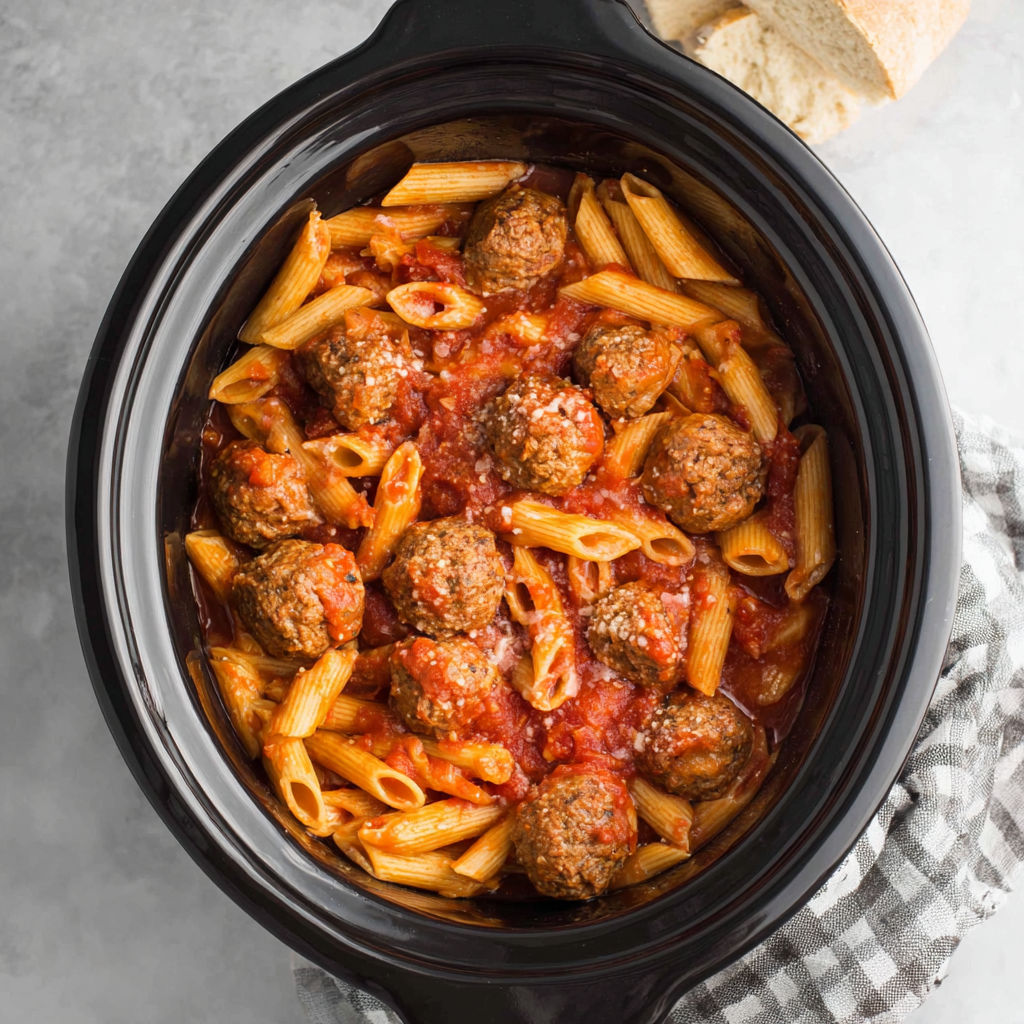
Plan the two stovetop tasks together. Start heating the meatballs and sauce while a large pot of water comes to a boil, then add the pasta when the meatballs are approaching their package heating time. Reserve some pasta water before draining. This sequence reduces the time cooked rigatoni sits unattended and allows everything to enter the slow cooker hot. Follow the appliance manual for preheating and its recommended fill level; do not put a ceramic insert directly on a burner.
Meatball and Pasta Variations
Small fully cooked beef, pork, chicken, or turkey meatballs can work, provided their package instructions suit the heating method. Larger meatballs need more time for their centers to warm. Penne is a reasonable shape alternative, but use its own package timing. Fresh filled pasta, dried spaghetti, and gluten-free pasta each behave differently, so they should not be assigned the rigatoni schedule automatically. Keep the sauce quantity consistent on the first attempt to judge how the finished mixture holds.
Refrigerating and Reheating Portions
For leftovers, follow USDA storage guidance: refrigerate shallow portions within two hours after hot holding ends, or one hour above 90°F, and use within three to four days. Reheat to 165°F on the stove, in the microwave, or in the oven. The pasta will have absorbed more sauce, so a little water can help restore a spoonable consistency. Reheat only the amount needed for the next meal and keep the rest refrigerated.
Serving a Saucy Pasta Dinner
Serve from the cooker with a broad spoon that can lift pasta and meatballs together. A deep ladle tends to collect sauce while leaving the rigatoni behind. Offer a simple green salad or cowboy caviar salad in a separate bowl for a cooler contrast. The pasta already includes a generous tomato sauce and cheese, so additional dressing or grated cheese can be offered individually instead of stirred through the whole batch.
Allergens, Portions, and Nutrition
Standard rigatoni contains wheat and mozzarella contains milk. Meatballs may also contain egg, breadcrumbs, milk, or soy; the particular product label matters more than the name of the dish. A gluten-free pasta change alone does not make a meal with breadcrumb-bound meatballs gluten-free. Four to six portions is a planning estimate, not a measured yield. Nutrition has not been calculated because meatball composition, sauce brands, and the amount served vary considerably.
Keeping the Pasta from Turning Soft
Use three separate checkpoints. First, taste a boiled rigatoni piece: it should be cooked but still firm enough to survive a short finish. Second, check that the meatballs have reached the package reheating endpoint throughout, using 165°F for reheated leftovers. Third, look at the combined sauce before adding water. Forty-eight ounces of marinara for eight ounces of dry pasta is intentionally generous; if sauce already runs freely between the tubes, extra water is unnecessary.
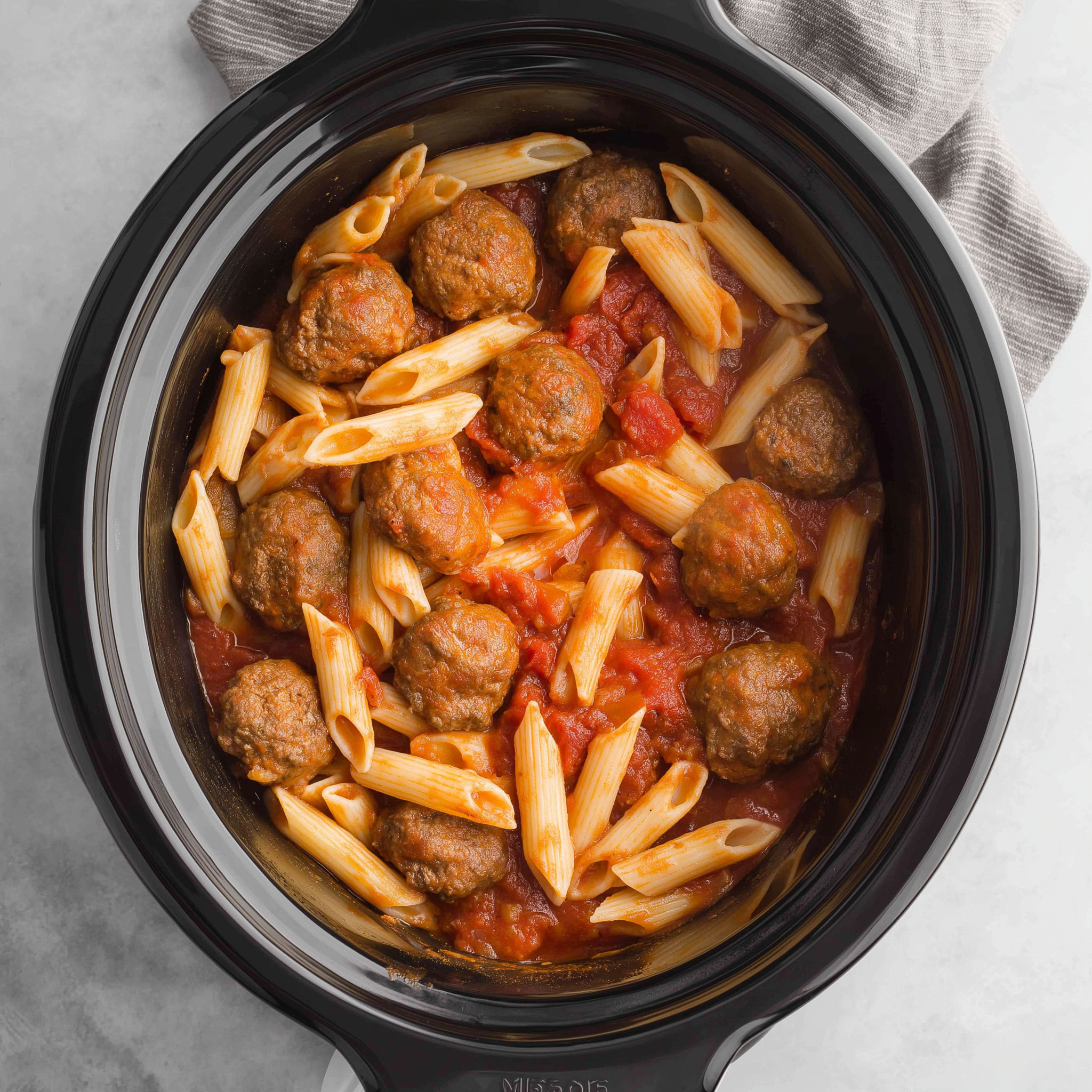
Reserve pasta water in a heatproof jug, but add it by the tablespoon, folding and reassessing between additions. Stop once the sauce coats without becoming soupy; the reserved amount is a maximum supply, not another compulsory ingredient. For a long meal service, keep sauce and meatballs hot separately and cook smaller pasta batches. A slow cooker cannot keep pasta firm for hours. Compare this serving method with oven-baked beef and shells or baked Angel chicken with separately cooked pasta.
Questions About This Recipe
- Can dry pasta go straight into this cooker recipe?
No. The current sauce quantity and short finishing stage are written for separately boiled pasta. Adding dry pasta changes water absorption and cooking time and would require a different tested method.
- Can I use the WARM setting to heat cold ingredients?
No. Heat the components properly first. Use a holding setting only for already hot food and verify that it stays at least 140°F; follow the cooker instructions.
- → Why is the water listed as up to two cups?
It is a reserve for adjusting thickness after the cooked pasta meets the sauce. You may need only a few spoonfuls or none, depending on the marinara.
- → How long can I hold the finished pasta?
Serve soon after the cheese melts for better texture. Any extended hot holding requires the food to stay at least 140°F, checked with a thermometer, and must follow the cooker manual.
- → Can I reheat yesterday’s batch in the slow cooker?
Reheat it first using a stove, oven, or microwave until the food reaches 165°F throughout. Transfer to a preheated cooker only if you need to keep it hot for serving.