
 Pin
Pin
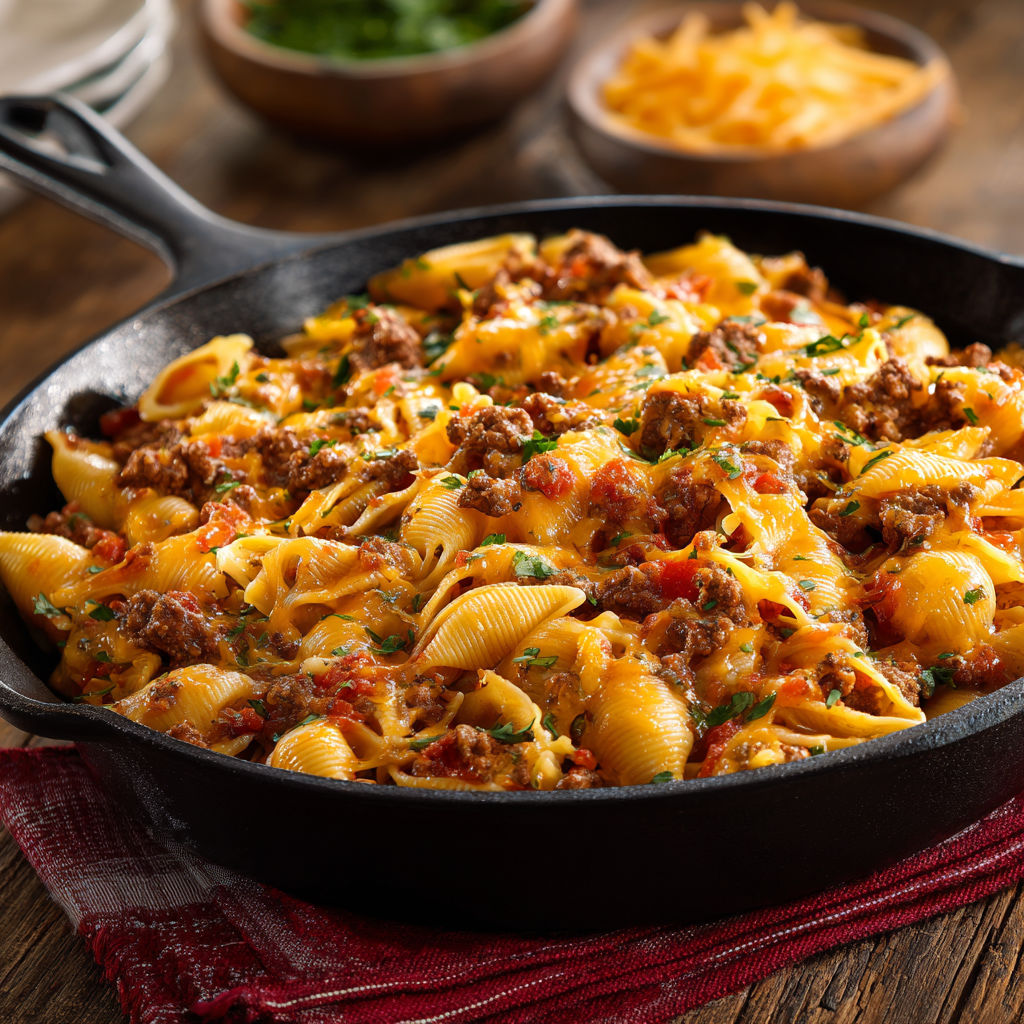
Cheesy beef and shells casserole is a baked pasta dinner with a concentrated tomato-soup sauce and a melted cheese topping. Medium shells catch the small pieces of ground beef, while cheddar adds a stronger cheese flavor and mozzarella supplies a milder, stretchy layer. Cook the pasta and beef before assembling the dish. The oven stage heats the filling through and melts the top; it is not a substitute for boiling a pound of dry shells or properly cooking raw ground meat.
Check the soup label before opening it. Condensed tomato soup is the concentrated ingredient in this recipe; ready-to-serve soup contributes a different amount of water. Keep the measured broth separate until combining the sauce, and do not dilute the condensed soup according to its lunch-serving directions as well. Weigh one pound of dry medium shells before boiling. Changing both soup type and pasta weight at once makes it difficult to diagnose a thin or dry result.
Ingredients and the Cheese Split
- 1 pound medium pasta shells: Weigh them dry, then boil until just tender. Their time in the oven means a very soft boiled shell can become fragile in the casserole.
- 1 pound ground beef: Break into small pieces as it cooks so the finished filling spreads evenly through the shells. Drain excess fat safely before adding the sauce.
- 1/2 teaspoon salt: Use the listed amount while remembering that soup, broth, and cheeses already contribute seasoning.
- 1/4 teaspoon ground black pepper: Distribute through the meat mixture instead of leaving a concentrated patch in the baking dish.
- 1/2 medium sweet onion, diced: Cut small enough to soften alongside the beef. Large chunks may stay firm after the meat is ready.
- 2 garlic cloves, minced: Add after the onion has begun to soften so the small garlic pieces are less likely to burn during browning.
- 1 tablespoon Italian seasoning: Stir into the warm sauce to distribute the dried herbs through the whole filling.
- 20 ounces condensed tomato soup: Measure the actual weight rather than assuming two cans equal twenty ounces. Do not dilute it according to soup-serving directions.
- 2 cups shredded cheddar: Use one cup in the filling and reserve one cup for the top.
- 1 cup shredded mozzarella: Use half a cup in the filling and the remaining half cup for the topping.
- 1/2 cup beef broth: This is the measured added liquid for the thick soup-based sauce; choose a broth that suits the other seasoned ingredients.
Build the Filling and Bake
- Heat the oven and boil the pasta:
- Preheat to 375°F and lightly grease a deep 9-by-13-inch baking dish. Boil the shells in a separate pot according to the package, stopping when just tender, then drain.
- Cook the beef, onion, and garlic:
- Cook beef and diced onion in a large skillet over medium heat, breaking the meat into small pieces. Add garlic once the onion begins softening. Cook ground beef to 160°F, then drain excess fat carefully.
- Mix the filling:
- Stir condensed tomato soup, broth, Italian seasoning, salt, and pepper into the cooked beef. Combine with drained shells, one cup cheddar, and half a cup mozzarella in a vessel large enough to stir comfortably.
- Top and bake:
- Spread in the dish and scatter the remaining cheeses over it. Cover with foil and bake about 20 minutes, then uncover for about 10–15 minutes more. Continue as necessary until the center reaches 165°F.
- Rest briefly and portion:
- Let stand about five minutes before scooping. Use a clean serving spoon and transfer planned leftovers to shallow containers promptly instead of leaving the baking dish out until cold.
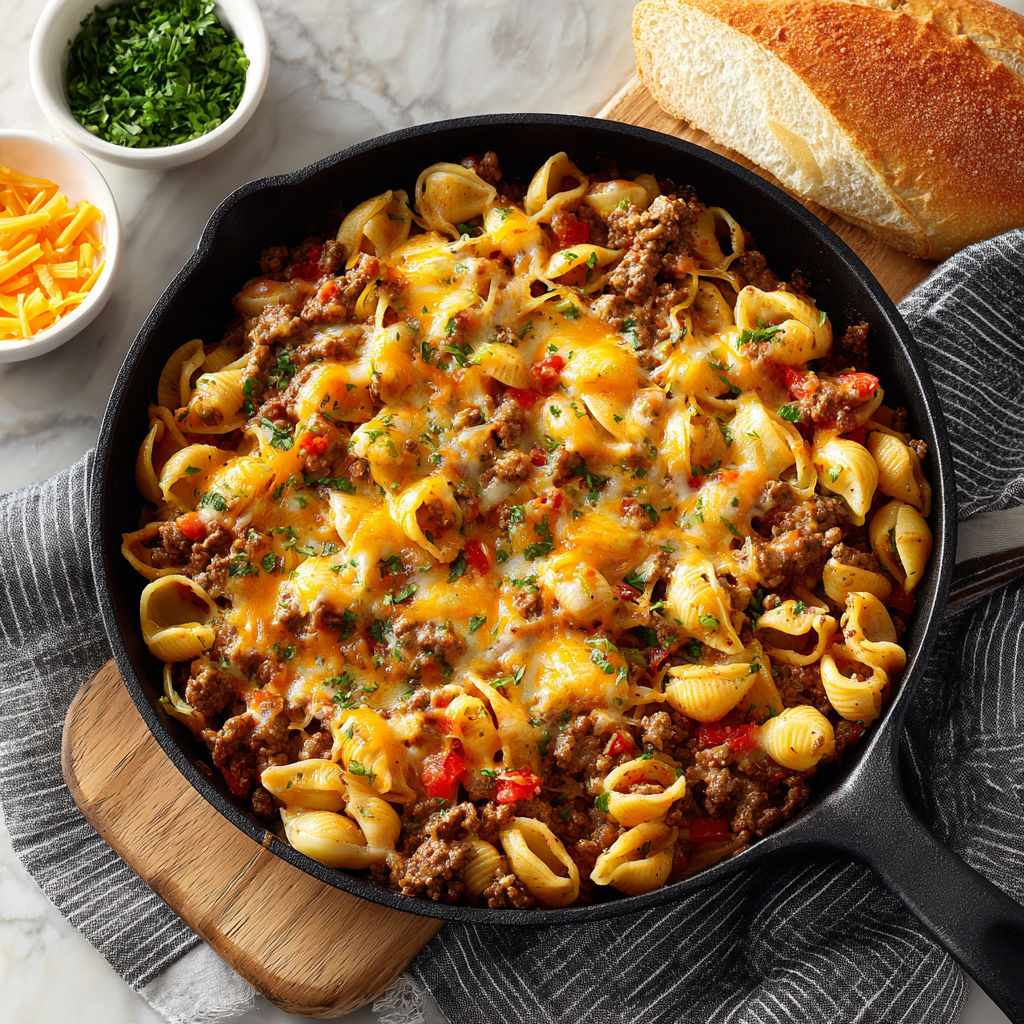
Keep the cheese division visible as you prepare the ingredients. From the two cups of cheddar, reserve one cup for the topping; from the one cup of mozzarella, reserve half a cup. The remaining halves go into the filling. Measuring the two groups first avoids using all the cheese in the skillet and then adding an unplanned second quantity on top. Shredded cheese should be distributed through the pasta before it is spread into the baking dish.
Changes to Meat, Pasta, or Soup
Ground turkey or chicken can replace beef as a different version, but use a 165°F cooking endpoint for ground poultry rather than the 160°F ground-beef endpoint. The USDA temperature chart distinguishes those meats and lists 165°F for casseroles. Another short pasta shape can work with its own package timing. Tomato pasta sauce is not identical to condensed tomato soup: its concentration, seasoning, and sweetness differ, so treat that swap as a separate sauce adjustment rather than an invisible replacement.
Making Ahead and Storing Portions
To prepare ahead, fully cook the beef and pasta, assemble with the sauce, and refrigerate promptly in an appropriate shallow container or baking dish. Do not partially cook the beef for finishing later. A chilled casserole takes longer to heat than one assembled from hot components; bake until the center reaches 165°F instead of adding an arbitrary few minutes. Follow the baking-dish maker’s directions about moving a cold dish into a hot oven, especially for glass or ceramic cookware.
Serving the Finished Casserole
Let the casserole stand about five minutes after baking so the filling is easier to scoop and the molten cheese is less likely to slide off in one piece. Use a broad serving spoon to reach the bottom and lift both filling and topping. A green salad or simply cooked vegetables fits alongside it. If you prefer potatoes as another meal’s main starch, fried potatoes and onions offers a separate skillet preparation; it is not added to this casserole.
Allergens and Nutrition Details
The usual version contains wheat from the pasta and often the soup, plus milk from the cheeses. Tomato soup, broth, and seasoning blends may have additional allergens, so check their labels rather than relying on the recipe title. No numerical nutrition estimate is supplied here. A pound of pasta, a pound of beef, and three cups of cheese make a substantial dish, but a nutrient value requires the actual brands, beef fat percentage, final yield, and measured serving size.
Preventing Dry Pasta and Burned Cheese
After draining the pasta, combine it while it is still warm enough to separate easily. Fold from the bottom and inspect several shells: the cavities should carry a little sauce and beef rather than remaining dry inside. If the mixture is stiff, first verify that the broth was added. Keep the covered bake stage to reduce surface drying and uncover only for the finish. A deeply piled substitute pan needs its own center check; matching the oven temperature does not make two different pan depths equivalent.
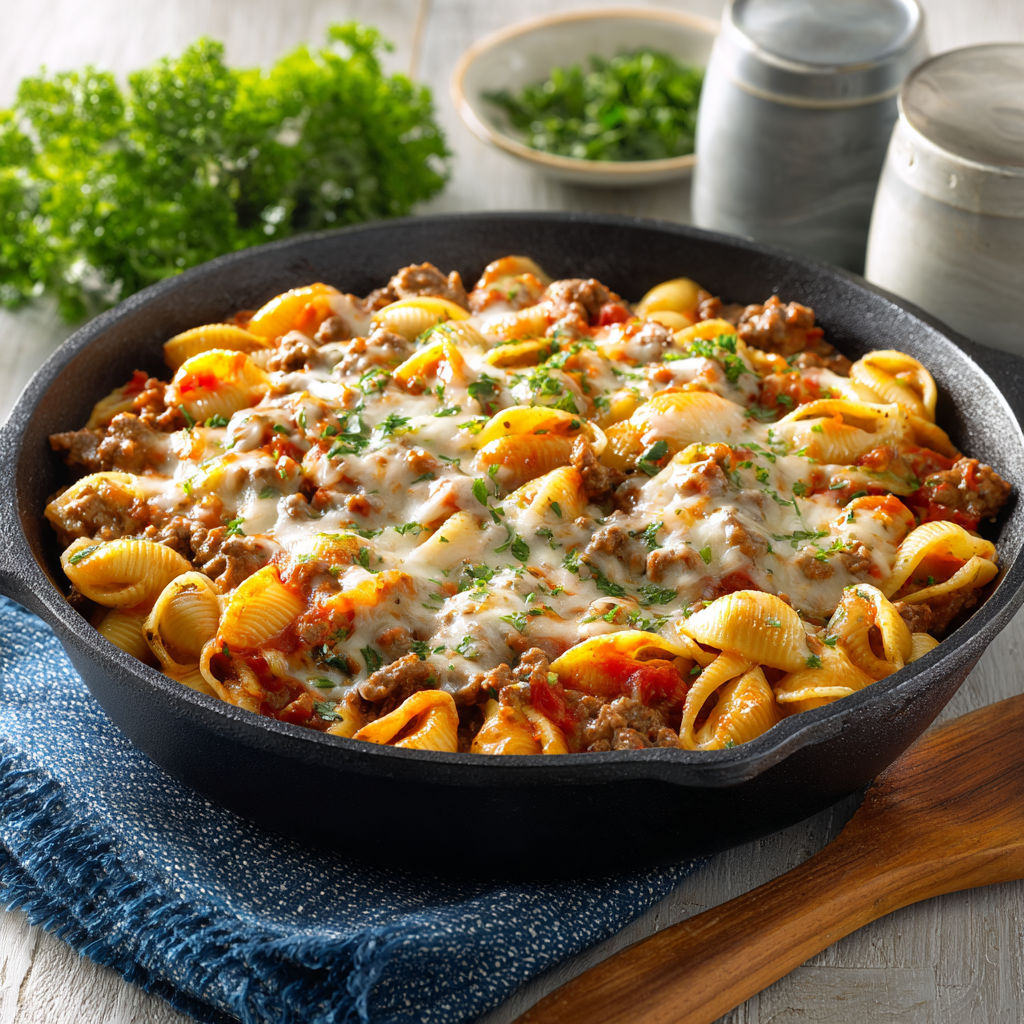
For a smaller meal, halve all ingredient quantities together and use a shallower suitable dish rather than leaving a thin layer in the full pan. Begin checking sooner, but do not claim that half the ingredients need half the time. Serve with a separate cold side such as cowboy caviar. For a chicken-based bake, BBQ ranch pasta casserole supplies its own sauce and reheating instructions.
Questions About This Recipe
- Can I use ready-to-eat tomato soup?
Not as an equal swap without revising the liquid balance. This formula specifies condensed soup plus a separately measured amount of broth.
- Why is the cheese brown but the middle cool?
Surface browning and center heating happen at different rates. Cover loosely and continue until the casserole center reaches 165°F.
- → Can I use two cans of tomato soup?
Only if you measure twenty ounces from them. Can sizes differ, and the soup should be condensed and undiluted for the sauce concentration described here.
- → Can I assemble it the day before?
Yes, with fully cooked beef and pasta and prompt refrigeration. Expect a longer bake from cold, observe the baking dish’s temperature-change instructions, and verify 165°F in the center.
- → Can the cooked casserole be frozen?
Portion it into suitable shallow containers and freeze promptly. Thaw in the refrigerator when convenient and reheat to 165°F. The pasta and cheese may be softer or less smooth afterward.