
 Pin
Pin
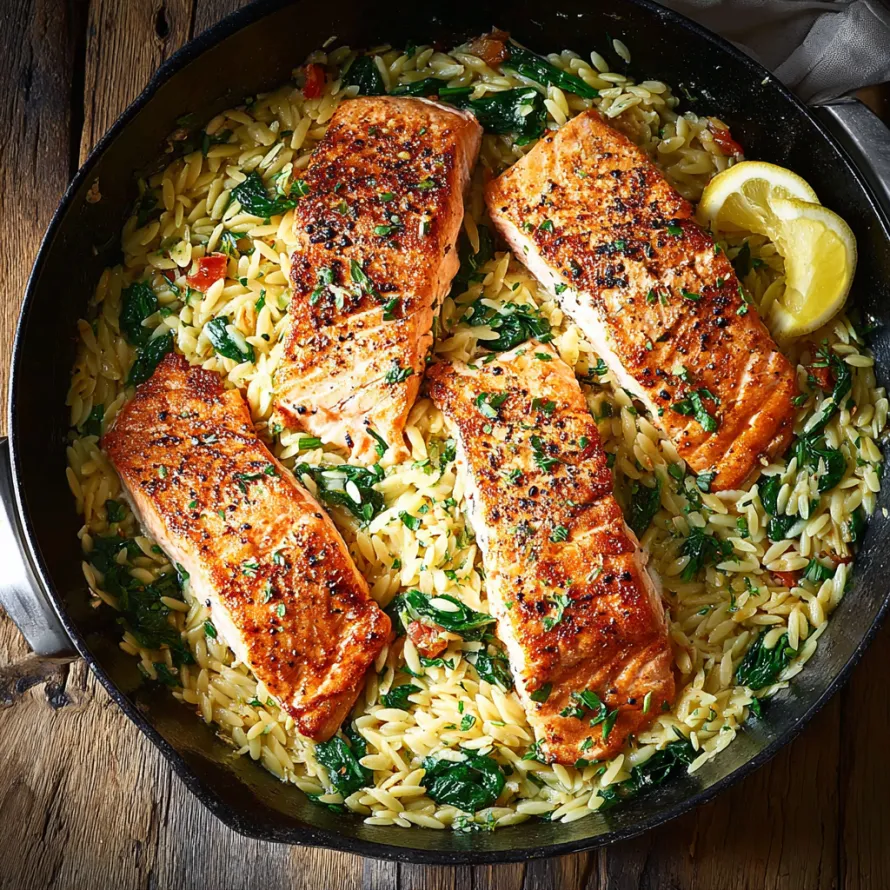
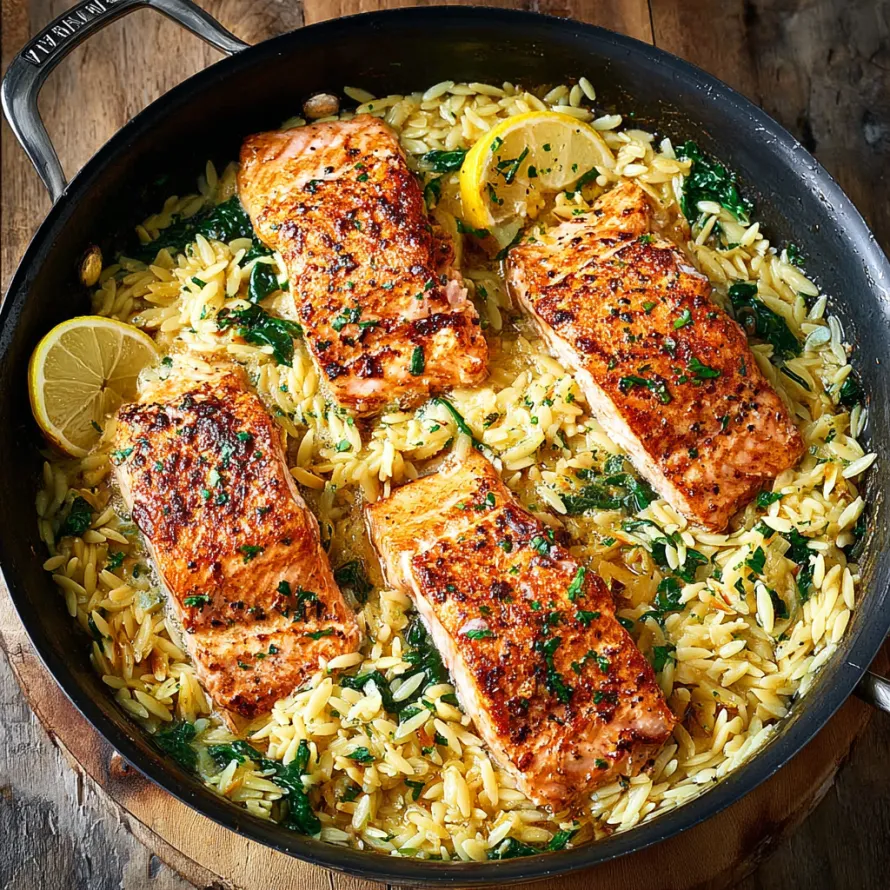
Seared salmon rests while orzo cooks in broth with onion and garlic. Spinach, Parmesan and lemon finish the pasta before the fish returns briefly to the skillet. This method starts with dry orzo and uses the broth as its cooking liquid.
Yes, the supplied ingredient list specifies skinless fillets. There is no skin-side-up instruction to follow. Place the fillets carefully in the hot pan and turn only after their first surface has set enough to release.
Ingredient amounts and preparation
- Set out: 4 skinless salmon fillets
- Set out: 1 tsp salt, divided
- Set out: 1 tsp coarsely ground black pepper, divided
- Set out: 1 tsp sweet paprika
- Set out: 1 tsp garlic powder
- Set out: 1 tbsp olive oil
- Set out: 1 tsp unsalted butter
- Set out: 1 yellow onion, finely chopped
- Set out: 3 garlic cloves, minced
- Set out: 1 cup dry orzo pasta
- Set out: 1 tsp dried thyme
- Set out: 3 cups low-sodium chicken broth
- Set out: 5 oz baby spinach
- Set out: Juice from ½ lemon
- Set out: ½ cup grated Parmesan
- Set out: Freshly ground black pepper, for serving; Chili flakes, for serving
Cooking sequence and doneness
- Stage 1
- Season salmon with half the salt and pepper plus paprika and garlic powder.
- Stage 2
- Heat olive oil in a wide skillet and sear the skinless fillets, turning carefully. Check the thick centers reach 145°F and move the fish to a clean plate.
- Stage 3
- Lower heat and melt the butter. Cook onion until softened, then add garlic briefly.
- Stage 4
- Stir in dry orzo and thyme for one to two minutes.
- Stage 5
- Add broth and simmer, stirring occasionally and checking tenderness from eight to ten minutes. Continue as needed, adding a little hot water only if the pan dries.
- Stage 6
- Wilt spinach into the tender orzo, then reduce heat and stir in Parmesan and lemon juice. Taste for seasoning and return the salmon briefly to warm before serving with optional pepper or chili flakes.
Use half the listed salt and pepper for the fish, then add the remainder to the orzo only after tasting. Broth and Parmesan vary in salt. The full seasoning allowance may not be necessary.
Does the orzo need stirring?
Stir occasionally as it simmers so grains do not stick to the pan base. Check tenderness from eight to ten minutes and continue if needed. If the pan dries while centers are firm, add a little hot water; if liquid remains when tender, simmer briefly uncovered. Wilt spinach once the orzo is tender, then reduce heat before stirring in Parmesan and lemon. Hard boiling after cheese is added can make the sauce less smooth. The pasta continues to thicken slightly as it stands.
How can salmon avoid a second long cook?
Cook the fillets to 145°F during the sear, then return them only to warm alongside the finished orzo. If a fillet is removed before reaching that temperature, complete its cooking immediately in the skillet. Do not hold partially cooked fish for later preparation.
Storage and serving later
Refrigerate perishable leftovers promptly in shallow containers at 40°F or below; do not wait for a large hot batch to cool completely on the counter. University of Illinois Extension’s leftover guidance gives a three-to-four-day refrigerated window and 165°F for reheating foods served hot. Keep cold salads and toppings chilled, and follow shorter product-label limits where applicable.
Related recipe choices
For another complete recipe, see Cajun-Style Salmon Bowls with Mango Salsa or Garlic Shrimp and Sausage Cabbage Cups. Each has its own ingredient quantities and cooking sequence; keep those measurements separate when choosing a meal. FDA seafood guidance recommends 145°F for most seafood and describes cooked shrimp as firm, pearly and opaque. Keep raw seafood and its utensils separate from ready-to-eat toppings.
Common Questions About This Recipe
- Are the salmon fillets skinless?
Yes, the supplied ingredient list specifies skinless fillets. There is no skin-side-up instruction to follow.
- How is the salt divided?
Use half the listed salt and pepper for the fish, then add the remainder to the orzo only after tasting. Broth and Parmesan vary in salt.
- Does the orzo need stirring?
Stir occasionally as it simmers so grains do not stick to the pan base. Check tenderness from eight to ten minutes and continue if needed.
- When do spinach and cheese go in?
Wilt spinach once the orzo is tender, then reduce heat before stirring in Parmesan and lemon. Hard boiling after cheese is added can make the sauce less smooth.
- How can salmon avoid a second long cook?
Cook the fillets to 145°F during the sear, then return them only to warm alongside the finished orzo. If a fillet is removed before reaching that temperature, complete its cooking immediately in the skillet.