
 Pin
Pin
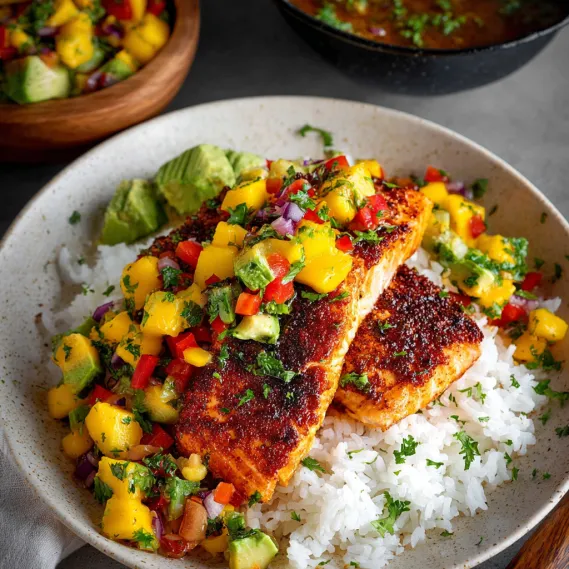
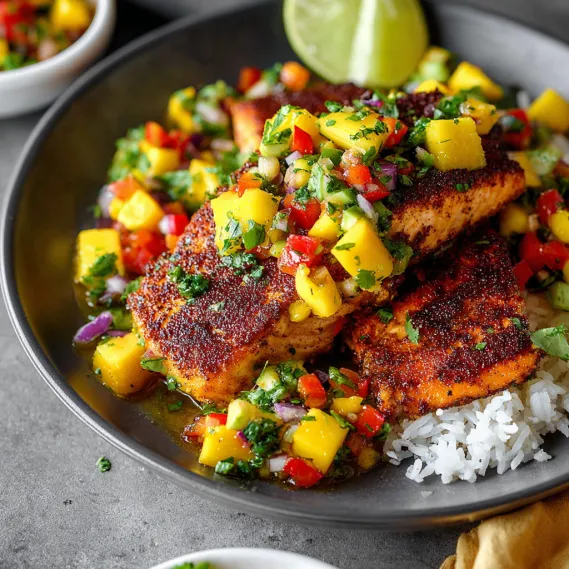
Pan-cooked salmon sits over cooked rice with mango salsa and optional avocado. Mix the spice blend once, reserve two teaspoons for the citrus marinade and use the remainder on the fish. Prepare the cold salsa separately so utensils used for raw salmon never touch the ready-to-eat fruit.
Stir all the dry spices and brown sugar thoroughly before measuring two teaspoons into the marinade. Keep the remaining dry blend separate. Dividing an unmixed pile can give one fillet most of the cayenne and the other mostly sugar.
Ingredient amounts and preparation
- Set out: 2 salmon filets, 4-6 ounces each
- Set out: 1 ½ teaspoons brown sugar; ¾ teaspoon paprika
- Set out: ¾ teaspoon garlic powder; ¾ teaspoon onion powder
- Set out: ½ teaspoon dried oregano; ½ teaspoon dried thyme
- Set out: ¼ teaspoon ginger; ⅛ teaspoon cayenne pepper
- Set out: ¼ teaspoon salt; 1 tablespoon olive oil
- Set out: 1 tablespoon olive oil; 1 tablespoon orange juice
- Set out: 1 tablespoon lime juice; 2 teaspoons spice blend (from above)
- Set out: 2 yellow mangoes, diced; 1 small red bell pepper, diced
- Set out: ¼ cup diced red onion; 4 tablespoons cilantro, chopped
- Set out: 1-2 tablespoons fresh lime juice; 1 cup cooked white rice
- Set out: ½ avocado; ¼ cup chipotle aioli or other sauce (optional)
Cooking sequence and doneness
- Stage 1
- Mix the brown sugar and all listed dry spices.
- Stage 2
- Whisk two teaspoons of that blend with the orange juice, lime juice and one tablespoon oil, coat the salmon and refrigerate about thirty minutes.
- Stage 3
- In a separate clean bowl combine diced mango, pepper, onion, cilantro and the salsa lime juice; keep chilled.
- Stage 4
- Remove salmon from the marinade, discard the used liquid, blot excess moisture and apply the reserved seasoning to the flesh.
- Stage 5
- Heat the other tablespoon oil in a skillet, place skin-on fillets skin-side down and cook over moderate heat, turning carefully; allow roughly 4–6 minutes per side but follow thickness and temperature.
- Stage 6
- Check each thick center reaches 145°F, reducing heat if the coating darkens too quickly.
- Stage 7
- Divide the cooked rice between bowls, add salmon and salsa, and finish with optional avocado or aioli without using raw-fish utensils.
One tablespoon belongs in the citrus marinade and the other heats the skillet. They serve different stages and total two tablespoons. Discard marinade that touched raw salmon rather than pouring it over the finished bowl. No. Refrigerate during the short thirty-minute marinade and cook the fish afterward. Orange and lime juice season the surface; they do not replace a cooking-temperature check at the thickest part of each fillet.
How should the mango be cut?
Use ripe but sliceable mango and dice the pepper and onion smaller so they distribute through the salsa. Stir in lime and cilantro in a clean bowl. Very soft mango makes a looser topping, so spoon rather than pour excess juice onto the rice.
What does one cup of rice mean?
It means cooked rice for the finished bowls, not a cup of dry grain. Cook additional rice separately if you want larger portions. Keep the seafood and rice quantities distinct when scaling the recipe. There is no skin to crisp, so use a clean, lightly oiled pan and turn carefully with a broad spatula. Thickness still determines timing. A sugary spice coating can darken before the center cooks; reduce the heat when necessary.
Storage and serving later
Refrigerate perishable leftovers promptly in shallow containers at 40°F or below; do not wait for a large hot batch to cool completely on the counter. University of Illinois Extension’s leftover guidance gives a three-to-four-day refrigerated window and 165°F for reheating foods served hot. Keep cold salads and toppings chilled, and follow shorter product-label limits where applicable.
Related recipe choices
For another complete recipe, see Grilled Cod with Roasted Tomatoes and Dill Cream or Black-Eyed Pea Cowboy Caviar with Beans and Corn. Each has its own ingredient quantities and cooking sequence; keep those measurements separate when choosing a meal. FDA seafood guidance recommends 145°F for most seafood and describes cooked shrimp as firm, pearly and opaque. Keep raw seafood and its utensils separate from ready-to-eat toppings.
Common Questions About This Recipe
- How is the spice blend divided?
Stir all the dry spices and brown sugar thoroughly before measuring two teaspoons into the marinade. Keep the remaining dry blend separate.
- Why are there two oil measures?
One tablespoon belongs in the citrus marinade and the other heats the skillet. They serve different stages and total two tablespoons.
- Does citrus make raw salmon safe?
No. Refrigerate during the short thirty-minute marinade and cook the fish afterward.
- How should the mango be cut?
Use ripe but sliceable mango and dice the pepper and onion smaller so they distribute through the salsa. Stir in lime and cilantro in a clean bowl.
- What does one cup of rice mean?
It means cooked rice for the finished bowls, not a cup of dry grain. Cook additional rice separately if you want larger portions.
- What changes with skinless fish?
There is no skin to crisp, so use a clean, lightly oiled pan and turn carefully with a broad spatula. Thickness still determines timing.