
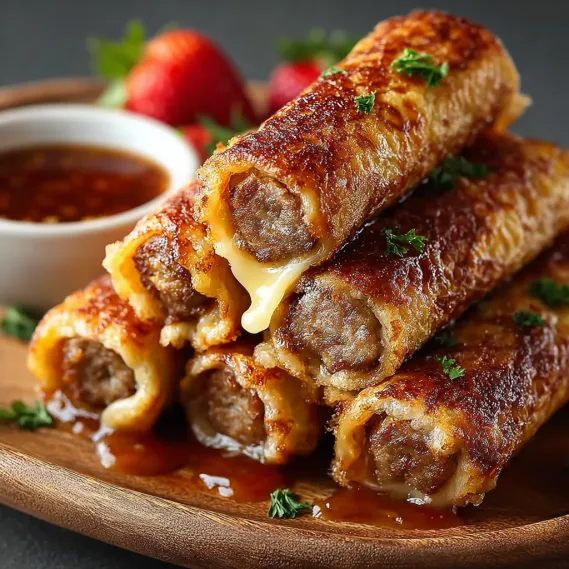
 Pin
Pin
Two crescent dough sheets enclose cooked sausage, scrambled eggs, bacon and cheddar in twelve baked spirals. Cool the cooked filling briefly before spreading so it does not soften the dough. The final bake must cook the dough between the filling layers, not just brown the tops.
No: the wrappers are refrigerated crescent dough sheets, and the rolls are sliced spirals baked in a dish. Use two eight-ounce sheets. Traditional egg-roll wrappers require a different recipe and do not roll or bake the same way.
Ingredient amounts and preparation
- Set out: 4 eggs
- Set out: 2 tablespoons red bell pepper, finely diced
- Set out: 1 tablespoon milk
- Set out: 1/4 teaspoon black pepper
- Set out: 2 cans (8 ounces each) crescent dough sheets
- Set out: 1/3 cup whipped chive and onion cream cheese
- Set out: 8 ounces ground breakfast sausage, cooked
- Set out: 4 slices bacon, cooked and crumbled
- Set out: 1 1/2 cups shredded cheddar cheese
Cooking sequence and doneness
- Stage 1
- Heat the oven to 350°F and grease a 9-by-13-inch baking dish.
- Stage 2
- Have the sausage and bacon fully cooked, drained and crumbled.
- Stage 3
- Whisk eggs, diced pepper, milk and black pepper together.
- Stage 4
- Scramble in a suitable pan until set, then cool briefly without leaving out for extended periods.
- Stage 5
- Join the long edges of the two crescent dough sheets to form a larger rectangle. Spread the chive-and-onion cream cheese evenly over it.
- Stage 6
- Distribute scrambled eggs, sausage, bacon and cheddar across the surface.
- Stage 7
- Roll into a snug log and cut into twelve equal slices.
- Stage 8
- Set the spirals cut-side up in the dish.
- Stage 9
- Bake about twenty-four to twenty-six minutes, continuing as needed until the inner dough seams are baked and the filling reaches 165°F. Rest briefly before lifting and serving.
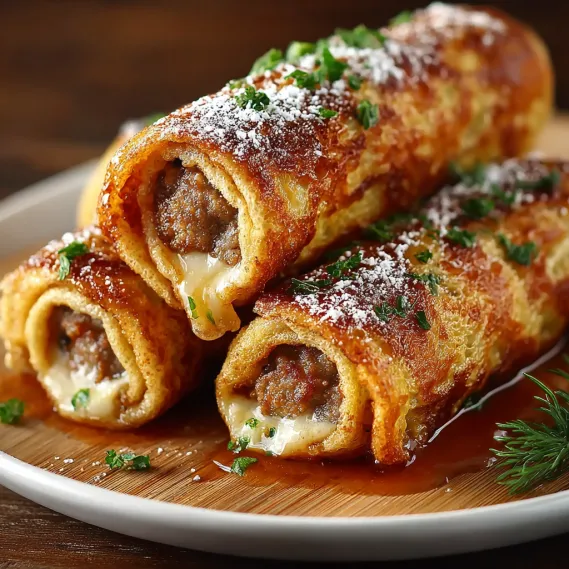
The eight ounces of breakfast sausage and four bacon slices should be fully cooked before assembly. Drain excess fat and crumble them into small pieces. Do not expect raw sausage tucked into a dough spiral to finish within the stated bake time. Unroll both and pinch their adjoining long edges firmly to form one larger rectangle. Spread the cream cheese gently across the surface without pulling open the seam. Distribute the remaining filling evenly rather than concentrating it down the center.
How can the spirals be cut neatly?
Roll the filled rectangle into a snug log and mark twelve equal portions before cutting. Use a serrated knife with a gentle sawing motion or another suitable cutting method that does not crush the log. Chill briefly if the dough becomes too soft to hold its shape.
How is the middle roll checked?
A golden outer edge can hide doughy seams in the center of the pan. Inspect an inner roll and check the filling reaches 165°F. Cover loosely if the tops brown while the dough underneath still needs more oven time. Refrigerate perishable leftovers promptly in shallow containers at 40°F or below; do not wait for a large hot batch to cool completely on the counter. University of Illinois Extension’s leftover guidance gives a three-to-four-day refrigerated window and 165°F for reheating foods served hot. Keep cold salads and toppings chilled, and follow shorter product-label limits where applicable.
Related recipe choices
For another complete recipe, see Grandma-Style Fried Potatoes and Onions in a Skillet or Old-School Cheese and Onion Pie. Each has its own ingredient quantities and cooking sequence; keep those measurements separate when choosing a meal. USDA’s temperature guidance specifies 165°F when reheating leftovers. Thermometer placement guidance explains checking the thick center rather than relying on surface color.
Common Questions About This Recipe
- Are these fried egg rolls?
No: the wrappers are refrigerated crescent dough sheets, and the rolls are sliced spirals baked in a dish. Use two eight-ounce sheets.
- Which meats start cooked?
The eight ounces of breakfast sausage and four bacon slices should be fully cooked before assembly. Drain excess fat and crumble them into small pieces.
- How are the dough sheets joined?
Unroll both and pinch their adjoining long edges firmly to form one larger rectangle. Spread the cream cheese gently across the surface without pulling open the seam.
- How can the spirals be cut neatly?
Roll the filled rectangle into a snug log and mark twelve equal portions before cutting. Use a serrated knife with a gentle sawing motion or another suitable cutting method that does not crush the log.
- How is the middle roll checked?
A golden outer edge can hide doughy seams in the center of the pan. Inspect an inner roll and check the filling reaches 165°F.