
 Pin
Pin
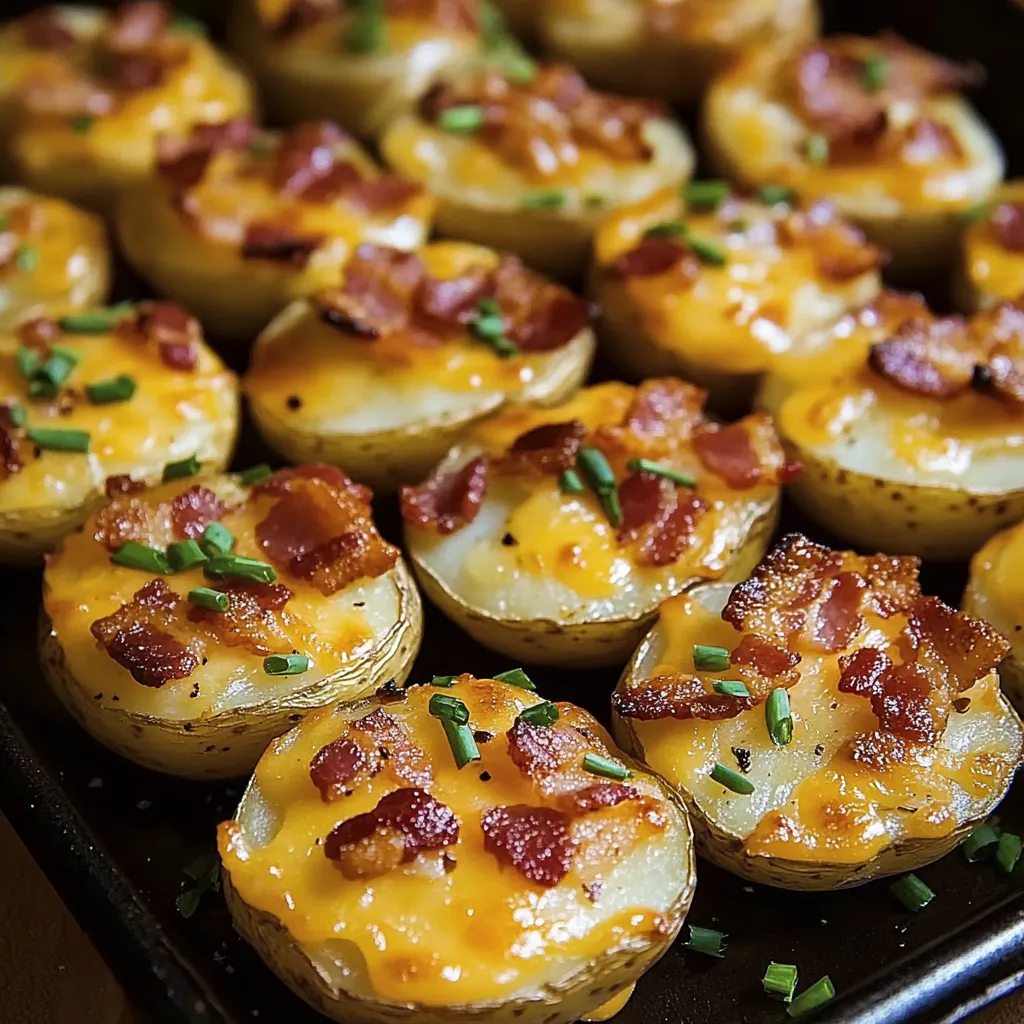
These potato rounds use half-inch slices as the base for cooked bacon, Cheddar and green onion. Bake the potatoes until tender before adding the toppings. The final few minutes melt cheese; they cannot reliably finish a hard potato center. This two-stage approach also prevents the bacon and onion from spending the entire roasting period exposed to heat.
Four medium potatoes do not establish a precise piece count. Diameter, length and discarded ends all matter. Count the rounds after slicing and decide whether a serving means two, three or more pieces. For example, twenty-four usable rounds make eight three-piece portions. That is planning arithmetic, not a yield measured in a kitchen trial.
Slice for even cooking
- 8 slices of bacon, cooked and crumbled
- 8 oz shredded Cheddar cheese
- 1/4 cup butter, melted
- 1/2 cup chopped green onions
- 4 medium potatoes, sliced into 1/2-inch rounds
Bake potatoes before adding toppings
- Stage 1
- Cook and crumble the bacon. Slice scrubbed potatoes into evenly thick half-inch rounds and dry their surfaces.
- Stage 2
- Preheat to 400°F. Line a baking tray with parchment rated for that temperature.
- Stage 3
- Use additional trays if one cannot hold a single layer. Brush both faces of the rounds with the measured melted butter and arrange without overlapping. Roast about 30–40 minutes, turning partway through.
- Stage 4
- Check several thick slices with a knife and continue until their centers are tender. Divide cheese, cooked bacon and green onion over the tender rounds.
- Stage 5
- Return to the oven for roughly 3–5 minutes, just until the cheese melts. Lift with a broad spatula and serve warm. Keep any optional sour cream separate and refrigerate remaining portions promptly.
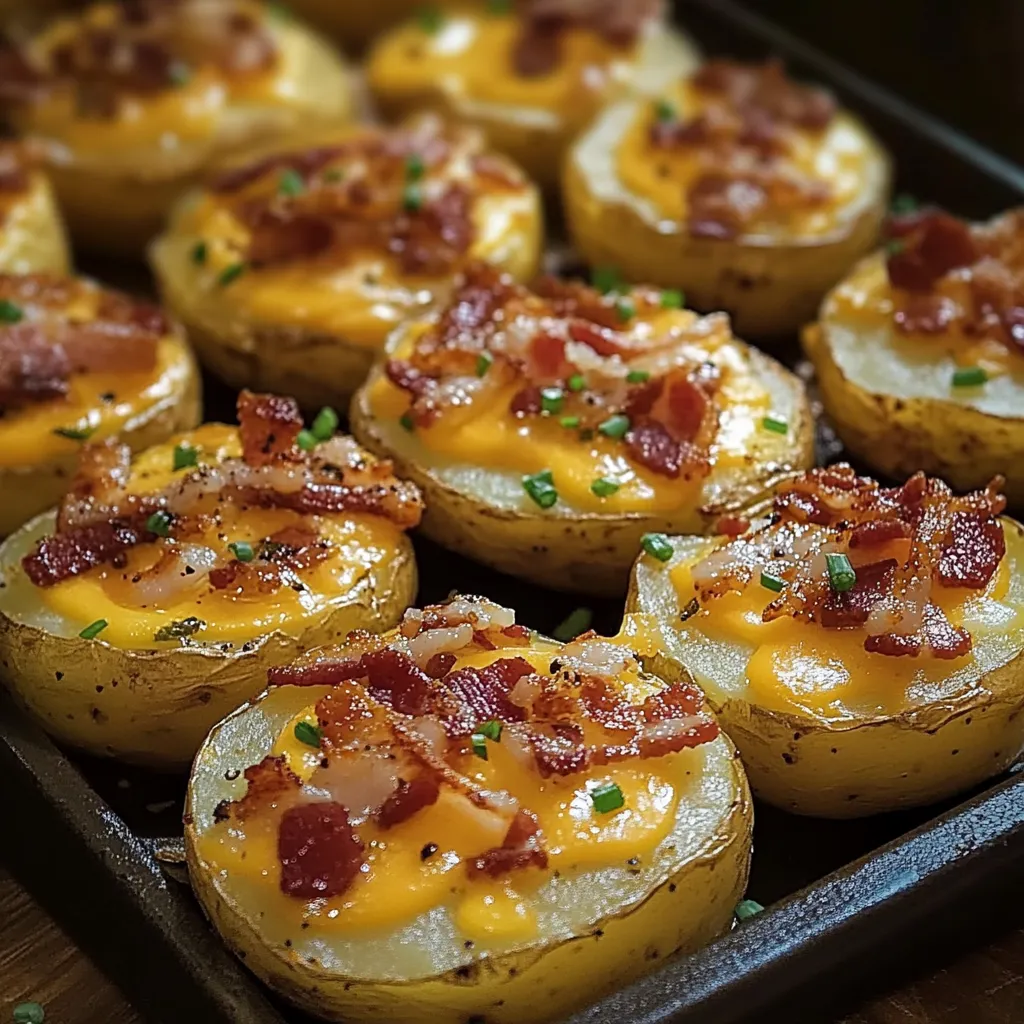
Spread rounds in one layer with space to turn them. A crowded tray traps moisture and makes browning less even. Use a second tray if needed, swapping shelf positions when checking the potatoes. Parchment must be rated for the oven temperature and kept away from heating elements; it is not a reason to add an unplanned broiling step.
Prepare ahead without wet surfaces
If slicing ahead, keep the potatoes submerged in cold water in the refrigerator, then drain and dry thoroughly before brushing with butter. Wet surfaces make it harder for the butter to coat evenly. Keep cooked bacon and cheese chilled separately until needed. The aim is to prepare components without storing an assembled wet tray that will behave differently in the oven.
Change toppings after the base works
Pepper Jack or a different cooked topping changes flavor, but large wet additions can cover the browned potato surface with moisture. First check the base with the original cheese and cooked bacon. If the potatoes are still firm, continue the first bake rather than hiding the problem under cheese. A knife through a thick slice is a more useful tenderness check than counting browned edges.
Plan portions from the actual slices
Offer the rounds as a side to liver and onions or serve them with cowboy caviar at a small gathering. Put out manageable portions and replenish as needed. USDA’s serving guidance limits perishable food at room temperature to two hours, or one hour above 90°F.
Reheat for safety and texture
Refrigerate leftover rounds promptly in a shallow container. Oven reheating can dry the surface more effectively than a closed container, but crispness is a quality preference, not proof of safe reheating. Use the USDA 165°F leftover endpoint. Keep an eye on the cheese, which can darken before the potato center is hot, and shield it loosely when necessary.
Common Questions About This Recipe
- Should the bacon start raw?
No. It is cooked before being crumbled onto the potatoes.
- Can the cheese finish cooking a hard potato?
The short cheese-melting stage is not enough to rely on. Finish the potato stage first.
- How many bites does this make?
Count your actual slices. Potato size varies, so the number of potatoes alone is not an exact yield.
- Why are the rounds pale and wet?
Check surface drying, crowding and tray position before simply increasing the heat.
- Can I broil the parchment-lined tray?
Do not assume parchment is broiler-safe. This method uses an oven bake, not a broiling finish.