
 Pin
Pin
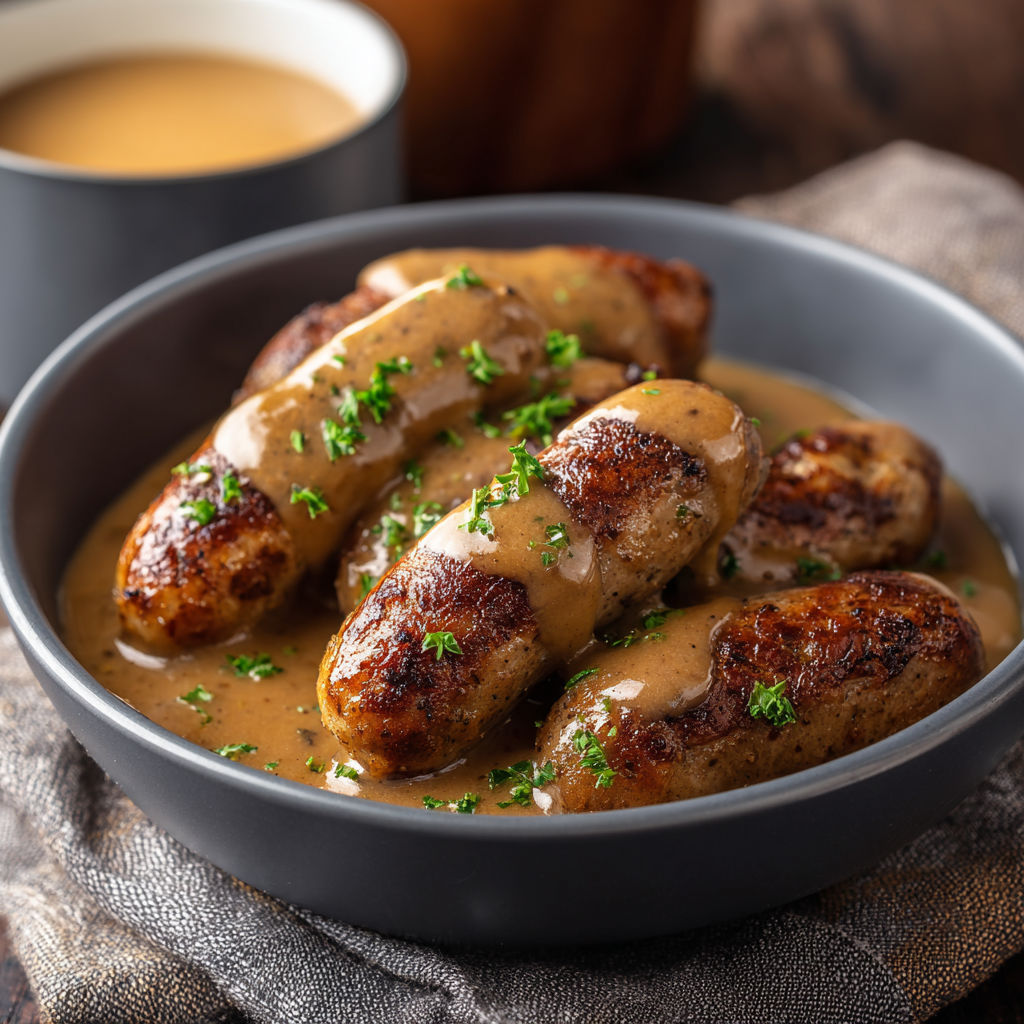
Slow cooker beef sausages in brown gravy combines raw beef dinner sausages with condensed mushroom soup, beef broth, and a packet of gravy mix. Start with thawed sausages and an appropriately sized slow cooker. Cook on HIGH, allowing several hours, then check every sausage for a center temperature of 160°F. The sauce does not brown the casings, and a thick gravy does not prove the meat is done. This is a moist, covered cooking method rather than a quick pan-fry.
Use raw beef dinner sausages, not cocktail links or already cooked frankfurters. Count alone does not describe the load: note the package weight and link thickness, and choose a cooker whose manual permits that quantity. Check the gravy packet’s prepared yield; this recipe assumes a packet intended to make about one cup. Whisk it with the listed broth and condensed soup, without also adding the packet’s separate water allowance.
The four ingredients and package differences
- Eight raw beef dinner sausages, fully thawed: Similar-sized links are easier to finish together. Confirm the meat species and whether the package says raw or fully cooked.
- One 10.5-ounce can condensed cream of mushroom soup: Use the condensed product as supplied, without adding an extra can of water.
- One cup beef broth: A lower-sodium version gives more control when soup, sausage, and gravy powder already contribute salt.
- One packet brown gravy mix: Select a packet intended to make about one cup of gravy. Packet formulas differ, so this sauce ratio still needs practical testing with your chosen brand.
Load, cook, and check the sausages
- Check and prepare the appliance
- Use a clean slow cooker with a sound lid and follow its recommended fill level for the planned load. Lightly grease the insert only if its instructions call for it. Set it on a stable, heat-resistant surface and confirm the controls are set to cooking, not WARM.
- Arrange the thawed links
- Lay the thawed raw beef sausages across the base without forcing them into a tight stack. Keep raw-meat packaging and utensils away from the serving area. This covered step will not brown the outside; browning is a separate optional technique that would add another pan and time.
- Whisk the gravy base
- In a bowl or jug, whisk condensed mushroom soup with the cup of broth, then incorporate the gravy powder until no dry pockets remain. Use the recipe’s broth amount rather than adding the packet’s suggested water on top. The mixture may look thick before heating.
- Cover evenly and start promptly
- Pour sauce over and around the sausages, distributing it between the links. Fit the lid securely and start on HIGH. Do not leave raw meat in an unpowered cooker waiting for a delayed-start timer. Keep the lid in place while the appliance heats the batch.
- Allow hours and check temperature
- Plan roughly 3–4 hours on HIGH as a provisional window and follow your cooker’s guidance. Check the center of each beef sausage with a food thermometer, returning any below 160°F for further cooking. Lift the lid only for necessary checks; time and gravy bubbles alone do not establish safety.
- Finish the gravy and serve
- Once every link has reached its endpoint, assess the sauce. If reduction is needed, remove sausages and simmer the gravy separately in a saucepan. Serve with cooked sides, or hold already hot food at 140°F or above with temperature checks. Refrigerate any saved portions promptly.
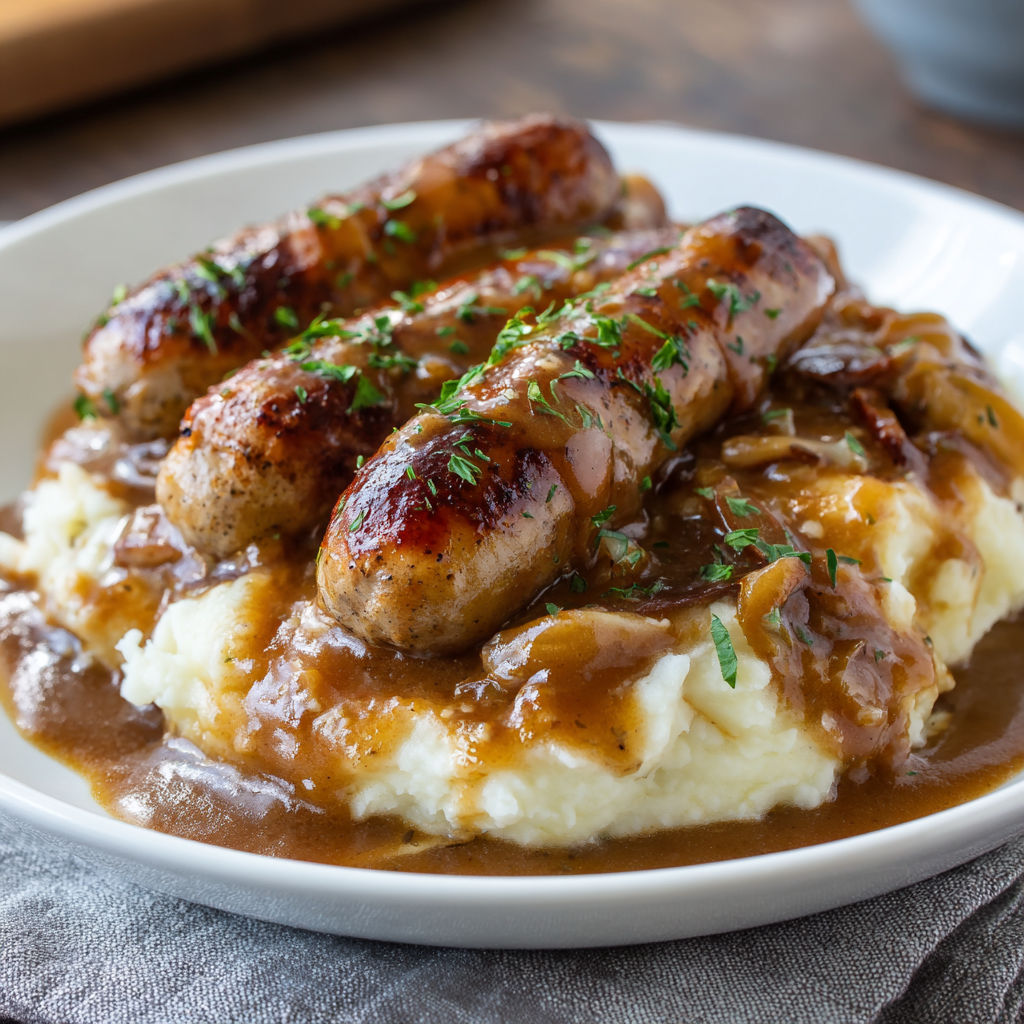
Read the sausage package before opening it. These directions specify raw beef sausages, not hot dogs or fully cooked smoked links. “Brown” in the title describes the gravy, not a safe-doneness color in the meat. Under USDA minimum-temperature guidance, ground beef requires 160°F, while sausages containing chicken or turkey require 165°F. A mixed-meat sausage must be handled according to its ingredients and label. Do not rely on a casing’s browned appearance or juices to distinguish those endpoints.
Why the sausage species matters
The four-ingredient sauce is deliberately simple, but brands matter. Condensed soup provides body, and a gravy packet contributes seasoning and thickener. Whisk both with the measured broth before adding them so dry mix is not trapped in lumps between links. Packet size is not standardized; choose a packet intended to make about one cup of gravy and record its weight if repeating the recipe. Do not also add the packet’s full water quantity, because the broth and condensed soup are already the planned liquid base.
Choosing the cooker and starting safely
Keep thawed raw sausages refrigerated until loading the cooker and start cooking promptly. USDA slow-cooker guidance calls for thawing meat first and keeping the lid in place except when necessary. Follow the appliance’s recommended fill level: eight large links and eight small links are different loads. A very large pot with a thin film of food or a pot packed above its limit is not the intended setup. Use the cooker suited to the batch instead of forcing every quantity into one appliance.
Sides that work with the gravy
Mash is a familiar accompaniment because it catches the gravy, but rice or a plain baked potato can serve the same purpose. Offer a simple green vegetable alongside. For an alternative potato side, skillet potatoes and onions provide a different texture. A small portion of bean and corn salad can supply a cool contrast on a separate part of the plate. Keep sides simple while you judge the sauce’s saltiness.
Allergen labels and realistic portions
Condensed mushroom soup and gravy mix often contain milk or wheat, and sausages may contain binders or additional allergens. Read all four labels before making a dietary claim. Replacing beef sausages with poultry does not automatically make the full meal low-fat or low-sodium; the other products and portions still matter. No verified nutrition totals are provided. Four servings means two links each as a starting plan, but link weight and the amount of gravy served determine how large those portions actually are.
Adjusting gravy after the meat is cooked
Only adjust the gravy after the sausages have reached their safe endpoint. Transfer the meat to a clean covered dish, then reduce thin sauce in a saucepan where you can stir and observe it. If the flavor is already very salty, reduction concentrates that salt too; avoid automatically boiling away a large volume. A small hot-water addition can loosen overly thick gravy. If the package sizes differ from those specified, record that difference rather than presenting the result as a tested variation.
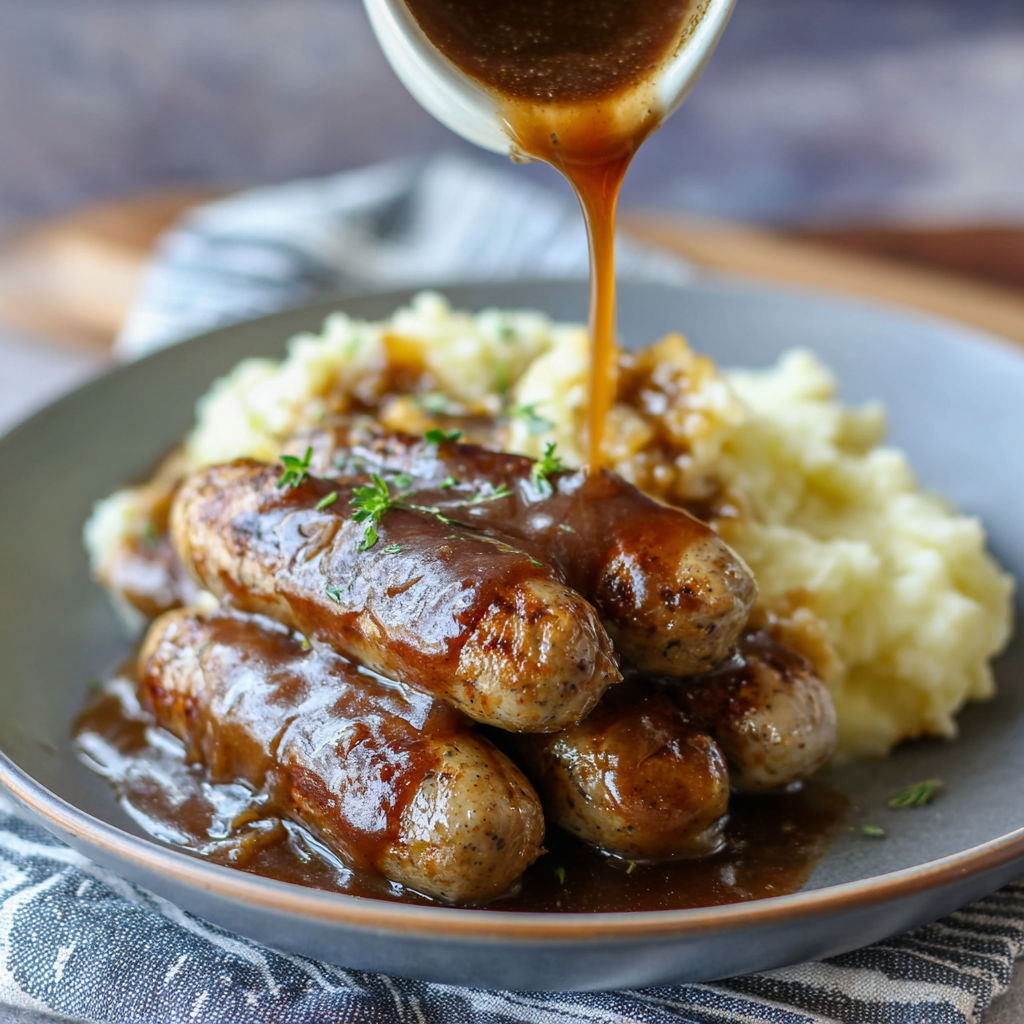
Browning is an optional flavor step, not proof of a cooked center. This recipe’s HIGH cooking window is planning guidance; the thermometer and cooker manual determine completion. Check every link, especially in a tightly packed insert. Serve the gravy with skillet potatoes or offer cowboy caviar separately for contrast. Use a stovetop or microwave to reheat cold leftovers, consistent with USDA reheating guidance, rather than warming them slowly in the cooker.
Questions About This Recipe
- Does this recipe contain onions?
No. Despite some related sausage-and-onion recipes in search results, this four-ingredient version uses mushroom soup, broth and gravy mix. Additions require their own liquid and timing decisions.
- What if my gravy packet makes two cups?
It is not the packet size assumed here. Choose the specified yield or use the label to develop a different sauce quantity; do not add the entire packet and its water automatically.
- → Do I need to brown the sausages?
It is optional for flavor and appearance, not a replacement for cooking the center. This method starts with raw thawed links and does not promise a browned casing.
- → Can chicken or turkey sausages replace beef?
They need a 165°F endpoint and may differ in fat, size, and texture. Read their labels and treat the substitution as a variation, not an identical timed recipe.
- → Should leftovers be reheated in the slow cooker?
No. Heat cold leftovers thoroughly on the stove or in a microwave. Transfer them to a preheated cooker only if it is being used to maintain already hot food at 140°F or above.