
 Pin
Pin
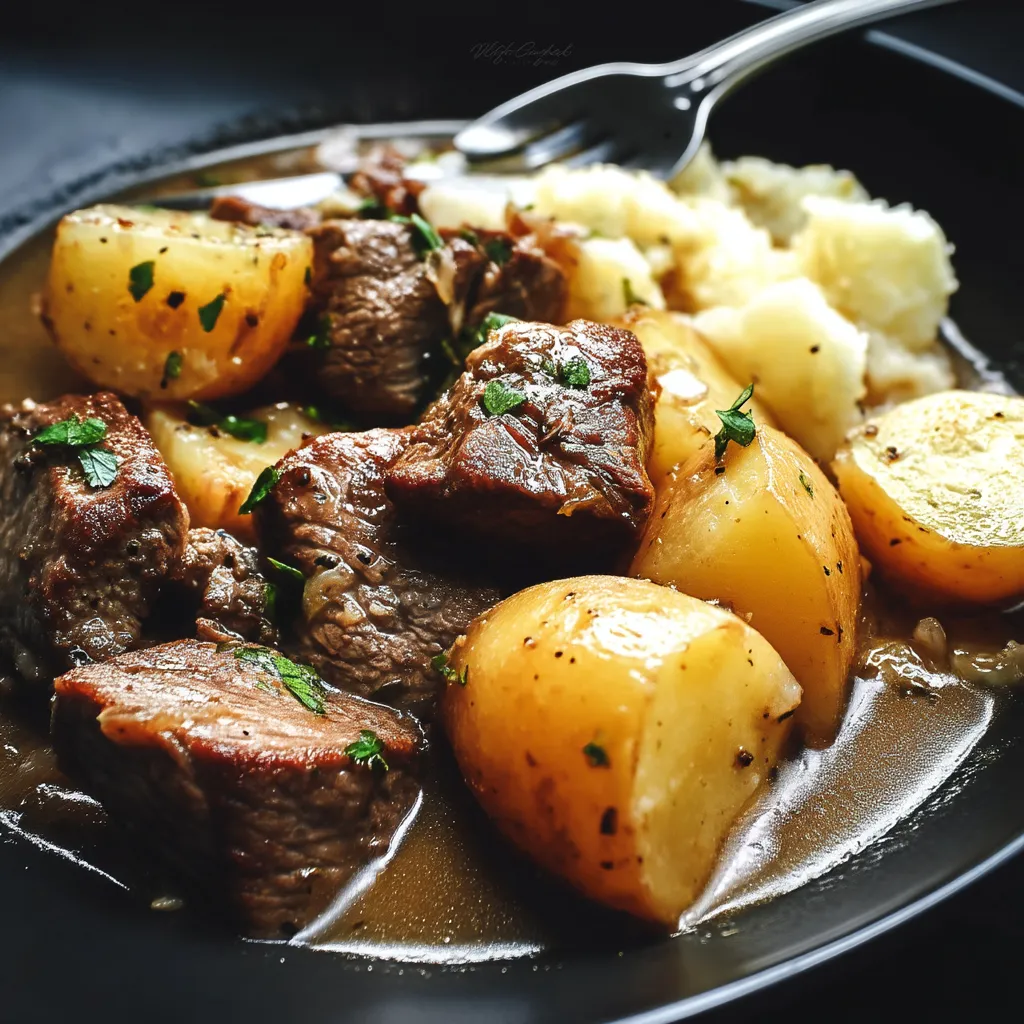
Cubed sirloin and potatoes cook with onion, broth and Worcestershire sauce before cheddar melts over the top. Put the vegetables beneath the meat and use thawed beef. The long cooking window is for potato tenderness as well as safe meat doneness.
Root vegetables can take longer to soften in a slow cooker than meat. Arrange evenly sized potato pieces and onion at the bottom, then place the beef above them. This follows the cooker’s heating pattern more reliably than burying potatoes on top.
Ingredient amounts and preparation
- Set out: 2 lbs sirloin steak, cubed
- Set out: 4 large potatoes, diced
- Set out: 1 onion, diced; 1 cup cheddar cheese, shredded
- Set out: 1/2 cup beef broth
- Set out: 1/4 cup Worcestershire sauce; Salt, to taste
- Set out: Black pepper, to taste
- Set out: Garlic powder, to taste; Paprika, to taste
Cooking sequence and doneness
- Stage 1
- Use fully thawed beef and prepare the cooker according to its capacity and liquid instructions. Dice potatoes and onion evenly and place them at the bottom.
- Stage 2
- Add cubed sirloin above the vegetables and season with garlic powder, paprika, pepper and salt as needed. Mix broth and Worcestershire sauce and pour over the ingredients.
- Stage 3
- Cover and cook on low for about six to eight hours or high for about three to four hours. Keep the lid closed during most of the cook, then check potatoes are tender and beef has reached at least 145°F followed by three minutes at rest or continued cooking.
- Stage 4
- Continue as needed for tenderness, adding a little hot broth only if the cooker is drying. Sprinkle cheddar over the finished ingredients.
- Stage 5
- Cover for ten to fifteen minutes until melted. Serve promptly and refrigerate leftovers in shallow containers.
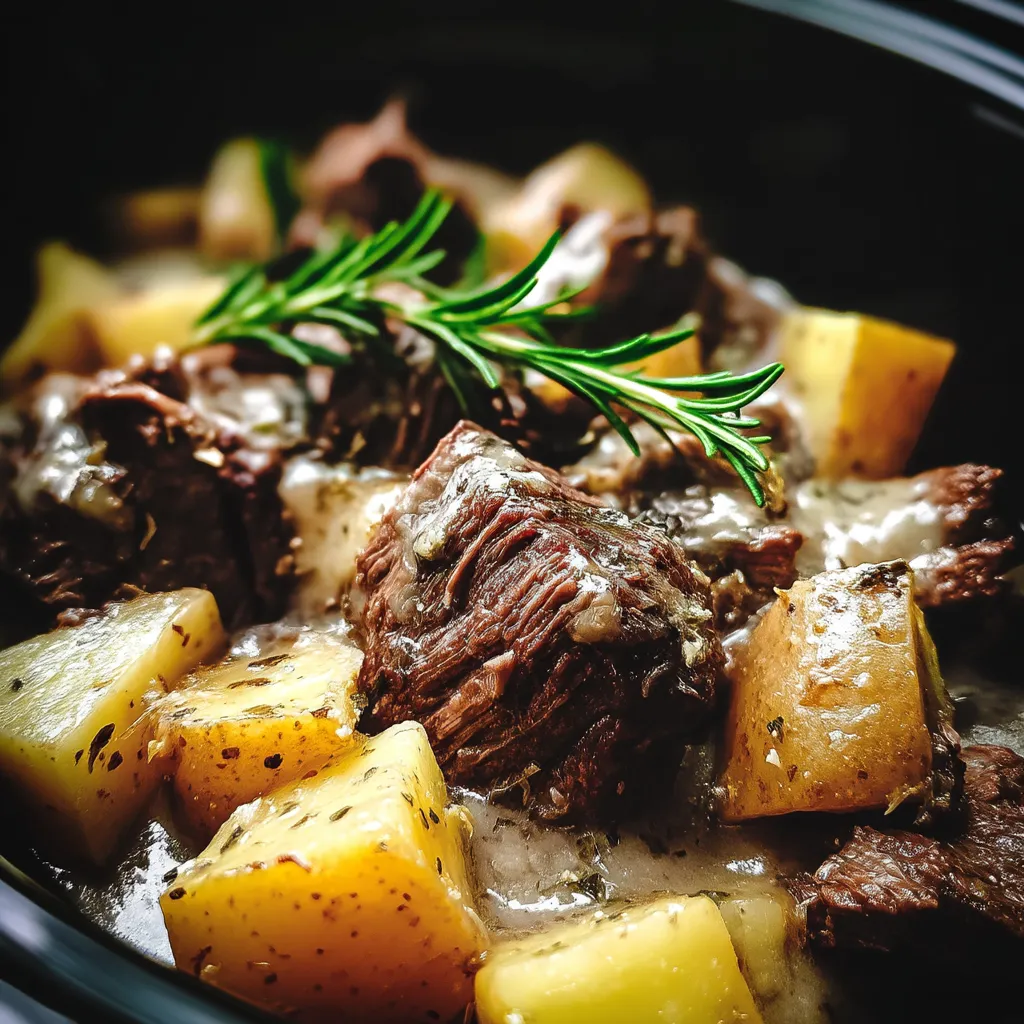
Thaw it in the refrigerator before loading the cooker. Frozen meat can warm too slowly in this method. Keep meat chilled until preparation, then start the cooker promptly rather than using a delayed start. Cut potatoes into similar small cubes and beef into even bite-size pieces. The source does not give a tested size-to-time relationship, so check tenderness rather than assuming all large potatoes behave the same. Sirloin can become firm or dry with extended cooking despite being safe.
Is half a cup of broth enough?
Meat and vegetables release liquid, but slow cookers differ. Follow your appliance’s minimum-liquid and fill guidance; choose a suitable cooker and add a little broth if necessary rather than letting it cook dry. Do not fill above the manufacturer’s limit.
When does the cheese go on?
Wait until the potatoes are tender and the beef is safely cooked. Add cheddar during the last ten to fifteen minutes and cover just long enough to melt it. Adding cheese at the start leaves it in the cooker unnecessarily for hours. Use the stove, microwave or oven to reheat portions to 165°F. A slow cooker is suitable for holding already hot food under its instructions, not for slowly reheating a cold dense batch. Divide leftovers into shallow containers for refrigeration.
Storage and serving later
Refrigerate perishable leftovers promptly in shallow containers at 40°F or below; do not wait for a large hot batch to cool completely on the counter. University of Illinois Extension’s leftover guidance gives a three-to-four-day refrigerated window and 165°F for reheating foods served hot. Keep cold salads and toppings chilled, and follow shorter product-label limits where applicable.
Related recipe choices
For another complete recipe, see Slow Cooker Beef Sausages in Brown Gravy or Cheddar Steak Bites with Roasted Potato Cubes. Each has its own ingredient quantities and cooking sequence; keep those measurements separate when choosing a meal. USDA’s temperature guidance specifies 145°F for beef steaks followed by at least three minutes of rest. Thermometer placement guidance explains checking the thick center rather than relying on surface color. USDA slow-cooker guidance recommends thawing meat first, placing vegetables below meat and reheating leftovers with another cooking method before hot holding.
Common Questions About This Recipe
- Why put potatoes underneath?
Root vegetables can take longer to soften in a slow cooker than meat. Arrange evenly sized potato pieces and onion at the bottom, then place the beef above them.
- Can the beef go in frozen?
Thaw it in the refrigerator before loading the cooker. Frozen meat can warm too slowly in this method.
- How large should the pieces be?
Cut potatoes into similar small cubes and beef into even bite-size pieces. The source does not give a tested size-to-time relationship, so check tenderness rather than assuming all large potatoes behave the same.
- Is half a cup of broth enough?
Meat and vegetables release liquid, but slow cookers differ. Follow your appliance’s minimum-liquid and fill guidance; choose a suitable cooker and add a little broth if necessary rather than letting it cook dry.
- When does the cheese go on?
Wait until the potatoes are tender and the beef is safely cooked. Add cheddar during the last ten to fifteen minutes and cover just long enough to melt it.
- How should leftovers be warmed?
Use the stove, microwave or oven to reheat portions to 165°F. A slow cooker is suitable for holding already hot food under its instructions, not for slowly reheating a cold dense batch.