
 Pin
Pin
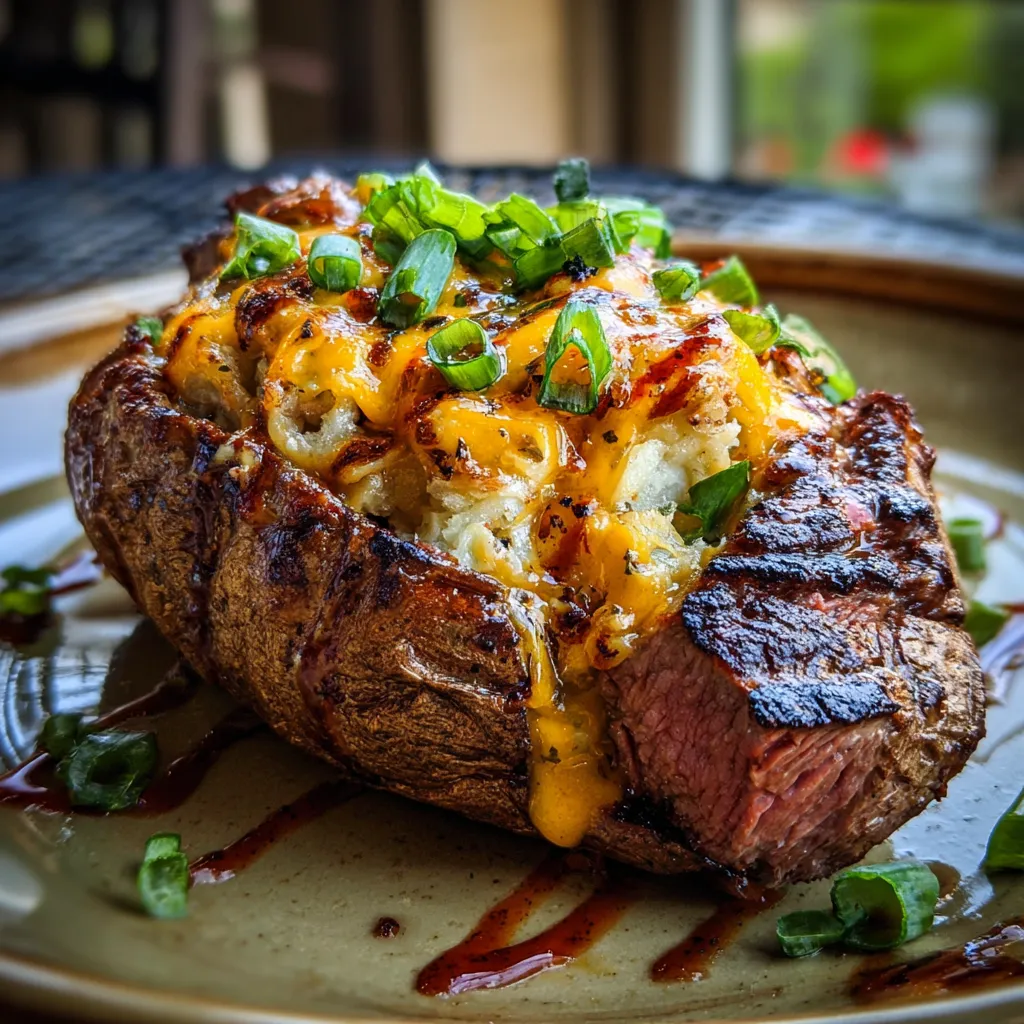
Roasted potato cubes, seared steak and melted cheddar make a loaded skillet meal with bacon and cool sour cream on top. The potatoes cook first so the steak needs only a brief return to the oven. This is a spoonable potato-and-steak bake rather than a stuffed whole baked potato.
Cut the potatoes into roughly half-inch cubes and keep their size consistent. Larger chunks will need longer than the first twenty-minute check. Spread them with space between pieces; if they are piled deeply, use another tray rather than waiting for crowded potatoes to crisp.
Ingredient amounts and preparation
- Set out: 3–4 small to medium russet or Yukon gold potatoes, diced into 1.25 cm cubes
- Set out: 2 tablespoons olive oil; 1 teaspoon garlic powder
- Set out: Salt, to taste; Black pepper, to taste
- Set out: 450 g sirloin or ribeye steak, cut into 2.5 cm cubes; 1 tablespoon olive oil or butter
- Set out: Salt, to taste; Black pepper, to taste
- Set out: Optional: 1/2 teaspoon steak seasoning or smoked paprika; 120 g shredded cheddar cheese
- Set out: 4 slices bacon, cooked and crumbled; 60 ml sour cream
- Set out: 2 green onions, chopped; Optional: chopped chives, hot sauce, or ranch drizzle
Cooking sequence and doneness
- Stage 1
- Heat the oven to 425°F, approximately 220°C. Toss the half-inch potato cubes with their two tablespoons of oil, garlic powder, salt and pepper.
- Stage 2
- Spread on a rimmed tray in one layer and roast, turning once, starting to check at twenty minutes. Continue until a knife enters the centers easily and the edges have browned.
- Stage 3
- Pat the one-inch steak cubes dry and season with salt, pepper and the optional steak seasoning or paprika. Heat the separate tablespoon of oil or butter in a skillet and sear the steak in an uncrowded layer.
- Stage 4
- Turn to brown the sides and check thick pieces reach 145°F; rest for at least three minutes. Put the tender potatoes and cooked steak in an oven-safe skillet or shallow dish.
- Stage 5
- Scatter the cheddar and cooked bacon over them and return to the oven about five minutes, just until the cheese melts. Finish with sour cream and green onions and serve promptly.
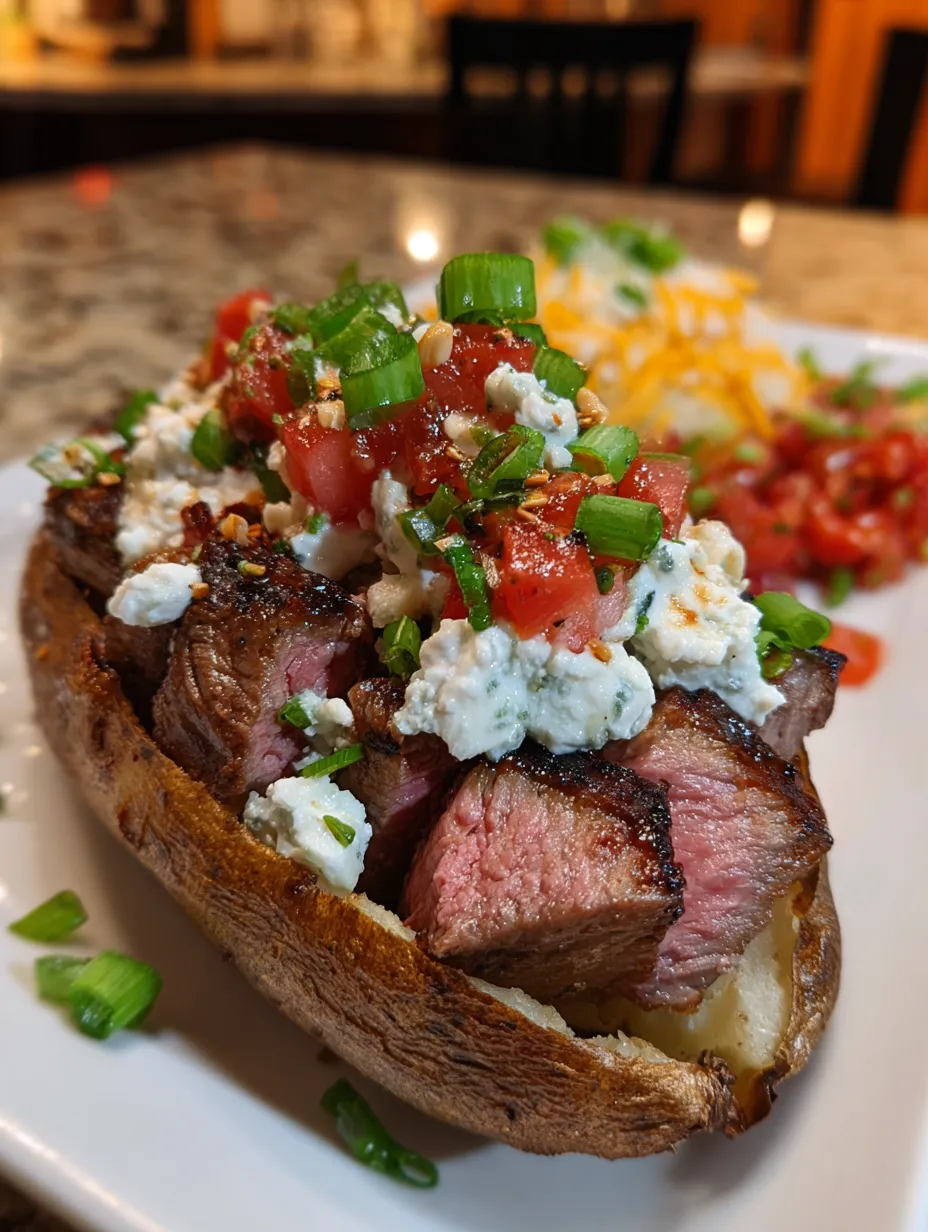
Start searing when the potatoes are nearly tender. Dry the one-inch steak cubes before seasoning, then cook in batches if they cannot sit in one layer. Check a thick piece from the side with a thin thermometer probe; browned surfaces do not establish the center temperature. The last oven stage melts cheese over already cooked components. Add the steak only when the potatoes can be pierced easily. Waiting for hard potatoes beneath a layer of cooked beef is likely to make the steak firmer than intended.
Which pan can finish in the oven?
Use a skillet with an oven-rated handle or transfer everything to a shallow baking dish. Keep a mitt on the handle after the oven stage as a reminder that it remains hot. A nonstick pan is suitable only if its manufacturer permits this temperature.
When do the cold toppings belong?
Add sour cream and green onions after the cheese melts. Keep spare toppings separate for portions that will be stored, since reheating the sour cream with the potatoes changes its texture. Bacon must already be cooked before it is scattered over the skillet. Refrigerate perishable leftovers promptly in shallow containers at 40°F or below; do not wait for a large hot batch to cool completely on the counter. University of Illinois Extension’s leftover guidance gives a three-to-four-day refrigerated window and 165°F for reheating foods served hot. Keep cold salads and toppings chilled, and follow shorter product-label limits where applicable.
Related recipe choices
For another complete recipe, see Baked Potatoes with Cajun Steak Bites and Parmesan Cream or Loaded Potato Salad with Baked Russets, Bacon and Cheddar. Each has its own ingredient quantities and cooking sequence; keep those measurements separate when choosing a meal. USDA’s temperature guidance specifies 145°F for beef steaks followed by at least three minutes of rest. Thermometer placement guidance explains checking the thick center rather than relying on surface color.
Common Questions About This Recipe
- How small should the potatoes be?
Cut the potatoes into roughly half-inch cubes and keep their size consistent. Larger chunks will need longer than the first twenty-minute check.
- When should the steak go into the skillet?
Start searing when the potatoes are nearly tender. Dry the one-inch steak cubes before seasoning, then cook in batches if they cannot sit in one layer.
- Why keep the final bake short?
The last oven stage melts cheese over already cooked components. Add the steak only when the potatoes can be pierced easily.
- Which pan can finish in the oven?
Use a skillet with an oven-rated handle or transfer everything to a shallow baking dish. Keep a mitt on the handle after the oven stage as a reminder that it remains hot.
- When do the cold toppings belong?
Add sour cream and green onions after the cheese melts. Keep spare toppings separate for portions that will be stored, since reheating the sour cream with the potatoes changes its texture.
- Has this recipe been kitchen-tested?
No. This is a research-based editorial revision.