
 Pin
Pin
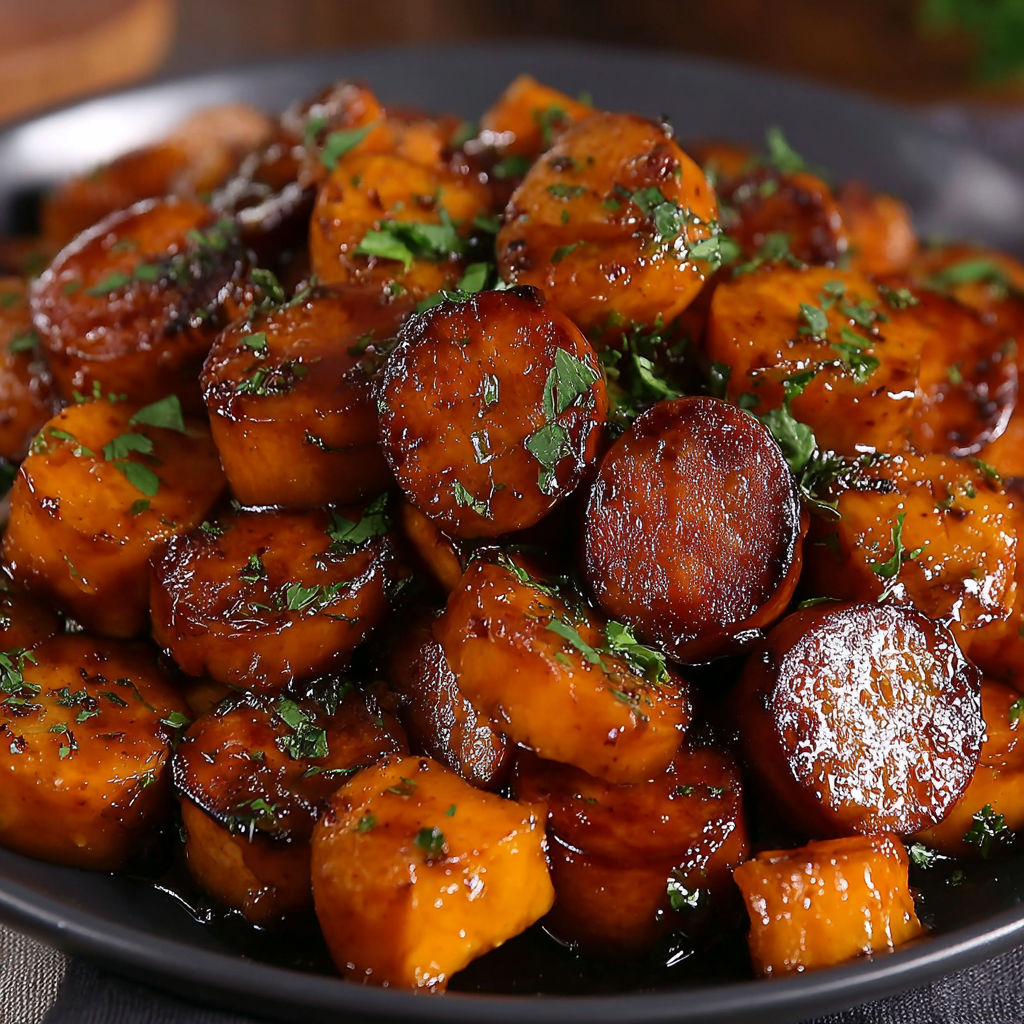
Sweet potato cubes and sausage are finished in a honey, soy and garlic glaze. Cook the sausage according to whether the package is raw or fully cooked, and soften the potatoes before reducing the sugary sauce. The covered potato stage may need a little water to prevent scorching.
Italian and chicken sausages may be raw or fully cooked. Follow the label and check raw pork sausage reaches 160°F or raw poultry sausage reaches 165°F. Slice cooked links for the final toss; a short browning step alone does not establish doneness.
Ingredient amounts and preparation
- Set out: 1 pound Italian or chicken sausage
- Set out: 2 large sweet potatoes, peeled and cubed
- Set out: 1/4 cup honey
- Set out: 3 cloves garlic, minced
- Set out: 2 tablespoons soy sauce or tamari
- Set out: 1 tablespoon olive oil
- Set out: 1 teaspoon paprika
- Set out: Salt, to taste
- Set out: Black pepper, to taste; Fresh parsley, chopped
Cooking sequence and doneness
- Stage 1
- Read the sausage package and prepare it according to its raw or fully cooked status.
- Stage 2
- Cook raw pork sausage to 160°F or raw chicken sausage to 165°F, then slice cooked links when safe to handle. Dice peeled sweet potatoes into half-inch cubes.
- Stage 3
- Mix honey, garlic, soy sauce, paprika and pepper separately. Heat the olive oil in a large skillet and brown the potato cubes briefly.
- Stage 4
- Add a small splash of water, cover and cook over moderate heat until the centers are tender, adding more water only if the pan dries.
- Stage 5
- Uncover and let excess moisture evaporate. Add the cooked sausage and honey mixture and toss over reduced heat.
- Stage 6
- Cook until the glaze coats the pieces without scorching, heating refrigerated cooked sausage to 165°F if used. Taste for salt and garnish with parsley.
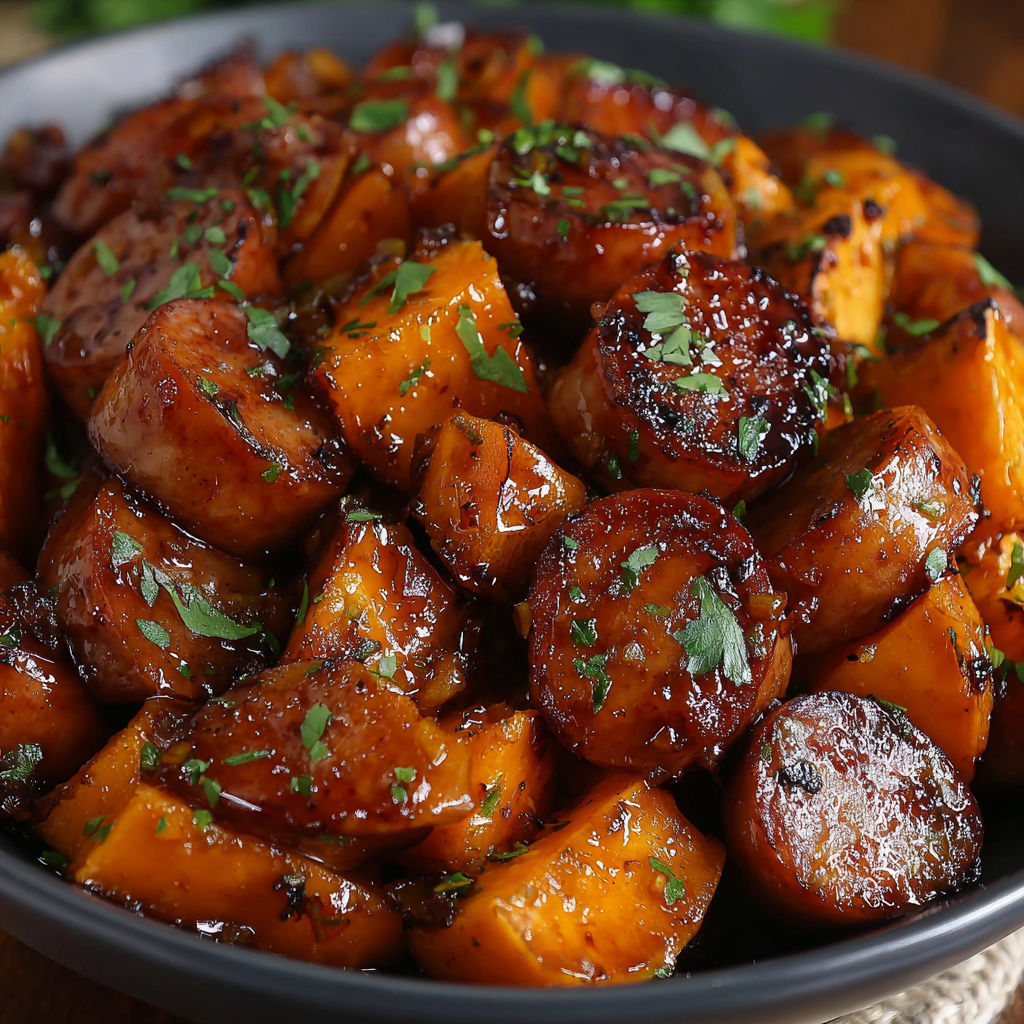
Cut them into similar half-inch cubes so they soften evenly. Large chunks need longer than the short skillet estimate. Test several pieces with a knife before adding the final glaze.
Why add the honey mixture late?
Honey can catch on the pan before firm potatoes finish cooking. Brown and steam the potato cubes first, then add the mixed sauce near the end. This keeps the sauce from needing a long simmer while the vegetables soften.
What if the skillet becomes dry?
Add a small splash of water and cover while the potato centers cook, reducing heat if necessary. Let excess water evaporate before adding the glaze. Do not add more honey or soy sauce simply to create steam.
Is tamari enough to make the dish gluten-free?
Only if the tamari, sausage and every other packaged ingredient also meet that requirement. Read the labels rather than relying on the sauce substitution alone. Taste the finished dish before adding salt because sausage and soy sauce vary considerably.
Storage and serving later
Refrigerate perishable leftovers promptly in shallow containers at 40°F or below; do not wait for a large hot batch to cool completely on the counter. University of Illinois Extension’s leftover guidance gives a three-to-four-day refrigerated window and 165°F for reheating foods served hot. Keep cold salads and toppings chilled, and follow shorter product-label limits where applicable.
Related recipe choices
For another complete recipe, see Slow Cooker Beef Sausages in Brown Gravy or Honey Garlic Shrimp, Smoked Sausage and Broccoli Skillet. Each has its own ingredient quantities and cooking sequence; keep those measurements separate when choosing a meal.
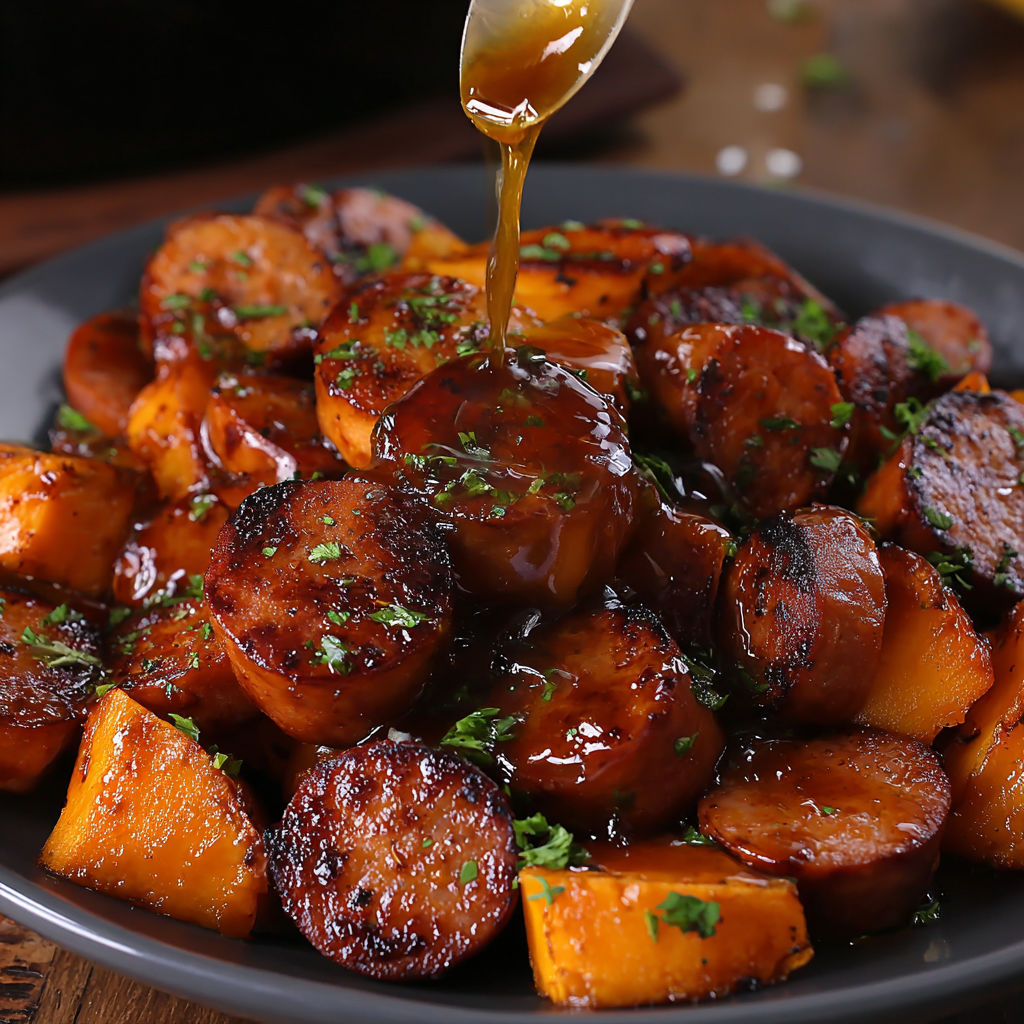
USDA thermometer guidance supports checking the center rather than judging by browning. Cook pork sausage to 160°F and poultry sausage to 165°F. USDA’s sausage guidance distinguishes uncooked smoked sausage from ready-to-eat products. The package label determines whether separate full cooking is required.
Common Questions About This Recipe
- Does sausage type change the method?
Italian and chicken sausages may be raw or fully cooked. Follow the label and check raw pork sausage reaches 160°F or raw poultry sausage reaches 165°F.
- How small should the sweet potatoes be?
Cut them into similar half-inch cubes so they soften evenly. Large chunks need longer than the short skillet estimate.
- Why add the honey mixture late?
Honey can catch on the pan before firm potatoes finish cooking. Brown and steam the potato cubes first, then add the mixed sauce near the end.
- What if the skillet becomes dry?
Add a small splash of water and cover while the potato centers cook, reducing heat if necessary. Let excess water evaporate before adding the glaze.
- Is tamari enough to make the dish gluten-free?
Only if the tamari, sausage and every other packaged ingredient also meet that requirement. Read the labels rather than relying on the sauce substitution alone.