
 Pin
Pin
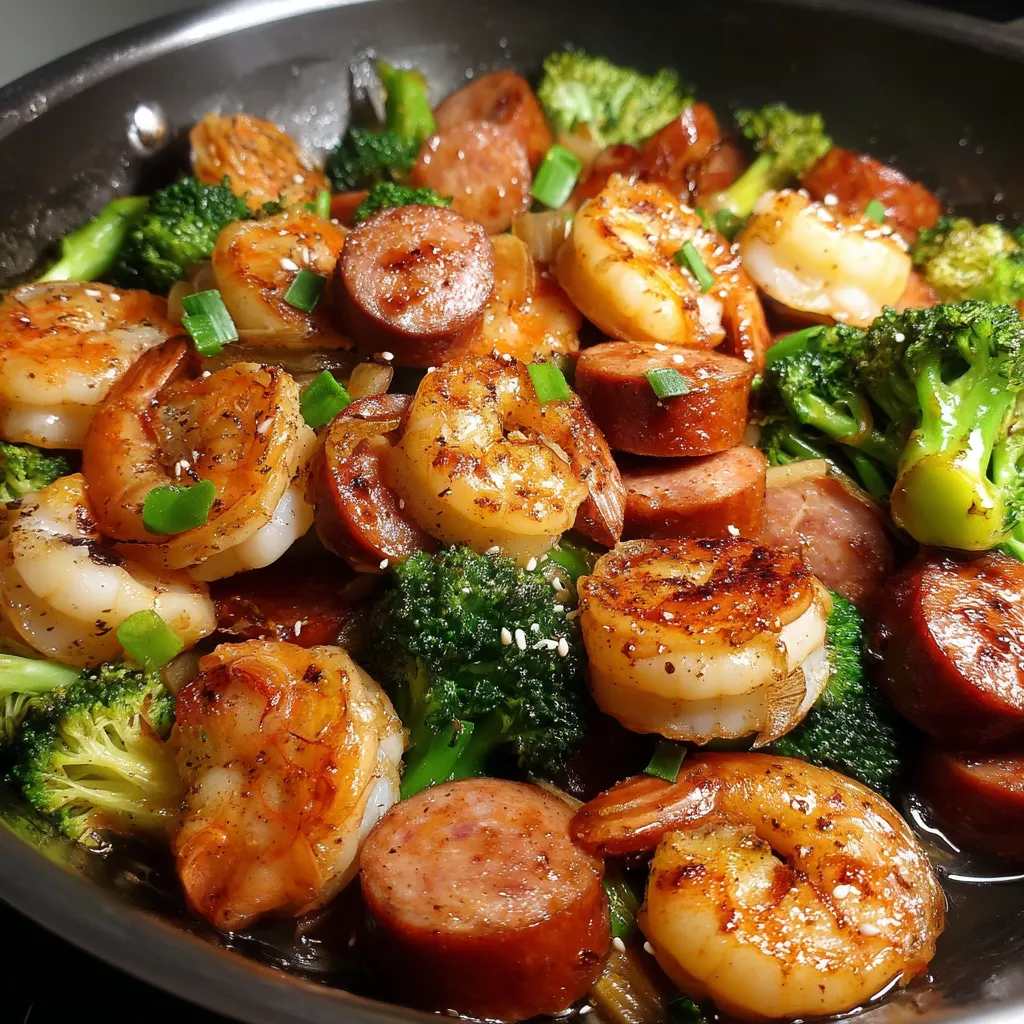
Shrimp, smoked sausage and broccoli cook in stages before a honey-garlic sauce brings them together. Check the sausage label first: this quick skillet assumes a fully cooked product. Browned smoked sausage is not automatically ready to eat if its label says it still requires cooking.
Broccoli and sausage need their own time against the hot surface. Keeping cooked shrimp in throughout those stages can make them firm and dry. Return them only for the brief final coating and heating stage.
Ingredient amounts and preparation
- Set out: 1 lb shrimp, peeled and deveined
- Set out: 8 ounces fully cooked smoked sausage, sliced
- Set out: 2 cups broccoli florets
- Set out: 3 cloves garlic, minced
- Set out: Green onions, chopped, for garnish
- Set out: ¼ cup honey
- Set out: ¼ cup soy sauce
- Set out: 1 tablespoon rice vinegar
- Set out: 1 teaspoon sesame oil
- Set out: ½ teaspoon red pepper flakes (optional)
- Set out: 1 teaspoon cornstarch (optional, for thickening)
- Set out: 2 tablespoons olive oil
- Set out: Salt and black pepper to taste; Sesame seeds for garnish
Cooking sequence and doneness
- Stage 1
- Confirm the sausage is fully cooked;
- Stage 2
- thaw and dry shrimp and cut broccoli into small florets.
- Stage 3
- Heat one tablespoon olive oil and cook shrimp until firm, pearly and opaque, checking 145°F where practical, then move to a clean plate.
- Stage 4
- Brown sliced sausage according to its heating directions and set aside.
- Stage 5
- Add the remaining olive oil and cook broccoli until tender-crisp, briefly steaming with a splash of water if needed and allowing excess water to evaporate.
- Stage 6
- Whisk honey, soy sauce, vinegar, sesame oil, garlic and pepper flakes.
- Stage 7
- Add the sauce to the pan and simmer briefly;
- Stage 8
- if using starch, stir in a slurry of one teaspoon cornstarch and two teaspoons cold water.
- Stage 9
- Return sausage and shrimp just long enough to coat and heat through, taste before adding salt, and serve with optional garnishes.
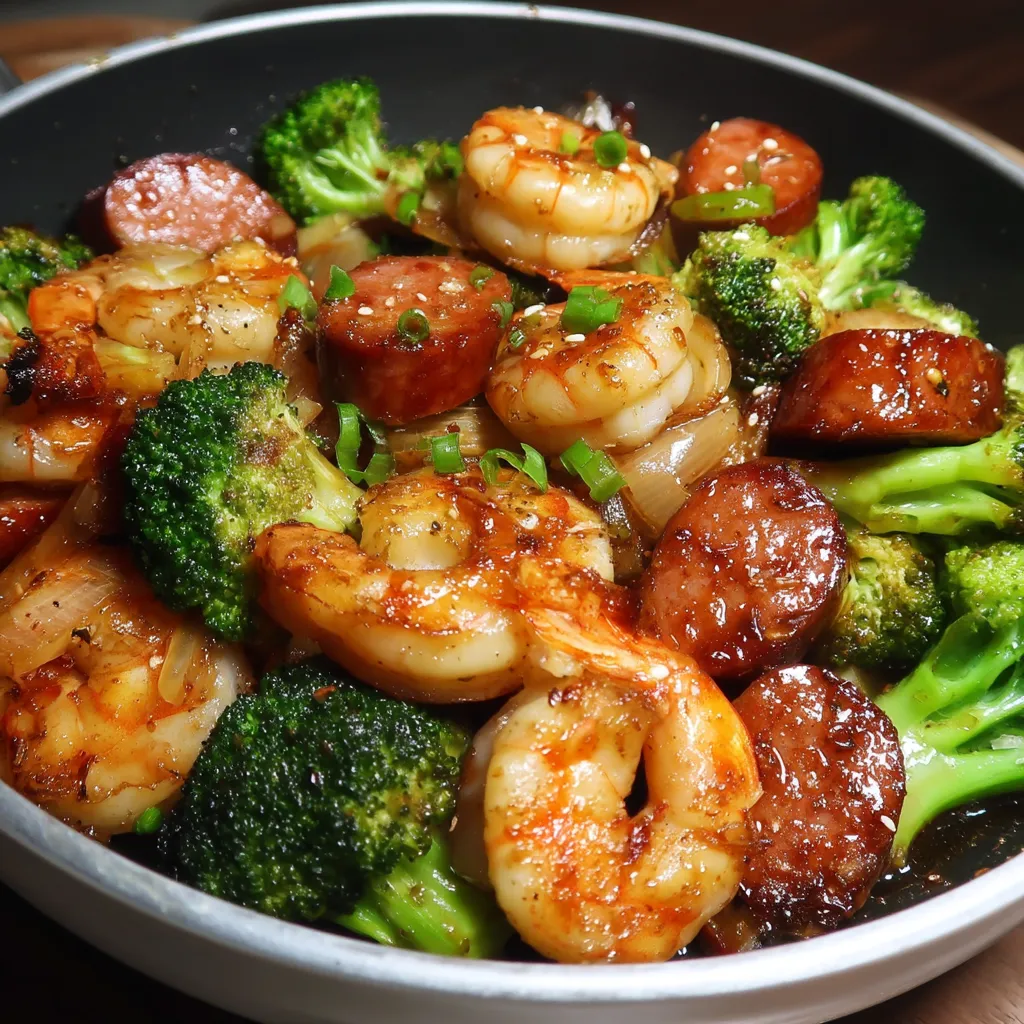
Choose fully cooked smoked sausage and follow its reheating directions. If the package says uncooked, cook it fully by its own instructions before using this quick sequence. The word smoked alone does not establish that it is ready to eat. Use small, even florets and slice thick stems thinly. If the exterior colors before the stems soften, add a little water and cover briefly, then uncover to evaporate it before adding sauce. Large raw stems will not cook in a one-minute glaze stage.
Is cornstarch required?
It is optional in this formula. For a thicker coating, mix the teaspoon of starch with two teaspoons cold water before stirring it into simmering sauce. Adding dry starch directly can leave lumps that are difficult to break around the shrimp.
When should salt be added?
After considering the soy sauce and sausage, both of which may already be salty. Taste the cooked sauce before adjusting. Use the measured honey and vinegar first; adding more of one to correct the other can unnecessarily increase the volume. Thaw them safely and pat dry before cooking. An icy or wet batch cools the pan and dilutes the sauce. Cook in smaller batches if necessary, and judge doneness by the flesh and temperature rather than a fixed two-minute promise.
Storage and serving later
Refrigerate perishable leftovers promptly in shallow containers at 40°F or below; do not wait for a large hot batch to cool completely on the counter. University of Illinois Extension’s leftover guidance gives a three-to-four-day refrigerated window and 165°F for reheating foods served hot. Keep cold salads and toppings chilled, and follow shorter product-label limits where applicable.
Related recipe choices
For another complete recipe, see Garlic Shrimp and Sausage Cabbage Cups or Crispy Baked Garlic Parmesan Shrimp Bites. Each has its own ingredient quantities and cooking sequence; keep those measurements separate when choosing a meal. FDA seafood guidance recommends 145°F for most seafood and describes cooked shrimp as firm, pearly and opaque. Keep raw seafood and its utensils separate from ready-to-eat toppings. USDA’s sausage guidance distinguishes uncooked smoked sausage from ready-to-eat products. The package label determines whether separate full cooking is required.
Common Questions About This Recipe
- Why remove the shrimp from the pan?
Broccoli and sausage need their own time against the hot surface. Keeping cooked shrimp in throughout those stages can make them firm and dry.
- What kind of sausage belongs here?
Choose fully cooked smoked sausage and follow its reheating directions. If the package says uncooked, cook it fully by its own instructions before using this quick sequence.
- How do I keep broccoli crisp but edible?
Use small, even florets and slice thick stems thinly. If the exterior colors before the stems soften, add a little water and cover briefly, then uncover to evaporate it before adding sauce.
- Is cornstarch required?
It is optional in this formula. For a thicker coating, mix the teaspoon of starch with two teaspoons cold water before stirring it into simmering sauce.
- When should salt be added?
After considering the soy sauce and sausage, both of which may already be salty. Taste the cooked sauce before adjusting.
- What if frozen shrimp release water?
Thaw them safely and pat dry before cooking. An icy or wet batch cools the pan and dilutes the sauce.