
 Pin
Pin
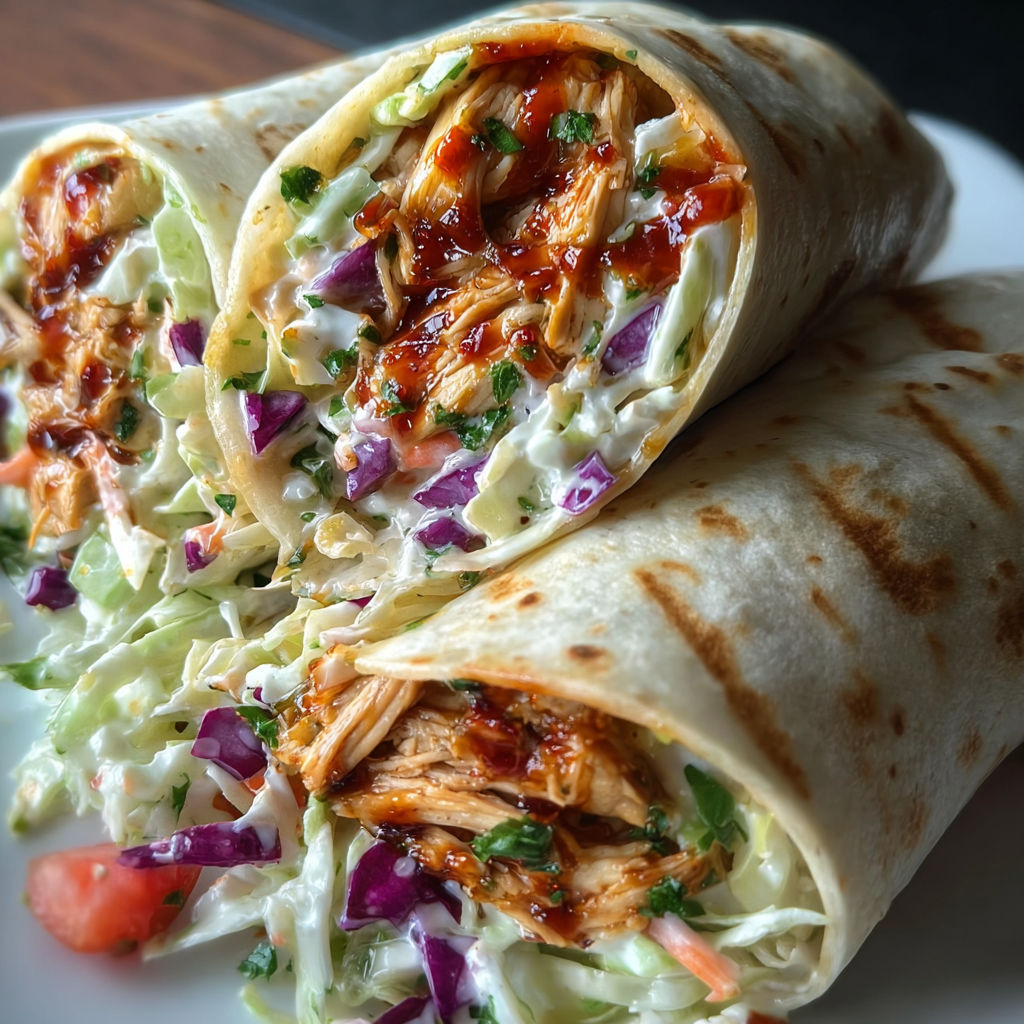
Cooked shredded chicken and quick coleslaw fill four flour tortillas. Dress the cabbage shortly before rolling and leave clear borders so the wrap can close. Warm chicken and cold slaw can be served together, but a long wait after assembly softens both the cabbage and tortilla.
Two cups chicken and two cups slaw mix give about half a cup of each per wrap before sauce and dressing. That can be generous for some tortilla brands. Test one wrap and reduce filling if necessary instead of forcing the ends to close.
Ingredient amounts and preparation
- Set out: 2 cups cooked shredded chicken
- Set out: 1/2 cup BBQ sauce
- Set out: 2 cups coleslaw mix (shredded cabbage and carrots)
- Set out: 1/4 cup mayonnaise
- Set out: 1 tablespoon apple cider vinegar
- Set out: 1 teaspoon granulated sugar
- Set out: Salt and freshly ground black pepper to taste
- Set out: 4 large flour tortillas
Cooking sequence and doneness
- Stage 1
- Toss safely cooked shredded chicken with barbecue sauce;
- Stage 2
- serve it cold from proper refrigeration or, if reheating leftovers, heat it to 165°F before assembly.
- Stage 3
- Whisk mayonnaise, cider vinegar, sugar, salt and pepper, then fold into the slaw mix close to serving and leave behind any pooled liquid.
- Stage 4
- Warm tortillas only as needed for flexibility, divide chicken and slaw without overfilling, fold the sides in and roll with the seam underneath.
- Stage 5
- Serve immediately or briefly toast seam-side down in a dry skillet for about 1–2 minutes per side as a surface finish, not as the reheating step for cold chicken.
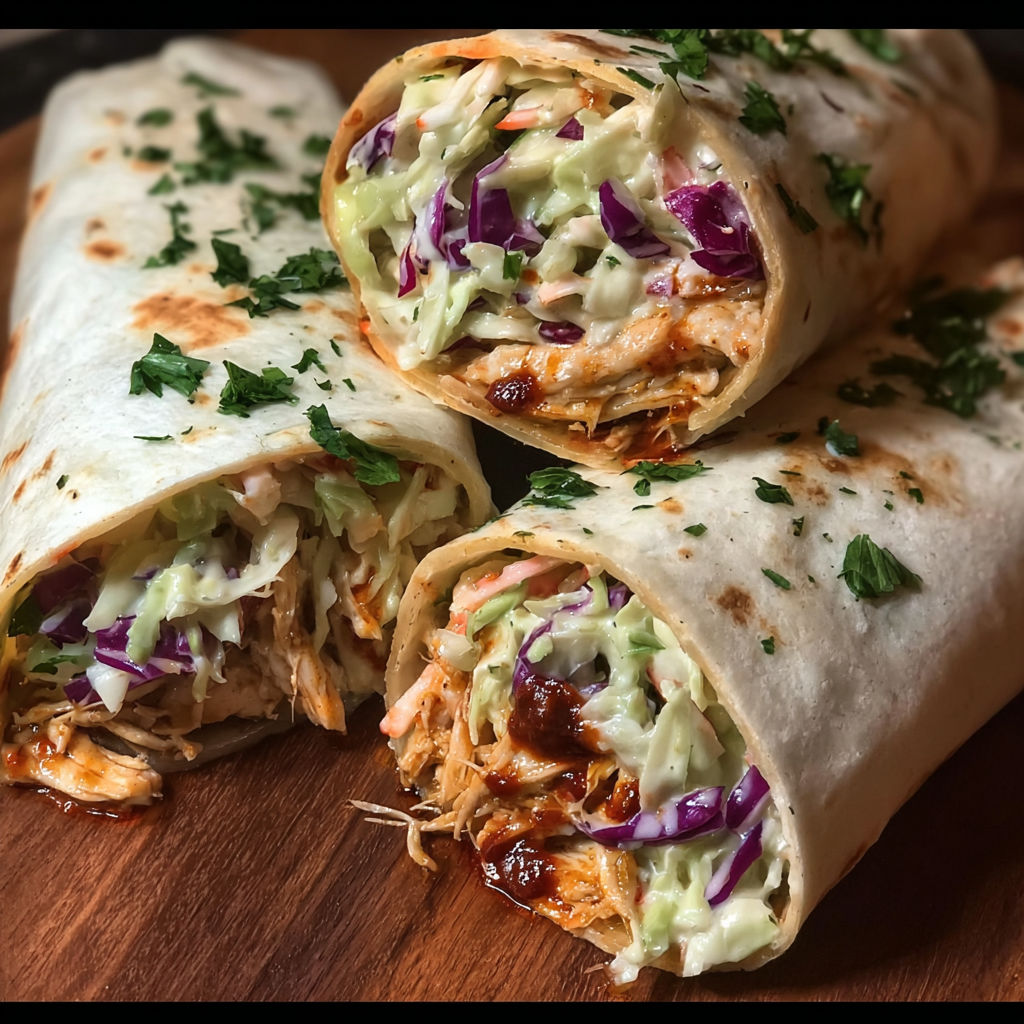
Safely cooked and refrigerated chicken can be served cold. If reheating leftovers, bring the chicken to 165°F before filling the wrap. A one-minute surface toast afterward is not a reliable way to reheat a dense cold center.
Why dress the slaw late?
Cabbage releases moisture as it sits with dressing. Mix mayonnaise, vinegar and sugar first, then toss with slaw near serving. Drain any pooled liquid rather than pouring it into the tortilla with the vegetables.
How do I keep a wrap closed?
Keep a clear border at both sides, fold those edges over the filling and roll from the nearest edge with gentle tension. Place the seam underneath. A tortilla that tears needs less filling or gentle warming to restore flexibility.
Is toasting required?
No. It is an optional texture finish. Use a dry skillet over moderate heat, start seam-side down and turn carefully. Prolonged toasting warms the mayonnaise slaw and can soften its cabbage even while the outside tortilla becomes firmer.
Storage and serving later
Refrigerate perishable leftovers promptly in shallow containers at 40°F or below; do not wait for a large hot batch to cool completely on the counter. University of Illinois Extension’s leftover guidance gives a three-to-four-day refrigerated window and 165°F for reheating foods served hot. Keep cold salads and toppings chilled, and follow shorter product-label limits where applicable.
Related recipe choices
For another complete recipe, see Baked Chicken Taquitos with Cream Cheese and Salsa or Toasted Beef Burritos with Rice and Nacho Cheese Sauce. Each has its own ingredient quantities and cooking sequence; keep those measurements separate when choosing a meal.
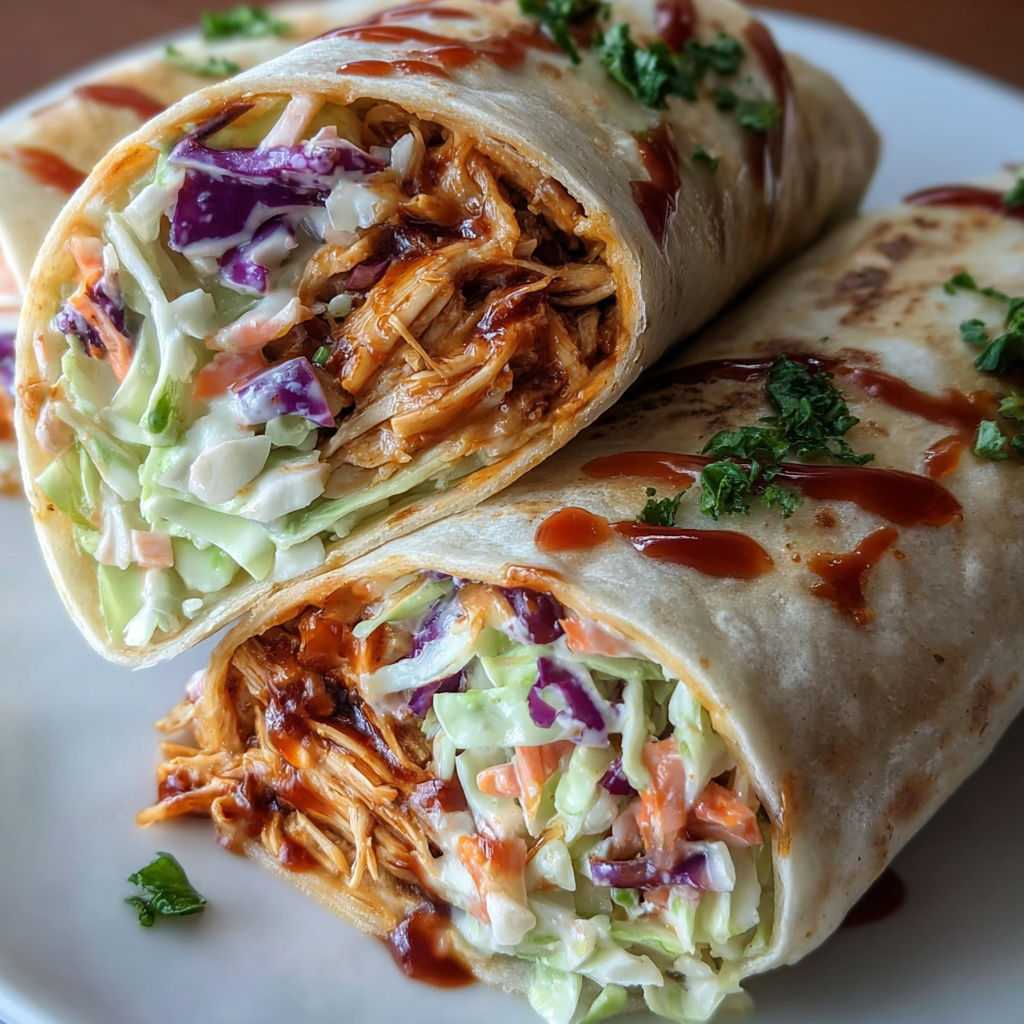
USDA’s temperature guidance specifies 165°F when reheating cooked poultry. Thermometer placement guidance explains checking the thick center rather than relying on surface color.
Common Questions About This Recipe
- How is the filling divided?
Two cups chicken and two cups slaw mix give about half a cup of each per wrap before sauce and dressing. That can be generous for some tortilla brands.
- Should the chicken be hot or cold?
Safely cooked and refrigerated chicken can be served cold. If reheating leftovers, bring the chicken to 165°F before filling the wrap.
- Why dress the slaw late?
Cabbage releases moisture as it sits with dressing. Mix mayonnaise, vinegar and sugar first, then toss with slaw near serving.
- How do I keep a wrap closed?
Keep a clear border at both sides, fold those edges over the filling and roll from the nearest edge with gentle tension. Place the seam underneath.
- Is toasting required?
No. It is an optional texture finish.