
 Pin
Pin
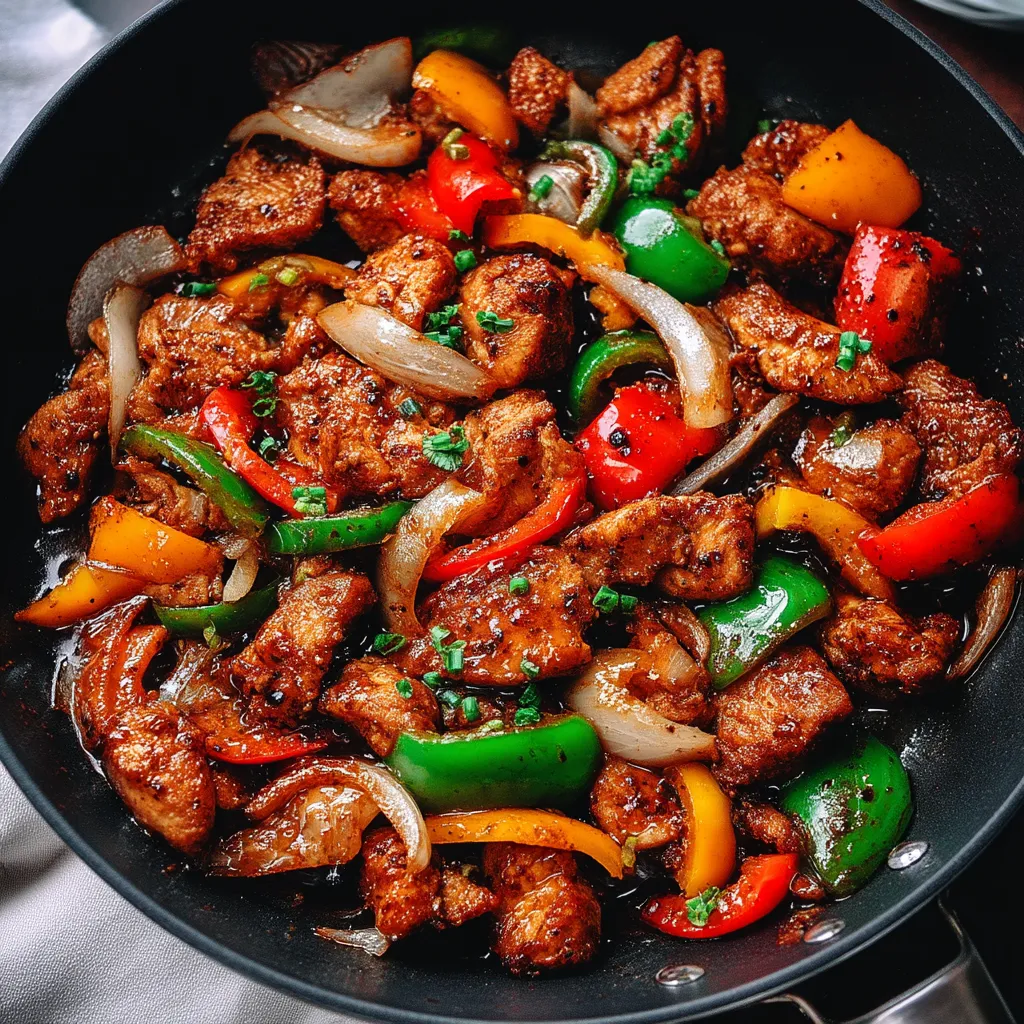
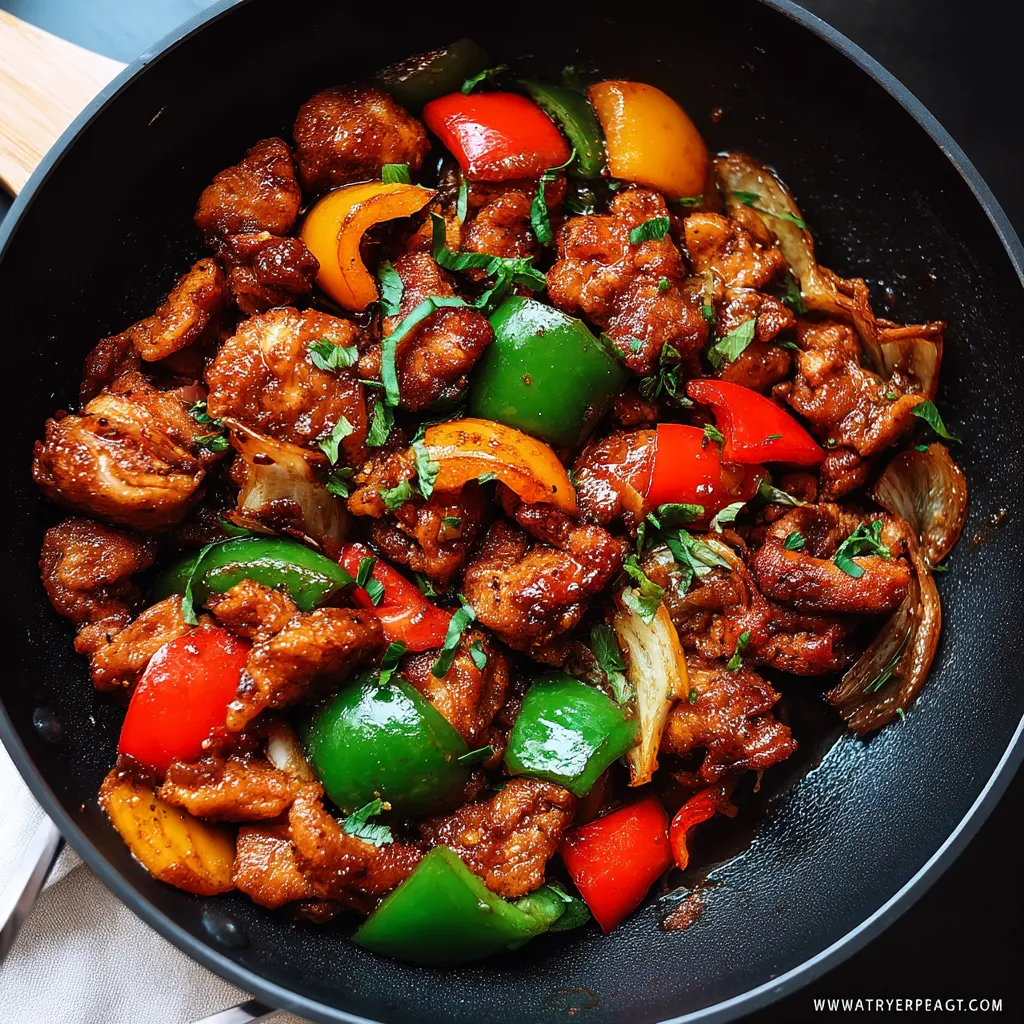
Thin chicken pieces and peppers are coated in a broth-based black pepper sauce. Keep the chicken’s marinade separate from the sauce mixture, and re-stir the sauce before pouring because its cornstarch settles. Finish cooking the chicken fully in the skillet before serving.
The first tablespoon of each belongs to the chicken marinade. The larger sauce mixture has its own soy sauces, wine and tablespoon of starch with broth, sugar and pepper. Measure two separate bowls rather than treating the repeated entries as a duplication error.
Ingredient amounts and preparation
- Set out: 1 lb chicken breasts or thighs, sliced against the grain into 1/4-inch (5-mm) thick pieces
- Set out: 1 tablespoon light soy sauce or soy sauce; 1 tablespoon Shaoxing wine or dry sherry
- Set out: 1 tablespoon cornstarch; 1/2 cup chicken broth
- Set out: 2 tablespoons light soy sauce or soy sauce
- Set out: 2 tablespoons Shaoxing wine or dry sherry; 2 teaspoons dark soy sauce or soy sauce
- Set out: 1 tablespoon cornstarch; 1 1/2 tablespoons sugar
- Set out: 2 teaspoons coarsely ground black pepper
- Set out: 1/8 teaspoon salt; 2 tablespoons peanut oil or vegetable oil
- Set out: 1 tablespoon minced ginger; 2 cloves garlic, minced
- Set out: 1/2 white onion, chopped; 2 bell peppers, chopped (mixed colors)
Cooking sequence and doneness
- Stage 1
- Mix chicken with the first tablespoon each of soy sauce, wine and cornstarch and refrigerate ten to fifteen minutes. Whisk broth, the sauce’s soy sauces, wine, cornstarch, sugar, black pepper and salt separately.
- Stage 2
- Heat one tablespoon oil in a wide skillet. Cook chicken in an uncrowded layer, turning and checking it reaches 165°F, then transfer to a clean plate.
- Stage 3
- Add the remaining oil and briefly stir-fry ginger and garlic. Add onion and peppers and cook until tender-crisp.
- Stage 4
- Re-stir the sauce thoroughly and pour into the skillet. Bring to a simmer while stirring until lightly thickened.
- Stage 5
- Return chicken and toss until hot throughout, loosening with a little water if the sauce becomes too tight. Serve promptly.
Slice across the grain into roughly quarter-inch pieces of similar thickness. Thin even pieces cook more predictably than mixed thick chunks. Keep the short marination refrigerated while preparing vegetables. No. Browning is only an early step, and the chicken must reach 165°F before the heat is turned off. If it is moved out temporarily to cook vegetables, return it immediately to finish in the hot sauce rather than saving partially cooked chicken for later.
Why stir the sauce again?
Cornstarch sinks while the bowl stands. Whisk it back into the liquid just before adding, then stir as it comes to a simmer. Otherwise the first pour can be thin and the final sediment can form lumps.
How can the vegetables stay crisp?
Cook onion and peppers until as tender as you prefer before adding the sauce, rather than relying on a twenty-second stir. Keep the heat high enough to avoid a cold crowded pan, but reduce it if garlic or ginger starts to burn. The Shaoxing wine or sherry is part of both marinade and sauce. A short stir-fry does not establish that all alcohol evaporates. Choose a separately specified alcohol-free recipe if that is required instead of assuming this cooking time removes it.
Storage and serving later
Refrigerate perishable leftovers promptly in shallow containers at 40°F or below; do not wait for a large hot batch to cool completely on the counter. University of Illinois Extension’s leftover guidance gives a three-to-four-day refrigerated window and 165°F for reheating foods served hot. Keep cold salads and toppings chilled, and follow shorter product-label limits where applicable.
Related recipe choices
For another complete recipe, see Sesame Chicken with Coconut Aminos, Rice and Green Beans or Ground Turkey Teriyaki with Broccoli and Carrots. Each has its own ingredient quantities and cooking sequence; keep those measurements separate when choosing a meal. USDA’s temperature guidance specifies 165°F for poultry, including ground chicken and turkey. Thermometer placement guidance explains checking the thick center rather than relying on surface color.
Common Questions About This Recipe
- Why are soy sauce, wine and starch repeated?
The first tablespoon of each belongs to the chicken marinade. The larger sauce mixture has its own soy sauces, wine and tablespoon of starch with broth, sugar and pepper.
- How thin should the chicken be?
Slice across the grain into roughly quarter-inch pieces of similar thickness. Thin even pieces cook more predictably than mixed thick chunks.
- Should pink chicken be served after a quick toss?
No. Browning is only an early step, and the chicken must reach 165°F before the heat is turned off.
- Why stir the sauce again?
Cornstarch sinks while the bowl stands. Whisk it back into the liquid just before adding, then stir as it comes to a simmer.
- How can the vegetables stay crisp?
Cook onion and peppers until as tender as you prefer before adding the sauce, rather than relying on a twenty-second stir. Keep the heat high enough to avoid a cold crowded pan, but reduce it if garlic or ginger starts to burn.
- Can this be described as alcohol-free?
The Shaoxing wine or sherry is part of both marinade and sauce. A short stir-fry does not establish that all alcohol evaporates.