
 Pin
Pin
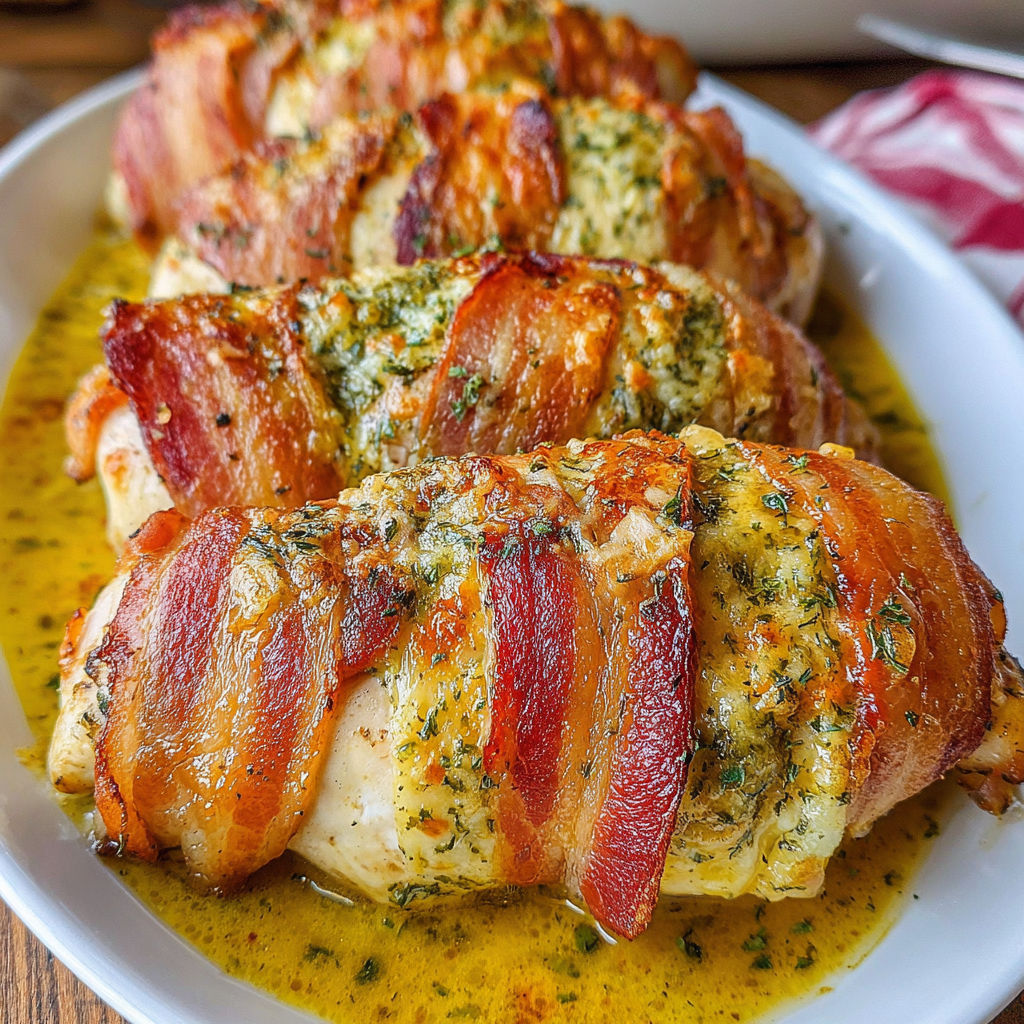
This garlic Parmesan chicken uses seven bacon slices around strips cut from three large chicken breasts. The breast count does not tell you their total weight or how many uniform strips they will produce. Plan the cutting and wrapping together before seasoning. The sauce is a prepared garlic Parmesan wing sauce, so its salt, sweetness and thickness depend on the product selected.
For seven wraps, divide the chicken into seven comparable portions where the breast shapes allow it. If your pieces cannot be made reasonably even, cook smaller pieces separately and check each one rather than layering them into thick bundles. Do not stretch a bacon slice so tightly that the chicken folds into a dense lump. The flat arrangement should leave exposed space around the pieces.
Match strip count to bacon
- 3 large boneless skinless chicken breasts
- 7 slices thick-cut bacon
- 1 tablespoon olive oil
- 1 teaspoon paprika
- 1 teaspoon garlic powder
- 1 teaspoon onion powder
- Salt and freshly ground black pepper, to taste Garlic parmesan wing sauce, for drizzling
Wrap and bake in one layer
- Stage 1
- Preheat to 350°F and select a baking dish that holds the chicken portions in one layer.
- Stage 2
- Cut the breasts into comparable strips, planning seven wraps for seven bacon slices where their shapes permit. Coat with olive oil, paprika, garlic powder, onion powder and seasoning.
- Stage 3
- Wrap each portion with bacon and place seam-side down without stacking. If using toothpicks, count them for removal before serving.
- Stage 4
- Drizzle prepared garlic Parmesan wing sauce over the pieces. Use its label to judge seasoning; the recipe does not establish a measured sauce yield.
- Stage 5
- Bake, beginning checks around 25–30 minutes. Continue until every thick chicken center reaches 165°F; strip size and bacon thickness can extend the schedule.
- Stage 6
- For an optional brief broiler finish, use only broiler-safe cookware and monitor continuously. Skip this step if the dish or sauce is unsuitable.
- Stage 7
- Remove fasteners, portion the sauce and serve. Refrigerate remaining portions promptly.
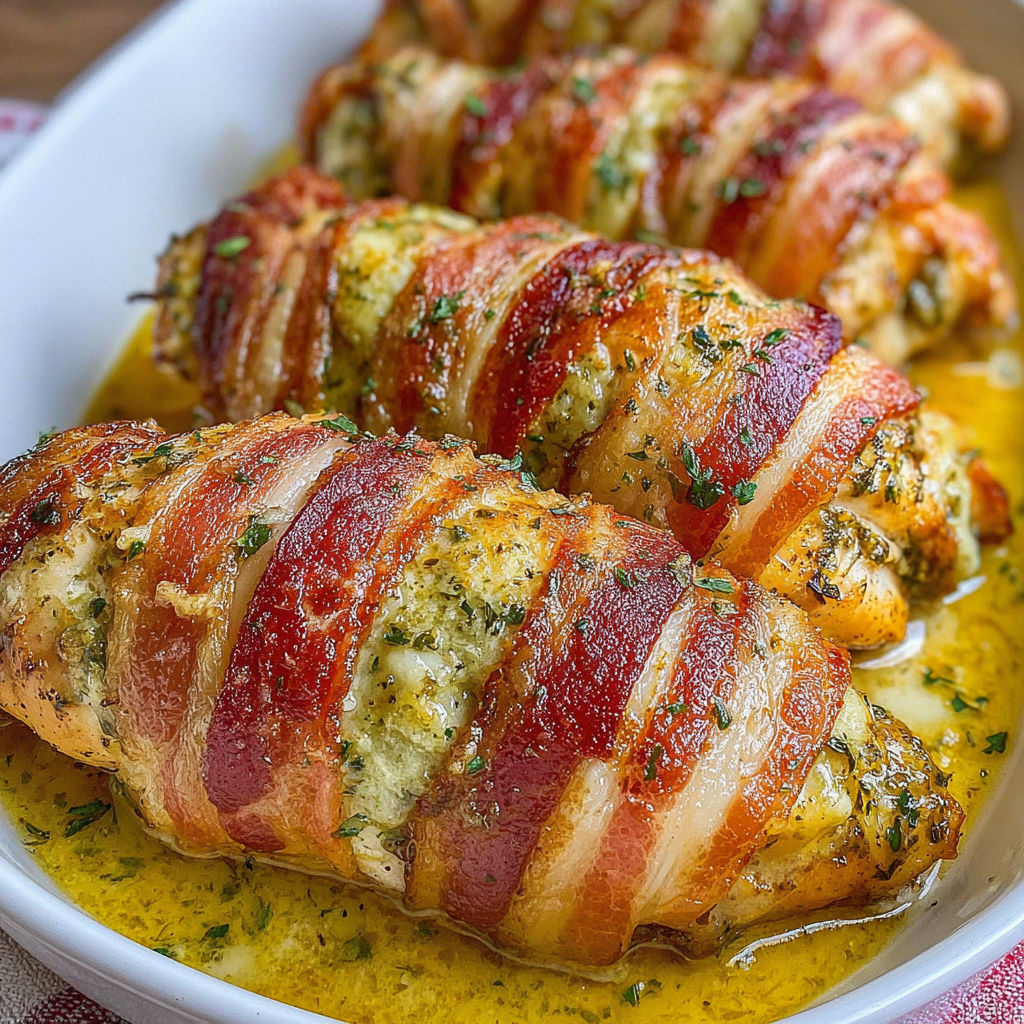
Thick bacon may remain flexible by the time the chicken is done. More baking does not guarantee both crisp bacon and juicy chicken at once. A sauce poured over the wrapper adds moisture, so this is not equivalent to roasting dry bacon on a rack. Judge safe cooking first; a soft wrapper is a texture result that requires recipe development, not a reason to undercook the filling.
Changing the wrapper changes cooking
Turkey bacon and thinner bacon have different structures and cooking behavior. Treat them as variations, not a guaranteed fix. A broccoli spear or other vegetable tucked inside would also change thickness and the heating path. Keep the original wrap simple while learning how your particular chicken portions and bacon cook together.
Store with the sauce separately if possible
Refrigerate cooked portions promptly, rather than waiting for a full casserole dish to cool on the counter. USDA lists three to four days for refrigerated leftovers. Pack sauce with the portion it belongs to and reheat thoroughly. There is no validated ten-minute reheating schedule for every strip size or refrigerator temperature.
Choose a side with contrast
Serve with skillet potatoes and onions or cowboy caviar. The cool salad offers a contrast to the sauce. If cutting the chicken for a platter, first verify the thickest pieces individually and remove any fasteners; slicing after cooking is not a substitute for the temperature check.
Avoid unverified nutrition claims
A calorie or protein figure would require chicken and bacon weights, sauce quantity and a defined serving count. Those are not fixed here, so no numerical nutrition claim is supplied. Check the sauce label for dairy, wheat and other allergens. A recipe with no separate flour coating is not automatically gluten-free or suitable for every carbohydrate-restricted diet.
Manage a soft bacon finish
If you consider a broiler finish, first check that the dish is broiler-safe and that the sauce label does not warn against intense heat. Glass bakeware may not be appropriate. Keep the food under observation and stop if the sauce scorches; broiling is optional and cannot substitute for the USDA 165°F chicken endpoint.
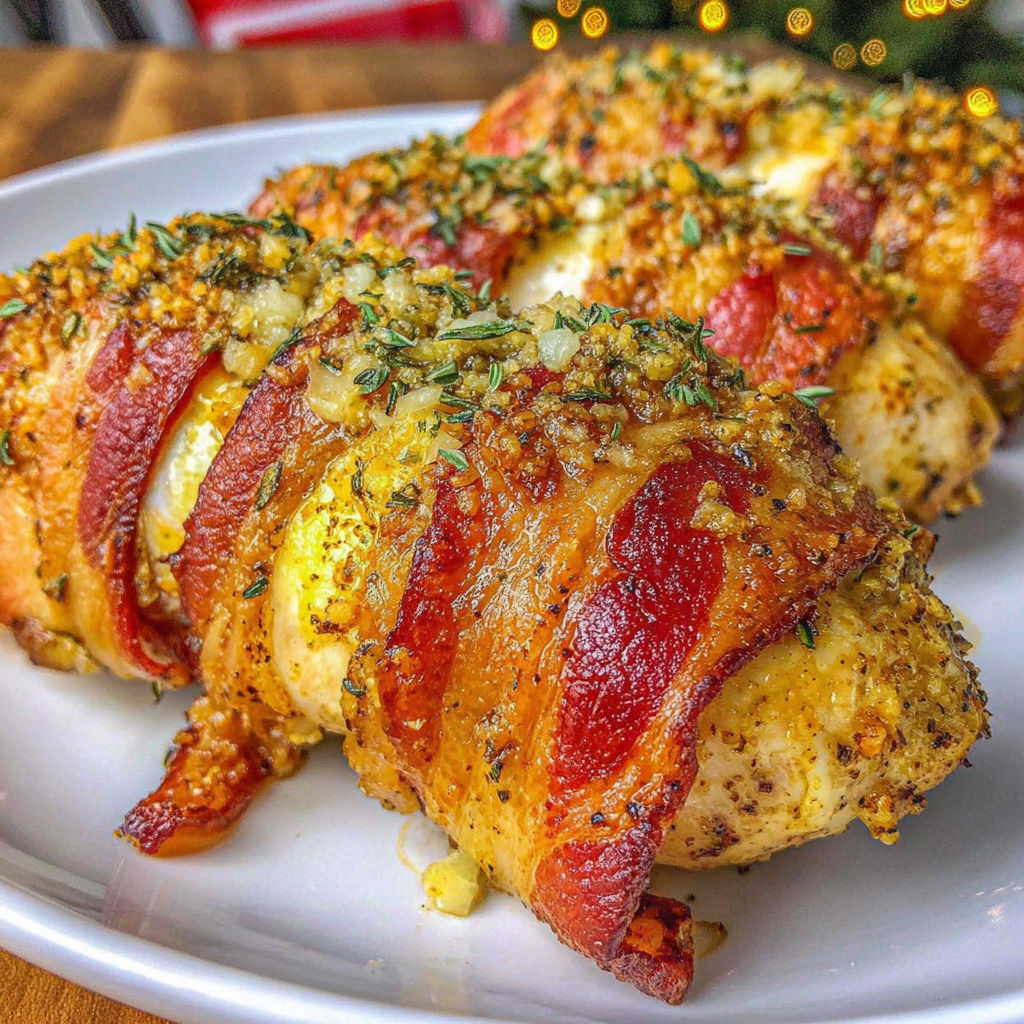
When the sauce pools, it is mixing with juices and rendered fat; basting does not seal moisture inside the chicken. Spoon off excess fat carefully if needed, then serve the desired amount of sauce. Record the breast weight and strip thickness if you repeat the recipe so any adjustment is tied to a measurable difference rather than another broad promise about cooking time.
Common Questions About This Recipe
- How many strips should I cut?
Plan around the seven bacon slices while keeping chicken portions comparable. Breast count alone cannot establish strip size.
- Why is the bacon soft?
Thick bacon, sauce moisture and a crowded dish can prevent crispness even when the chicken is cooked.
- Does basting seal in juices?
No. It coats the surface; it does not create a seal inside the meat.
- Can any casserole dish go under the broiler?
No. Follow the cookware manufacturer’s limits and skip broiling when suitability is uncertain.
- Why are nutrition numbers omitted?
The chicken weights, sauce amount and serving size are not defined well enough for a verified calculation.