
 Pin
Pin
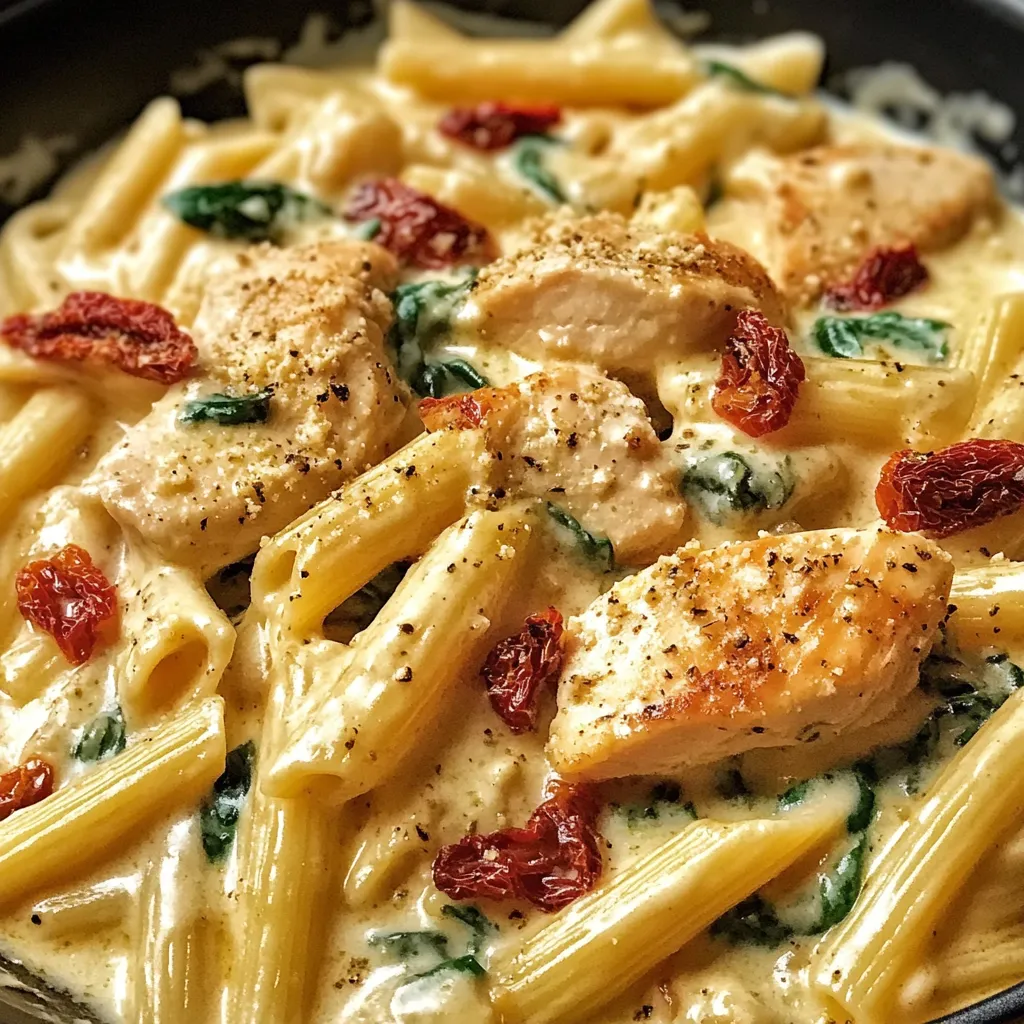
Cottage cheese, cream and Parmesan coat this chicken pasta with spinach and sun-dried tomatoes. Keep the dairy over gentle heat and reserve pasta water for adjusting the sauce. Cottage cheese can retain curds; it does not melt into a smooth sauce on its own.
For a smoother sauce, blend the cottage cheese and cream while cold before adding them to the skillet. Leaving them unblended gives a more textured sauce. Neither version needs a vigorous boil.
Ingredient amounts and preparation
- Set out: 2 boneless, skinless chicken breasts
- Set out: 1 tablespoon olive oil
- Set out: 1 teaspoon Italian seasoning; ½ teaspoon garlic powder
- Set out: Salt and pepper to taste
- Set out: 8 ounces penne or any pasta of your choice; 1 tablespoon olive oil
- Set out: 3 cloves garlic, minced
- Set out: 1 cup sun-dried tomatoes, chopped; 2 cups fresh spinach, roughly chopped
- Set out: 1 cup cottage cheese
- Set out: ½ cup heavy cream; ¼ cup grated Parmesan cheese
- Set out: 1 teaspoon Italian seasoning
- Set out: ½ teaspoon red pepper flakes (optional); Salt and pepper to taste
Cooking sequence and doneness
- Stage 1
- Bring a pot of water to a boil for the pasta. Season the chicken with its Italian seasoning, garlic powder, salt and pepper.
- Stage 2
- Heat the first tablespoon of oil and cook the chicken, turning as needed, until thick centers reach 165°F. Transfer to a clean board and slice after a short rest.
- Stage 3
- Cook pasta according to its package and reserve some cooking water before draining. Heat the second tablespoon of oil in the skillet. Briefly cook garlic, then add chopped sun-dried tomatoes.
- Stage 4
- Reduce heat and stir in cottage cheese, cream, Parmesan, the remaining Italian seasoning and optional pepper flakes. Warm gently without boiling.
- Stage 5
- Add spinach and stir until wilted. Toss in pasta and cooked chicken, loosening with a little reserved water if necessary. Taste the finished sauce before adding more salt and serve promptly.
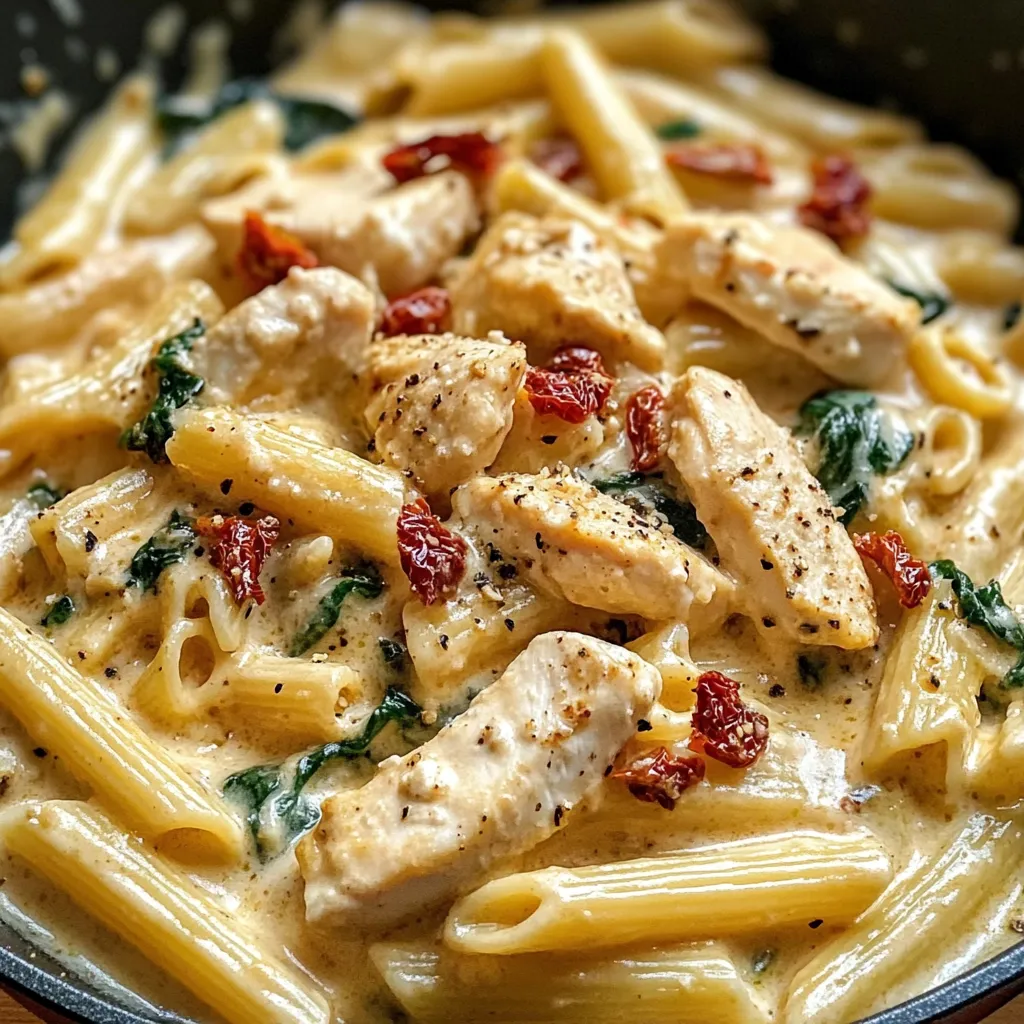
Drain oil-packed tomatoes before measuring and chopping. If using dry tomatoes, soften according to their package instructions first. A full cup is a substantial addition, so chop finely enough to distribute it. The first tablespoon of oil and teaspoon of Italian seasoning belong to the chicken. The second portions go into the sauce. Keep the two sets separate during preparation.
How is the chicken checked?
Even out very thick breasts before cooking so the outside does not overcook while the center stays underdone. Use a thermometer to verify 165°F in the thickest part, then slice on a clean board.
What if the sauce becomes thick?
Reserve some pasta water before draining. Add it a spoonful at a time while tossing over low heat; avoid diluting the sauce with a large unmeasured pour. Spinach will also release a little moisture. Refrigerate perishable leftovers promptly in shallow containers at 40°F or below; do not wait for a large hot batch to cool completely on the counter. University of Illinois Extension’s leftover guidance gives a three-to-four-day refrigerated window and 165°F for reheating foods served hot. Keep cold salads and toppings chilled, and follow shorter product-label limits where applicable.
Related recipe choices
For another complete recipe, see Cajun Chicken Bowties with Cream Cheese Sauce or Garlic Butter Chicken Bowties with Cream and Mozzarella. Each has its own ingredient quantities and cooking sequence; keep those measurements separate when choosing a meal. USDA’s temperature guidance specifies 165°F for poultry, including ground chicken and turkey. Thermometer placement guidance explains checking the thick center rather than relying on surface color.
Common Questions About This Recipe
- Should the cottage cheese be blended?
For a smoother sauce, blend the cottage cheese and cream while cold before adding them to the skillet. Leaving them unblended gives a more textured sauce.
- Which sun-dried tomatoes work?
Drain oil-packed tomatoes before measuring and chopping. If using dry tomatoes, soften according to their package instructions first.
- Why are oil and seasoning listed twice?
The first tablespoon of oil and teaspoon of Italian seasoning belong to the chicken. The second portions go into the sauce.
- How is the chicken checked?
Even out very thick breasts before cooking so the outside does not overcook while the center stays underdone. Use a thermometer to verify 165°F in the thickest part, then slice on a clean board.
- What if the sauce becomes thick?
Reserve some pasta water before draining. Add it a spoonful at a time while tossing over low heat; avoid diluting the sauce with a large unmeasured pour.
- Has this recipe been kitchen-tested?
No. This is a research-based editorial revision.