
 Pin
Pin
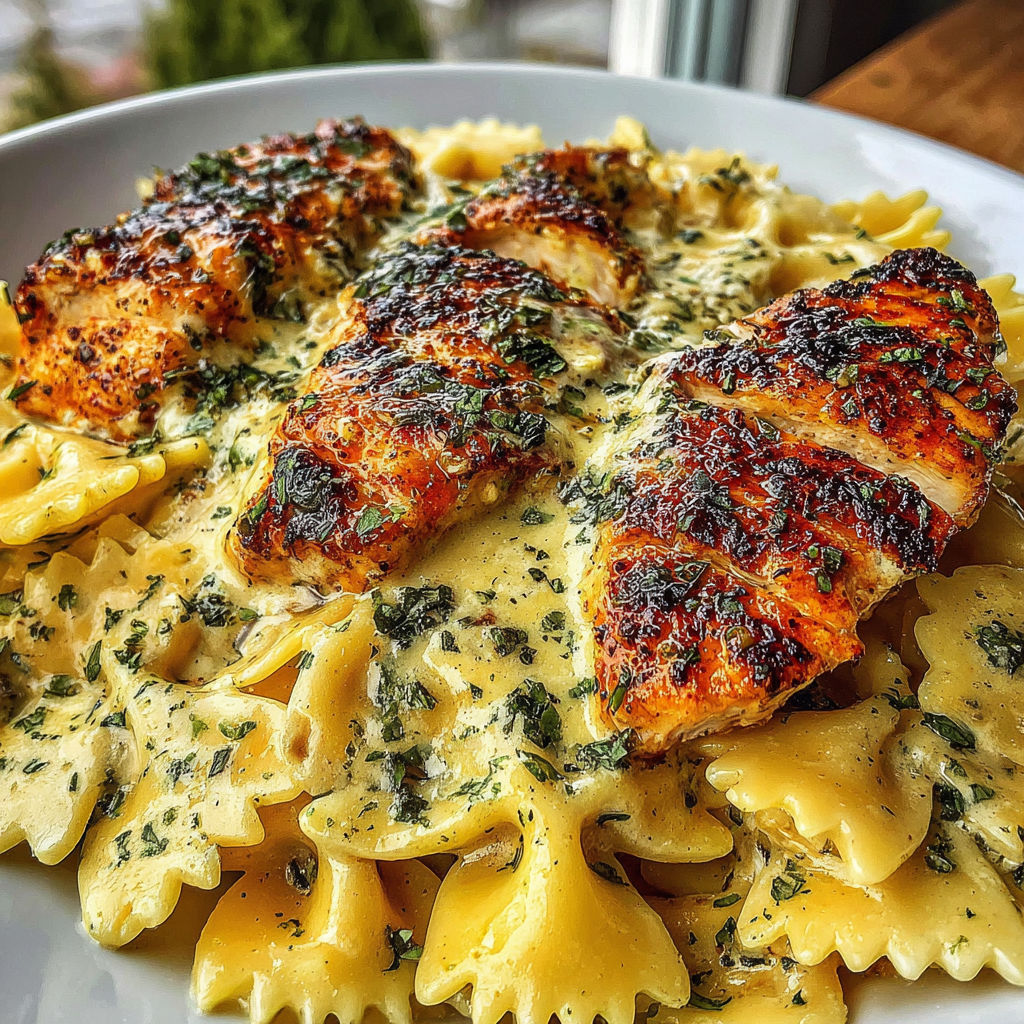
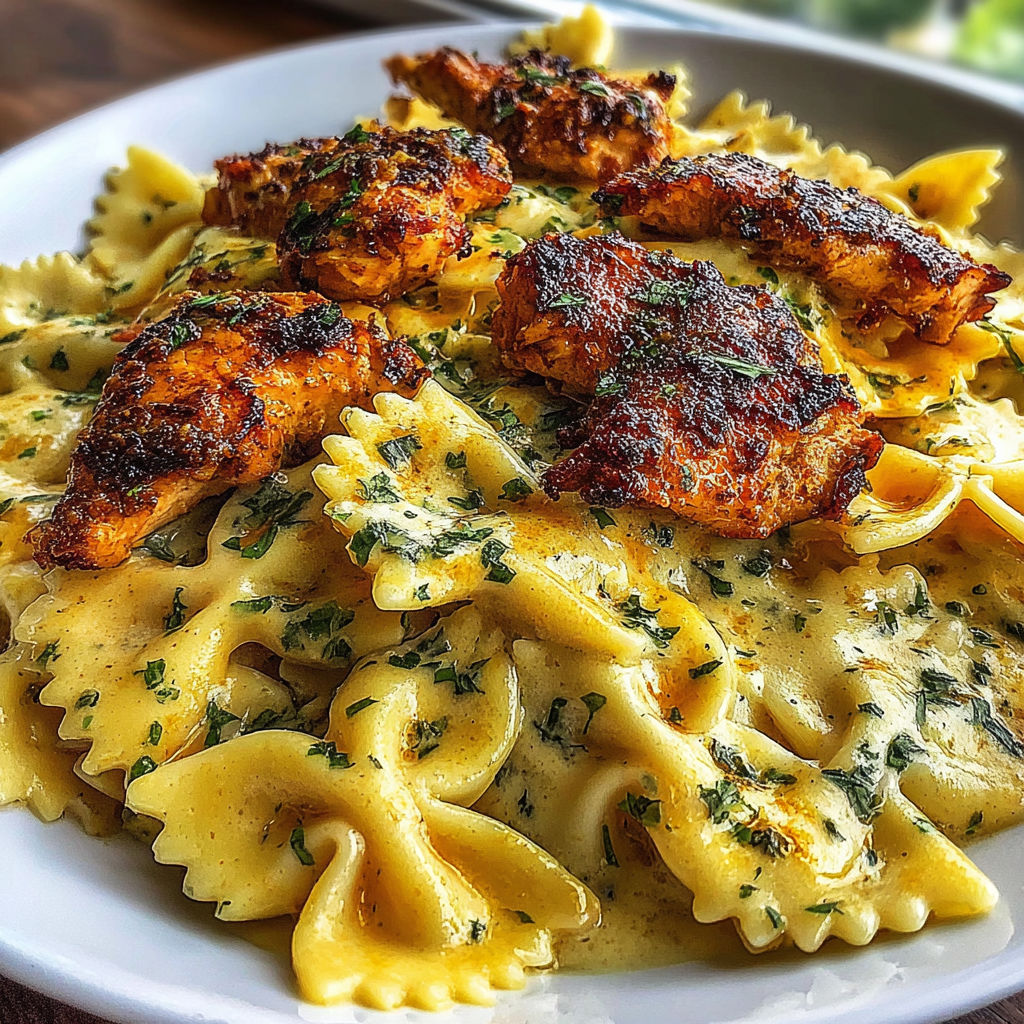
Bowtie pasta and browned chicken are combined in a garlic cream sauce finished with mozzarella and Parmesan. Cook the chicken separately so the cheese can melt over gentle heat. The sauce should coat the folds of the pasta without being boiled until it turns oily or stringy.
The twelve ounces in the card means dry pasta. Boiling it separately lets you check the thick centers of the bowties before they enter a dairy sauce that should not boil hard. Reserve a little cooking water before draining to loosen the final coating if necessary.
Ingredient amounts and preparation
- Set out: 12 ounces bowtie pasta (farfalle)
- Set out: 1 pound boneless, skinless chicken breasts, cut into bite-sized pieces
- Set out: 2 tablespoons unsalted butter
- Set out: 1 tablespoon olive oil
- Set out: 1 teaspoon garlic powder
- Set out: 1 teaspoon onion powder; Salt, to taste
- Set out: Black pepper, to taste
- Set out: 1/2 teaspoon Italian seasoning
- Set out: 1 tablespoon chopped fresh parsley (optional)
- Set out: 4 cloves garlic, minced
- Set out: 2 cups heavy cream
- Set out: 1 cup shredded mozzarella cheese; 1/2 cup grated Parmesan cheese
Cooking sequence and doneness
- Stage 1
- Boil the bowties according to their package until the thick folds are tender; reserve a little cooking water and drain.
- Stage 2
- Season the chicken with the listed garlic powder, onion powder, salt and pepper.
- Stage 3
- Heat butter and olive oil in a wide skillet and cook chicken in an uncrowded layer, turning until it reaches 165°F; transfer to a clean plate.
- Stage 4
- Lower the heat and stir the minced garlic in the skillet briefly, stopping before it browns.
- Stage 5
- Add cream, simmer gently for about 3–4 minutes, then reduce heat and gradually melt in mozzarella and Parmesan with the Italian seasoning.
- Stage 6
- Return chicken and drained pasta, tossing just until hot and coated; loosen with reserved water only as needed and serve.
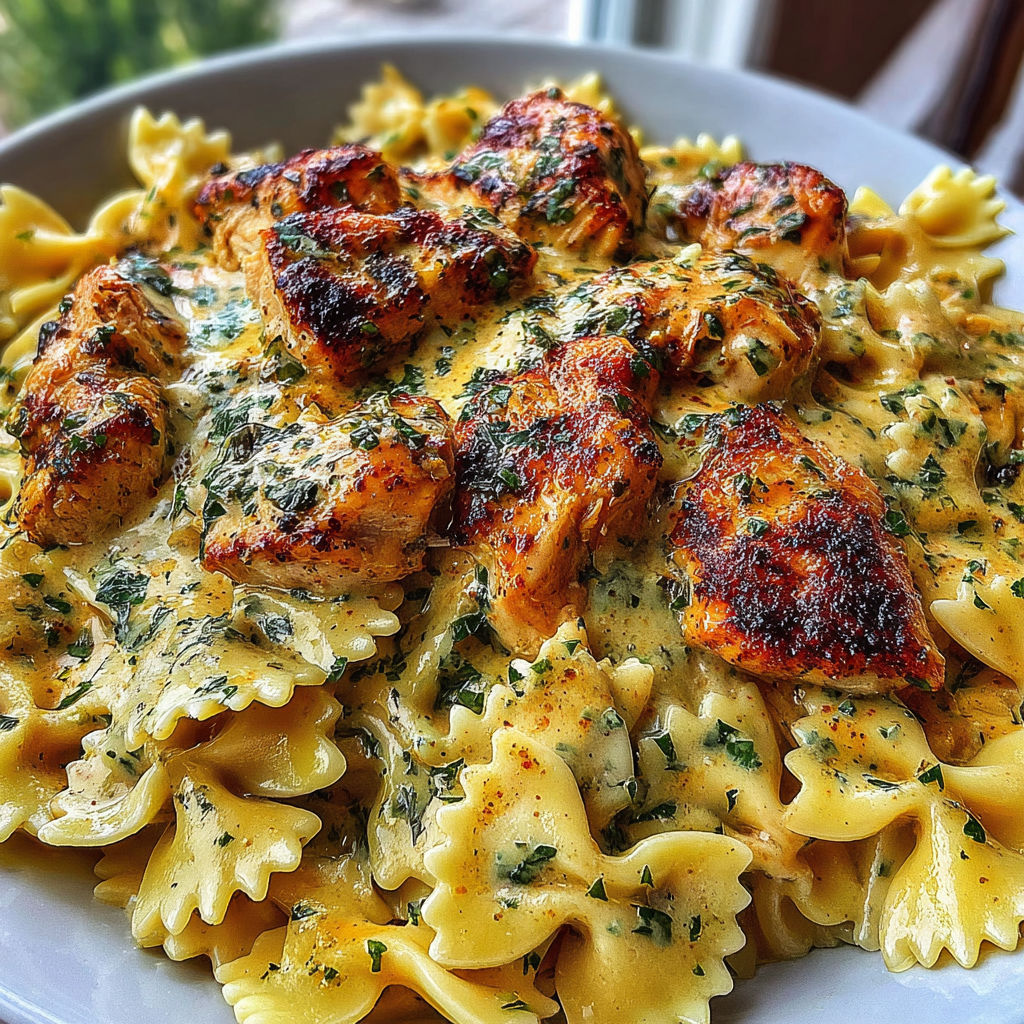
Keep the pieces similar in thickness and leave space in the skillet. If the entire pound covers the pan tightly, brown it in batches. A crowded pan collects liquid instead of developing the browned surfaces that flavor the sauce.
When do the cheeses go in?
Let the cream simmer briefly first, then reduce the heat before adding mozzarella and Parmesan in small handfuls. Wait for each addition to disperse. Mozzarella can make stretchy strands; increasing the burner to force them smooth can worsen the texture.
What if the sauce looks too thick?
Add reserved pasta water a small splash at a time while tossing over low heat. Stop when the pasta is coated but still moves readily. Do not add the whole reserve automatically, because the pasta and cheese brands can change how much is needed.
Can milk replace the heavy cream?
Not as a verified equal swap in this formula. Milk has a different fat content and would need a separately designed thickening method. The Cajun cream-cheese version is another complete recipe, rather than a substitution chart for this sauce.
Storage and serving later
Refrigerate perishable leftovers promptly in shallow containers at 40°F or below; do not wait for a large hot batch to cool completely on the counter. University of Illinois Extension’s leftover guidance gives a three-to-four-day refrigerated window and 165°F for reheating foods served hot. Keep cold salads and toppings chilled, and follow shorter product-label limits where applicable.
Related recipe choices
For another complete recipe, see Cajun Chicken Bowties with Cream Cheese Sauce or Chicken Meatballs with Garlic Parmesan Fettuccine. Each has its own ingredient quantities and cooking sequence; keep those measurements separate when choosing a meal.
USDA’s temperature guidance specifies 165°F for poultry, including ground chicken and turkey. Thermometer placement guidance explains checking the thick center rather than relying on surface color.
Common Questions About This Recipe
- Why cook the pasta separately?
The twelve ounces in the card means dry pasta. Boiling it separately lets you check the thick centers of the bowties before they enter a dairy sauce that should not boil hard.
- How should the chicken be cut?
Keep the pieces similar in thickness and leave space in the skillet. If the entire pound covers the pan tightly, brown it in batches.
- When do the cheeses go in?
Let the cream simmer briefly first, then reduce the heat before adding mozzarella and Parmesan in small handfuls. Wait for each addition to disperse.
- What if the sauce looks too thick?
Add reserved pasta water a small splash at a time while tossing over low heat. Stop when the pasta is coated but still moves readily.
- Can milk replace the heavy cream?
Not as a verified equal swap in this formula. Milk has a different fat content and would need a separately designed thickening method.