
 Pin
Pin
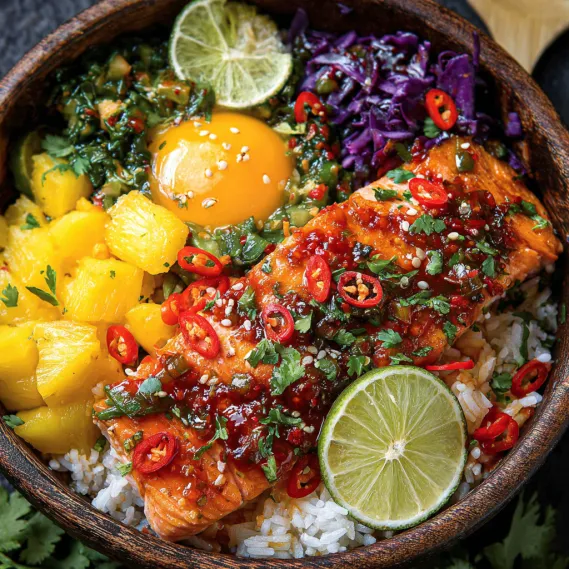
Fig spread, soy sauce and rice vinegar make the glaze for this roasted salmon bowl. Reserve a clean portion before brushing the fish, then serve it with mango salsa and cooked jasmine rice. The sauce is fig-based rather than bottled sweet chili sauce.
Mix the third cup of fig spread with vinegar, soy sauce and pepper flakes. The source method called it sweet chili sauce, but that ingredient is not in the formula. Use the fig mixture throughout instead of adding an unmeasured bottled sauce.
Ingredient amounts and preparation
- Set out: 2 tablespoons rice vinegar
- Set out: 2 tablespoons soy sauce; ⅓ cup fig spread
- Set out: Red pepper flakes to taste; 24 oz salmon fillets (4 fillets)
- Set out: 2 tablespoons olive oil; 2 cloves garlic, minced
- Set out: Salt and pepper to taste; 2 ripe mangos, peeled, pitted, and diced
- Set out: 1 small sweet red bell pepper, diced; ½ bunch fresh cilantro, chopped
- Set out: 2 tablespoons freshly squeezed lime juice; ¼ teaspoon chili powder
- Set out: Salt and pepper to taste; 2 cups cooked jasmine rice
- Set out: 1 lime, sliced; Fresh cilantro, chopped
Cooking sequence and doneness
- Stage 1
- Heat the oven to 425°F.
- Stage 2
- Mix rice vinegar, soy sauce, fig spread and pepper flakes. Reserve one-third in a clean bowl with a clean spoon.
- Stage 3
- Season salmon with olive oil, garlic, salt and pepper and arrange in a single layer in an oven dish. Roast, starting to check around ten minutes.
- Stage 4
- Brush with the non-reserved glaze near the end and continue until thick centers reach 145°F, shielding if the glaze darkens too quickly.
- Stage 5
- Mix diced mango, red pepper, cilantro, lime juice, chili powder and seasonings for the salsa. Heat the cooked rice, using 165°F if reheating leftovers.
- Stage 6
- Portion rice and salmon with salsa alongside. Finish with the reserved clean glaze, lime and cilantro.
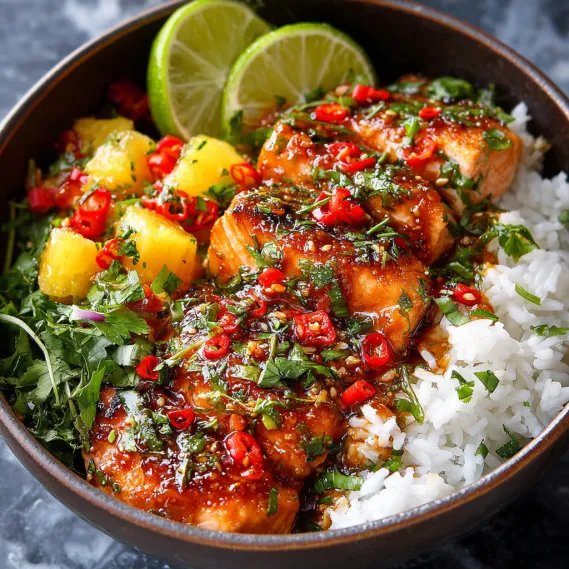
Set aside one-third of the glaze before a brush or spoon touches the salmon. Keep separate utensils for that portion. Sauce left in a bowl used to coat raw or partly cooked fish should not be drizzled cold over the finished meal. Roast the seasoned salmon first, then add glaze near the end so the sugar does not spend the full cooking time exposed to high heat. If the surface darkens quickly, lower the heat or shield it while the center finishes.
How is salmon doneness checked?
Use 145°F in the thickest part, with opaque flesh that separates easily. Four six-ounce portions can differ in thickness even when their weights match. Remove finished pieces individually instead of waiting for the thickest one to catch up.
How ripe should the mango be?
Choose fruit that can be diced and still hold its shape. Mix it gently with pepper, cilantro, lime, chili powder and seasoning. A very soft mango produces a looser salsa but can still be spooned alongside rather than stirred into the rice. Have the salsa chilled and two cups of cooked rice ready. Reheat refrigerated rice to 165°F. Portion the hot rice and salmon, then add the cool salsa and reserved clean glaze immediately before serving.
Storage and serving later
Refrigerate perishable leftovers promptly in shallow containers at 40°F or below; do not wait for a large hot batch to cool completely on the counter. University of Illinois Extension’s leftover guidance gives a three-to-four-day refrigerated window and 165°F for reheating foods served hot. Keep cold salads and toppings chilled, and follow shorter product-label limits where applicable.
Related recipe choices
For another complete recipe, see Cajun-Style Salmon Bowls with Mango Salsa or Skillet Salmon with Lemon Parmesan Orzo. Each has its own ingredient quantities and cooking sequence; keep those measurements separate when choosing a meal. FDA seafood guidance recommends 145°F for most seafood and describes cooked shrimp as firm, pearly and opaque. Keep raw seafood and its utensils separate from ready-to-eat toppings.
Common Questions About This Recipe
- Which sauce is actually used?
Mix the third cup of fig spread with vinegar, soy sauce and pepper flakes. The source method called it sweet chili sauce, but that ingredient is not in the formula.
- How is the clean serving portion reserved?
Set aside one-third of the glaze before a brush or spoon touches the salmon. Keep separate utensils for that portion.
- When should the glaze be brushed on?
Roast the seasoned salmon first, then add glaze near the end so the sugar does not spend the full cooking time exposed to high heat. If the surface darkens quickly, lower the heat or shield it while the center finishes.
- How is salmon doneness checked?
Use 145°F in the thickest part, with opaque flesh that separates easily. Four six-ounce portions can differ in thickness even when their weights match.
- How ripe should the mango be?
Choose fruit that can be diced and still hold its shape. Mix it gently with pepper, cilantro, lime, chili powder and seasoning.
- What should be ready before assembly?
Have the salsa chilled and two cups of cooked rice ready. Reheat refrigerated rice to 165°F.