
 Pin
Pin
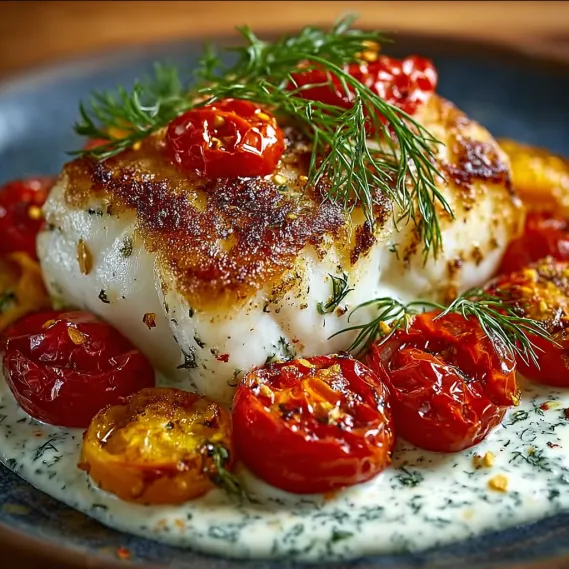
Roasted cherry tomatoes and dill cream accompany two grilled cod fillets. Roast the tomatoes first and cook the fish close to serving, since cod can break apart if repeatedly moved. Divide the oil between vegetables and fish instead of treating each instruction as another full measure.
The two tablespoons cover both tomato roasting and the fish. Use roughly one tablespoon for each stage. If a grill requires separate grate preparation, follow its instructions rather than emptying the fish’s oil onto hot flames.
Ingredient amounts and preparation
- Set out: 2 cod fillets (about 6 ounces each)
- Set out: 1.5 cups cherry tomatoes
- Set out: 2 tablespoons olive oil
- Set out: 2 cloves garlic, minced
- Set out: 0.5 cup heavy cream
- Set out: 1 tablespoon fresh dill, chopped
- Set out: 1 tablespoon lemon juice
- Set out: 1 tablespoon butter (optional)
- Set out: 0.5 teaspoon salt; 0.25 teaspoon black pepper
Cooking sequence and doneness
- Stage 1
- Heat the oven to 425°F, toss cherry tomatoes with about one tablespoon of the measured oil and some salt and pepper, then roast about 15–20 minutes until blistered.
- Stage 2
- Pat cod dry, coat with the remaining oil while reserving a little for garlic if omitting butter, and season lightly.
- Stage 3
- Heat a clean grill or grill pan over medium-high heat and cook the fillets carefully, allowing about 3–4 minutes per side as a starting point and verifying 145°F at each thick center.
- Stage 4
- Gently warm garlic in the optional butter or reserved oil, stir in cream and simmer briefly; lower the heat and add dill, lemon and seasoning.
- Stage 5
- Spoon sauce onto plates, add tomatoes and fish, and serve immediately without leaving the cod in the hot pan.
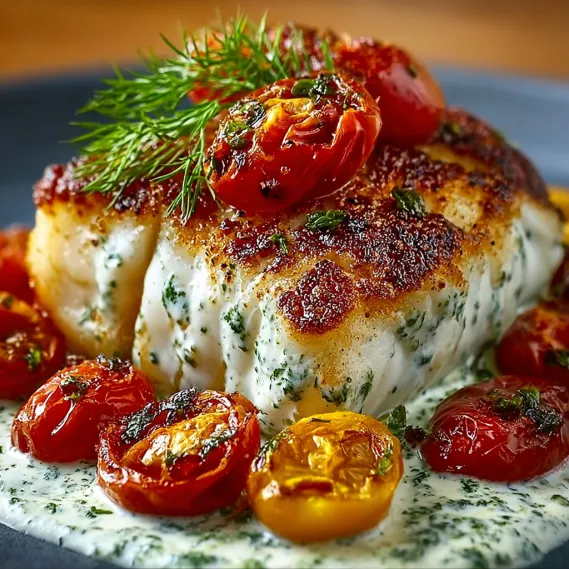
Dry the fillets and use a clean cooking surface with a broad fish spatula. Let a surface set before trying to lift it, and support the full fillet when turning. A grill pan offers more support than widely spaced outdoor grates. Check the thickest part for 145°F rather than relying only on white flesh or a four-minute timer. The two six-ounce fillets may still differ in thickness. Remove each when ready instead of cooking the thinner one until the thicker one finishes.
When should lemon enter the cream?
Warm garlic and cream gently, then stir in dill and lemon off the strongest heat. Avoid a rolling boil after acid is added. The sauce only needs to lightly coat a spoon; reducing it to a thick paste makes plating difficult.
What if optional butter is omitted?
Use a little of the measured olive oil for the garlic stage, reserving it before coating the fish. Do not heat dry garlic in an empty saucepan and expect the same result. Keep the total allocation visible while preparing the components. Refrigerate perishable leftovers promptly in shallow containers at 40°F or below; do not wait for a large hot batch to cool completely on the counter. University of Illinois Extension’s leftover guidance gives a three-to-four-day refrigerated window and 165°F for reheating foods served hot. Keep cold salads and toppings chilled, and follow shorter product-label limits where applicable.
Related recipe choices
For another complete recipe, see Cajun-Style Salmon Bowls with Mango Salsa or Crispy Baked Garlic Parmesan Shrimp Bites. Each has its own ingredient quantities and cooking sequence; keep those measurements separate when choosing a meal. FDA seafood guidance recommends 145°F for most seafood and describes cooked shrimp as firm, pearly and opaque. Keep raw seafood and its utensils separate from ready-to-eat toppings.
Common Questions About This Recipe
- How is the olive oil divided?
The two tablespoons cover both tomato roasting and the fish. Use roughly one tablespoon for each stage.
- How can delicate cod be turned?
Dry the fillets and use a clean cooking surface with a broad fish spatula. Let a surface set before trying to lift it, and support the full fillet when turning.
- When is the fish cooked?
Check the thickest part for 145°F rather than relying only on white flesh or a four-minute timer. The two six-ounce fillets may still differ in thickness.
- When should lemon enter the cream?
Warm garlic and cream gently, then stir in dill and lemon off the strongest heat. Avoid a rolling boil after acid is added.
- What if optional butter is omitted?
Use a little of the measured olive oil for the garlic stage, reserving it before coating the fish. Do not heat dry garlic in an empty saucepan and expect the same result.