
 Pin
Pin
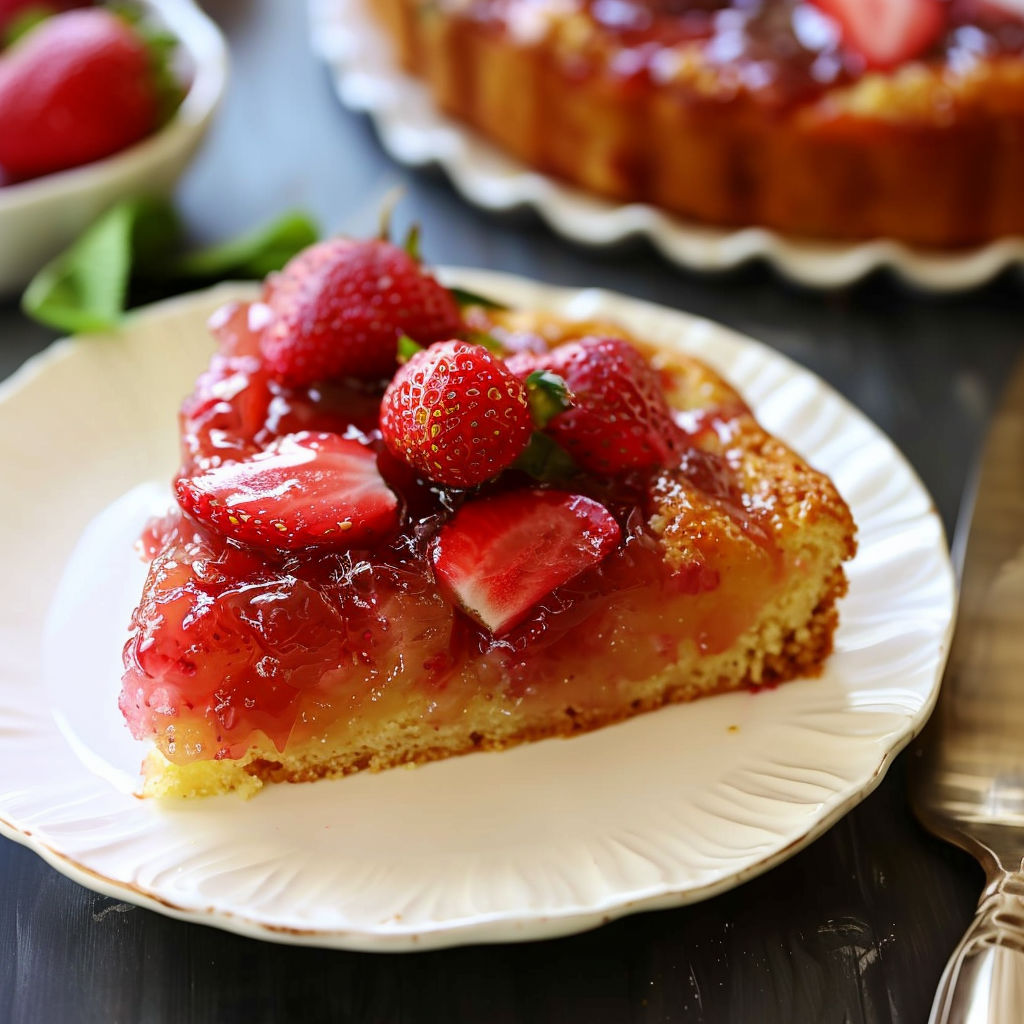
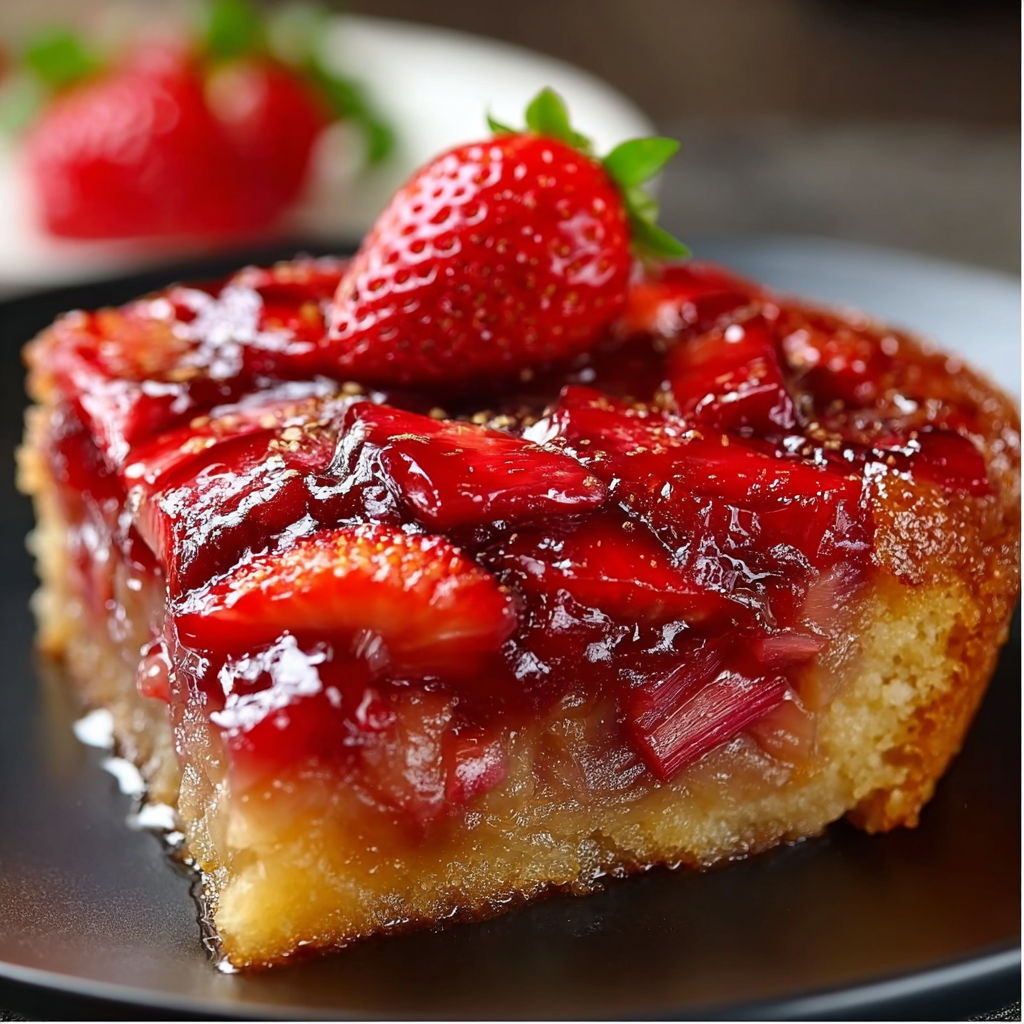
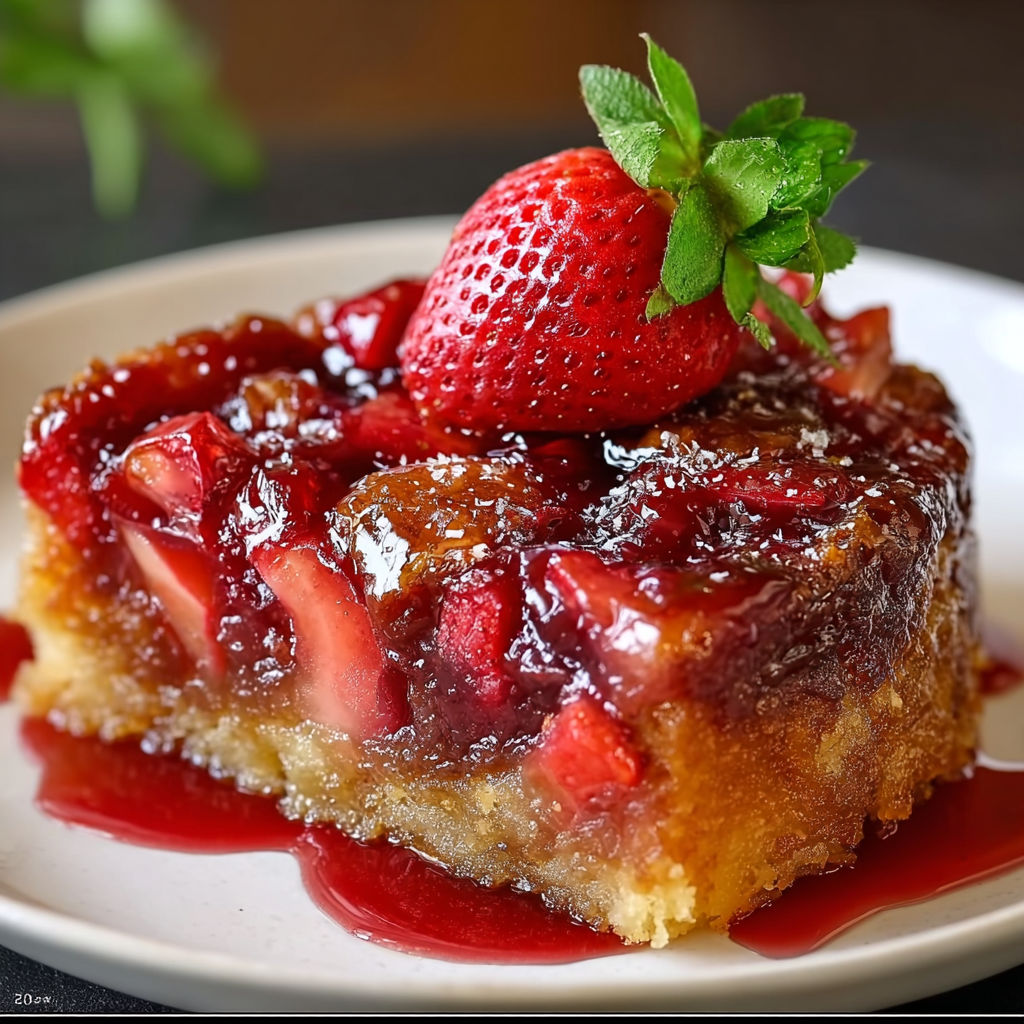
Strawberries and rhubarb bake beneath a buttermilk cake, then become the top when the warm cake is inverted. Use a solid nine-inch round pan for the main method. Let the cake settle briefly before turning it onto a plate large enough to catch the fruit juices.
Use the edible stalks, washed and chopped into small similar pieces. Discard all leaves; they are not a cooking ingredient. Measure a cup of chopped stalks alongside the cup of sliced strawberries.
Ingredient amounts and preparation
- Set out: 2 tablespoons butter, melted
- Set out: 1/3 cup packed brown sugar
- Set out: 1 cup sliced fresh strawberries
- Set out: 1 cup chopped fresh rhubarb
- Set out: 1/2 cup unsalted butter, at room temperature
- Set out: 2/3 cup granulated sugar; 1 large egg
- Set out: 1 teaspoon vanilla extract
- Set out: 1 1/3 cups all-purpose flour
- Set out: 1 teaspoon baking powder
- Set out: 1/4 teaspoon baking soda
- Set out: 1/4 teaspoon salt
- Set out: 2/3 cup buttermilk; Whipped cream
Cooking sequence and doneness
- Stage 1
- Heat the oven to 350°F and grease a solid 9-inch round cake pan.
- Stage 2
- Pour the two tablespoons of melted butter into its base.
- Stage 3
- Sprinkle brown sugar evenly over the butter.
- Stage 4
- Arrange measured strawberries and chopped rhubarb stalks over the sugar.
- Stage 5
- Cream the separate softened butter with white sugar until evenly lighter. Beat in egg and vanilla.
- Stage 6
- Whisk flour, baking powder, baking soda and salt separately.
- Stage 7
- Add that mixture to the creamed mixture alternately with buttermilk, stirring just until combined.
- Stage 8
- Spoon and gently spread batter over the fruit.
- Stage 9
- Bake about thirty to thirty-five minutes, continuing until a tester in the cake shows no wet batter.
- Stage 10
- Rest five minutes, loosen the edge and carefully invert onto a sturdy plate using oven mitts. Let cool before serving with optional whipped cream.
The original offered eight or nine inches without a timing adjustment. A nine-inch solid pan gives a shallower layer for the stated thirty-to-thirty-five-minute starting estimate. An eight-inch pan may require more time and sufficient depth; a springform can leak fruit syrup.
Which butter and sugar go under the fruit?
The two tablespoons of melted butter and one-third cup brown sugar make the bottom layer. The separate half cup softened butter and two-thirds cup white sugar belong in the batter. Keep those portions separate before mixing. Drop small spoonfuls across the fruit layer, then connect them gently with a spatula. Do not pour one mound and press hard across the pan. Stop mixing the batter once the flour and buttermilk are incorporated.
How can the cake be inverted safely?
Rest about five minutes, loosen the edge and place a sturdy serving plate over the pan. Wear oven mitts and turn both together while holding firmly. Lift the pan carefully because the fruit syrup remains hot, then reposition any fruit that stayed behind.
Storage and serving later
Refrigerate perishable leftovers promptly in shallow containers at 40°F or below; do not wait for a large hot batch to cool completely on the counter. University of Illinois Extension’s leftover guidance gives a three-to-four-day refrigerated window and 165°F for reheating foods served hot. Keep cold salads and toppings chilled, and follow shorter product-label limits where applicable. Do not leave the prepared dish out longer than two hours, or one hour above 90°F; return the remaining batch to cold storage.
For another complete recipe, see Roasted Pears with Feta, Dried Cranberries and Honey or Strawberry Cake-Mix Bars with Fresh Berry Glaze. Each has its own ingredient quantities and cooking sequence; keep those measurements separate when choosing a meal. Purdue Extension rhubarb guidance identifies the stalks as the food portion and instructs cooks to discard the leaves.
Common Questions About This Recipe
- Which parts of rhubarb are used?
Use the edible stalks, washed and chopped into small similar pieces. Discard all leaves; they are not a cooking ingredient.
- Why choose a nine-inch pan?
The original offered eight or nine inches without a timing adjustment. A nine-inch solid pan gives a shallower layer for the stated thirty-to-thirty-five-minute starting estimate.
- Which butter and sugar go under the fruit?
The two tablespoons of melted butter and one-third cup brown sugar make the bottom layer. The separate half cup softened butter and two-thirds cup white sugar belong in the batter.
- How is the batter spread without moving the fruit?
Drop small spoonfuls across the fruit layer, then connect them gently with a spatula. Do not pour one mound and press hard across the pan.
- How can the cake be inverted safely?
Rest about five minutes, loosen the edge and place a sturdy serving plate over the pan. Wear oven mitts and turn both together while holding firmly.