
 Pin
Pin
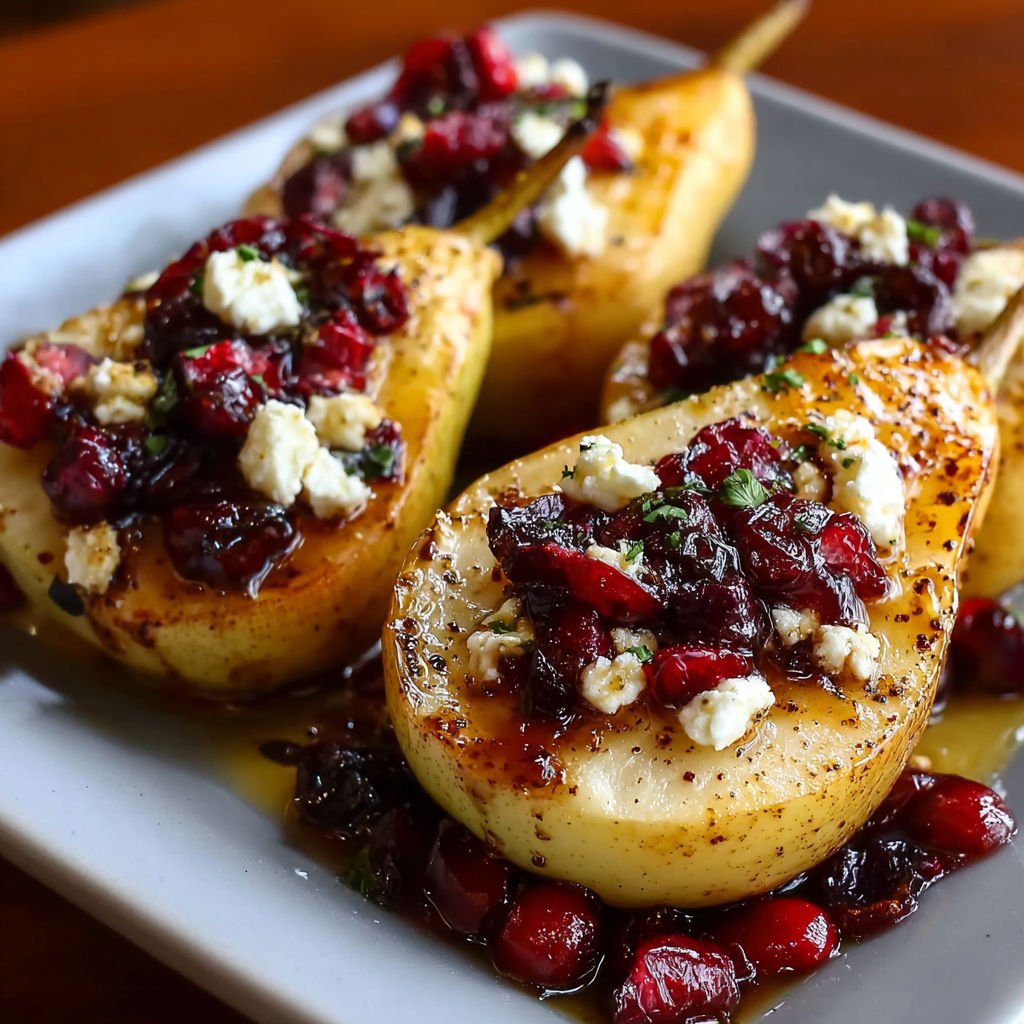
Pear halves are roasted until tender before feta and dried cranberries are added. This keeps the cheese crumbly and the cranberries from spending the entire bake exposed to heat. Four pears make eight halves, which can be served singly as a side or in pairs as a larger portion.
Choose pears that yield slightly but are not collapsing around the stem. A very hard pear may need longer, while a soft one can slump before the edges color. Similar-sized halves make the roasting check more consistent across the dish.
Ingredient amounts and preparation
- Set out: 4 soft pears, ideally Anjou or Bosc
- Set out: Sprigs of fresh thyme, for topping if you want
- Set out: 1/2 cup broken up feta cheese
- Set out: 2 tablespoons melted unsalted butter or olive oil
- Set out: 1/3 cup dried cranberries
- Set out: 2 tablespoons honey
- Set out: 1/2 teaspoon ground cinnamon
Cooking sequence and doneness
- Stage 1
- Heat the oven to 375°F and prepare a baking dish.
- Stage 2
- Halve and core four pears, trimming a very thin underside slice only if needed for stability.
- Stage 3
- Arrange cut-side up and brush with the measured melted butter or oil, then add cinnamon.
- Stage 4
- Roast about 20–25 minutes, continuing until a small knife enters the flesh readily without the halves collapsing. Add crumbled feta and dried cranberries after roasting, distribute the honey and finish with the listed thyme before serving warm.
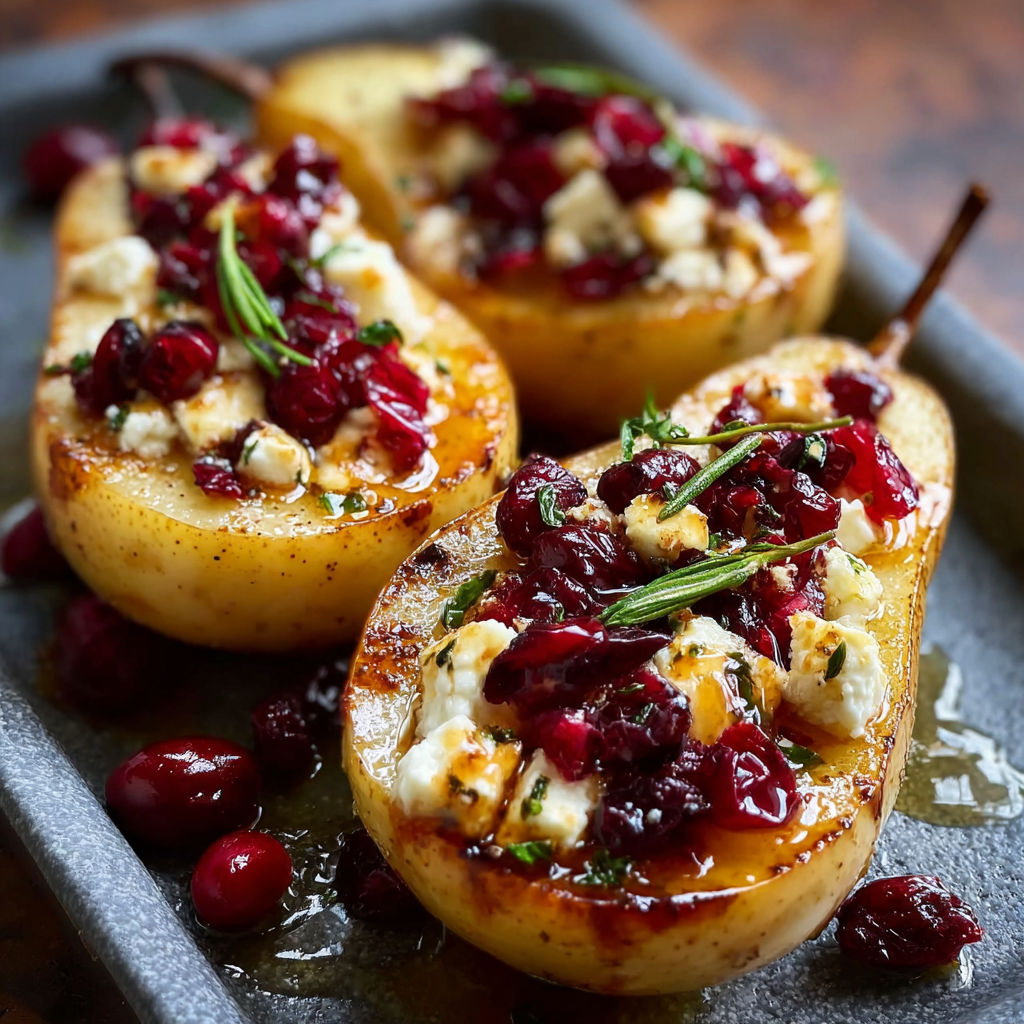
Remove the seed core with a spoon and leave most of the flesh intact. This recipe tops the pears after roasting, so a deep stuffing cavity is unnecessary. If a half rocks, trim only a thin sliver from its underside.
Why add the toppings afterward?
The feta is intended to remain a cool, crumbly contrast against the warm pear. Dried cranberries also remain chewy instead of spending twenty minutes on a dry hot surface. This is different from a filled pear baked with its cheese inside. The two-tablespoon measure is a choice of melted butter or oil, not both together. Brush it across the cut surfaces rather than pouring it all into the hollow. The honey is a separate finish and can be distributed across the eight halves.
Can fresh cranberries replace dried ones?
Not directly at the topping stage: fresh berries are much tarter and have a different texture. The goat-cheese pear recipe cooks fresh cranberries with honey separately. Follow that method if using fresh fruit rather than assuming the two forms behave alike.
Storage and serving later
Refrigerate the cheese-topped pears promptly, ideally with spare fruit topping separate. University of Illinois Extension’s leftover guidance gives a three-to-four-day refrigerated window for leftovers, with shallow containers for cooling. Warm only the portion wanted; repeated heating changes the pear’s texture.
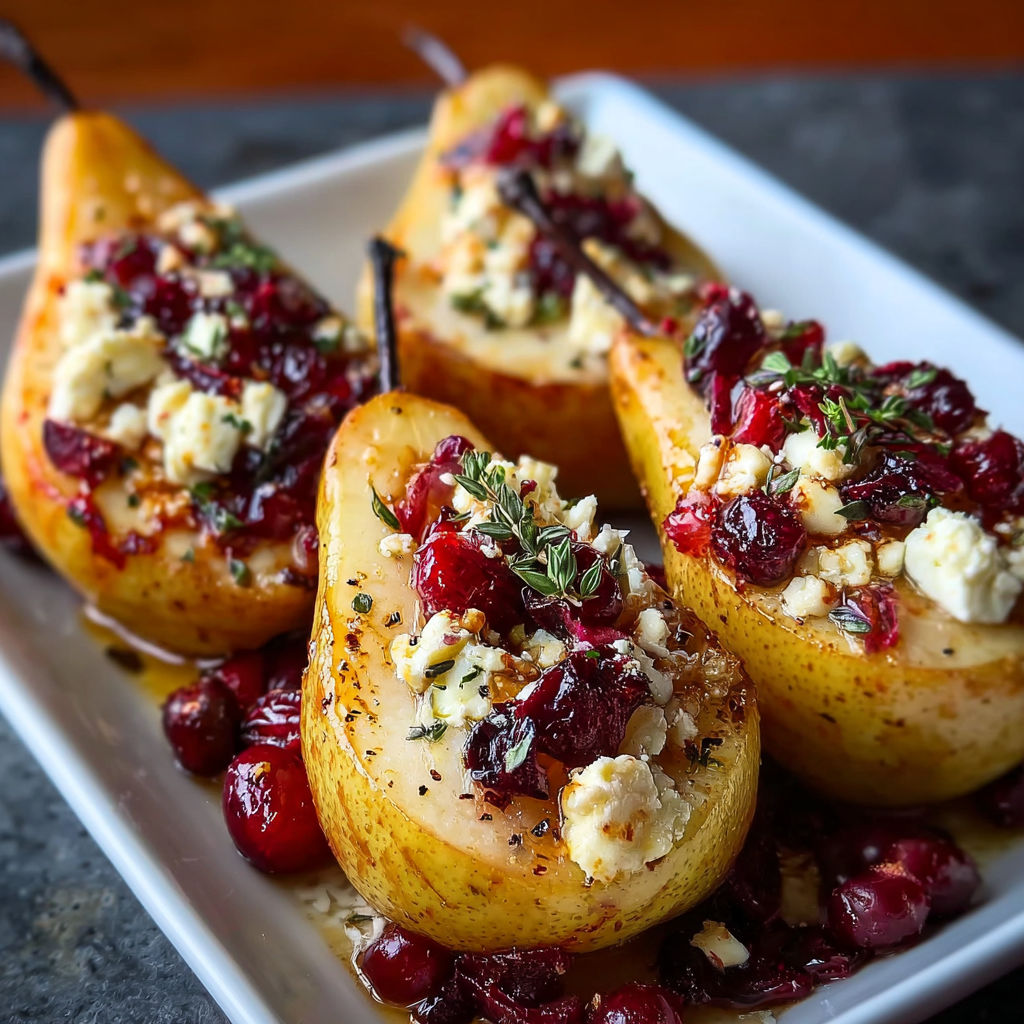
For another complete recipe, see Baked Pears with Goat Cheese and Fresh Cranberry Honey or Apple Crisp Dessert Pizza on a Pie-Crust Base. Each has its own ingredient quantities and cooking sequence; keep those measurements separate when choosing a meal. Recipe guidance is based on the listed ingredient amounts and the method checks above. Timing is an estimate rather than a kitchen-test result; ingredient brands and cookware can change the outcome.
Common Questions About This Recipe
- Which pears hold their shape?
Choose pears that yield slightly but are not collapsing around the stem. A very hard pear may need longer, while a soft one can slump before the edges color.
- How large should the hollow be?
Remove the seed core with a spoon and leave most of the flesh intact. This recipe tops the pears after roasting, so a deep stuffing cavity is unnecessary.
- Why add the toppings afterward?
The feta is intended to remain a cool, crumbly contrast against the warm pear. Dried cranberries also remain chewy instead of spending twenty minutes on a dry hot surface.
- How is the butter or oil used?
The two-tablespoon measure is a choice of melted butter or oil, not both together. Brush it across the cut surfaces rather than pouring it all into the hollow.
- Can fresh cranberries replace dried ones?
Not directly at the topping stage: fresh berries are much tarter and have a different texture. The goat-cheese pear recipe cooks fresh cranberries with honey separately.