
ADVERTISEMENT
in-article · In-Article — 336x280 / 300x250 desktop · 300x250 / 320x50 mobile
House placeholder — AdSense units launch here

Gochujang Beef with Sauced Ramen Noodles

Category: Evening Meals That Deliver Results

Marinated steak tops drained ramen coated in a gochujang sauce, with a separate spicy mayonnaise drizzle. The noodle seasoning packets are discarded. Keep the raw-beef marinade away from the finishing sauce and include the thirty-minute refrigeration time in your preparation.
Unverified portrait retained from the existing template
Research and writing by A Pinch Of Lemon
Revised 2026-10-11 · Research-based; not kitchen-tested
ADVERTISEMENT
in-article · In-Article — 336x280 / 300x250 desktop · 300x250 / 320x50 mobile
House placeholder — AdSense units launch here
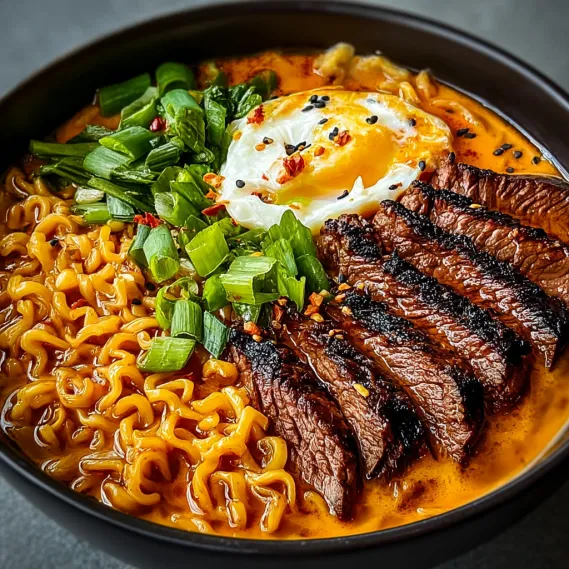
A bowl of spicy Korean ramen with grilled beef and creamy sauce. Pin
A bowl of spicy Korean ramen with grilled beef and creamy sauce. | apinchoflemon.com
ADVERTISEMENT
in-article · In-Article — 336x280 / 300x250 desktop · 300x250 / 320x50 mobile
House placeholder — AdSense units launch here

Marinated steak tops drained ramen coated in a gochujang sauce, with a separate spicy mayonnaise drizzle. The noodle seasoning packets are discarded. Keep the raw-beef marinade away from the finishing sauce and include the thirty-minute refrigeration time in your preparation.

No: the noodles are boiled separately, drained and coated with a small sauce using a quarter cup of noodle water. The result is sauced noodles, not a broth bowl. Keep the broth-simmered ramen recipe’s liquid quantities separate.

Ingredient amounts and preparation

ADVERTISEMENT
in-article · In-Article — 336x280 / 300x250 desktop · 300x250 / 320x50 mobile
House placeholder — AdSense units launch here
  • Set out: 300g flank steak or sirloin, thinly sliced; 2 tablespoons soy sauce; 1 tablespoon sesame oil
  • Set out: 1 tablespoon brown sugar; 1 tablespoon gochujang; 2 garlic cloves, minced
  • Set out: 1 teaspoon grated ginger; 1 teaspoon rice vinegar; ½ teaspoon ground black pepper
  • Set out: 2 packs Korean instant ramen, seasoning packets discarded; 1 tablespoon gochujang; 1 tablespoon soy sauce; 1 teaspoon sesame oil
  • Set out: 1 teaspoon chili flakes; ½ teaspoon sugar; ¼ cup reserved noodle water
  • Set out: 2 tablespoons mayonnaise; 1 teaspoon gochujang; 1 teaspoon soy sauce
  • Set out: 1 teaspoon honey; 1 tablespoon warm water; 2 tablespoons chopped scallions
  • Set out: 1 teaspoon toasted sesame seeds; Optional: shredded nori; Optional: pickled radish; Optional: soft-boiled egg

Cooking sequence and doneness

Stage 1
Mix the beef’s soy sauce, sesame oil, brown sugar, gochujang, garlic, ginger, vinegar and pepper in a bowl.
Stage 2
Coat the thin steak slices and refrigerate thirty minutes. Mix mayonnaise, its gochujang, soy sauce, honey and warm water separately and chill.
Stage 3
Boil ramen without the seasoning packets until just tender and reserve one-quarter cup cooking water. Drain the noodles.
Stage 4
Heat the noodle sauce ingredients with the reserved water in a pan over low heat.
Stage 5
Toss in noodles until coated and hot, loosening with a little water if needed. Sear the drained steak slices in a hot skillet in batches, discarding used marinade.
Stage 6
Check the steak reaches 145°F and rest at least three minutes. Portion noodles and steak, then drizzle with the clean mayonnaise sauce and add scallions and sesame seeds.
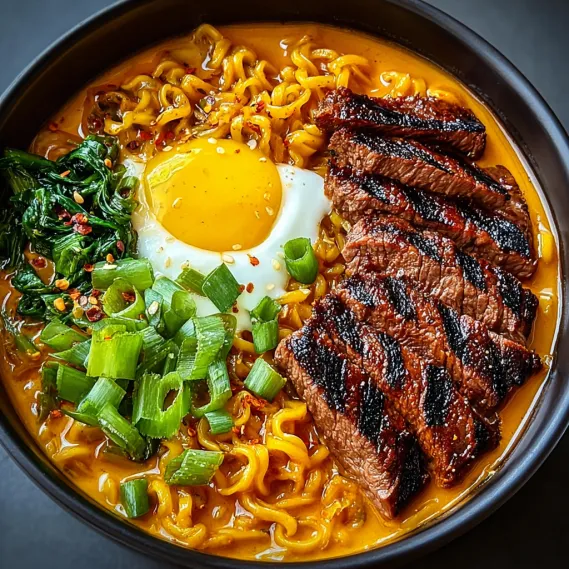
A bowl of spicy Korean ramen with grilled beef and creamy sauce.
A bowl of spicy Korean ramen with grilled beef and creamy sauce. | apinchoflemon.com
ADVERTISEMENT
in-article · In-Article — 336x280 / 300x250 desktop · 300x250 / 320x50 mobile
House placeholder — AdSense units launch here

They belong to three separate mixtures: beef marinade, noodle sauce and mayonnaise drizzle. Measure each part into its own bowl. Do not save marinade that touched raw beef to use as a cold finishing sauce. Slice thinly across the grain so it cooks quickly and is easier to bite with noodles. Refrigerate while marinating for thirty minutes. Lift slices from excess marinade before searing so the pan does not fill with liquid.

Can the instant seasoning be used too?

Discard those packets for this version because soy sauce and chili paste already season the noodles. Packet sizes and salt levels vary. Taste a cooked noodle before deciding whether any further seasoning is needed.

When is the mayonnaise sauce added?

ADVERTISEMENT
in-article · In-Article — 336x280 / 300x250 desktop · 300x250 / 320x50 mobile
House placeholder — AdSense units launch here

Mix it with clean utensils and keep chilled until plating. Drizzle after the hot noodles and beef are portioned. The optional toppings should be ready to eat; if choosing an egg, use a separately prepared, safely cooked egg. Refrigerate perishable leftovers promptly in shallow containers at 40°F or below; do not wait for a large hot batch to cool completely on the counter. University of Illinois Extension’s leftover guidance gives a three-to-four-day refrigerated window and 165°F for reheating foods served hot. Keep cold salads and toppings chilled, and follow shorter product-label limits where applicable.

Related recipe choices

For another complete recipe, see Gochujang Beef Meatball Bowls with Rice and Spicy Mayo or Ground Beef Noodles with Ginger and Soy Sauce. Each has its own ingredient quantities and cooking sequence; keep those measurements separate when choosing a meal. USDA’s temperature guidance specifies 145°F for beef steaks followed by at least three minutes of rest. Thermometer placement guidance explains checking the thick center rather than relying on surface color.

Common Questions About This Recipe

Is this a noodle soup?

No: the noodles are boiled separately, drained and coated with a small sauce using a quarter cup of noodle water. The result is sauced noodles, not a broth bowl.

Why are soy sauce and gochujang listed several times?

They belong to three separate mixtures: beef marinade, noodle sauce and mayonnaise drizzle. Measure each part into its own bowl.

How should the steak be cut?

Slice thinly across the grain so it cooks quickly and is easier to bite with noodles. Refrigerate while marinating for thirty minutes.

Can the instant seasoning be used too?

Discard those packets for this version because soy sauce and chili paste already season the noodles. Packet sizes and salt levels vary.

When is the mayonnaise sauce added?

Mix it with clean utensils and keep chilled until plating. Drizzle after the hot noodles and beef are portioned.

ADVERTISEMENT
in-article · In-Article — 336x280 / 300x250 desktop · 300x250 / 320x50 mobile
House placeholder — AdSense units launch here

Gochujang Beef with Sauced Ramen Noodles

Marinated steak tops drained ramen coated in a gochujang sauce, with a separate spicy mayonnaise drizzle. The noodle seasoning packets are discarded. Keep the raw-beef marinade away from the finishing sauce and include the thirty-minute refrigeration time in your preparation.

ADVERTISEMENT
in-article · In-Article — 336x280 / 300x250 desktop · 300x250 / 320x50 mobile
House placeholder — AdSense units launch here
Prep Time
45 min
Time to Cook
15–20 min
Complete Time
60–65 min
Research and writing: A Pinch Of Lemon

Recipe Type: Dinner Victories

Level of Difficulty: Moderate Difficulty

Cuisine Style: Korean

Makes: 2 Number of Servings (2 servings)

Dietary Categories: Check ingredient labels

Ingredients You’ll Need

→ For Grilled Beef

01 300g flank steak or sirloin, thinly sliced
02 2 tablespoons soy sauce
03 1 tablespoon sesame oil
04 1 tablespoon brown sugar
05 1 tablespoon gochujang
06 2 garlic cloves, minced
07 1 teaspoon grated ginger
08 1 teaspoon rice vinegar
09 ½ teaspoon ground black pepper

→ For Ramen

10 2 packs Korean instant ramen, seasoning packets discarded
11 1 tablespoon gochujang
12 1 tablespoon soy sauce
13 1 teaspoon sesame oil
14 1 teaspoon chili flakes
15 ½ teaspoon sugar
16 ¼ cup reserved noodle water

→ For Creamy Sauce

17 2 tablespoons mayonnaise
18 1 teaspoon gochujang
19 1 teaspoon soy sauce
20 1 teaspoon honey
21 1 tablespoon warm water

→ Garnishes

22 2 tablespoons chopped scallions
23 1 teaspoon toasted sesame seeds
24 Optional: shredded nori
25 Optional: pickled radish
26 Optional: soft-boiled egg

How to Make It

Step 01

Mix the beef’s soy sauce, sesame oil, brown sugar, gochujang, garlic, ginger, vinegar and pepper in a bowl.

Step 02

Coat the thin steak slices and refrigerate thirty minutes. Mix mayonnaise, its gochujang, soy sauce, honey and warm water separately and chill.

Step 03

Boil ramen without the seasoning packets until just tender and reserve one-quarter cup cooking water. Drain the noodles.

Step 04

Heat the noodle sauce ingredients with the reserved water in a pan over low heat.

Step 05

Toss in noodles until coated and hot, loosening with a little water if needed. Sear the drained steak slices in a hot skillet in batches, discarding used marinade.

Step 06

Check the steak reaches 145°F and rest at least three minutes. Portion noodles and steak, then drizzle with the clean mayonnaise sauce and add scallions and sesame seeds.

Extra Suggestions

  1. No: the noodles are boiled separately, drained and coated with a small sauce using a quarter cup of noodle water.
  2. They belong to three separate mixtures: beef marinade, noodle sauce and mayonnaise drizzle.
  3. Slice thinly across the grain so it cooks quickly and is easier to bite with noodles.

Things You'll Need

  • Grill pan
  • Mixing bowls
  • Medium pot
  • Tongs

Allergen Information

Always read labels for allergens and consult your doctor if unsure.
  • Contains soy.
  • Contains sesame.
  • Contains eggs (if using mayonnaise).

Nutritional Breakdown (Per Serving)

This is for general info and isn't a replacement for professional advice.
  • Calories: Not calculated
  • Fat Content: Not calculated
  • Carbohydrates: Not calculated
  • Protein Content: Not calculated
ADVERTISEMENT
in-article · In-Article — 336x280 / 300x250 desktop · 300x250 / 320x50 mobile
House placeholder — AdSense units launch here