
 Pin
Pin
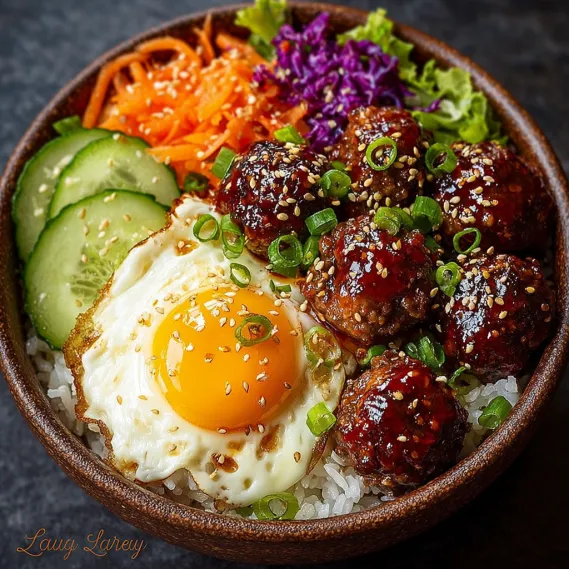
Beef meatballs are baked, coated with a soy-gochujang glaze and served over cooked rice with cucumber, carrot and spicy mayo. The glaze is thickened separately so the meatballs can be checked before coating. This is a Korean-inspired bowl, without an unsupported claim of traditional barbecue technique.
A tablespoon seasons the meatball mixture, while a separate teaspoon finishes the glaze. Keep the two measures visible with their respective ingredients. The sauce ingredients do not belong in the raw meat mixture simply because they also contain soy and garlic.
Ingredient amounts and preparation
- Set out: 1 pound ground beef; 0.5 cup panko breadcrumbs; 1 egg; 2 cloves garlic, minced
- Set out: 1 inch piece ginger, grated; 2 tablespoons soy sauce; 1 tablespoon sesame oil; 1 green onion, finely chopped
- Set out: 0.5 teaspoon black pepper; 0.25 cup soy sauce; 2 tablespoons brown sugar; 1 tablespoon rice vinegar; 1 tablespoon gochujang
- Set out: 1 teaspoon sesame oil; 1 clove garlic, grated; 1 teaspoon cornstarch; 1 tablespoon water
- Set out: 0.25 cup mayonnaise; 1 tablespoon gochujang; 1 teaspoon lime juice or rice vinegar; 1 teaspoon honey (optional)
- Set out: 2 cups cooked jasmine rice; 0.5 cup shredded carrots; 0.5 cucumber, thinly sliced; 2 green onions, sliced; Sesame seeds (optional)
Cooking sequence and doneness
- Stage 1
- Heat the oven to 400°F and prepare a rimmed baking tray.
- Stage 2
- Gently combine beef, breadcrumbs, egg, garlic, ginger, meatball soy sauce, the tablespoon sesame oil, green onion and pepper.
- Stage 3
- Shape similar meatballs using about one-and-a-half tablespoons each and arrange with gaps.
- Stage 4
- Bake about 18–20 minutes, continuing until several large centers reach 160°F.
- Stage 5
- Simmer the glaze soy sauce, brown sugar, vinegar, gochujang, garlic and teaspoon sesame oil in a small pan.
- Stage 6
- Mix cornstarch with cold water, stir into the simmering glaze and cook until it lightly coats a spoon, then toss with fully cooked meatballs.
- Stage 7
- In a clean bowl combine mayonnaise, gochujang, lime and optional honey for the serving sauce.
- Stage 8
- Build bowls with cooked rice, glazed meatballs, clean cucumber and carrot, then add spicy mayo and green onion.
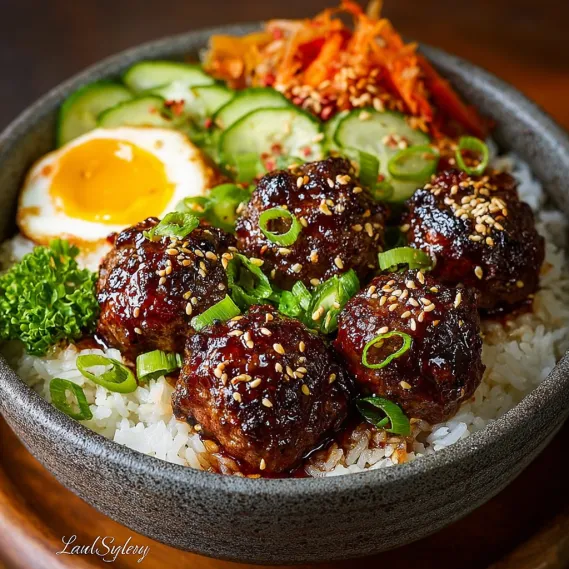
Use about one-and-a-half tablespoons of mixture per ball and keep them similar. Avoid compressing them into hard spheres. The actual count depends on your scoop; check several large centers rather than assuming an eighteen-minute bake fits every portion.
How does the glaze thicken?
Mix the teaspoon of cornstarch with the tablespoon of cold water first, then stir into simmering sauce. Keep stirring briefly until it coats a spoon. Adding starch dry to the sweet sauce can produce lumps among the garlic pieces. Its pepper intensity and sweetness vary by product. Taste a clean sample before choosing the amount used in the mayo, and check ingredient labels for dietary needs. Neither the Korean-inspired name nor a red color guarantees a particular heat level.
Why keep the vegetables separate?
Cucumber and shredded carrot provide cool texture against hot meatballs and rice. Prepare them on a clean board before handling raw beef or use a separate cleaned board afterward. The serving vegetables do not receive a cooking step that could correct raw-meat cross-contact.
Storage and serving later
Refrigerate perishable leftovers promptly in shallow containers at 40°F or below; do not wait for a large hot batch to cool completely on the counter. University of Illinois Extension’s leftover guidance gives a three-to-four-day refrigerated window and 165°F for reheating foods served hot. Keep cold salads and toppings chilled, and follow shorter product-label limits where applicable.
Related recipe choices
For another complete recipe, see Chicken Meatballs with Garlic Parmesan Fettuccine or Ground Turkey Teriyaki with Broccoli and Carrots. Each has its own ingredient quantities and cooking sequence; keep those measurements separate when choosing a meal. USDA’s temperature guidance specifies 160°F for ground beef. Thermometer placement guidance explains checking the thick center rather than relying on surface color.
Common Questions About This Recipe
- Which sesame oil measure goes where?
A tablespoon seasons the meatball mixture, while a separate teaspoon finishes the glaze. Keep the two measures visible with their respective ingredients.
- How large should the meatballs be?
Use about one-and-a-half tablespoons of mixture per ball and keep them similar. Avoid compressing them into hard spheres.
- How does the glaze thicken?
Mix the teaspoon of cornstarch with the tablespoon of cold water first, then stir into simmering sauce. Keep stirring briefly until it coats a spoon.
- How hot is gochujang?
Its pepper intensity and sweetness vary by product. Taste a clean sample before choosing the amount used in the mayo, and check ingredient labels for dietary needs.
- Why keep the vegetables separate?
Cucumber and shredded carrot provide cool texture against hot meatballs and rice. Prepare them on a clean board before handling raw beef or use a separate cleaned board afterward.