
 Pin
Pin
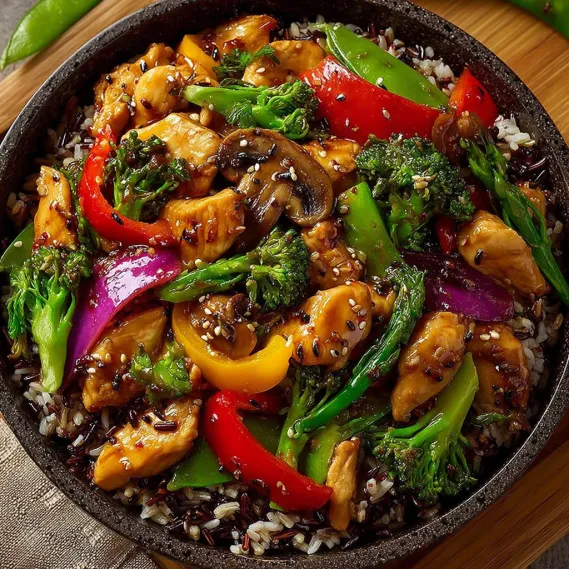
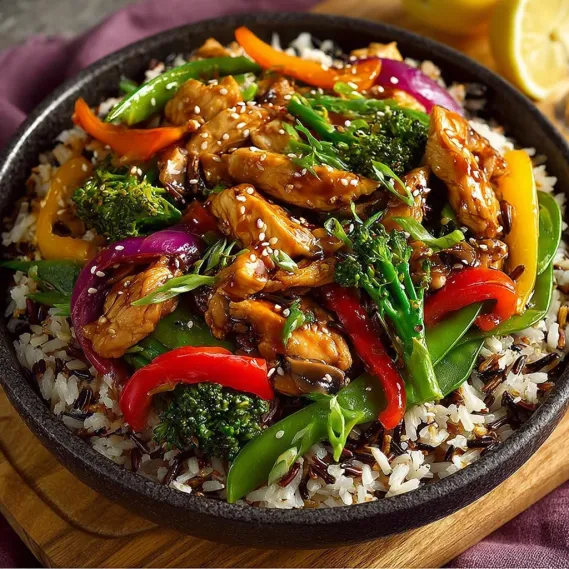
Cornstarch-coated chicken and colorful vegetables are tossed with a honey-soy sauce and one cup of cooked wild rice. Prepare the rice before starting this skillet meal. Separate the starch used on chicken from the slurry used to thicken the sauce.
No: measure one cup of already cooked wild rice. Dry wild rice takes substantially longer to prepare and needs additional water, so it cannot simply be added to this stir-fry. Cook it separately and cool leftovers promptly if preparing ahead.
Ingredient amounts and preparation
- Set out: 1 lb boneless skinless chicken breast
- Set out: 2 tablespoons cornstarch
- Set out: 1 tablespoon vegetable oil; 1 cup cooked wild rice
- Set out: 1 red bell pepper, chopped
- Set out: 1 yellow bell pepper, chopped
- Set out: 1 cup broccoli florets; 1/2 cup snap peas
- Set out: 1/2 cup chopped carrots
- Set out: 1/4 cup green peas
- Set out: 2 tablespoons chopped scallions; Fresh cilantro or sesame seeds
- Set out: 1/4 cup low-sodium soy sauce
- Set out: 2 tablespoons honey
- Set out: 1 tablespoon rice vinegar; 1 tablespoon sesame oil
- Set out: 1 garlic clove, minced
- Set out: 1 teaspoon grated fresh ginger; 1 tablespoon cornstarch mixed with 2 tablespoons cold water
Cooking sequence and doneness
- Stage 1
- Prepare and measure one cup of cooked wild rice before starting.
- Stage 2
- Cut chicken into even bite-size pieces and toss with its two tablespoons of cornstarch. Mix soy sauce, honey, vinegar, sesame oil, garlic and ginger separately.
- Stage 3
- Re-stir the separate cornstarch-and-water slurry and keep it ready.
- Stage 4
- Heat vegetable oil in a wide skillet and cook chicken in batches if needed until the thick centers reach 165°F. Transfer to a clean plate.
- Stage 5
- Stir-fry carrots and broccoli, then peppers and snap peas, until tender to your preference.
- Stage 6
- Add green peas and cook through. Return chicken, pour in sauce and simmer gently.
- Stage 7
- Add slurry gradually until coated, then fold in the cooked rice and heat the whole mixture to 165°F. Finish with scallions and optional cilantro or sesame seeds.
Two tablespoons coat the chicken. The separate tablespoon mixed with two tablespoons of cold water is for the sauce. Keep these portions separate so the sauce does not receive all three tablespoons and become excessively thick. Slice carrots thinly and keep broccoli florets small. Start these firmer vegetables before the peppers and snap peas if their pieces are thick. Add green peas last so they do not become mushy while waiting for the carrots.
Can the chicken be crowded into a small pan?
Cook in batches if necessary. Coated chicken pieces touching in a deep pile are more likely to steam and stick than brown. Check thick centers reach 165°F before moving the cooked chicken to a clean plate. Re-stir the cold slurry just before adding because starch settles. Add it gradually to simmering sauce and stop when it coats the ingredients. A little water can loosen a sauce that becomes too tight after the rice is added.
How is refrigerated rice reheated?
Fold it in near the end and heat the whole mixture to 165°F. Do not stop merely because the sauce has thickened. Divide leftovers into shallow containers rather than cooling a large dense mound on the counter. Refrigerate perishable leftovers promptly in shallow containers at 40°F or below; do not wait for a large hot batch to cool completely on the counter. University of Illinois Extension’s leftover guidance gives a three-to-four-day refrigerated window and 165°F for reheating foods served hot. Keep cold salads and toppings chilled, and follow shorter product-label limits where applicable.
Related recipe choices
For another complete recipe, see Ground Turkey Teriyaki with Broccoli and Carrots or Sesame Chicken with Coconut Aminos, Rice and Green Beans. Each has its own ingredient quantities and cooking sequence; keep those measurements separate when choosing a meal. USDA’s temperature guidance specifies 165°F for poultry, including ground chicken and turkey. Thermometer placement guidance explains checking the thick center rather than relying on surface color.
Common Questions About This Recipe
- Is the rice measured before cooking?
No: measure one cup of already cooked wild rice. Dry wild rice takes substantially longer to prepare and needs additional water, so it cannot simply be added to this stir-fry.
- Why are there two starch quantities?
Two tablespoons coat the chicken. The separate tablespoon mixed with two tablespoons of cold water is for the sauce.
- Which vegetables need a head start?
Slice carrots thinly and keep broccoli florets small. Start these firmer vegetables before the peppers and snap peas if their pieces are thick.
- Can the chicken be crowded into a small pan?
Cook in batches if necessary. Coated chicken pieces touching in a deep pile are more likely to steam and stick than brown.
- When does the slurry go in?
Re-stir the cold slurry just before adding because starch settles. Add it gradually to simmering sauce and stop when it coats the ingredients.
- How is refrigerated rice reheated?
Fold it in near the end and heat the whole mixture to 165°F. Do not stop merely because the sauce has thickened.