
 Pin
Pin
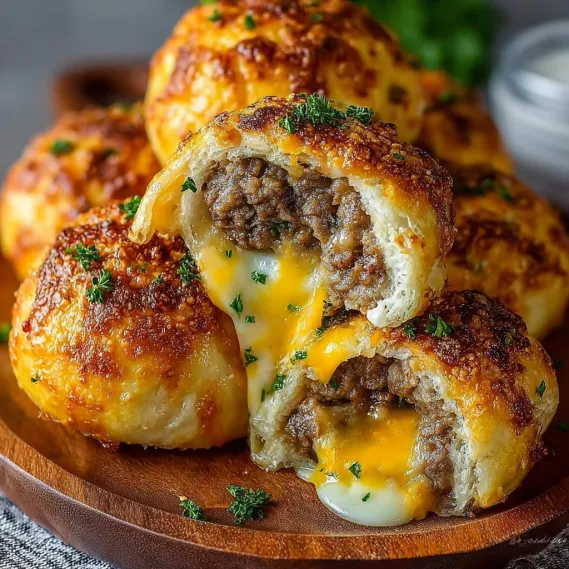
Hollowed baked dinner rolls hold cooked beef and cheddar, then warm in the oven under garlic butter and Parmesan. This method uses ready-baked rolls instead of sealing raw biscuit dough around filling. Leave enough bread in each shell to support the beef.
Use twelve fully baked soft dinner rolls. Cut off small lids and hollow each roll gently, leaving a base and walls. Raw refrigerated dough needs its own shaping and baking method and is not interchangeable here.
Ingredient amounts and preparation
- Set out: 1 pound ground beef
- Set out: 1 cup cheddar cheese, cubed or shredded
- Set out: 12 soft dinner rolls
- Set out: 3 tablespoons butter, melted
- Set out: 2 cloves garlic, minced
- Set out: 3 tablespoons grated parmesan cheese
- Set out: 1 tablespoon chopped fresh parsley
- Set out: 1 teaspoon salt; 1/2 teaspoon black pepper
Cooking sequence and doneness
- Stage 1
- Heat the oven to 375°F and line a baking sheet.
- Stage 2
- Brown the ground beef in a skillet, breaking it into small crumbles.
- Stage 3
- Cook to 160°F, season and drain excess fat.
- Stage 4
- Cut small lids from the baked dinner rolls.
- Stage 5
- Hollow each gently while leaving a sturdy base and sides.
- Stage 6
- Divide some of the cheddar among the bottoms.
- Stage 7
- Spoon in the warm cooked beef evenly.
- Stage 8
- Add the remaining cheddar and replace the bread lids.
- Stage 9
- Stir garlic into the melted butter and brush over the rolls.
- Stage 10
- Sprinkle with Parmesan and parsley.
- Stage 11
- Bake about fifteen to eighteen minutes, checking early and shielding if needed until hot with melted cheese. Rest briefly before lifting and serving.
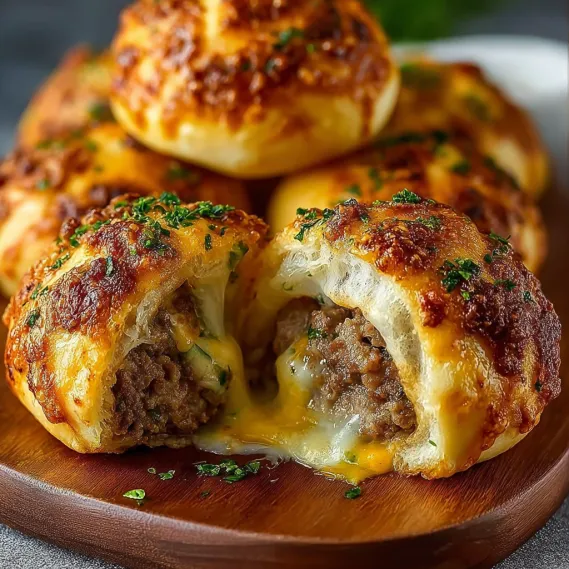
Put part of the cup of cheddar at the bottom of each shell, then divide the remainder above the beef. Cubes give pockets of cheese; shreds distribute more evenly. Either form should remain within the total listed cup. Rendered fat can soak through soft bread. Cook the beef to 160°F, season and drain before spooning it into the shells. Fill evenly without packing so much meat into one roll that its sides tear.
What happens to the bread lids?
Replace them after filling, then brush the upper surfaces with garlic butter. The lids help contain the filling when picked up. Save hollowed bread for another use rather than mixing it into the beef without a measured allowance.
How can the rolls avoid becoming too dark?
Start checking before the fifteen-to-eighteen-minute estimate ends because the bread is already baked. Cover loosely if needed while the filling heats. Serve when the cheese has melted and the center is hot; use 165°F if reheating refrigerated filling. Refrigerate perishable leftovers promptly in shallow containers at 40°F or below; do not wait for a large hot batch to cool completely on the counter. University of Illinois Extension’s leftover guidance gives a three-to-four-day refrigerated window and 165°F for reheating foods served hot. Keep cold salads and toppings chilled, and follow shorter product-label limits where applicable.
Related recipe choices
For another complete recipe, see Biscuit Cheeseburger Parcels with Garlic and Parmesan or Toasted Beef Burritos with Rice and Nacho Cheese Sauce. Each has its own ingredient quantities and cooking sequence; keep those measurements separate when choosing a meal. USDA’s temperature guidance specifies 160°F for ground beef. Thermometer placement guidance explains checking the thick center rather than relying on surface color.
Common Questions About This Recipe
- Are the rolls raw dough?
Use twelve fully baked soft dinner rolls. Cut off small lids and hollow each roll gently, leaving a base and walls.
- How is the cheddar divided?
Put part of the cup of cheddar at the bottom of each shell, then divide the remainder above the beef. Cubes give pockets of cheese; shreds distribute more evenly.
- Why drain the beef?
Rendered fat can soak through soft bread. Cook the beef to 160°F, season and drain before spooning it into the shells.
- What happens to the bread lids?
Replace them after filling, then brush the upper surfaces with garlic butter. The lids help contain the filling when picked up.
- How can the rolls avoid becoming too dark?
Start checking before the fifteen-to-eighteen-minute estimate ends because the bread is already baked. Cover loosely if needed while the filling heats.