
 Pin
Pin
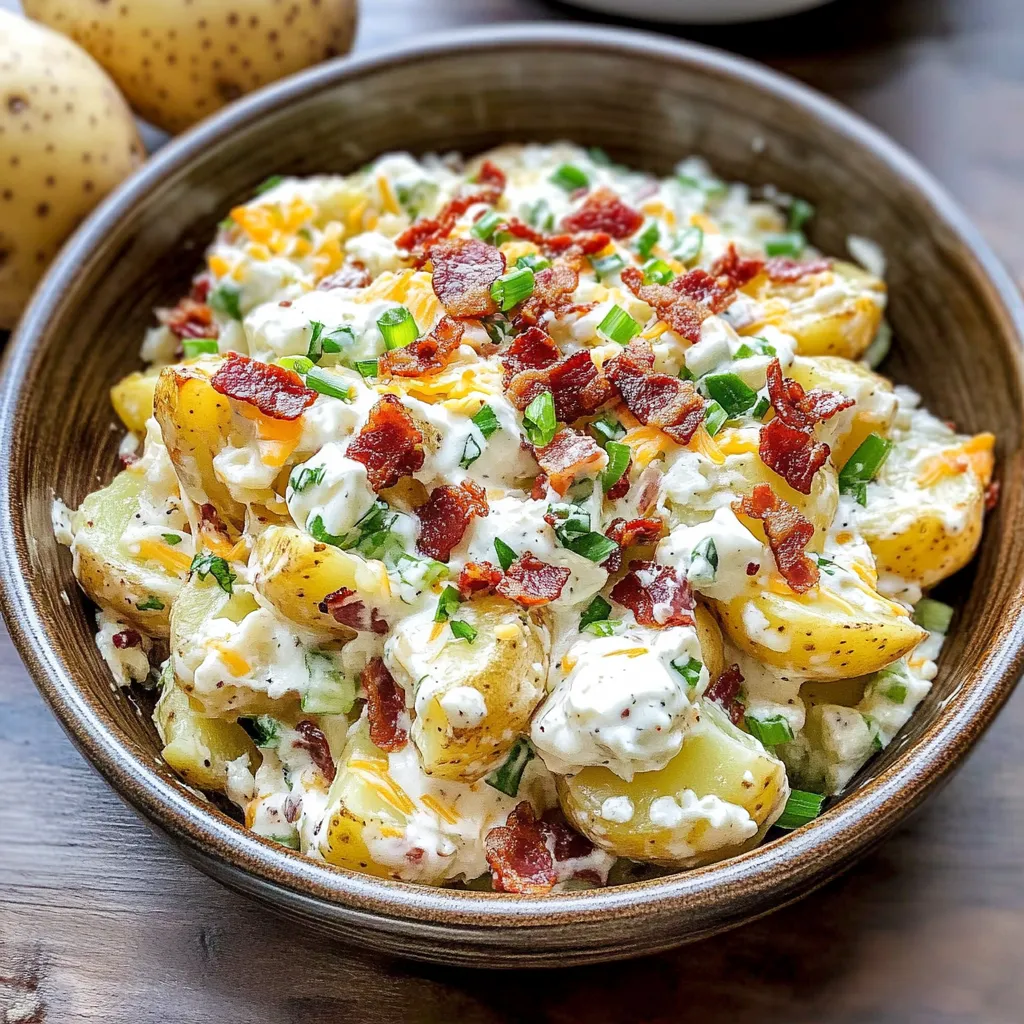
Baked russet potatoes form a crumbly base for this chilled salad with bacon, Cheddar, mayonnaise and sour cream. Vinegar seasons the warm potato pieces before the dairy dressing is added. Build cooling time into the plan; a tray of freshly baked potatoes is not ready for immediate cold salad assembly.
The supplied method cooks the potatoes whole and peels them afterward. Russet flesh can crumble as it is cut, so expect a softer-edged salad rather than perfectly firm waxy-potato cubes. Fold gently instead of stirring until the pieces are mashed.
Ingredient amounts and preparation
- Set out: 4 pounds russet potatoes
- Set out: 1-2 tablespoons olive oil
- Set out: 3 tablespoons apple cider vinegar
- Set out: 1 teaspoon kosher salt
- Set out: 1 teaspoon freshly ground black pepper
- Set out: 1 cup mayonnaise
- Set out: ¾ cup sour cream or Greek yogurt
- Set out: 12 ounces bacon, cooked, cooled, and chopped
- Set out: 6 green onions, chopped
- Set out: 1 ½ cups medium cheddar cheese, shredded
Cooking sequence and doneness
- Stage 1
- Heat the oven to 400°F.
- Stage 2
- Scrub and dry potatoes, pierce each several times, coat lightly with the listed oil and bake about 50–60 minutes or longer until a skewer enters easily.
- Stage 3
- When safe to handle, peel and cut into one-inch pieces, sprinkle with measured vinegar and spread in shallow containers for prompt refrigeration rather than prolonged counter cooling.
- Stage 4
- Cook bacon until crisp, drain and chill if it will not be used immediately.
- Stage 5
- Mix mayonnaise and sour cream, considering the listed salt as a total seasoning allowance and adding pepper to taste.
- Stage 6
- Once potatoes are cool, gently fold in dressing, bacon, green onion and Cheddar, reserving some bacon separately if desired.
- Stage 7
- Refrigerate about three hours or overnight, serve cold and keep leftovers within the normal three-to-four-day refrigerated window.
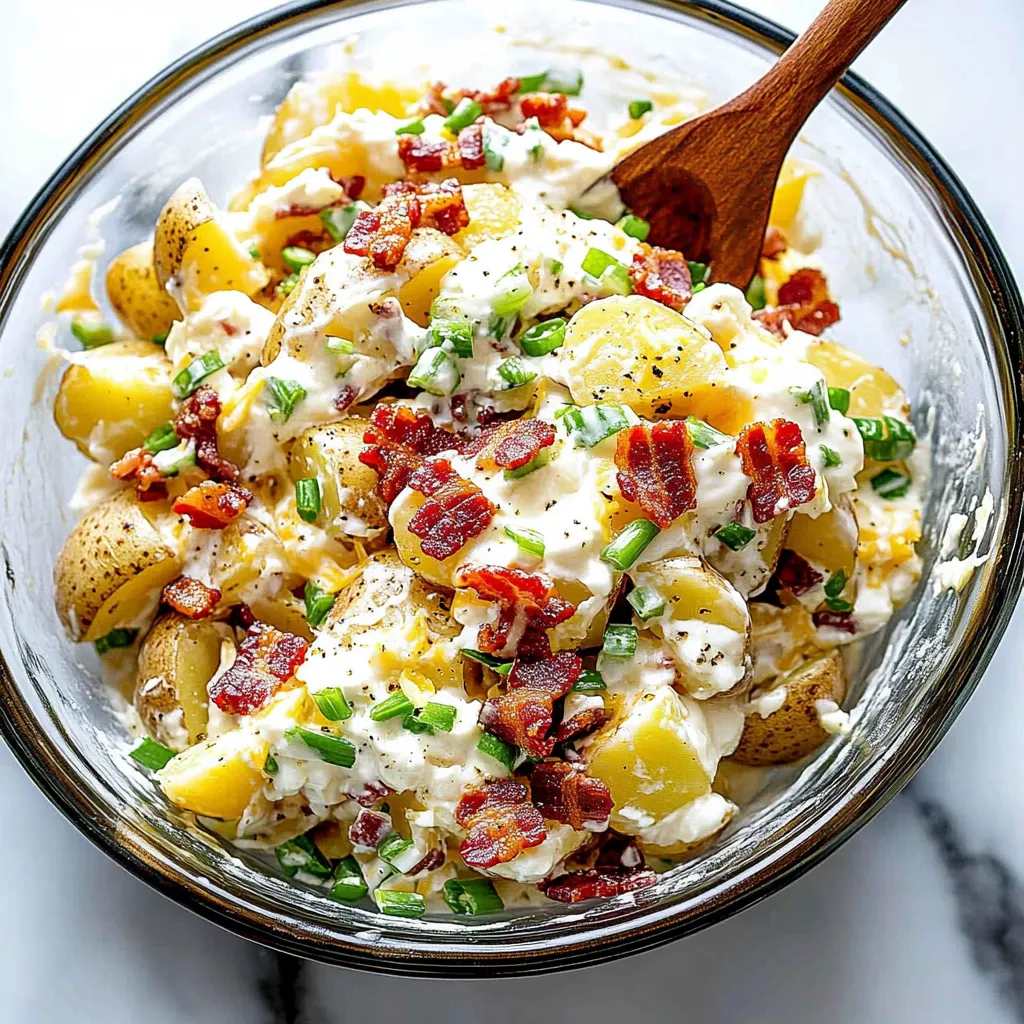
Sprinkle the measured cider vinegar over warm cut potatoes before the mayonnaise mixture. Distribute it in several passes so one section does not absorb all of it. This is seasoning, not a substitute for cooling and refrigeration. Spread the cut pieces in shallow containers and refrigerate promptly rather than leaving a large warm bowl on the counter until completely cold. Avoid trapping a deep mass of hot potato beneath dressing. Keep total room-temperature handling within two hours.
Where should the salt go?
The listed teaspoon can be divided between the skins and final dressing, or reserved for seasoning after tasting. Bacon and Cheddar add salt of their own. Do not silently use a full teaspoon at every instruction that mentions seasoning.
Can bacon stay crisp overnight?
Contact with dressing softens it. Reserve a portion to scatter shortly before serving if texture matters, keeping it refrigerated separately. The rest can be folded into the salad for distributed flavor. The recipe plans roughly three hours after assembly, or overnight. That is separate from potato baking and initial cooling. Use a chilled salad at serving and return the remaining batch promptly to the refrigerator.
Storage and serving later
Refrigerate perishable leftovers promptly in shallow containers at 40°F or below; do not wait for a large hot batch to cool completely on the counter. University of Illinois Extension’s leftover guidance gives a three-to-four-day refrigerated window and 165°F for reheating foods served hot. Keep cold salads and toppings chilled, and follow shorter product-label limits where applicable. Do not leave the prepared dish out longer than two hours, or one hour above 90°F; return the remaining batch to cold storage.
Related recipe choices
For another complete recipe, see Cheddar Bacon Potato Packets for the Grill or Grandma-Style Fried Potatoes and Onions in a Skillet. Each has its own ingredient quantities and cooking sequence; keep those measurements separate when choosing a meal. Recipe guidance is based on the listed ingredient amounts and the method checks above. Timing is an estimate rather than a kitchen-test result; ingredient brands and cookware can change the outcome.
Common Questions About This Recipe
- Why bake rather than boil?
The supplied method cooks the potatoes whole and peels them afterward. Russet flesh can crumble as it is cut, so expect a softer-edged salad rather than perfectly firm waxy-potato cubes.
- When is vinegar added?
Sprinkle the measured cider vinegar over warm cut potatoes before the mayonnaise mixture. Distribute it in several passes so one section does not absorb all of it.
- How should hot potatoes be cooled?
Spread the cut pieces in shallow containers and refrigerate promptly rather than leaving a large warm bowl on the counter until completely cold. Avoid trapping a deep mass of hot potato beneath dressing.
- Where should the salt go?
The listed teaspoon can be divided between the skins and final dressing, or reserved for seasoning after tasting. Bacon and Cheddar add salt of their own.
- Can bacon stay crisp overnight?
Contact with dressing softens it. Reserve a portion to scatter shortly before serving if texture matters, keeping it refrigerated separately.
- How long does the salad need to chill?
The recipe plans roughly three hours after assembly, or overnight. That is separate from potato baking and initial cooling.