
 Pin
Pin
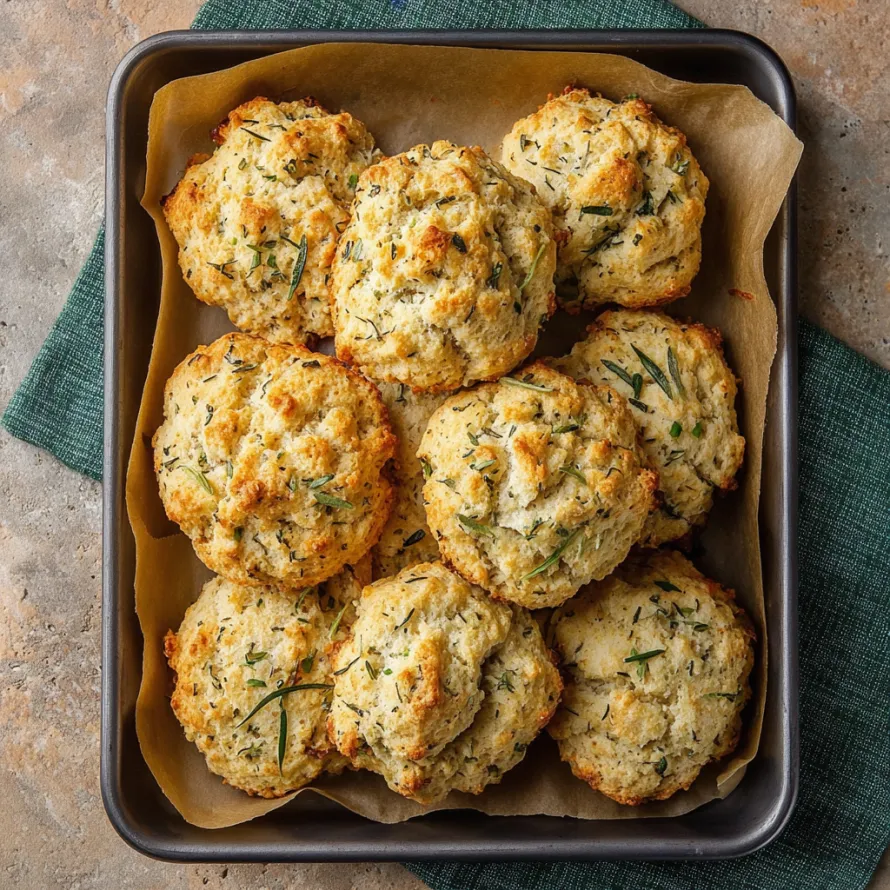
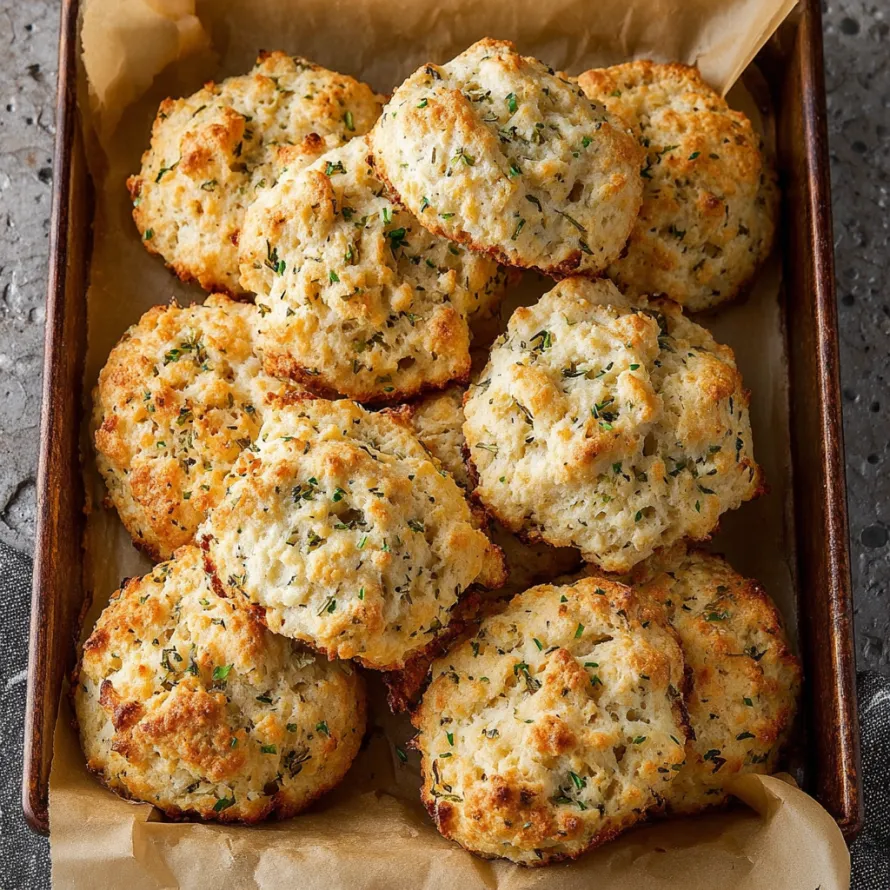
These spooned biscuits combine cold salted butter with thyme, parsley and chives. The original formula contains a full tablespoon of black pepper, which makes a distinctly peppery batch. There is no rolling or cutting stage; mix a soft dough and portion it directly onto the tray.
That is the supplied quantity, not a teaspoon conversion. It equals three teaspoons and should be understood before mixing. For a milder batch, reduce it deliberately to taste and record the change rather than assuming the original formula is mildly seasoned.
Ingredient amounts and preparation
- Set out: 2 cups all-purpose flour
- Set out: 1 tablespoon baking powder
- Set out: 1 tablespoon coarse ground black pepper
- Set out: ½ cup cold salted butter, cut into pieces
- Set out: 1 tablespoon fresh thyme
- Set out: 2 tablespoons chopped fresh parsley
- Set out: 2 tablespoons chopped chives
- Set out: ¾ cup whole milk or buttermilk
Cooking sequence and doneness
- Stage 1
- Heat the oven to 400°F.
- Stage 2
- Line a large baking sheet.
- Stage 3
- Whisk flour, baking powder and the chosen amount of pepper, then distribute the chopped herbs.
- Stage 4
- Cut in cold salted butter using a pastry cutter or forks until crumbly, and gently stir in milk just until the dough holds together.
- Stage 5
- Alternatively, pulse the dry ingredients and butter in a processor, briefly add herbs, then pulse in milk only until combined;
- Stage 6
- do not perform both mixing methods.
- Stage 7
- Drop similar-size mounds with two spoons, leaving gaps, and bake about 20–25 minutes until lightly golden with baked centers;
- Stage 8
- cool briefly before serving.
No. Cut cold butter into the flour mixture until small pieces remain. Keep the bowl cool enough that those pieces do not turn into an oily paste while you work. A pastry cutter or brief processor pulses can limit handling.
Are hand mixing and the processor two steps?
They are alternative ways to make the same dough, not consecutive stages. Once milk has been mixed in by hand, do not process the finished dough again. Stop as soon as the dry flour is incorporated. Use two spoons to move similar-size mounds onto the tray with space between them. Do not pack them into smooth balls or add flour merely to make them rollable. Different scoop sizes change the yield and baking time.
Can milk and buttermilk be treated identically?
Both are listed options, but thickness can vary. Start with the measured three-quarter cup and mix gently; the dough should hold a mound without dry flour pockets. If a small correction is needed, add liquid by spoonfuls rather than pouring freely.
Storage and serving later
Let the baked pieces cool completely before closing a storage container, so trapped steam does not wet the surface. Keep any perishable filling or accompaniment under its own refrigerated-storage instructions.
Related recipe choices
For another complete recipe, see Tomato Coconut Soup with Carrot and Celery or Tuscan-Style White Bean Soup with Bacon, Potato and Kale. Each has its own ingredient quantities and cooking sequence; keep those measurements separate when choosing a meal. King Arthur’s biscuit guidance supports using cold fat and limiting handling. The drop method here avoids rolling and repeated cutting; it has not been kitchen-tested as a new formula.
Common Questions About This Recipe
- Is a tablespoon of pepper intentional?
That is the supplied quantity, not a teaspoon conversion. It equals three teaspoons and should be understood before mixing.
- Should the butter melt first?
No. Cut cold butter into the flour mixture until small pieces remain.
- Are hand mixing and the processor two steps?
They are alternative ways to make the same dough, not consecutive stages. Once milk has been mixed in by hand, do not process the finished dough again.
- How are drop biscuits portioned?
Use two spoons to move similar-size mounds onto the tray with space between them. Do not pack them into smooth balls or add flour merely to make them rollable.
- Can milk and buttermilk be treated identically?
Both are listed options, but thickness can vary. Start with the measured three-quarter cup and mix gently; the dough should hold a mound without dry flour pockets.