
 Pin
Pin
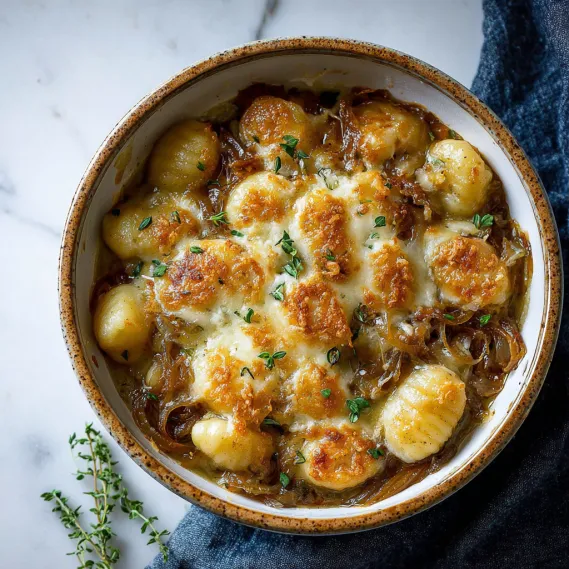
This French onion gnocchi bake starts with browned onions and broth on the stove, then receives a melted cheese topping in the oven. The one-pound gnocchi batch cooks in the onion liquid before baking. The oven is a finishing stage; it should not be used to hide hard dumplings or a sauce that has never been assessed for consistency.
Two cups of broth plus a quarter cup of wine create a fairly loose starting base. The final texture depends on evaporation, pan width and the gnocchi product. Read the package and use a pan broad enough to reduce the liquid without crushing the dumplings. DeLallo’s product-specific soup directions are a reminder that gnocchi timing belongs to the particular product and method.
Understand the broth-to-gnocchi stage
- 1 tablespoon olive oil
- 1 tablespoon unsalted butter
- 1 large sweet onion, thinly sliced 1/4 cup white wine
- 1 tablespoon fresh minced thyme
- 2 cups beef broth 1 lb gnocchi
- Salt and pepper to taste
- 1 cup shredded swiss or gruyere cheese 8-10 slices French bread, toasted
Cook onions before adding liquid
- Stage 1
- Heat the oven to 400°F and prepare a baking dish with enough capacity for the mixture and room below its rim. Warm oil and butter in a broad skillet. Add onion and cook, stirring, until softened and deeply golden to preference; adjust heat instead of treating twenty minutes as a fixed endpoint.
- Stage 2
- Add wine and scrape up brown, unburned residue. Stir in thyme and broth, then bring to a controlled simmer. Add gnocchi and cook according to the product’s requirements, stirring gently.
- Stage 3
- Check tenderness and sauce consistency; reduce excess liquid carefully rather than baking a watery mixture blindly. Taste before adjusting salt and pepper, then transfer to the prepared dish. Cover with the measured Swiss or Gruyère and bake about 20–25 minutes, checking for a hot center and melted, lightly browned cheese.
- Stage 4
- Shield the top if it colors too quickly. Serve with toasted French bread alongside. Refrigerate remaining portions promptly in shallow containers.
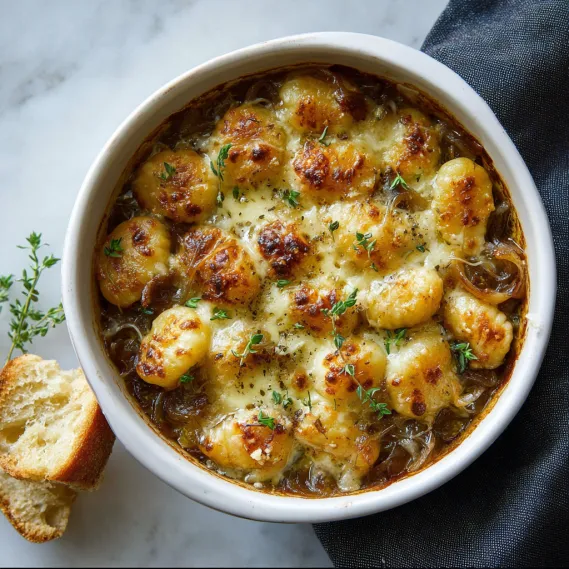
Cook sliced onion at a heat that permits gradual browning without black edges. Twenty minutes is an estimate, not a guarantee of deep caramelization. Add a small splash of water if browned residue threatens to burn, and scrape it up before adding wine and broth. Blackened residue contributes bitterness; deglazing cannot turn it back into pleasant browning.
Choose a practical make-ahead point
If preparing ahead, cook and refrigerate the onion base separately, then add and cook the gnocchi near serving. Holding fully cooked dumplings in liquid can change their texture. Once the dish is assembled, check that any cold center heats thoroughly rather than simply adding a fixed ten minutes. USDA gives three to four days for refrigerated leftovers when safely handled.
Serve the reduced sauce
The toasted bread is for dipping into the remaining sauce, so serve it beside the dish. If the bake is already thick, reduce the bread portion rather than thinning the whole pan solely to create dip. For a creamy soup alternative, bacon Cheddar gnocchi soup uses a different finish. Cowboy caviar offers a cooler side.
Adapt broth and wine deliberately
Beef broth means this is not vegetarian as written. Vegetable broth changes flavor, and cheese labels can matter as well. If avoiding wine, use a separately measured broth replacement as an untested variation; cooking with wine does not guarantee an alcohol-free dish. Check salt only after reduction because concentrated broth and cheese can supply enough on their own.
Common Questions About This Recipe
- Do the gnocchi start raw in the oven?
They cook in the onion broth on the stove before the cheese bake.
- Why is my pan still soupy?
Pan width, product and evaporation differ. Assess the sauce before baking and reduce carefully if needed.
- Are onions caramelized after twenty minutes?
Use their color and softness, not the timer alone.
- Can I make the onions ahead?
Yes. Refrigerating the onion base separately avoids a long soak for cooked gnocchi.
- Is this vegetarian?
Not with beef broth. Broth and cheese choices both need consideration for a variation.
- Does simmering remove all wine alcohol?
No complete removal is guaranteed. Choose an appropriate alternative if alcohol avoidance is required.