
ADVERTISEMENT
in-article · In-Article — 336x280 / 300x250 desktop · 300x250 / 320x50 mobile
House placeholder — AdSense units launch here

French Onion Beef and Noodles with Slowly Braised Beef

Category: Evening Meals That Deliver Results

French onion beef and noodles needs two different cooking schedules: stew beef requires time to become tender, while egg noodles cook much faster. Do not add both and expect a twenty-minute simmer to suit them. This method braises the beef first and boils the noodles separately, so the pasta does not soften while the meat finishes.
Unverified portrait retained from the existing template
Research and writing by A Pinch Of Lemon
Revised 2026-10-09 · Research-based; not kitchen-tested
ADVERTISEMENT
in-article · In-Article — 336x280 / 300x250 desktop · 300x250 / 320x50 mobile
House placeholder — AdSense units launch here
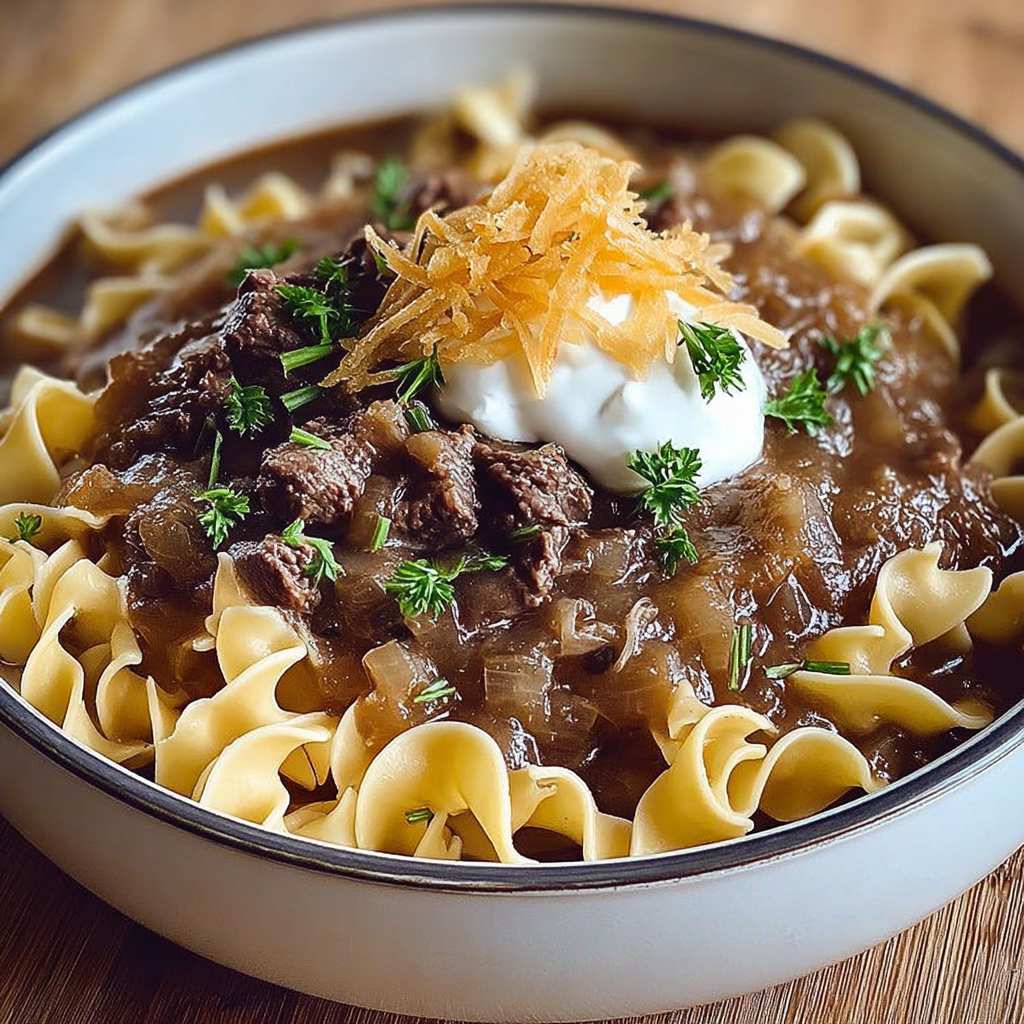
A bowl of French onion beef noodles. Pin
A bowl of French onion beef noodles. | apinchoflemon.com
ADVERTISEMENT
in-article · In-Article — 336x280 / 300x250 desktop · 300x250 / 320x50 mobile
House placeholder — AdSense units launch here

French onion beef and noodles needs two different cooking schedules: stew beef requires time to become tender, while egg noodles cook much faster. Do not add both and expect a twenty-minute simmer to suit them. This method braises the beef first and boils the noodles separately, so the pasta does not soften while the meat finishes.

“Stew meat” may include different cuts, so the package name does not establish a precise cooking time. Beef. It’s What’s For Dinner describes stewing to fork tenderness. Check a thick piece: a fork should enter and turn with little resistance. Allow a substantially longer schedule than the former quick-meal claim, often around one and a half to two hours or more depending on the cut and size.

Choose stew beef for a longer cook

ADVERTISEMENT
in-article · In-Article — 336x280 / 300x250 desktop · 300x250 / 320x50 mobile
House placeholder — AdSense units launch here
  • 2 tablespoons olive oil
  • 1 pound beef stew meat, cut into bite-sized chunks
  • 1 teaspoon onion powder
  • 1 teaspoon garlic powder
  • Salt and freshly ground black pepper to taste
  • 1 can (10.5 oz) French onion soup
  • 3 cups good quality beef broth
  • 12 oz egg noodles, wide variety
  • 1/2 cup sour cream, room temperature
  • 1/4 cup freshly grated Parmesan cheese
  • 1 cup French fried onions

Braise before the noodles

Stage 1
Heat olive oil in a heavy pot and brown the bite-sized beef in batches with onion powder, garlic powder and cautious seasoning. Transfer browned batches to a plate while the rest cook.
Stage 2
Return all beef, add French onion soup and broth, and scrape up unburned browned residue. Cover and simmer gently until fork-tender, checking periodically and replacing evaporated liquid with hot water. Allow roughly 1½–2 hours or longer as needed; do not rely on a ten-minute simmer.
Stage 3
When beef is tender, boil egg noodles separately in water following their package directions. Drain.
Stage 4
If the beef sauce is too thin, reduce it before adding dairy. Remove the beef pot from direct heat. Temper sour cream with a little hot sauce, then stir it and Parmesan into the pot.
Stage 5
Fold in cooked noodles gradually to the desired sauce-to-noodle balance. Top individual servings with French fried onions immediately before eating. Refrigerate leftover portions promptly, keeping crunchy toppings separate.
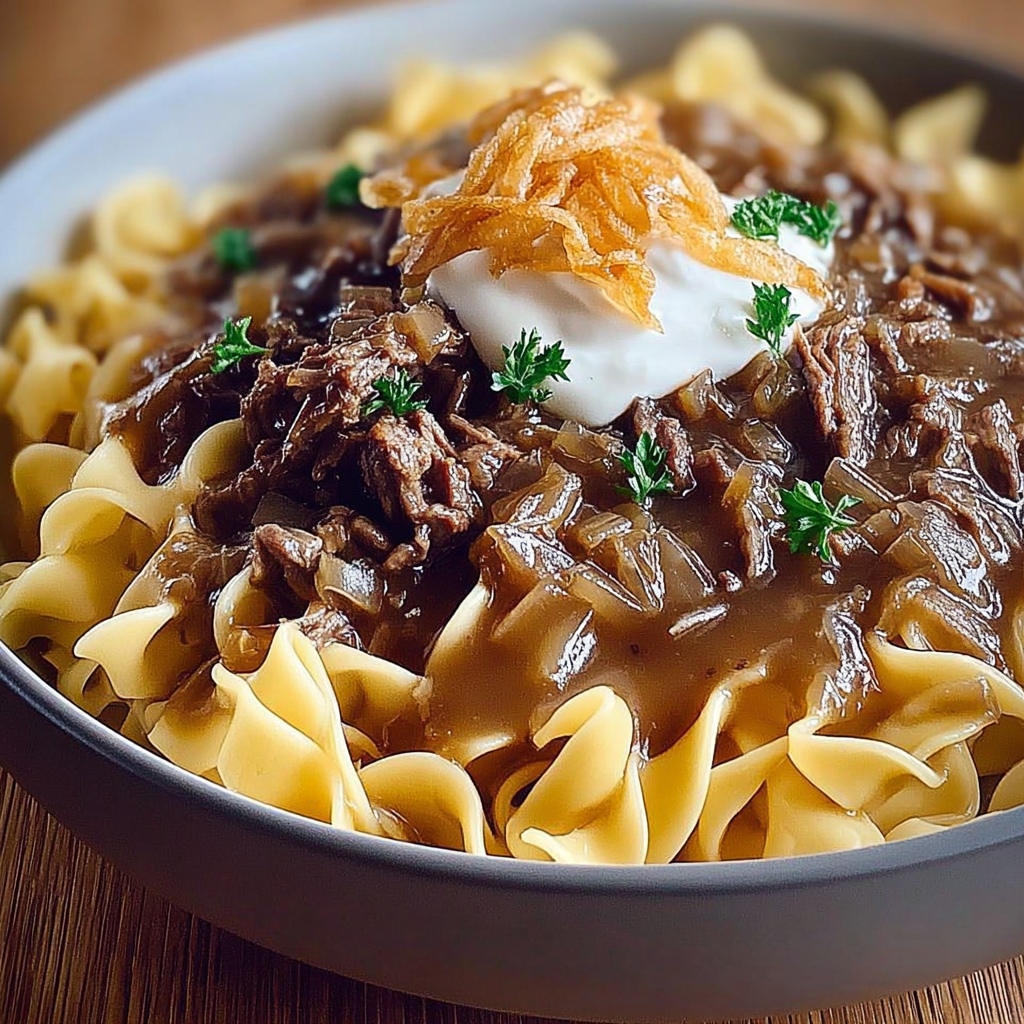
A bowl of French onion beef noodles.
A bowl of French onion beef noodles. | apinchoflemon.com
ADVERTISEMENT
in-article · In-Article — 336x280 / 300x250 desktop · 300x250 / 320x50 mobile
House placeholder — AdSense units launch here

Brown the beef in manageable batches so it contacts the pot rather than steaming in a crowded pile. Add the soup and broth, scrape up brown residue and maintain a gentle covered simmer. Check periodically that liquid still surrounds the meat, adding hot water as needed. Water replaces evaporation without repeatedly increasing the salt from more concentrated broth. Do not add noodles while the beef is still tough.

Reheat without losing all the sauce

Reserve only the portions you plan to serve with noodles if making extra. Separately chilled beef and sauce are easier to reheat without over-softening pasta. USDA gives three to four days for safely refrigerated leftovers. Reheat the portion thoroughly, then assess consistency; the crunchy onions should be added at the table rather than stored in the sauce.

Substitutions change the cut and method

ADVERTISEMENT
in-article · In-Article — 336x280 / 300x250 desktop · 300x250 / 320x50 mobile
House placeholder — AdSense units launch here

Ground turkey, sliced steak and mushrooms are not equivalent replacements for stewing beef. They need different cooking methods and can be harmed by the long braise described here. For a quicker preparation using cooked deli beef, roast beef and Swiss sliders solve a different dinner problem. Skillet potatoes are an alternative side if you serve the braised beef without noodles.

Finish with sour cream off the heat

Once the beef is tender, boil the noodles separately according to their package and drain. Reduce an overly thin beef sauce before adding dairy. Remove the pot from direct heat, stir a little hot sauce into the sour cream, then fold it back with Parmesan. Add noodles gradually, stopping if they would absorb more sauce than you want. This replaces an unreliable promise that twelve ounces of dry noodles always fit the same remaining braising liquid.

Common Questions About This Recipe

Can stew beef become tender in twenty minutes?

Not reliably. Use a gentle braise and fork-tenderness check; the cut and piece size control the schedule.

Why cook the noodles separately?

The beef’s long cook changes the liquid volume. Separate boiling keeps noodle hydration independent of evaporation.

What liquid replaces evaporation?

Small amounts of hot water can restore the level without continually increasing broth salt.

When does sour cream go in?

After the beef is tender and the pot is off direct heat. Loosen it with hot sauce before stirring it back.

Can ground meat use this method unchanged?

No. It needs a different cooking schedule and should not inherit a stew-beef braise.

When should fried onions be added?

At serving, so they do not soak in the sauce during storage.

ADVERTISEMENT
in-article · In-Article — 336x280 / 300x250 desktop · 300x250 / 320x50 mobile
House placeholder — AdSense units launch here

French Onion Beef and Noodles with Slowly Braised Beef

French onion beef and noodles needs two different cooking schedules: stew beef requires time to become tender, while egg noodles cook much faster. Do not add both and expect a twenty-minute simmer to suit them. This method braises the beef first and boils the noodles separately, so the pasta does not soften while the meat finishes.

ADVERTISEMENT
in-article · In-Article — 336x280 / 300x250 desktop · 300x250 / 320x50 mobile
House placeholder — AdSense units launch here
Prep Time
About 20 minutes
Time to Cook
About 100–150+ minutes
Complete Time
About 120–170+ minutes
Research and writing: A Pinch Of Lemon

Recipe Type: Dinner Victories

Level of Difficulty: Moderate Difficulty

Cuisine Style: American

Makes: 4 Number of Servings

Dietary Categories: Check ingredient labels

Ingredients You’ll Need

→ Beef and Seasonings

01 2 tablespoons olive oil
02 1 pound beef stew meat, cut into bite-sized chunks
03 1 teaspoon onion powder
04 1 teaspoon garlic powder
05 Salt and freshly ground black pepper to taste

→ Broth and Noodles

06 1 can (10.5 oz) French onion soup
07 3 cups good quality beef broth
08 12 oz egg noodles, wide variety

→ Creamy Finish

09 1/2 cup sour cream, room temperature
10 1/4 cup freshly grated Parmesan cheese
11 1 cup French fried onions

How to Make It

Step 01

Heat olive oil in a heavy pot and brown the bite-sized beef in batches with onion powder, garlic powder and cautious seasoning. Transfer browned batches to a plate while the rest cook.

Step 02

Return all beef, add French onion soup and broth, and scrape up unburned browned residue. Cover and simmer gently until fork-tender, checking periodically and replacing evaporated liquid with hot water. Allow roughly 1½–2 hours or longer as needed; do not rely on a ten-minute simmer.

Step 03

When beef is tender, boil egg noodles separately in water following their package directions. Drain. If the beef sauce is too thin, reduce it before adding dairy.

Step 04

Remove the beef pot from direct heat. Temper sour cream with a little hot sauce, then stir it and Parmesan into the pot. Fold in cooked noodles gradually to the desired sauce-to-noodle balance.

Step 05

Top individual servings with French fried onions immediately before eating. Refrigerate leftover portions promptly, keeping crunchy toppings separate.

Extra Suggestions

  1. Not reliably. Use a gentle braise and fork-tenderness check; the cut and piece size control the schedule.
  2. The beef’s long cook changes the liquid volume. Separate boiling keeps noodle hydration independent of evaporation.
  3. Small amounts of hot water can restore the level without continually increasing broth salt.
  4. After the beef is tender and the pot is off direct heat. Loosen it with hot sauce before stirring it back.
  5. No. It needs a different cooking schedule and should not inherit a stew-beef braise.

Things You'll Need

  • Large, heavy-bottomed pot

Allergen Information

Always read labels for allergens and consult your doctor if unsure.
  • Contains dairy (sour cream and Parmesan cheese)
  • Contains gluten (egg noodles)

Nutritional Breakdown (Per Serving)

This is for general info and isn't a replacement for professional advice.
  • Calories: Not calculated
  • Fat Content: Not calculated
  • Carbohydrates: Not calculated
  • Protein Content: Not calculated
ADVERTISEMENT
in-article · In-Article — 336x280 / 300x250 desktop · 300x250 / 320x50 mobile
House placeholder — AdSense units launch here