
 Pin
Pin
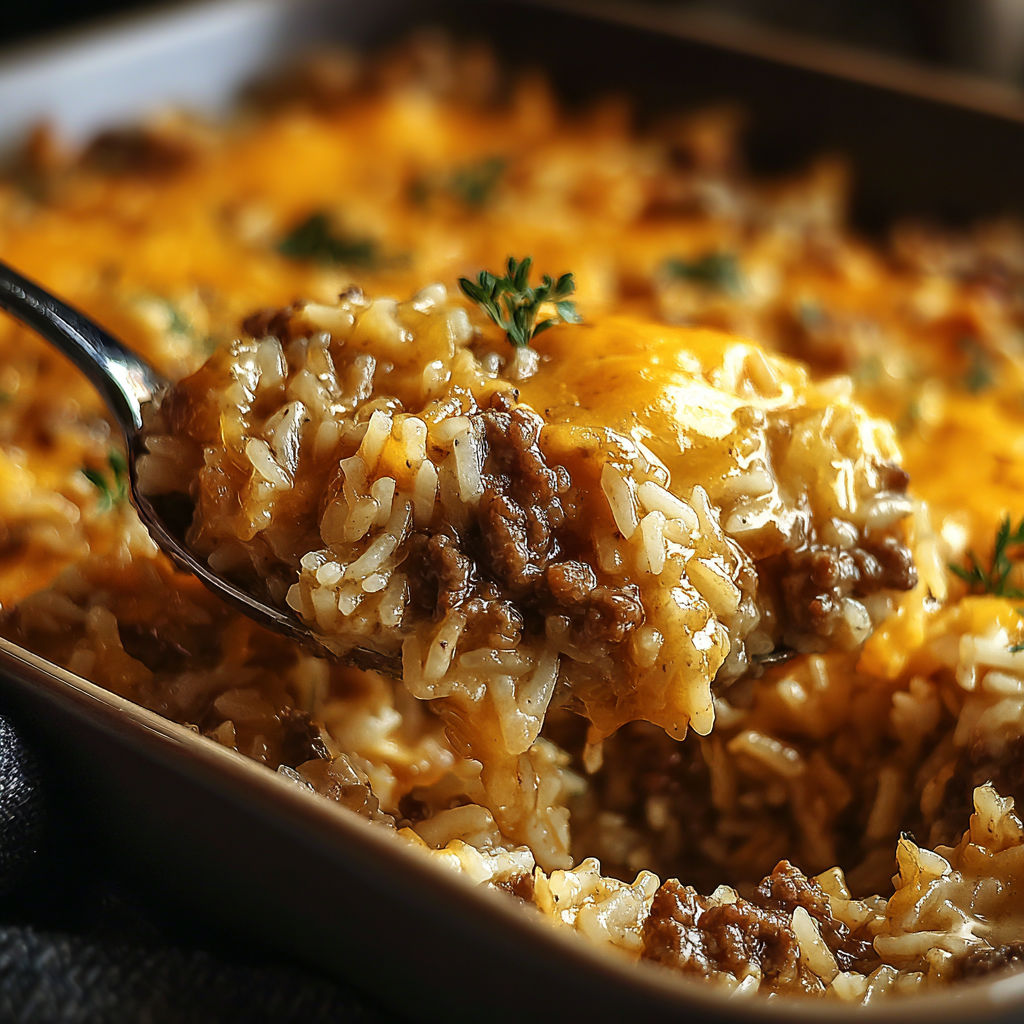
This casserole combines browned ground beef with uncooked long-grain white rice, canned consommé and French onion soup. The rice cooks in the covered dish, unlike a casserole assembled with boiled noodles. Use the specified rice type and do not dilute the soups as if preparing separate bowls of soup. The three-quarter cup of water is the additional liquid in this formula.
Instant rice, brown rice and ordinary long-grain white rice are not interchangeable under one bake schedule. USA Rice’s cooking guide lists different liquid and timing requirements by type. The canned liquids here are measured by their packages, so check the 10.5-ounce can size rather than assuming a larger can supplies an equivalent amount.
Use the specified rice and canned liquids
- 1 pound lean ground beef
- 0.5 to 1 teaspoon garlic salt
- 2 cans (10.5 ounces each) beef consommé
- 2 cans (10.5 ounces each) French onion soup
- 0.75 cup water
- 2 cups uncooked long grain white rice
- 0.75 cup butter
Brown beef before the covered bake
- Stage 1
- Heat the oven to 425°F and grease a 9-by-13-inch baking dish.
- Stage 2
- Verify that the rice is uncooked long-grain white rice, not instant or brown rice. Cook beef with garlic salt in a skillet, breaking it up, until it reaches 160°F.
- Stage 3
- Drain excess fat. Mix the dry rice and cooked beef in the dish with both cans of consommé, both cans of French onion soup and the measured water.
- Stage 4
- Do not add separate soup-serving dilution water. Distribute the sliced butter over the surface, keeping the rice evenly spread under the liquid.
- Stage 5
- Seal tightly with foil and bake for about thirty minutes. Uncover and continue, checking near the next thirty-minute mark.
- Stage 6
- Test center grains for tenderness and the casserole for 165°F. If dry but still firm, add a little hot water and re-cover; if tender but too wet, reduce briefly uncovered.
- Stage 7
- Let stand briefly, then fluff and portion. Refrigerate leftovers promptly in shallow containers.
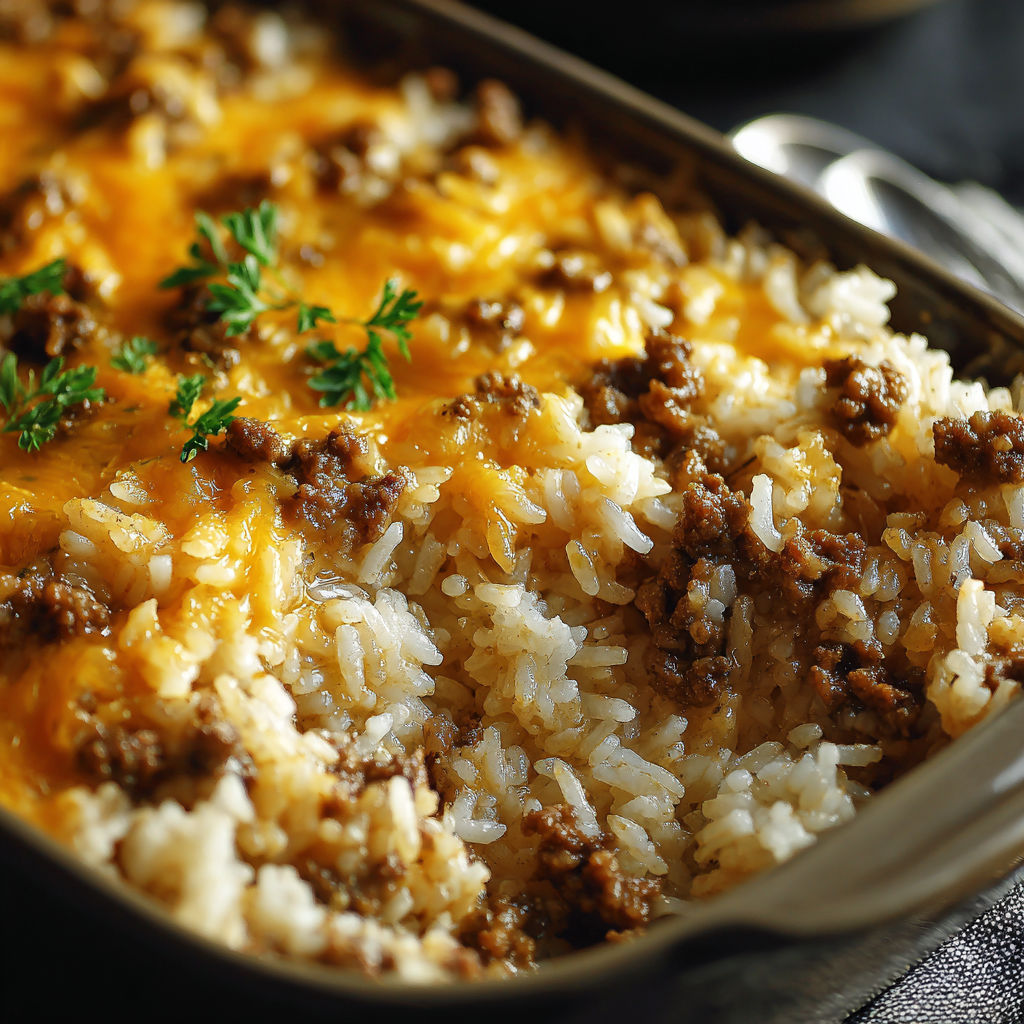
A tightly fitted foil cover helps retain the moisture the rice needs. Stir well before covering so no dry pocket remains above the liquid. During the uncovered stage, inspect the middle as well as the edge. If grains are still hard and the pan looks dry, add a small measured amount of hot water and re-cover; if rice is tender but liquid remains, a short uncovered finish addresses a different problem.
Store rice portions promptly
Cook the ground beef fully before assembling. USDA guidance gives 160°F for ground meat and 165°F for casseroles. The final temperature check and the rice-tenderness check answer separate questions. A hot casserole can still contain hard rice, while tender grains at an exposed edge do not establish the center temperature.
Serve the butter-rich casserole simply
Portion leftovers into shallow containers and refrigerate promptly; do not leave a large rice casserole on the counter until completely cold. USDA gives three to four refrigerator days for safely handled leftovers. Reheat portions thoroughly with a little water if needed, rather than repeatedly heating the entire original dish.
Change one variable at a time
The listed butter quantity is three quarters of a cup, or twelve tablespoons. That is part of the retained formula, not a low-fat claim. A cool bean and corn salad provides contrast. If you want a pasta base instead, beef and shells casserole has its own liquid and cooking method.
When troubleshooting, record the rice brand, actual can sizes and whether the foil sealed the dish. Changing the rice, replacing both soups and reducing butter in the same batch prevents you from identifying which change caused dryness or excess liquid. Optional cheese or fried onions belong near the end; they cannot correct underhydrated rice below them.
Common Questions About This Recipe
- Can brown rice use the same timing?
No. Different rice types have different hydration and cooking requirements.
- Should I prepare the canned soups first?
No. Add the specified cans as ingredients and only the separate measured water.
- Why are some grains hard?
Check coverage by liquid, foil seal, rice type and whether the middle received enough cooking time.
- Does a hot center mean the rice is tender?
No. Measure safety temperature and taste or press a grain for texture as separate checks.
- Can a crunchy topping fix wet rice?
No. Correct the rice and liquid first; toppings are finishing ingredients.