
 Pin
Pin
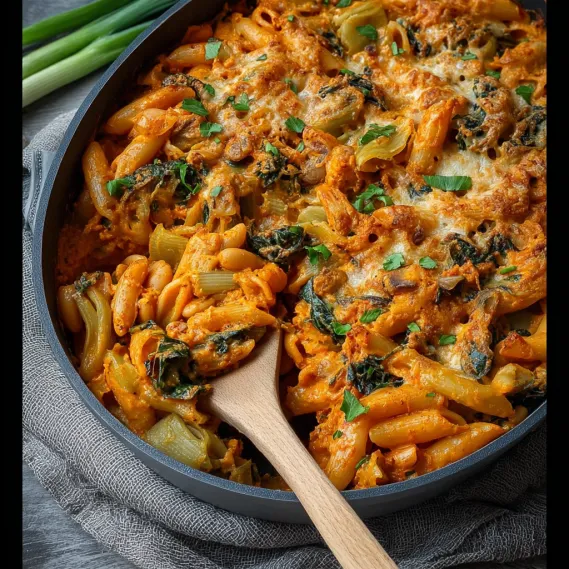
White beans and broccoli join tomato-coated pasta with a blended silken-tofu topping. Reserve part of the beans for blending before adding the rest to the skillet. The brief oven finish needs broiler-safe cookware, and the kimchi label determines whether the dish is fully plant-based.
The half cup in the blended sauce is reserved from the main can or cooked batch, not an extra half cup. Drain the beans, measure that portion into the blender and add the remainder to the tomato pasta. This keeps the overall bean quantity consistent.
Ingredient amounts and preparation
- Set out: 1 tbsp olive oil
- Set out: 1 red onion, thinly sliced; 3 cloves garlic, minced
- Set out: 1 heaping cup blanched broccoli florets; 1 can (15 oz / 400g) white beans or 1.5 cups cooked from scratch
- Set out: 500 ml tomato passata or plain tomato sauce, measured
- Set out: 250 g dry pasta, such as penne, fusilli or shells; Salt and pepper to taste
- Set out: 1 tsp paprika; ½ tsp cayenne pepper
- Set out: 1/2 block (approx. 150g) silken tofu
- Set out: 1/2 cup cooked white beans (reserved from the can or batch); 1-2 tbsp kimchi with a splash of its juice
- Set out: 1-2 tbsp soy sauce or tamari (for gluten-free); Fresh basil or parsley, chopped (optional)
Cooking sequence and doneness
- Stage 1
- Cook 250 grams of dry pasta to al dente and reserve half a cup of cooking water before draining.
- Stage 2
- Drain the white beans and reserve half a cup for the blended sauce. Heat oil in a large skillet and soften sliced onion for six to eight minutes.
- Stage 3
- Add garlic briefly, then add the already blanched broccoli and cook until tender. Stir in the measured passata, paprika and cayenne and heat through.
- Stage 4
- Add the remaining beans and cooked pasta.
- Stage 5
- Blend silken tofu, the reserved beans, kimchi with its juice and soy sauce until smooth. Fold the blended sauce into the pasta and loosen with reserved cooking water as needed.
- Stage 6
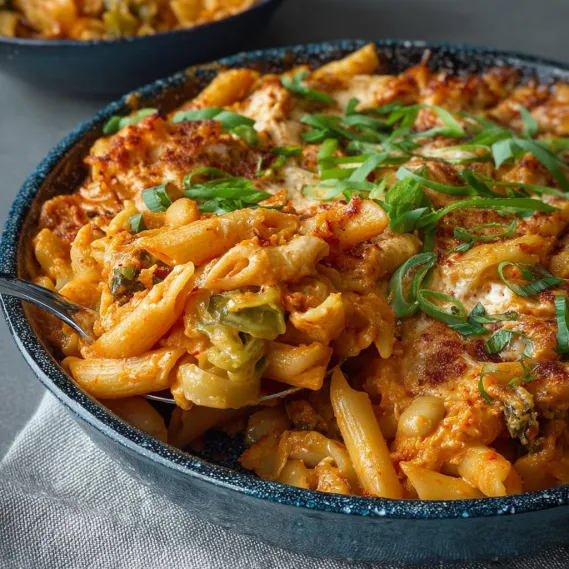
- Heat the mixture thoroughly to 165°F, then transfer to broiler-safe cookware if the skillet is not suitable. Broil briefly under close observation until the surface begins to color, then finish with herbs.
Measure 500 milliliters of passata and 250 grams of dry pasta. The approximate ounce labels in the source were not exact equivalents. Measuring these ingredients directly is clearer than treating every tomato can or pasta package as the same size.
Why use silken tofu?
It blends with the reserved beans into a smooth sauce without requiring cream. Firm tofu behaves differently and may leave a grainy mixture. Blend the cool ingredients before they meet the hot pasta; this step does not require blending hot liquid.
Is all kimchi vegan?
Some kimchi contains fish sauce or seafood. Check its label, and also check pasta and any other packaged ingredients if serving a vegan meal. Tamari only addresses the soy sauce component; it does not make wheat pasta gluten-free.
Use a pan or dish explicitly rated for the broiler, not ordinary glass bakeware. The mixture should already be hot before going under the element. Watch continuously and remove it as the surface begins to color; ten minutes at high heat is not a universal safe timer.
Reserve half a cup of its cooking water before draining and add only a splash at a time. The bean-tofu sauce thickens the tomato mixture, so loosen it before the oven stage. Excess water can leave a soupy center even when the surface browns.
Storage and serving later
Refrigerate perishable leftovers promptly in shallow containers at 40°F or below; do not wait for a large hot batch to cool completely on the counter. University of Illinois Extension’s leftover guidance gives a three-to-four-day refrigerated window and 165°F for reheating foods served hot. Keep cold salads and toppings chilled, and follow shorter product-label limits where applicable.
For another complete recipe, see Tuscan-Style White Bean Soup with Bacon, Potato and Kale or Tomato Coconut Soup with Carrot and Celery. Each has its own ingredient quantities and cooking sequence; keep those measurements separate when choosing a meal. Recipe guidance is based on the listed ingredient amounts and the method checks above. Timing is an estimate rather than a kitchen-test result; ingredient brands and cookware can change the outcome.
Common Questions About This Recipe
- Are the beans listed twice?
The half cup in the blended sauce is reserved from the main can or cooked batch, not an extra half cup. Drain the beans, measure that portion into the blender and add the remainder to the tomato pasta.
- Which measurements take precedence?
Measure 500 milliliters of passata and 250 grams of dry pasta. The approximate ounce labels in the source were not exact equivalents.
- Why use silken tofu?
It blends with the reserved beans into a smooth sauce without requiring cream. Firm tofu behaves differently and may leave a grainy mixture.
- Is all kimchi vegan?
Some kimchi contains fish sauce or seafood. Check its label, and also check pasta and any other packaged ingredients if serving a vegan meal.
- How should the broiler finish be handled?
Use a pan or dish explicitly rated for the broiler, not ordinary glass bakeware. The mixture should already be hot before going under the element.
- What if the pasta looks dry?
Reserve half a cup of its cooking water before draining and add only a splash at a time. The bean-tofu sauce thickens the tomato mixture, so loosen it before the oven stage.