
 Pin
Pin
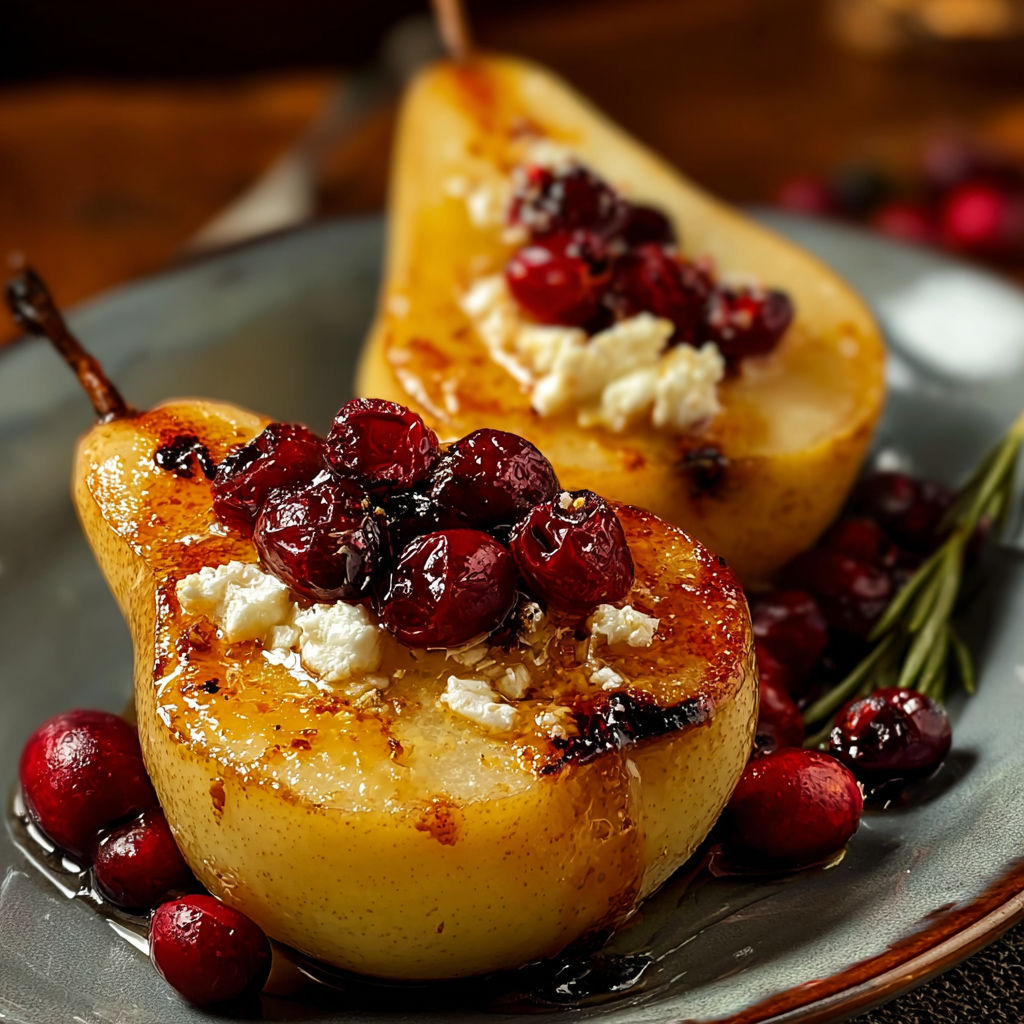
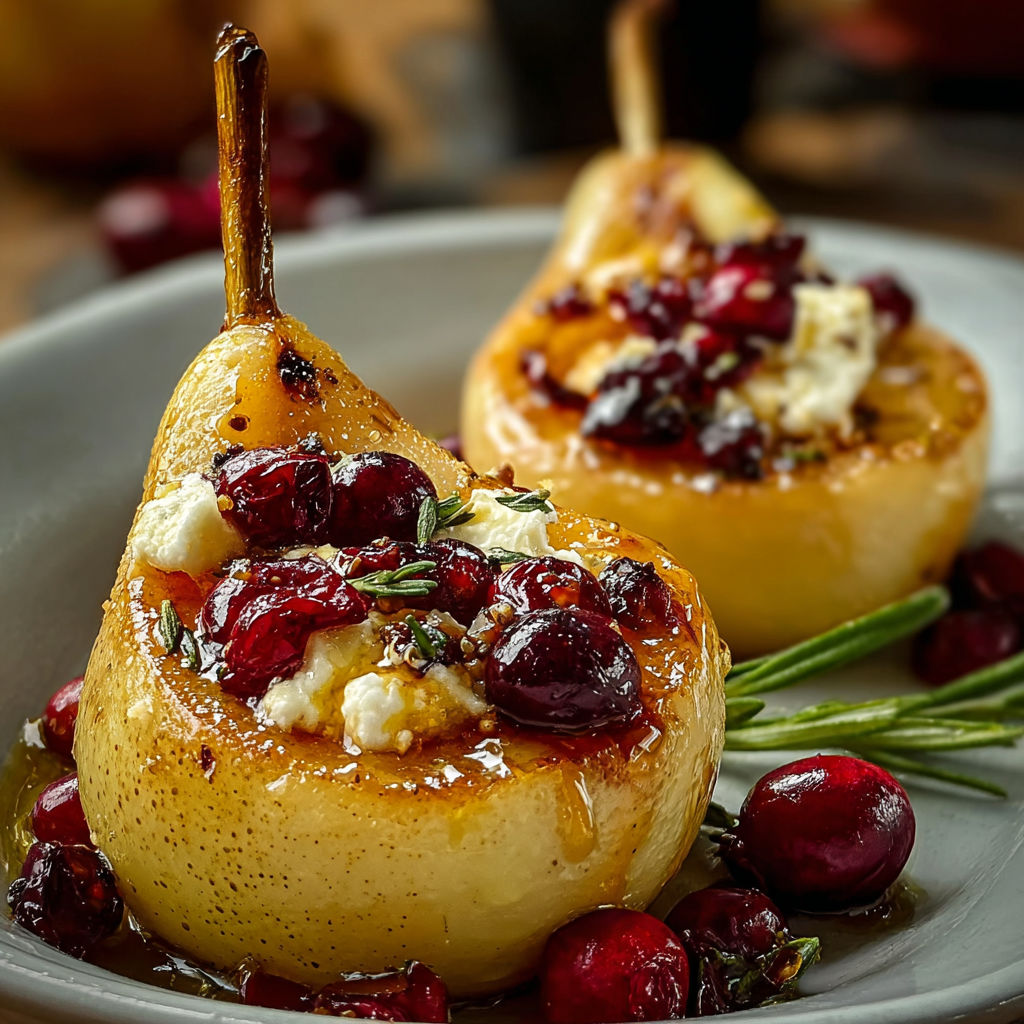
Warm baked pears are filled with goat cheese and a separately cooked fresh-cranberry topping. The cranberries soften in honey while the pears roast. Three pears make six halves; keeping the berry mixture separate allows you to judge its tartness and divide it evenly at serving.
This formula uses fresh cranberries. Their skins burst as the honey mixture warms, producing a tart topping with soft fruit pieces. Dried cranberries would not release the same moisture or make the same sauce in that pan.
Ingredient amounts and preparation
- Set out:
- Set out: 3 firm but ripe Bartlett or Bosc pears, cut in half and seeds removed
- Set out: 1/3 cup whole cranberries
- Set out: 3 ounces soft goat cheese
- Set out: 2 tablespoons butter, unsalted
- Set out: 2 tablespoons honey, with extra for pouring on top
- Set out: 1/4 teaspoon cinnamon powder, if you want
Cooking sequence and doneness
- Stage 1
- Heat the oven to 375°F.
- Stage 2
- Halve and core three pears, trimming only enough underneath to keep them steady.
- Stage 3
- Arrange cut-side up and divide the butter across the halves.
- Stage 4
- Roast about twenty minutes, continuing until tender but still intact.
- Stage 5
- Meanwhile warm fresh cranberries with the measured honey over low heat, stirring until berries burst; add a little water only if the pan starts to catch.
- Stage 6
- Remove pears and let heavy steam subside, then divide goat cheese among the six hollows.
- Stage 7
- Spoon the cranberry mixture over the cheese without overfilling. Finish with optional cinnamon or mint and serve warm; refrigerate leftovers promptly.
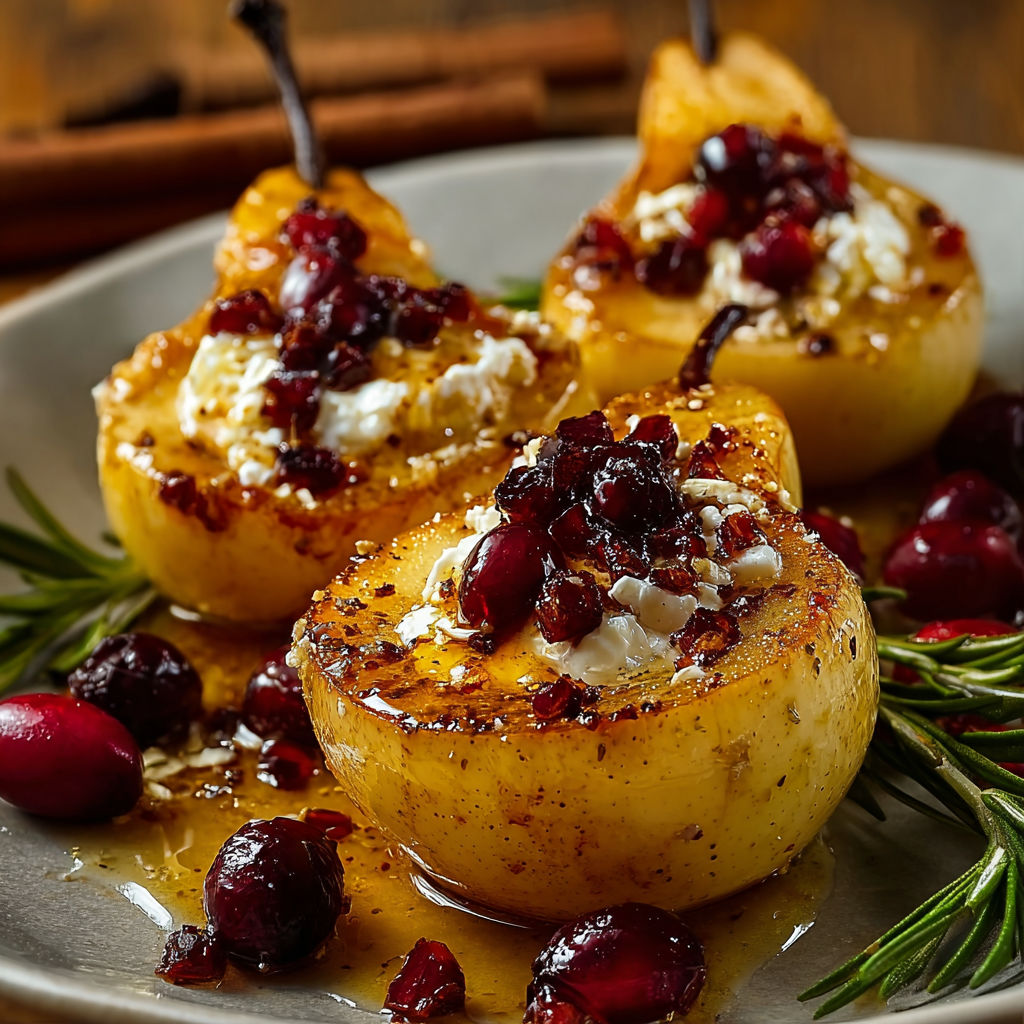
After roasting and a brief cooling period. Divide the three ounces across six halves, about half an ounce per half. The warm fruit softens the cheese without requiring another oven stage or a browned-cheese finish.
How should the honey be allocated?
The measured two tablespoons go into the cranberry mixture. An additional serving drizzle is optional and not needed to cook the berries. Start with the specified topping before deciding whether a ripe pear needs extra sweetness. Use a small pan over low heat and stir while the berries soften. If the mixture threatens to catch before they burst, lower the heat and add a little water as needed. Do not leave a shallow honey layer over a strong burner.
What makes a pear ready?
A fork or small knife should enter the flesh without force, but the half should still lift with a spatula. Ripeness and size matter more than a fixed twenty-minute promise. Remove earlier-finishing halves if the batch is uneven.
Storage and serving later
Refrigerate the cheese-topped pears promptly, ideally with spare fruit topping separate. University of Illinois Extension’s leftover guidance gives a three-to-four-day refrigerated window for leftovers, with shallow containers for cooling. Warm only the portion wanted; repeated heating changes the pear’s texture.
For another complete recipe, see Roasted Pears with Feta, Dried Cranberries and Honey or Apple Crumb Cake with a Warm Cinnamon Brown-Sugar Drizzle. Each has its own ingredient quantities and cooking sequence; keep those measurements separate when choosing a meal. Recipe guidance is based on the listed ingredient amounts and the method checks above. Timing is an estimate rather than a kitchen-test result; ingredient brands and cookware can change the outcome.
Common Questions About This Recipe
- Are the cranberries fresh or dried?
This formula uses fresh cranberries. Their skins burst as the honey mixture warms, producing a tart topping with soft fruit pieces.
- When does the goat cheese go in?
After roasting and a brief cooling period. Divide the three ounces across six halves, about half an ounce per half.
- How should the honey be allocated?
The measured two tablespoons go into the cranberry mixture. An additional serving drizzle is optional and not needed to cook the berries.
- How do I avoid scorched honey?
Use a small pan over low heat and stir while the berries soften. If the mixture threatens to catch before they burst, lower the heat and add a little water as needed.
- What makes a pear ready?
A fork or small knife should enter the flesh without force, but the half should still lift with a spatula. Ripeness and size matter more than a fixed twenty-minute promise.