
 Pin
Pin
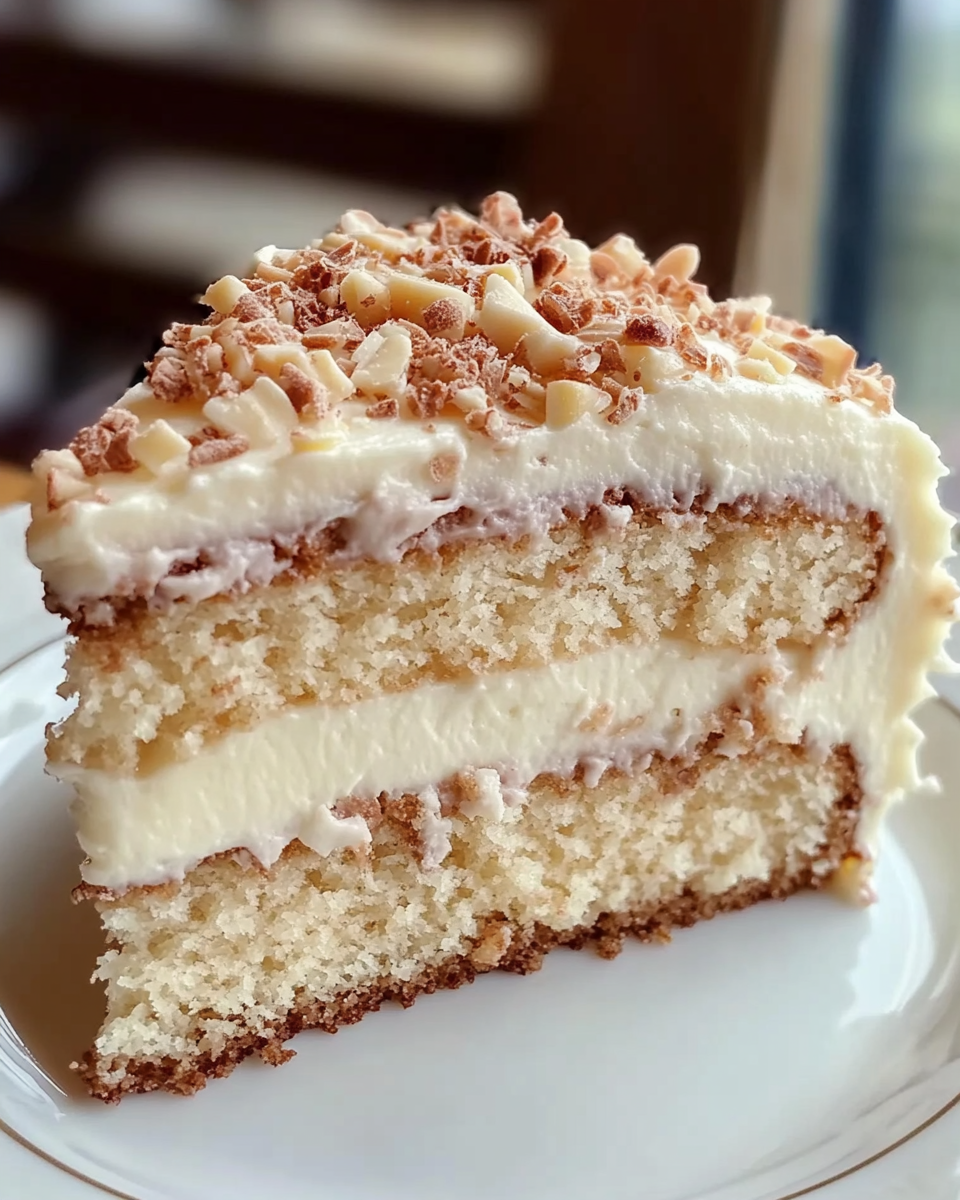
Three white-chocolate cake layers are finished with a cooked coconut-pecan frosting. Separate the cake eggs carefully and fold their beaten whites into the batter without knocking out all the air. The yolk-based frosting needs a temperature check and refrigerated storage.
Use the four-ounce white baking-chocolate bar specified in the ingredient list. Melt gently in short intervals and let it cool until fluid but no longer hot. Baking chips can behave differently and are not a direct tested replacement.
Ingredient amounts and preparation
- Set out:
- Set out: 1 (4-ounce) bar white baking chocolate, chopped
- Set out: 2 ½ cups all-purpose flour
- Set out: 1 teaspoon baking soda
- Set out: ¼ teaspoon salt
- Set out: 1 cup salted butter, softened
- Set out: 1 cup granulated sugar
- Set out: 4 large eggs, separated
- Set out: 2 teaspoons vanilla extract
- Set out: 1 ¼ cups buttermilk
- Set out: 2 ½ cups finely chopped pecans
- Set out: 3 (5-ounce) cans evaporated milk
- Set out: 1 ¼ cups granulated sugar
- Set out: 1 cup salted butter
- Set out: ⅔ cup firmly packed light brown sugar
- Set out: 5 large egg yolks, lightly beaten
- Set out: 3 ½ cups sweetened shredded coconut
- Set out: 2 teaspoons vanilla extract
Cooking sequence and doneness
- Stage 1
- Heat the oven to 350°F and prepare three nine-inch cake pans with greased parchment bottoms.
- Stage 2
- Melt the chopped white chocolate gently and cool until no longer hot. Whisk flour, baking soda and salt together.
- Stage 3
- Beat butter and sugar until creamy, then add the four cake yolks individually. Mix in white chocolate and vanilla.
- Stage 4
- Alternate dry ingredients with buttermilk at low speed. Beat the four whites in a clean bowl to medium-stiff peaks and fold into the batter in two additions.
- Stage 5
- Divide among pans and bake about twenty to twenty-two minutes, continuing until the centers are set and a tester has no wet batter.
- Stage 6
- Cool briefly in pans, then on racks. Toast pecans until fragrant, watching closely.
- Stage 7
- Stir evaporated milk, both frosting sugars, frosting butter and five yolks over moderate heat until thickened and 160°F. Remove from heat and stir in pecans, coconut and frosting vanilla.
- Stage 8
- Cool to spreading consistency and refrigerate within two hours. Stack fully cooled layers with frosting between them and over the exterior, then refrigerate.
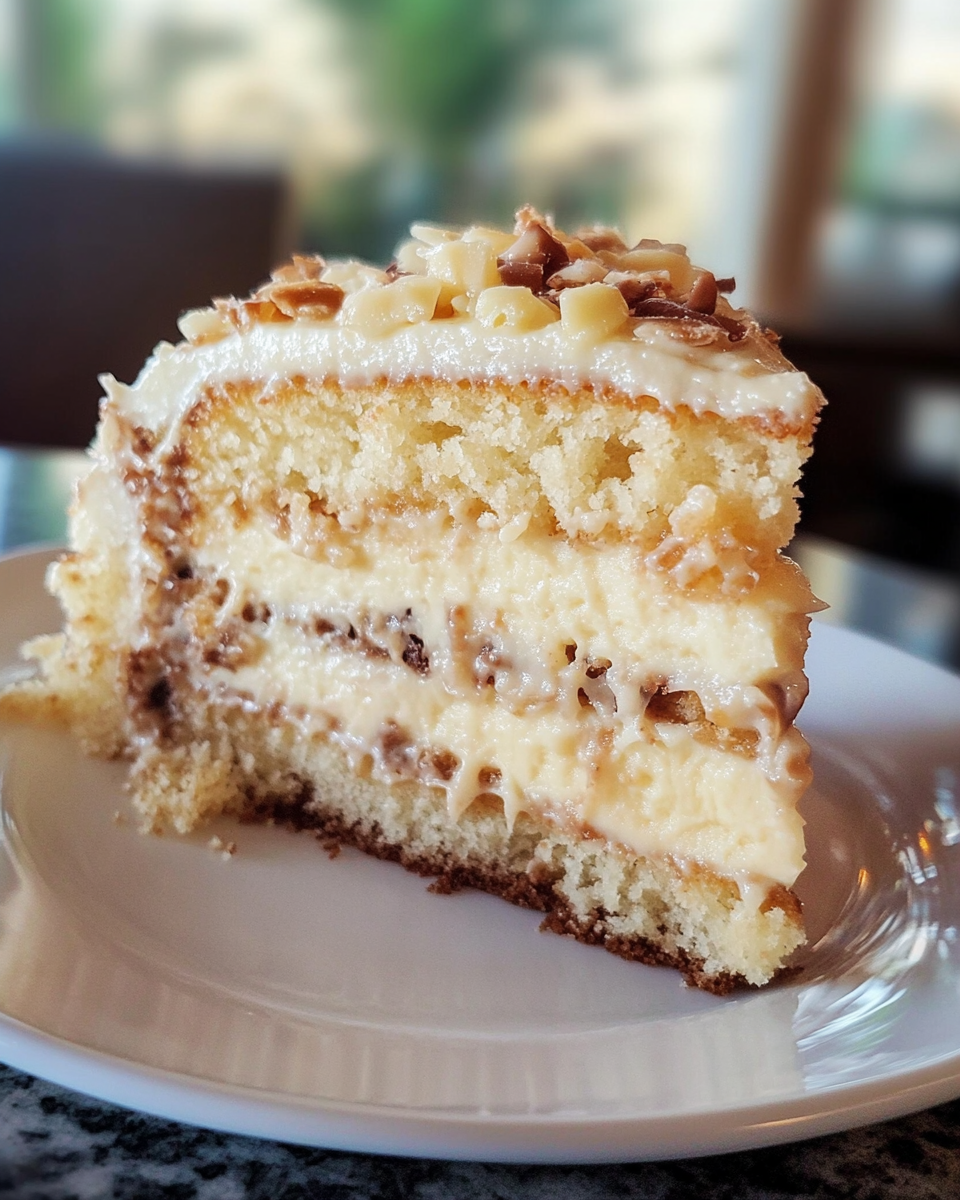
Yolks enrich the butter mixture while beaten whites lighten it. Keep yolk and grease out of the whites bowl. Fold the whites in gently after the flour and buttermilk have been incorporated.
How are the three layers divided?
Use three matching nine-inch pans with lined bottoms. Divide batter evenly so no layer needs much longer than another. Start checking near twenty minutes and look for a set center and a tester without wet batter. Stir the milk, sugars, butter and five yolks constantly over moderate heat until thickened and at least 160°F. Elapsed time alone is not the check. Remove from heat before adding coconut, toasted pecans and vanilla.
Can a frosted cake stay on the counter?
The cooked egg-and-milk frosting is perishable. Refrigerate within two hours of cooking, cooling in shallow containers if necessary, and keep the assembled cake chilled. Only assemble with fully cooled cake and spreadable frosting.
Storage and serving later
Refrigerate perishable leftovers promptly in shallow containers at 40°F or below; do not wait for a large hot batch to cool completely on the counter. University of Illinois Extension’s leftover guidance gives a three-to-four-day refrigerated window and 165°F for reheating foods served hot. Keep cold salads and toppings chilled, and follow shorter product-label limits where applicable. Do not leave the prepared dish out longer than two hours, or one hour above 90°F; return the remaining batch to cold storage.
Related recipe choices
For another complete recipe, see Baked Oreo Cheesecake with Optional Chocolate Ganache or Muffin-Pan Pecan Pies with Brown Sugar Crusts. Each has its own ingredient quantities and cooking sequence; keep those measurements separate when choosing a meal. FoodSafety.gov egg temperature guidance supports checking the cooked egg frosting reaches 160°F; this is not a kitchen-test result for the cake.
Common Questions About This Recipe
- Which chocolate belongs in the batter?
Use the four-ounce white baking-chocolate bar specified in the ingredient list. Melt gently in short intervals and let it cool until fluid but no longer hot.
- Why separate the eggs?
Yolks enrich the butter mixture while beaten whites lighten it. Keep yolk and grease out of the whites bowl.
- How are the three layers divided?
Use three matching nine-inch pans with lined bottoms. Divide batter evenly so no layer needs much longer than another.
- When is the frosting cooked?
Stir the milk, sugars, butter and five yolks constantly over moderate heat until thickened and at least 160°F. Elapsed time alone is not the check.
- Can a frosted cake stay on the counter?
The cooked egg-and-milk frosting is perishable. Refrigerate within two hours of cooking, cooling in shallow containers if necessary, and keep the assembled cake chilled.