
 Pin
Before starting, read the measured recipe card and set out the listed equipment. Keep the ingredient groups separate while weighing so additions intended for different stages do not get combined too early.
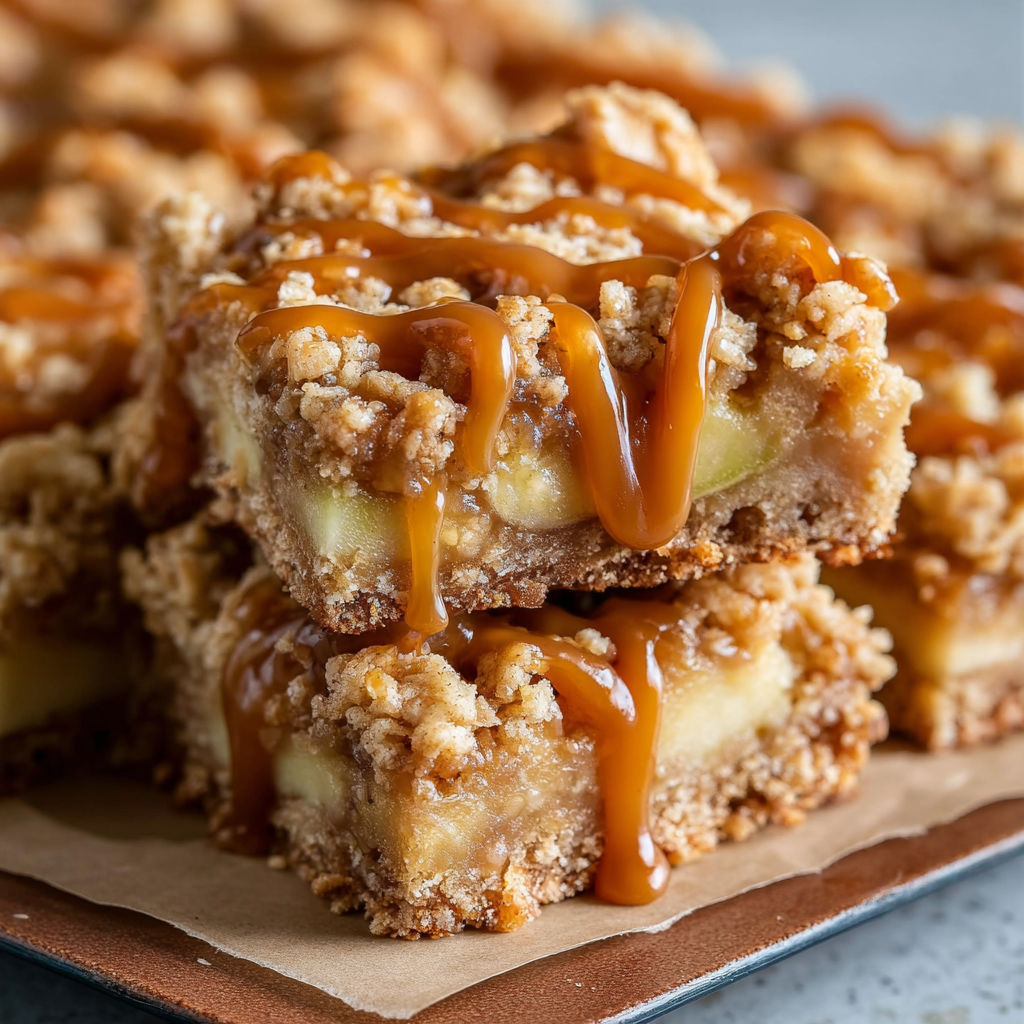
Measured apple slices sit between a shortbread base and an oat topping. This source-backed version replaces an incomplete draft that omitted the apple quantity; allow cooling and chilling time before cutting.
Ingredients and preparation checklist
- Crust: 113 g melted butter, 50 g sugar, 1 teaspoon vanilla, 1/4 teaspoon salt, 133 g flour
- Filling: 315 g peeled apple slices, 16 g flour, 25 g sugar, 1 teaspoon cinnamon, 1/8 teaspoon nutmeg
- Topping: 43 g rolled oats, 67 g brown sugar, 31 g flour, 1/4 teaspoon cinnamon, 56 g cold butter
- Caramel sauce, to drizzle
- optional flaky salt
- Weigh apples after trimming.
- Keep topping butter cold.
- Reserve melted butter for the base.
- Use a square eight-inch pan.
- Leave parchment handles for lifting.
- Distribute the base into the corners.
- Slice fruit to a consistent thickness.
Method and cooking checks
- Stage 1
Line an 8-inch square pan; heat oven to 300°F. Mix topping dry ingredients, cut in cold butter and refrigerate.
- Stage 2
Combine crust ingredients, press evenly into pan and bake about 20 minutes, until edges lightly brown.
- Stage 3
Toss quarter-inch apple slices with remaining filling ingredients. Layer onto warm crust; scatter topping over them.
- Stage 4
Raise oven to 350°F. Bake 30–35 minutes, checking for golden crumble and tender apples.
- Stage 5
Cool 20 minutes, refrigerate at least two hours, then lift out, slice and drizzle with caramel.
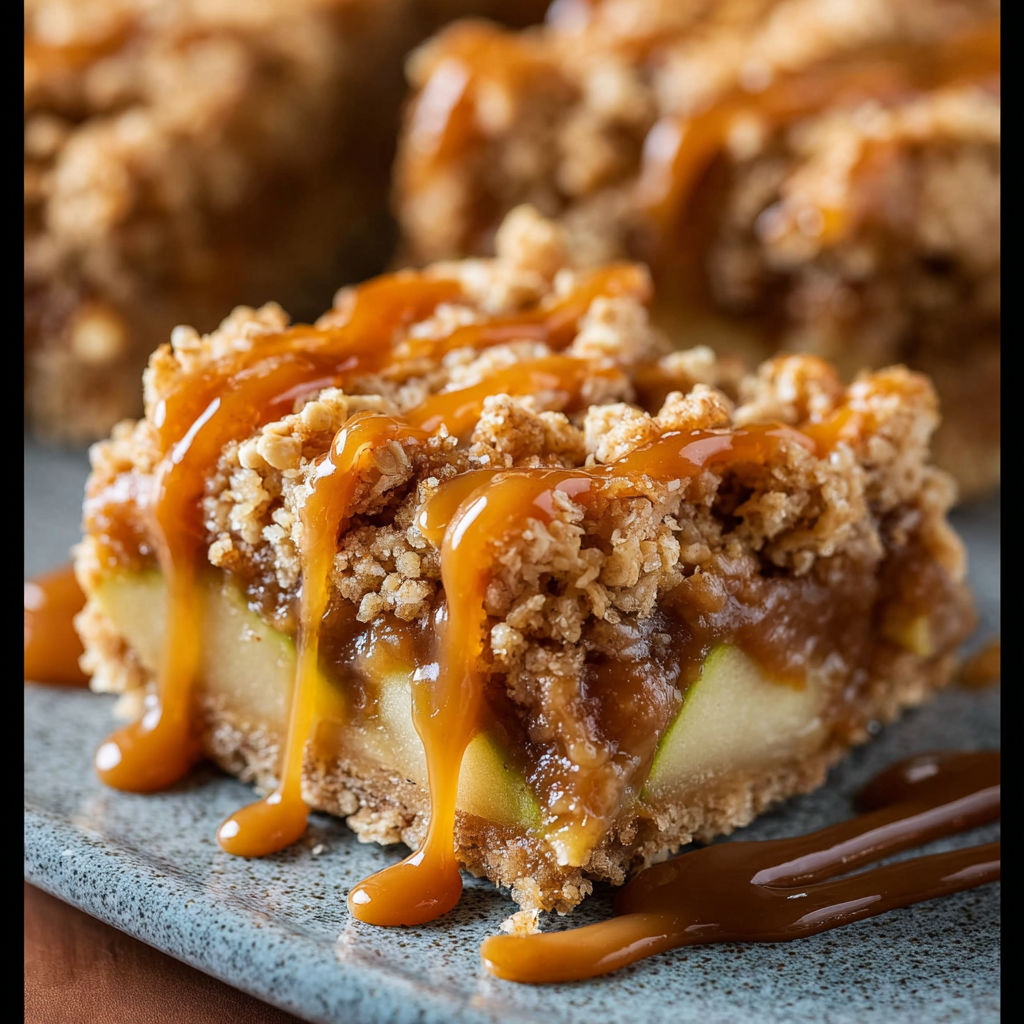
Weigh the fruit after peeling and removing the cores. Whole apples vary in size, so counting two apples without checking the prepared weight can leave a different depth of filling. Keep the slices similar in thickness; a few thick wedges can stay firm after the surrounding slices soften.
Why is the apple weight explicit?
Label bowls crust, filling and topping before weighing. Each has its own flour and sugar allowance, and only the topping butter stays cold. Cross off each measured ingredient as it enters its bowl rather than trying to remember which sugar portion was already used.
How should the three mixtures be organized?
Press the crust into the corners with a flat-bottomed cup or a spatula. Check the middle as well as the perimeter; a mound at the center changes the balance of base and fruit in every slice. Use the stated pan size and leave parchment handles clear of the oven heating element.
How can the base stay even?
A warm slab is more fragile than a chilled one. Put the pan on a level rack, then chill before using the parchment to lift it. Cut on a board rather than pressing a sharp knife against the pan coating. Add caramel to the portions being served so stored pieces are easier to handle.
When is it ready to slice?
Keep covered in the refrigerator and use within three days. Keep caramel separately if its label calls for different storage. Do not pack bars while they are steaming, and avoid leaving the pan uncovered near foods with strong odors.
Storage and serving
For more recipes to serve alongside, see salted caramel white chocolate or oatmeal chocolate chip bars. Use that recipe’s own quantities rather than mixing formulas.
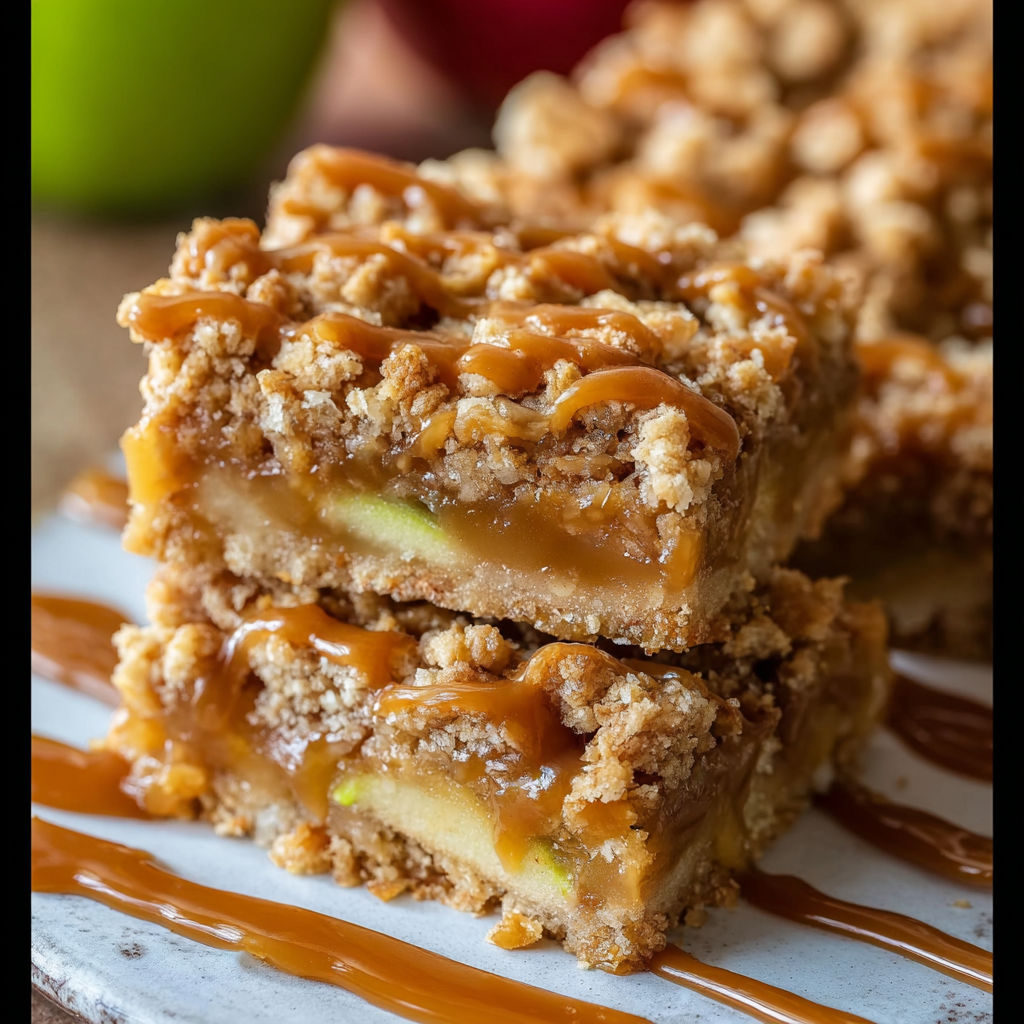
Formula adapted from Sally McKenney’s Salted Caramel Apple Pie Bars. The ingredient proportions and core method are credited to that source; the preparation guidance here is editorial research. A Pinch Of Lemon has not kitchen-tested this version. Existing photographs are illustrative and are not evidence of a test bake.
Common Questions About This Recipe
- Why is the apple weight explicit?
Weigh the fruit after peeling and removing the cores. Whole apples vary in size, so counting two apples without checking the prepared weight can leave a different depth of filling. Keep the slices similar in thickness; a few thick wedges can stay firm after the surrounding slices soften.
- How should the three mixtures be organized?
Label bowls crust, filling and topping before weighing. Each has its own flour and sugar allowance, and only the topping butter stays cold. Cross off each measured ingredient as it enters its bowl rather than trying to remember which sugar portion was already used.
- How can the base stay even?
Press the crust into the corners with a flat-bottomed cup or a spatula. Check the middle as well as the perimeter; a mound at the center changes the balance of base and fruit in every slice. Use the stated pan size and leave parchment handles clear of the oven heating element.
- When is it ready to slice?
A warm slab is more fragile than a chilled one. Put the pan on a level rack, then chill before using the parchment to lift it. Cut on a board rather than pressing a sharp knife against the pan coating. Add caramel to the portions being served so stored pieces are easier to handle.