
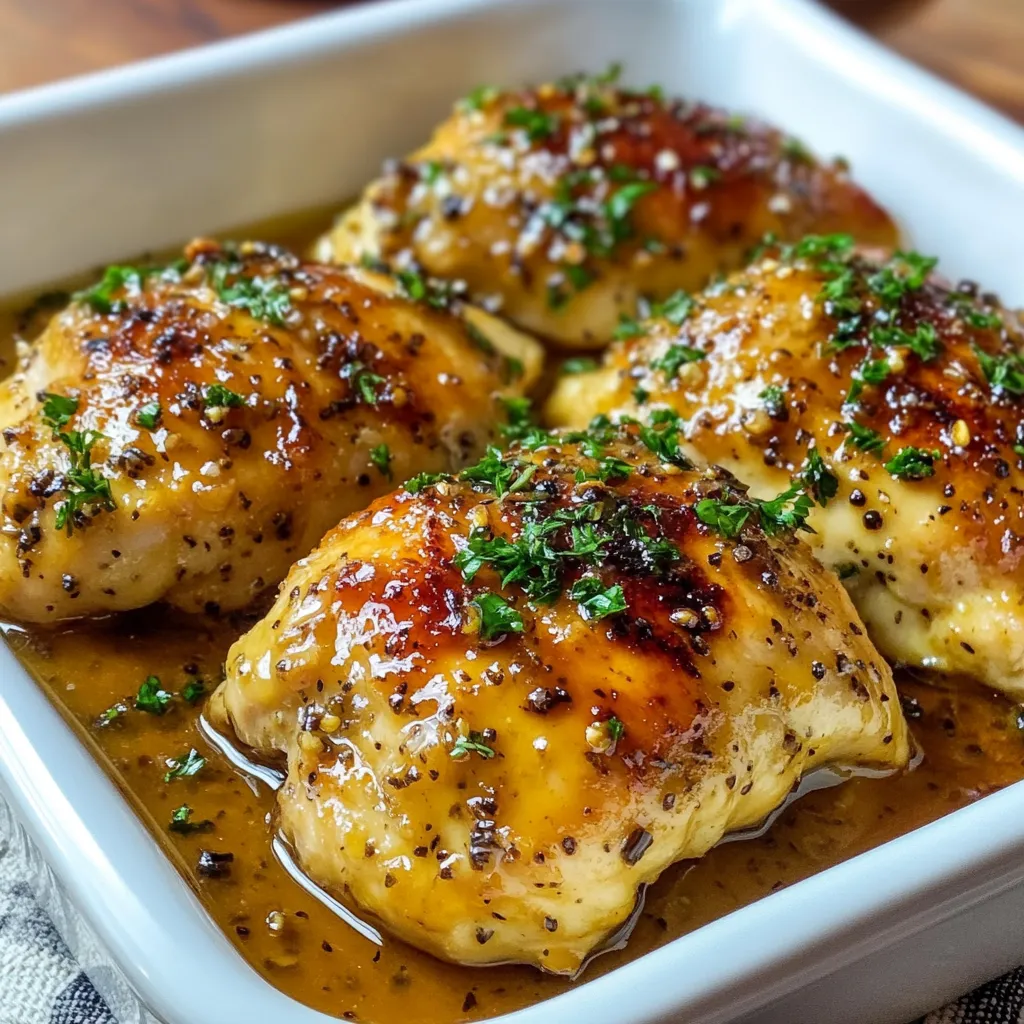
 Pin
Pin
Three mustard styles combine with honey for chicken baked over softened onion. Wholegrain mustard contributes seeds, while Dijon and yellow mustard distribute through the sauce. Choose either the listed breasts or thighs and check their actual thickness rather than expecting both cuts to finish at the same minute.
The quarter cup plus two tablespoons is six tablespoons total. Measure that amount once rather than adding another quarter cup at the finish. The recipe uses three separate mustard measures, which should all be whisked together before coating the chicken.
Ingredient amounts and preparation
- Set out: 4 to 5 (8 oz each) boneless skinless chicken breasts or 6 boneless skinless chicken thighs
- Set out: 1/4 cup whole grain mustard
- Set out: 2 Tbsp dijon mustard
- Set out: 2 Tbsp yellow mustard
- Set out: 1/4 cup + 2 Tbsp honey
- Set out: 2 Tbsp olive oil, divided
- Set out: Salt and freshly ground black pepper, to taste
- Set out: 1 cup chopped yellow onion
- Set out: 1 Tbsp minced garlic (approx. 3 cloves); 4 small sprigs fresh rosemary
Cooking sequence and doneness
- Stage 1
- Heat the oven to 375°F and prepare a 9-by-13-inch baking dish;
- Stage 2
- whisk all three mustards with the full measured honey and one tablespoon oil.
- Stage 3
- Heat the other tablespoon oil, soften onion until golden and add garlic briefly, then spread in the dish.
- Stage 4
- Season similarly sized chicken pieces and arrange over the onion without stacking.
- Stage 5
- Coat with the mustard mixture and tuck rosemary sprigs between pieces.
- Stage 6
- Bake about 25–30 minutes as a first check, continuing until every thick center reaches 165°F; tent if the sauce darkens, remove woody stems and spoon cooked sauce over the chicken to serve.
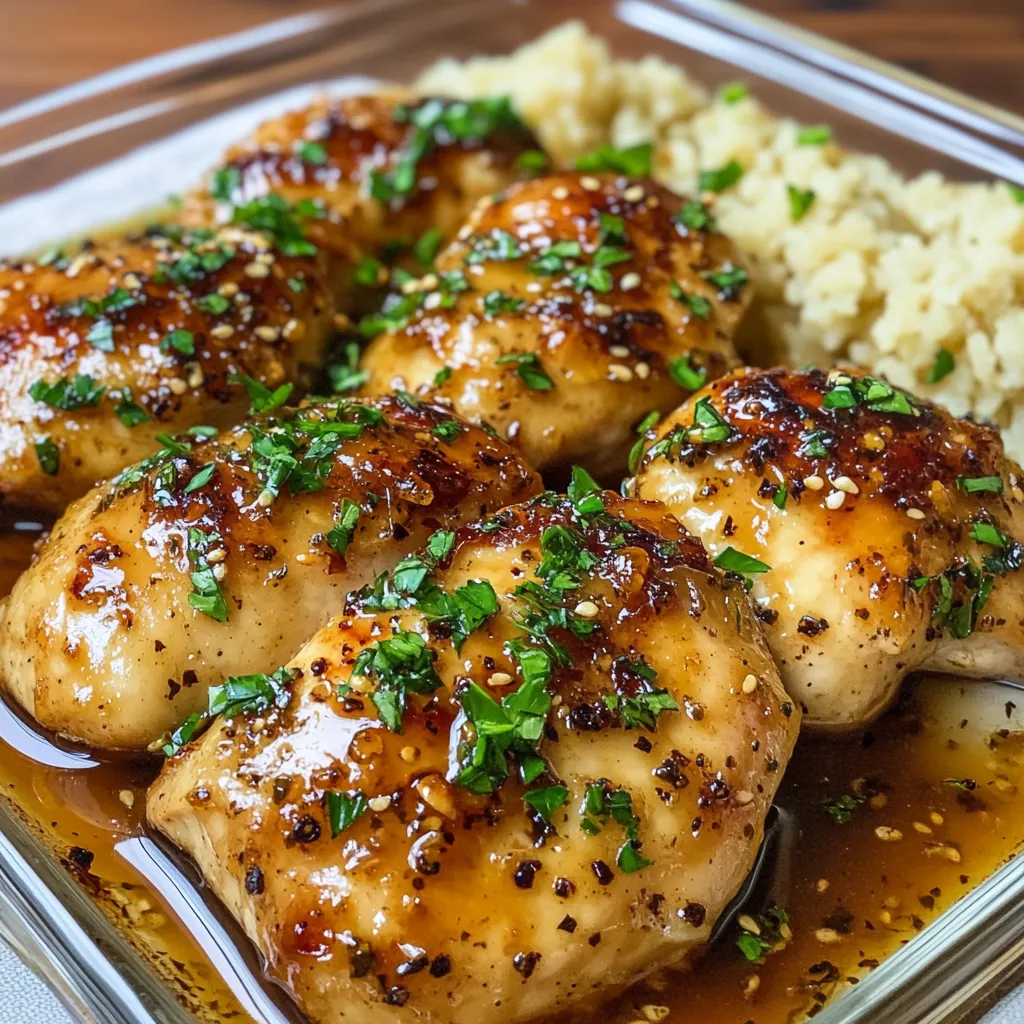
The onion layer is sheltered by chicken and sauce during baking. Sautéing beforehand gives it a tender base rather than depending on a short oven stage to soften raw pieces. Add garlic near the end so it does not spend the whole onion-cooking time in the hot skillet. One tablespoon enters the mustard mixture and the other sautés the onion. Keeping the portions separate avoids accidentally doubling the oil. Spread the onion mixture evenly so every piece of chicken sits over some of the base.
What if the sauce darkens too soon?
Tent the dish loosely with foil and continue until the chicken is done. Honey can color before a thick breast reaches its required center temperature. Do not remove undercooked meat solely to preserve a pale sauce.
Can breasts and thighs share one tray?
They can finish at different times even if their weights match. For the most straightforward batch, choose one cut and keep pieces similar in thickness. If mixing cuts, check and remove each piece individually when cooked. Lay the sprigs between the chicken pieces so they are easy to find after cooking. Remove the woody stems before serving and spoon the cooked pan sauce over the meat. The sprigs are not intended to be eaten whole.
Storage and serving later
Refrigerate perishable leftovers promptly in shallow containers at 40°F or below; do not wait for a large hot batch to cool completely on the counter. University of Illinois Extension’s leftover guidance gives a three-to-four-day refrigerated window and 165°F for reheating foods served hot. Keep cold salads and toppings chilled, and follow shorter product-label limits where applicable.
Related recipe choices
For another complete recipe, see Grilled Chicken Salad with Strawberries and Honey Mustard or Skillet Corn with Honey Butter and Cream Cheese. Each has its own ingredient quantities and cooking sequence; keep those measurements separate when choosing a meal. USDA’s temperature guidance specifies 165°F for poultry, including ground chicken and turkey. Thermometer placement guidance explains checking the thick center rather than relying on surface color.
Common Questions About This Recipe
- How much honey goes into the sauce?
The quarter cup plus two tablespoons is six tablespoons total. Measure that amount once rather than adding another quarter cup at the finish.
- Why soften the onion first?
The onion layer is sheltered by chicken and sauce during baking. Sautéing beforehand gives it a tender base rather than depending on a short oven stage to soften raw pieces.
- How is the oil allocated?
One tablespoon enters the mustard mixture and the other sautés the onion. Keeping the portions separate avoids accidentally doubling the oil.
- What if the sauce darkens too soon?
Tent the dish loosely with foil and continue until the chicken is done. Honey can color before a thick breast reaches its required center temperature.
- Can breasts and thighs share one tray?
They can finish at different times even if their weights match. For the most straightforward batch, choose one cut and keep pieces similar in thickness.
- What should happen to rosemary stems?
Lay the sprigs between the chicken pieces so they are easy to find after cooking. Remove the woody stems before serving and spoon the cooked pan sauce over the meat.