
 Pin
Pin
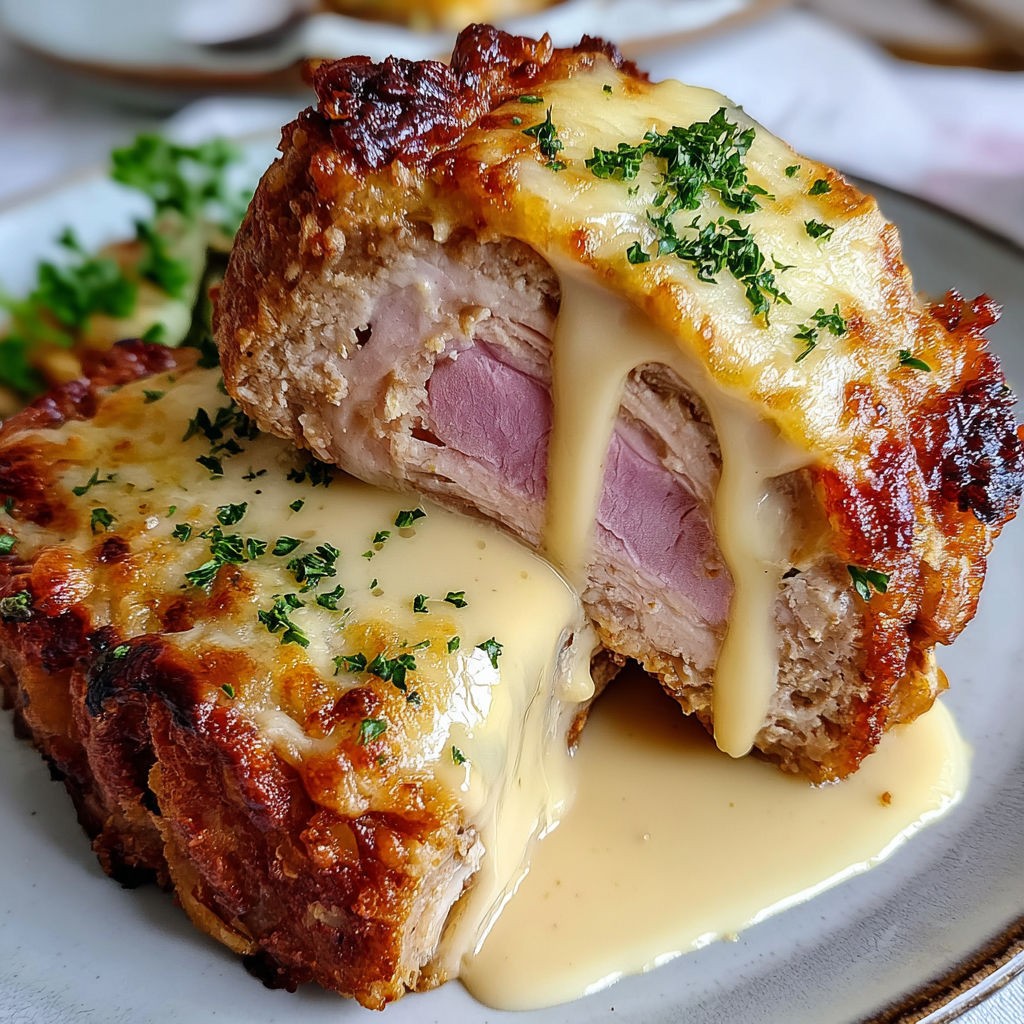
Ground chicken wraps around sliced chicken ham and Swiss in this rolled meatloaf. Choose a pan that can hold the substantial loaf with room below the rim. Measure doneness in several chicken areas, since melted cheese alone is not a reliable reading.
The mixture contains two pounds of chicken plus filling and binders. Use a deep loaf pan with adequate headroom; if it cannot fit, shape on a greased rimmed baking tray instead. A different shape changes baking time.
Ingredient amounts and preparation
- Set out: 2 pounds ground chicken
- Set out: 1 cup plain breadcrumbs
- Set out: 2 large eggs
- Set out: 1/2 cup milk
- Set out: 1 teaspoon garlic powder
- Set out: 1 teaspoon onion powder
- Set out: 1/2 teaspoon salt
- Set out: 1/2 teaspoon black pepper
- Set out: 6 ounces sliced chicken ham
- Set out: 6 ounces Swiss cheese, sliced
- Set out: 1 tablespoon Dijon mustard
- Set out: 1 tablespoon olive oil, for greasing pan
Cooking sequence and doneness
- Stage 1
- Heat the oven to 375°F and grease a suitable deep loaf pan or rimmed baking tray.
- Stage 2
- Mix ground chicken, breadcrumbs, eggs, milk and measured seasonings until evenly combined. Spread on parchment as a roughly half-inch-thick rectangle.
- Stage 3
- Arrange cooked chicken ham and Swiss inside the edges.
- Stage 4
- Lift the parchment to help begin rolling. Peel the paper away as the chicken rolls around the filling.
- Stage 5
- Seal the seam and ends thoroughly.
- Stage 6
- Transfer seam-side down to the prepared pan with adequate headroom. Brush the top with Dijon.
- Stage 7
- Bake about fifty to sixty minutes, continuing as needed until several thick chicken areas and the center reach 165°F.
- Stage 8
- Shield excessive surface browning if necessary. Rest ten minutes, then slice with a sharp knife.
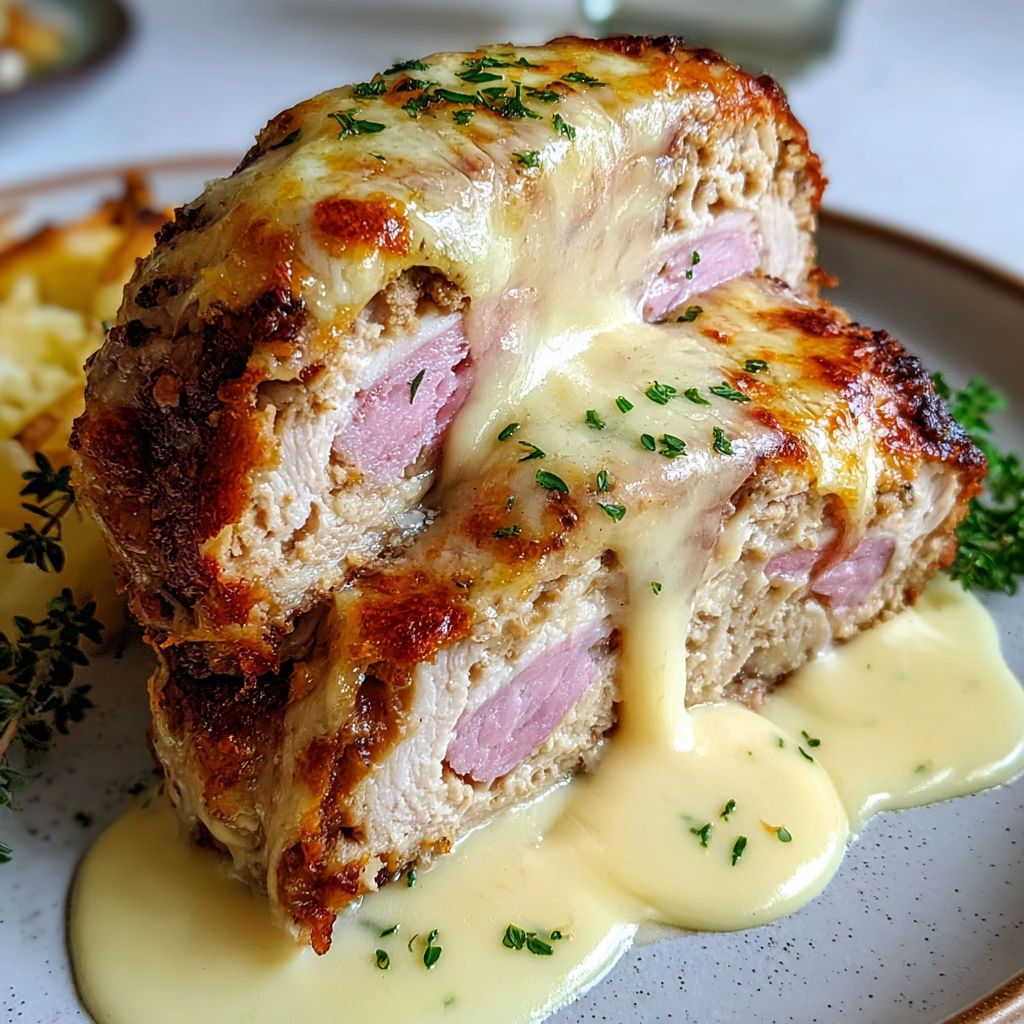
Combine the breadcrumbs, eggs, milk and seasonings evenly with ground chicken. Mix until cohesive without prolonged kneading. Keep the mixture cold and shape promptly.
What paper can help rolling?
Use parchment as a support under the rectangle and peel it away while rolling. Do not roll paper into the meat or leave wax paper in the oven. Seal the seam and both ends before transferring.
Is chicken ham raw?
Choose a fully cooked sliced product and follow its label. Distribute ham and cheese inside a border of chicken so the edges can seal. The outer ground poultry still needs full cooking.
Where should the thermometer go?
Check several thick areas of chicken and the center for 165°F. A probe lodged only in a cheese pocket can misrepresent the meat temperature. Rest ten minutes before slicing to help the loaf hold together.
Storage and serving later
Refrigerate perishable leftovers promptly in shallow containers at 40°F or below; do not wait for a large hot batch to cool completely on the counter. University of Illinois Extension’s leftover guidance gives a three-to-four-day refrigerated window and 165°F for reheating foods served hot. Keep cold salads and toppings chilled, and follow shorter product-label limits where applicable.
Related recipe choices
For another complete recipe, see Rolled Chicken Cordon Bleu or Cajun Ground Chicken Sloppy Joes. Each has its own ingredient quantities and cooking sequence; keep those measurements separate when choosing a meal.
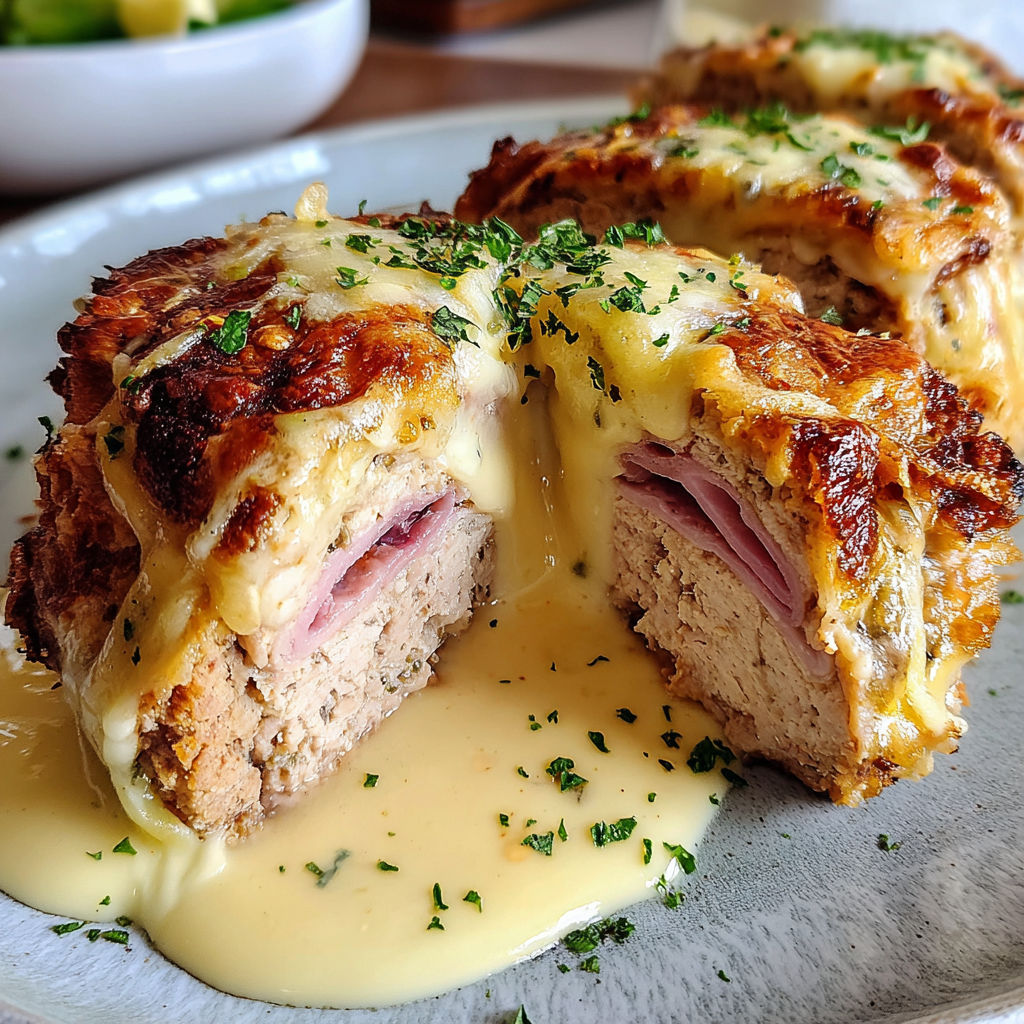
USDA’s temperature guidance specifies 165°F for poultry, including ground chicken and turkey. Thermometer placement guidance explains checking the thick center rather than relying on surface color.
Common Questions About This Recipe
- What size pan is suitable?
The mixture contains two pounds of chicken plus filling and binders. Use a deep loaf pan with adequate headroom; if it cannot fit, shape on a greased rimmed baking tray instead.
- How is the meat mixed?
Combine the breadcrumbs, eggs, milk and seasonings evenly with ground chicken. Mix until cohesive without prolonged kneading.
- What paper can help rolling?
Use parchment as a support under the rectangle and peel it away while rolling. Do not roll paper into the meat or leave wax paper in the oven.
- Is chicken ham raw?
Choose a fully cooked sliced product and follow its label. Distribute ham and cheese inside a border of chicken so the edges can seal.
- Where should the thermometer go?
Check several thick areas of chicken and the center for 165°F. A probe lodged only in a cheese pocket can misrepresent the meat temperature.