
 Pin
Pin
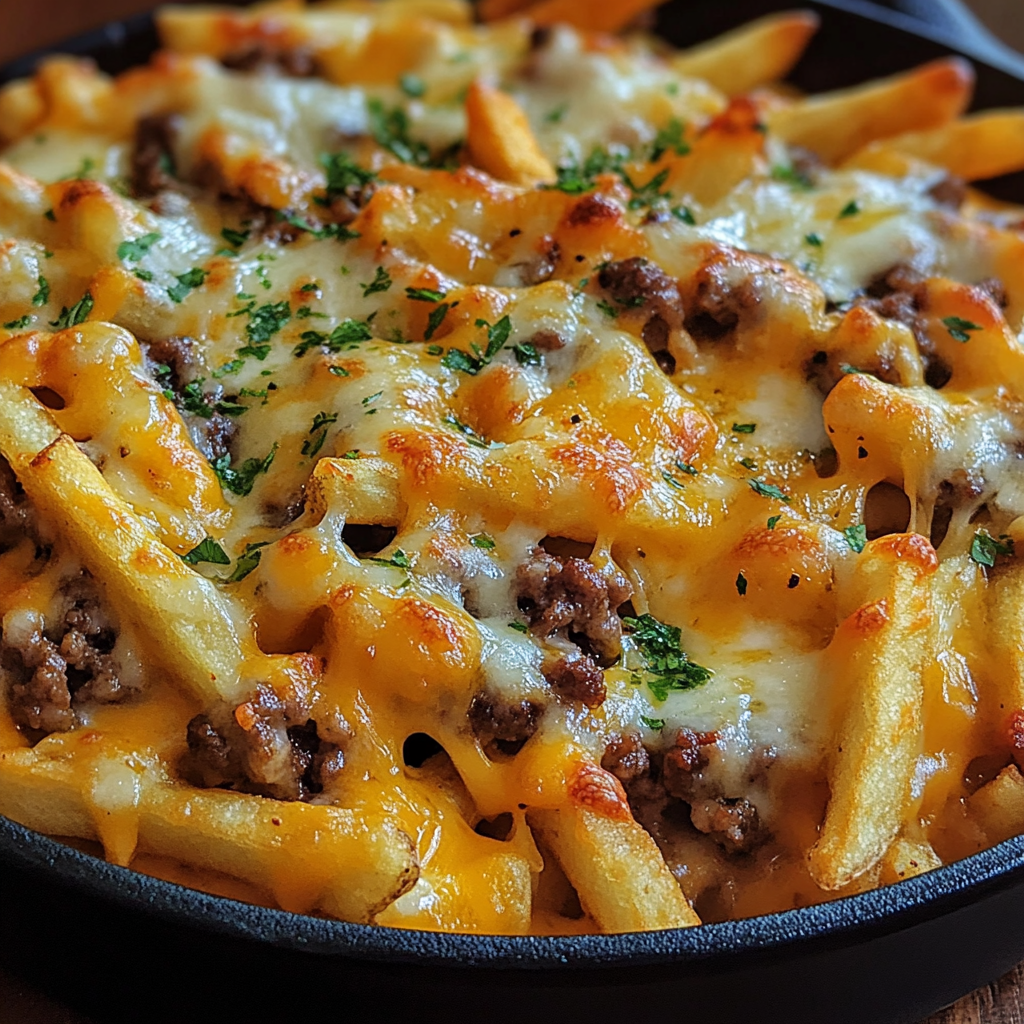
Seasoned beef, ketchup, mustard and cheddar bake over a French-fry base. Pre-cook the fries according to their package before layering; the covered base will soften under sauce and cheese. Pickles add a cool finishing contrast after baking.
A sauce-covered base softens, even if fries start crisp. Bake the frozen fries first so they are cooked before being covered. This casserole should not be presented as a tray of uniformly crunchy fries.
Ingredient amounts and preparation
- Set out: 4 cups frozen fries
- Set out: ½ cup shredded mozzarella (optional); 1 medium onion, finely chopped
- Set out: 1 tsp salt; 1 tbsp olive oil for sautéing
- Set out: 2 cups grated cheddar; 1 cup ketchup
- Set out: ½ cup diced pickles, optional topping; ¼ cup milk
- Set out: 2 minced garlic cloves; 1 tbsp yellow mustard
- Set out: ½ tsp ground black pepper; 1 lb beef, ground
Cooking sequence and doneness
- Stage 1
- Cook the frozen fries on a tray according to their package. Prepare a greased nine-by-thirteen-inch baking dish and set the oven to 400°F for the casserole.
- Stage 2
- Heat olive oil in a skillet. Cook ground beef in crumbles until it reaches 160°F and drain excess fat.
- Stage 3
- Add onion and garlic and cook until softened. Stir in ketchup, mustard, salt and pepper and simmer briefly.
- Stage 4
- Spread the cooked fries across the prepared dish. Distribute the beef mixture evenly over them.
- Stage 5
- Drizzle with milk and add cheddar plus optional mozzarella. Bake about twenty-five to thirty minutes, continuing until the center reaches 165°F.
- Stage 6
- Cover loosely if browning too quickly. Finish with optional pickles and serve, expecting a softened potato base.
Brown and break up the ground beef, checking that it reaches 160°F before assembly. Drain excess fat carefully. The assembled casserole should then reach 165°F in the center.
How is sauce distributed?
Mix ketchup and mustard into the cooked beef with softened onion and garlic. Spread evenly over the fries rather than leaving a thick central mound. Drizzle the small milk quantity across the dish. Cheddar is the main two-cup topping; mozzarella is optional. Keep the optional half cup separate so it is not confused with the cheddar quantity. Cover loosely if cheese colors before the middle is hot.
When do pickles go on?
Add diced pickles after baking. They provide a fresh contrast and do not need prolonged heating. Store extra pickles separately from casserole leftovers.
Storage and serving later
Refrigerate perishable leftovers promptly in shallow containers at 40°F or below; do not wait for a large hot batch to cool completely on the counter. University of Illinois Extension’s leftover guidance gives a three-to-four-day refrigerated window and 165°F for reheating foods served hot. Keep cold salads and toppings chilled, and follow shorter product-label limits where applicable.
Related recipe choices
For another complete recipe, see Ground Beef Noodles with Ginger and Soy Sauce or Cajun Ground Chicken Sloppy Joes. Each has its own ingredient quantities and cooking sequence; keep those measurements separate when choosing a meal. USDA’s temperature guidance specifies 160°F for ground beef. Thermometer placement guidance explains checking the thick center rather than relying on surface color.
Common Questions About This Recipe
- Will the bottom fries stay crisp?
A sauce-covered base softens, even if fries start crisp. Bake the frozen fries first so they are cooked before being covered.
- What beef endpoint is needed?
Brown and break up the ground beef, checking that it reaches 160°F before assembly. Drain excess fat carefully.
- How is sauce distributed?
Mix ketchup and mustard into the cooked beef with softened onion and garlic. Spread evenly over the fries rather than leaving a thick central mound.
- Are both cheeses required?
Cheddar is the main two-cup topping; mozzarella is optional. Keep the optional half cup separate so it is not confused with the cheddar quantity.
- When do pickles go on?
Add diced pickles after baking. They provide a fresh contrast and do not need prolonged heating.
- Has this recipe been kitchen-tested?
No. This is a research-based editorial revision.