
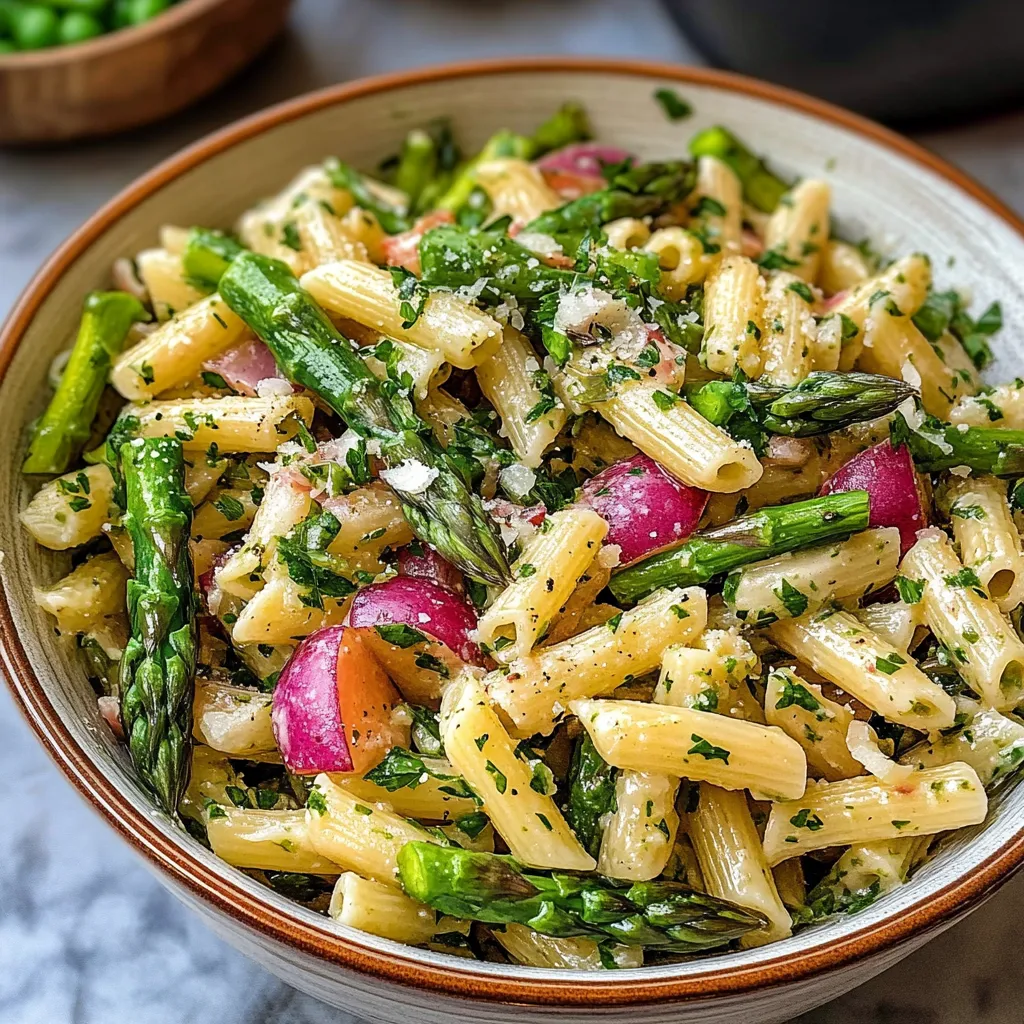
 Pin
Pasta, asparagus and cheese are dressed after cooling. The asparagus is blanched in the pasta water so no unlisted sautéing oil is needed.
This revision specifies a pound of dry pasta before cooking. Measuring after cooking would produce a much smaller batch.
Ingredients and measurements
- 1 pound dry pasta, cooked according to package
- kosher salt and pepper, to taste
- 1 pound asparagus, woody stems removed and cut into thirds
- 1 pint cherry tomatoes, quartered
- 4 green onions, thinly sliced
- 8 ounces white cheddar or fontina cheese, cubed; ¼ cup chopped fresh herbs (basil and parsley)
- ¼ cup apple cider vinegar
- 2 tablespoons honey
- 2 tablespoons dijon mustard
- 2 garlic cloves, finely minced or pressed
- kosher salt and pepper, to taste; ½ cup extra virgin olive oil
Preparation and cooking
- Stage 1
Cook one pound dry pasta according to its package. Add asparagus during the last few minutes, cooking until bright and just tender. Drain, cool promptly and drain again thoroughly.
- Stage 2
Whisk vinegar, honey, mustard, garlic, salt and pepper, then gradually whisk in the half cup oil.
- Stage 3
Combine cooled pasta and asparagus with tomatoes, scallions and cheese. Add dressing gradually and toss.
- Stage 4
Fold in herbs close to serving and keep chilled. Reserve extra dressing separately if the salad is already coated.
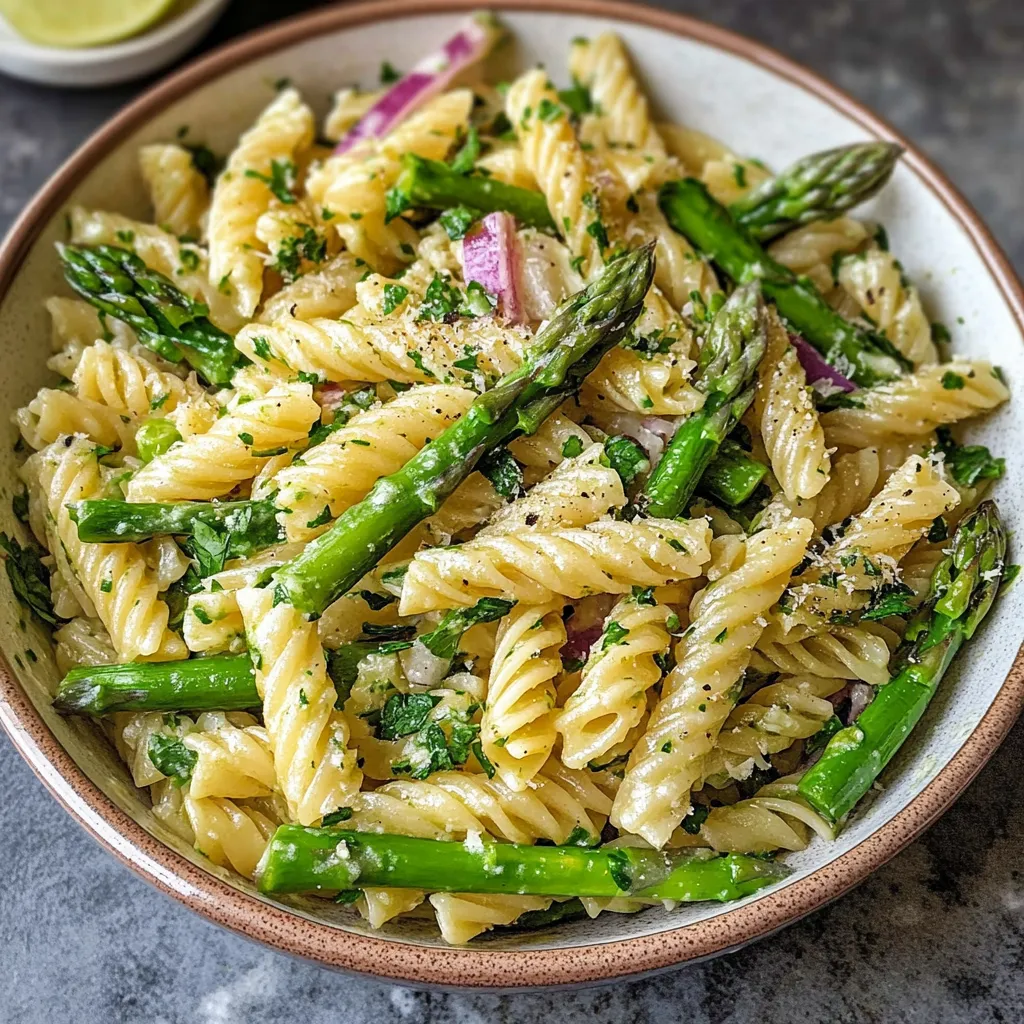
Warm pasta softens the cubes and can make the salad greasy instead of leaving distinct cheese pieces.
Is the pound dry or cooked?
Refrigerate perishable leftovers promptly in shallow containers at 40°F or below, within two hours or one hour above 90°F. Reheat cooked leftovers to 165°F; keep cold dishes chilled.
Why cool before cheese?
For more recipes to serve alongside, see healthy cowboy caviar salad or chicken buttered noodles. Use that recipe’s own quantities rather than mixing formulas.
Storage and serving
This is an editorial revision of the archived formula with clarified preparation and original troubleshooting notes. A Pinch Of Lemon has not kitchen-tested this version. The linked reference supports food-safety guidance only, not the entire recipe. Photographs are illustrative. Reference: FoodSafety.gov cooking-temperature guidance.
Common Questions About This Recipe
- Is the pound dry or cooked?
This revision specifies a pound of dry pasta before cooking. Measuring after cooking would produce a much smaller batch.
- Why cool before cheese?
Warm pasta softens the cubes and can make the salad greasy instead of leaving distinct cheese pieces.