
 Pin
Pin
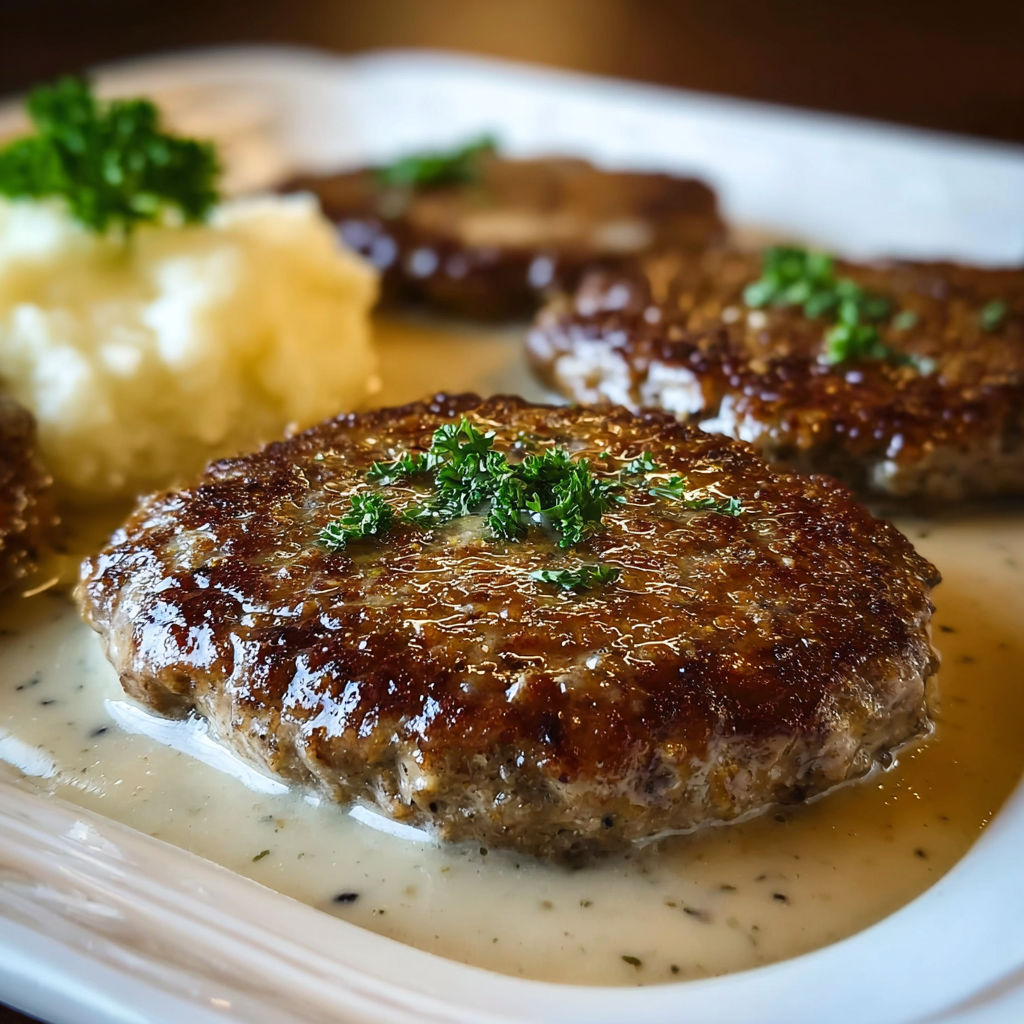
These hamburger steaks use a homemade gravy thickened with butter and flour, then finished with beef broth and heavy cream. Finely diced onion goes inside the patties; sliced onion belongs in the sauce. That distinction matters because large onion pieces in the meat can create weak spots, while fine pieces in the gravy will not provide the same visible texture.
Two pounds of beef divides into eight four-ounce portions or six portions of about 5.3 ounces, before egg, crumbs and onion. Choose one size and keep thickness consistent. “80/20” means roughly twenty percent fat, not an especially lean blend. Drain excess rendered fat before starting the measured butter-and-flour sauce so the gravy does not inherit an uncontrolled amount of grease.
Two onion cuts and a scratch gravy
- 2 pounds ground beef, 80/20 blend
- 1/2 cup plain or seasoned breadcrumbs
- 1 large egg, beaten
- 1 small onion, finely diced
- 2 teaspoons salt
- 1 teaspoon black pepper
- 3 tablespoons butter, salted or unsalted
- 3 tablespoons all-purpose flour
- 2 cups low sodium beef broth
- 1 cup heavy cream
- 1 small onion, sliced 1 teaspoon garlic powder
Cook in a continuous sequence
- Stage 1
- Preheat the oven to 350°F. Gently mix beef, breadcrumbs, beaten egg, finely diced onion, salt and pepper; stop when distributed rather than kneading densely.
- Stage 2
- Shape six to eight evenly thick oval patties. Keep raw portions chilled until the skillet and remaining ingredients are ready.
- Stage 3
- Brown patties in batches in an oven-safe skillet, turning carefully. Transfer to a plate briefly while making the gravy; proceed directly with cooking. Drain excess rendered fat.
- Stage 4
- Melt the measured butter in the skillet, soften the sliced onion, then stir in flour and garlic powder. Cook while stirring for about two minutes.
- Stage 5
- Gradually whisk in broth, then cream, smoothing each addition. Return patties to the gravy in one layer.
- Stage 6
- Cover and bake, beginning temperature checks around 30 minutes; larger patties may need longer. Every center must reach 160°F. Uncover briefly if the sauce needs reducing, and do not continue to a fixed hour if the patties are already done.
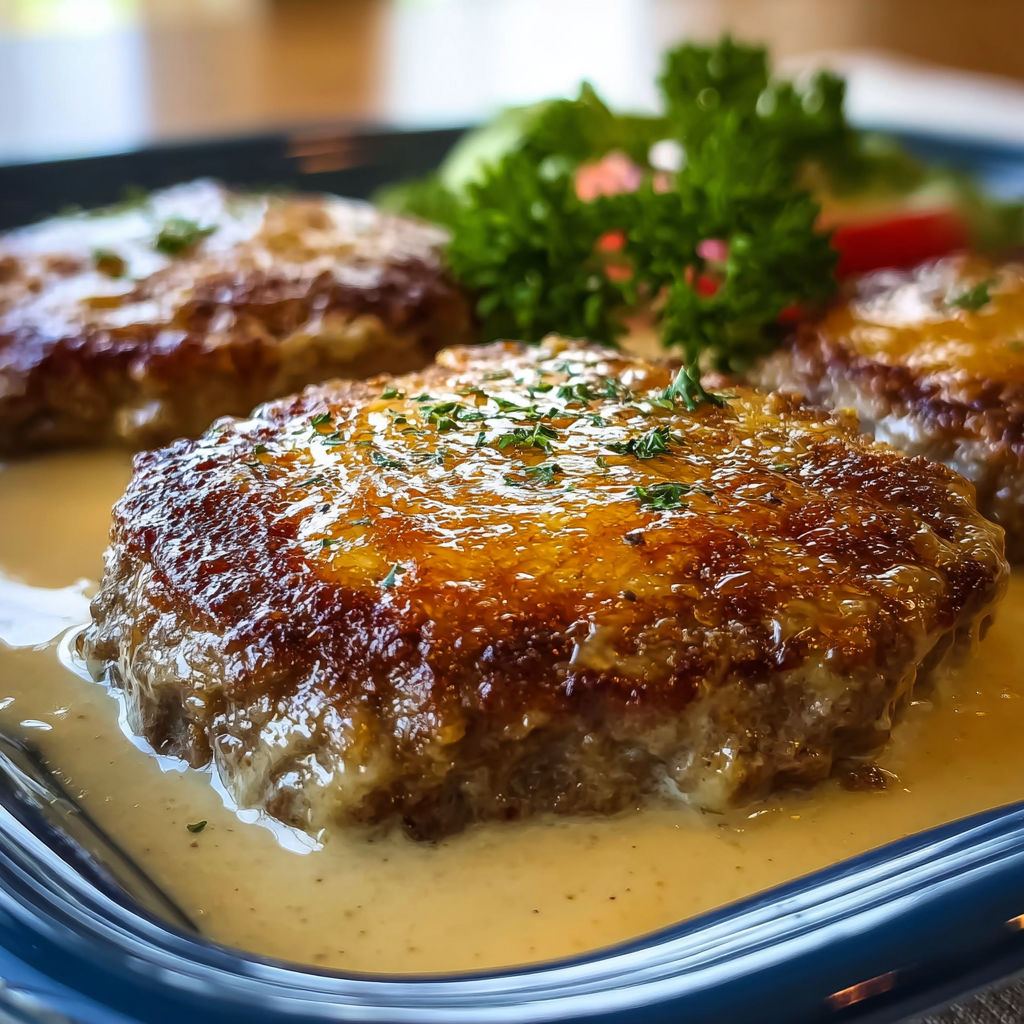
A roux is the cooked butter-and-flour base. Whisk in a small portion of broth first, smooth it, then add the rest gradually. Trying to dissolve dry flour in a full pan of hot liquid creates a different problem. If lumps appear, address them before returning the patties; aggressive whisking around fragile meat can break it apart without fixing the sauce evenly.
Choose the dairy deliberately
Heavy cream and milk are not equivalent ingredients. Milk changes both richness and how the sauce behaves during heating. Keep this formula intact for the first attempt, especially when troubleshooting thickness. The condensed mushroom-gravy bake is a useful alternative if you want a canned-soup method; it has its own quantities and should not be combined with this roux.
Chill portions promptly
Do not leave cooked patties and gravy on the counter until completely cold. Refrigerate portions promptly in shallow containers. USDA gives three to four refrigerator days for leftovers. Thaw frozen portions in the refrigerator. Add small amounts of water when reheating if the gravy thickens, then check the reheated center rather than assuming a bubbling edge means the whole portion is hot.
Use the gravy at the table
Spoon the sauce over the patties instead of hiding them under an extra-large starch serving. Fried potatoes and onions provide a contrasting browned surface. A side salad is another option. If dividing the meal into storage containers, distribute sauce among all portions; the last patty should not receive all the reduced gravy from the bottom.
Read ingredient labels
This recipe contains beef, egg, wheat and dairy as written. A lower-sodium broth does not establish a low-sodium finished dish because the meat seasoning still contributes salt. No calorie or protein total has been calculated for a verified serving size. Check breadcrumb and broth labels for allergens; changing one ingredient cannot establish that the entire meal meets a dietary restriction.
Diagnose patties and gravy separately
Patties that crack need a handling adjustment: support them with a broad spatula, avoid repeated turning and keep onion pieces small. An oily gravy needs excess fat assessed, while a thick but smooth gravy needs gradual dilution. These are separate problems. USDA sets 160°F for ground beef; use temperature for meat doneness and consistency for gravy adjustment.
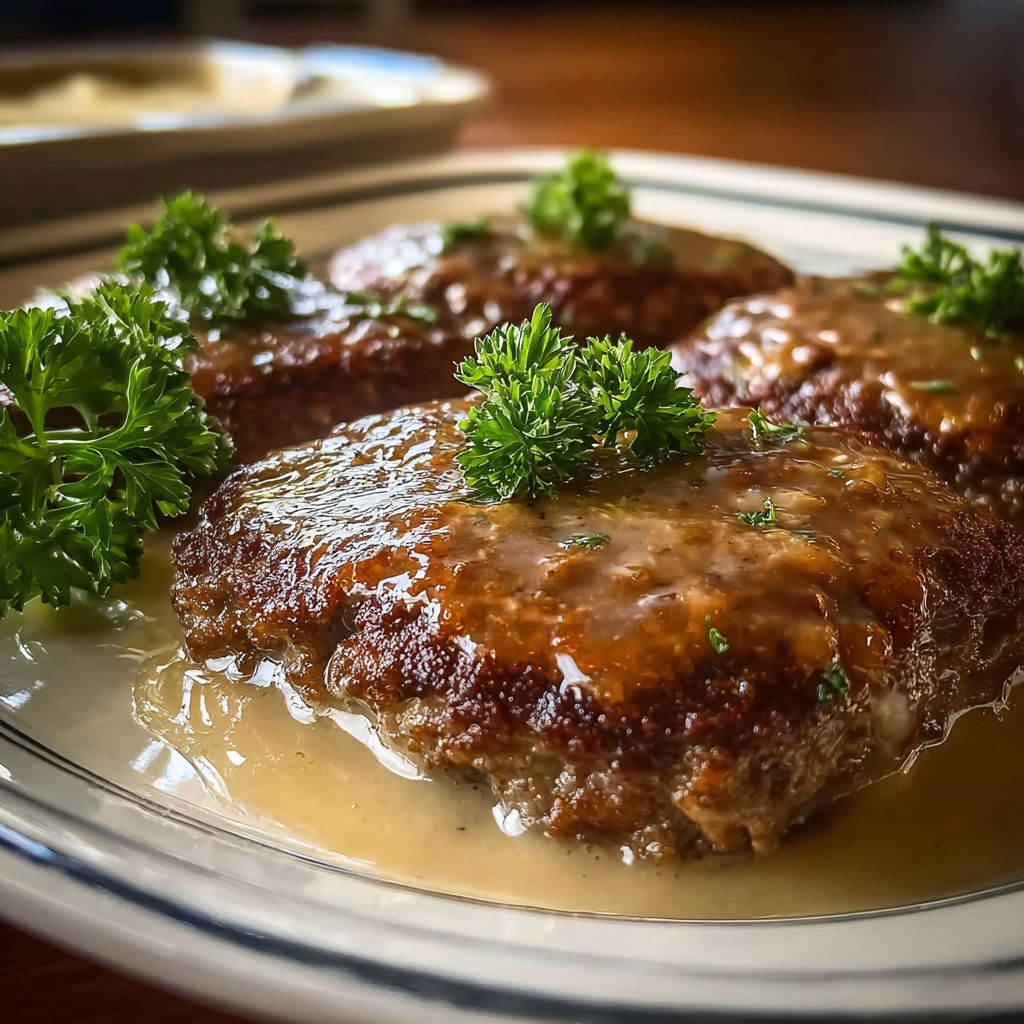
Use an oven-safe skillet with room for the patties in one layer, or transfer everything to a suitable baking dish. A crowded pile creates uneven heating and makes turning difficult. The published time is a checking window, not a tested guarantee for every patty size. The scratch-gravy method is the reason to choose this version; no unverified Amish origin or personal family story is claimed.
Common Questions About This Recipe
- Does this use condensed soup?
No. Flour and butter thicken the broth-and-cream gravy.
- Why are two onions listed?
Finely diced onion goes into the patties; sliced onion cooks in the gravy.
- Can I use milk instead of cream?
That is an untested change to the sauce. Expect different richness and heating behavior.
- Why is the gravy greasy?
Check how much rendered beef fat remained before adding the measured butter. Too much unmeasured fat can separate from the sauce.
- Should the patties bake for a full hour?
Use the temperature checkpoint. Patty thickness and vessel size affect the schedule; longer is not automatically better.